The Creators: Sam Guindon's artistic palette

The Creators:
Sam Guindon's artistic palette

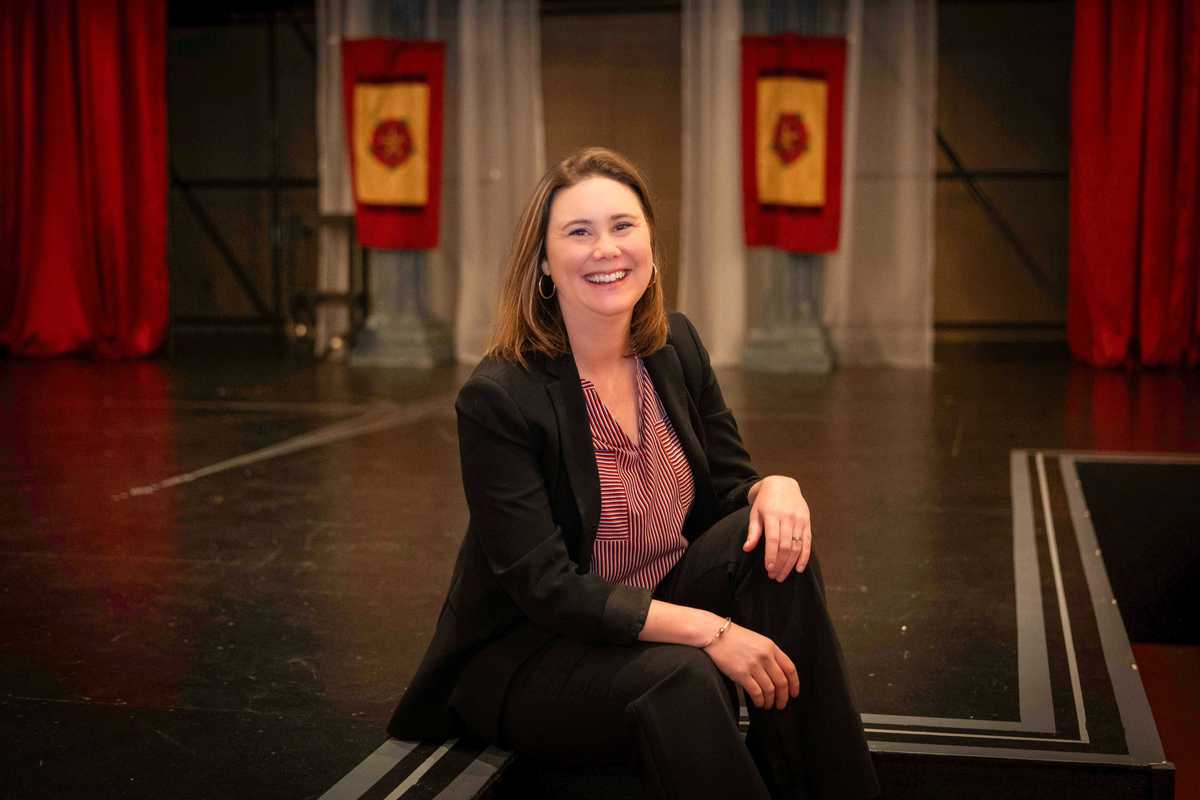
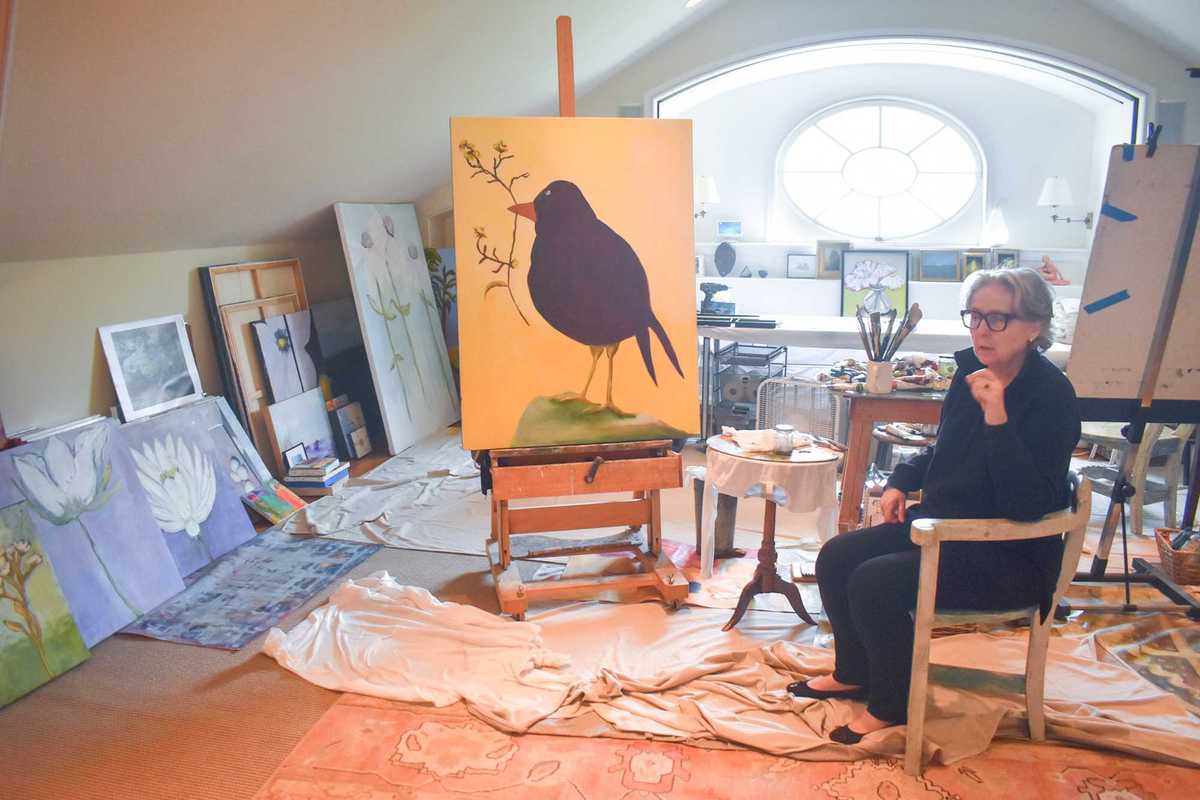
Norfolk painter Sam Guindon.

Jennifer Almquist

Painter Sam Guindon is an earnest young man who paints light with the skill of John Singer Sargent. Guindon’s attention to technique harks back to an earlier time when artists studied under a master, learned anatomy, perspective, how to make their own pigment, and closely observed the work of great artists. Guindon has studied oil painting since he was nineteen. In a recent show of his paintings in his hometown of Norfolk, Connecticut, Guindon sold 40 of the 42 paintings he exhibited.

Guindon’s sketchbooks are windows into his creative mind and a well-traveled life, packed with vignettes, ink drawings, observations and thoughts written in the margins. His subjects range from sketches done in gouache at the National Gallery, to ink drawings of vine-covered trees in Costa Rica, to the interior of an airplane drawn with the perspective of a fisheye lens, to colorful bottles of hot sauce. Currently Guindon is teaching art at the Compass Atelier in Maryland.

Artwork created by Guindon.Jennifer Almquist

The Creators Interview:

Jennifer Almquist: What are your plans after you come home to Norfolk this winter?

Sam Guindon: Picasso said, “There’s no great art without great solitude.” I plan to spend a year solo creating one thousand paintings on paper in Santa Fe, Norway, Costa Rica, and Ireland.

We went to Costa Rica, where my dad is from, for a year when I was in 3rd grade. I will be there for three months doing some work on our house this winter. I’m going do some plein air (in the open air) painting in the jungle.

JA: Tell me your earliest memory of wanting to draw or paint. How old were you?

SG: My first memories are very illustrative, light-filled - as if they are paintings. The first drawings I did, when I was two, were very imaginative. I drew a lot of monsters as my earliest subjects. I liked drawing monsters because the anatomy is never incorrect. You have the freedom to just draw whatever you imagine.

JA: How have your paintings evolved?

SG: Only more recently did my art come around to being representative of anything. I guess it was more just a desire to create things, as opposed to capturing things. Now the desire to create has been fused with the desire to record the world. In that sense, especially with plein air paintings, you can capture your experience. I think the sketchbook is similar in that it’s a record of my journey throughout the year.

Work from Sam Guindon's sketchbook.Jennifer Almquist

JA: Your sketchbooks are wonderful. Where did you draw these?

SG: Those are copies from the National Gallery of different artists. The sketchbook has turned into half sketchbook/ half journal which is fun to look back on. It feels more lived in.

JA: When did you realize that you wanted to go to school for this?

SG: I went to a liberal arts school, Hamilton College. I was not sold on being an art major. My mom told me when I was a kid that I should do something that I loved as a career. That pushed me to have the courage to study art.

JA: Did you have a teacher that influenced you?

SG: My advanced painting teacher was the first to introduce a more traditional kind of education. She had us do master studies, taught us about different pigments, their history, how you use them.

JA: What was your plan after college?

SG: Taking classes online through Compass. My teacher has changed the way I paint. He taught me how to mix color in a scientific way.

Artwork created by Guindon.Jennifer Almquist

JA: In your recent show in Norfolk of smaller paintings, you sold out! How do you explain that success?

SG: The new paintings have a different feeling, a little more raw, more accessible. Before I had only shown my studio work. I learn more about painting from these smaller, direct observation pieces.

JA: Your paintings are of everyday things like tractors and bulldozers, workshops, hydrants, and your own sneakers. What draws you to your subject matter?

SG: Those are my dad’s tractors - they’re from Belarus. They are Soviet era and have a lot of personality. I remember as a kid working with these immensely powerful things that could crush you so easily. They are rusty, they misfire in the winter, they’ve got hydraulic leaks. If you’re a kid who looks closely at things, they have meaning that other people don’t feel or see. It is a shame that we lose our child’s eye, through which everything has meaning and beauty. That is something that I think about, finding a sort of equanimity by just finding beauty in uncelebrated things, quiet things.

JA: Did you like reading books when you were little?

SG: I loved reading books, especially fantasy. In Costa Rica life is slow, so we spent a lot of time just reading from the old library, and drawing. I love Percy Jackson and Tintin. I just learned Andy Warhol and Herge, the author of Tintin, were good friends!

JA: Do you like the paintings of John Singer Sargent?

SG: He was one of the painters that got me into this. He’s the gateway drug to more traditional painters. It is cool to see his sketches because you can see the artist’s hand. He was good at showing you what he wanted you to see in his paintings.

Artwork created by Guindon.Jennifer Almquist
JA: Your favorite artists?

SG: Jeremy Mann, Mark Boedges, Richard Schmid, Antonio Lopez Garcia, Rackstraw Downes, Quang Ho, George Bellows, Camille Corot, Gustave Caillebotte, Peter Paul Rubens, and Franz Kline.

JA: Do you dream in paintings?

SG: If I am working on a painting intensely, or drawing, then I will dream about it.

JA: There is much creative shorthand in the world now, using artificial intelligence, digital cameras, or 3D printing. Your ability to paint, using your mind and your hands, is going to be an increasingly rare skill. Will you resist the ease of modern forms of image creation?

SG: Different factors make it rare. The more art that I make, the more insulated I am against like that kind of influence. Because you really can’t be making something while distracted in a million ways by your phone.

Latest News

Millerton’s 175th committee advances plans for celebration, seeks vendors and sponsors

The Millerton 175th anniversary committee's tent during the village's trunk-or-treat event on Oct. 31, 2025.

Photo provided

MILLERTON — As Millerton officially enters its 175th year, the volunteer committee tasked with planning its milestone celebration is advancing plans and firming up its week-long schedule of events, which will include a large community fair at Eddie Collins Memorial Park and a drone light show. The events will take place this July 11 through 19.

Millerton’s 175th committee chair Lisa Hermann said she is excited for this next phase of planning.

Keep ReadingShow less
Why the focus on Greenland?

As I noted here in an article last spring entitled “Hands off Greenland”, the world’s largest island was at the center of a developing controversy. President Trump was telling all who would listen that, for national security reasons, the United States needed to take over Greenland, amicably if possible or by force if necessary. While many were shocked by Trump’s imperialistic statements, most people, at least in this country, took his words as ill-considered bluster. But he kept telling questioners that he had to have Greenland (oftenechoing the former King of France, Louis XIV who famously said, “L’État c’est moi!”.

Since 1951, the U.S. has had a security agreement with Denmark giving it near total freedom to install and operate whatever military facilities it wanted on Greenland. At one point there were sixteen small bases across the island, now there’s only one. Denmark’s Prime Minister has told President Trump that the U.S. should feel free to expand its installations if needed. As climate change is starting to allow a future passage from thePacific Ocean to the Arctic, many countries are showing interest in Greenland including Russia and China but this hardly indicates an international crisis as Trump and his subordinates insist.

Keep ReadingShow less
Military hardware as a signpost

It is hard not to equate military spending and purchasing with diplomatic or strategic plans being made, for reasons otherwise unknown. Keeping an eye out for the physical stuff can often begin to shine a light on what’s coming – good and possibly very bad.

Without Congressional specific approval, the Pentagon has awarded a contract to Boeing for $8,600,000,000 (US taxpayer dollars) for another 25 F-15A attack fighters to be given to Israel. Oh, and there’s another 25 more of the F-15EX variant on option, free to Israel as well.

Keep ReadingShow less
Truth and evidence depend on the right to observe

A small group of protesters voice opposition to President Trump's administration and Immigration and Customs Enforcement at Amenia's Fountain Square at the intersection of Route 44 and Route 22 on Saturday, Nov. 8, 2025

Photo by Nathan Miller

The fatal shooting of Alex Pretti, and before him Renée Good, by federal agents in Minnesota is not just a tragedy; it is a warning. In the aftermath, Trump administration officials released an account of events that directly contradicted citizen video recorded at the scene. Those recordings, made by ordinary people exercising their rights, showed circumstances sharply at odds with the official narrative. Once again, the public is asked to choose between the administration’s version of events and the evidence of its own eyes.

This moment underscores an essential truth: the right to record law enforcement is not a nuisance or a provocation; it is a safeguard. As New York Times columnist David French put it, “Citizen video has decisively rebutted the administration’s lies. The evidence of our eyes contradicts the dishonesty of the administration’s words.”

Keep ReadingShow less