Students get a taste of the real world during Career Day

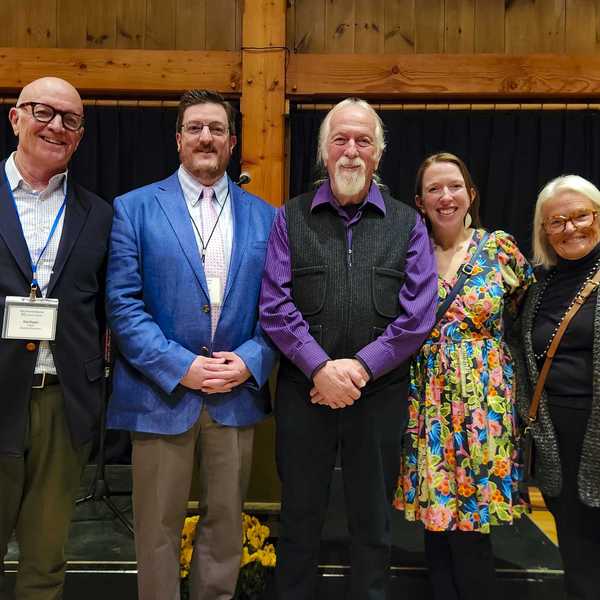
Ella Emberlin, an eighth grader at Salisbury Central School, meets alum Colby Hickey, owner of Colby’s Tree Service, on Career Day.
Madi Long

Ella Emberlin, an eighth grader at Salisbury Central School, meets alum Colby Hickey, owner of Colby’s Tree Service, on Career Day.
SHARON – Sharon Center School students got a firsthand look at potential career paths on Friday, April 10, during their annual Career Day, where guest speakers from a range of fields spoke with students in fourth through eighth grade.
The annual event is organized by school counselor Liz Foster, who aims to showcase the positions held by local community members. Presenters included a meteorologist, scuba diving instructor, mechanic and attorney.
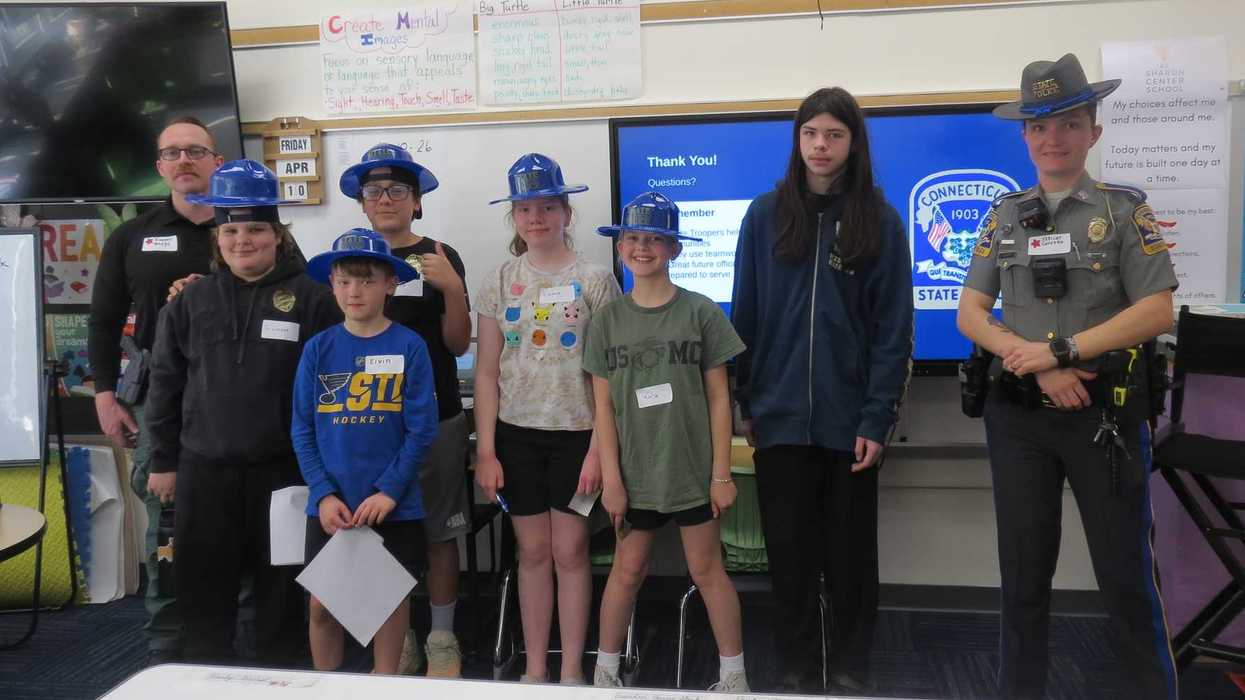
In one classroom, students listened intently as two Connecticut State Police troopers provided an overview of their duties. Josh Wedge and Miranda Coretto of Troop B in North Canaan discussed the types of incidents they respond to, including car crashes, crimes and emergency calls. The troopers said they are also asked to cover large events, such as fairs and games. They told students police are dispatched through two radios – one in their vehicles and the other a portable radio they carry.
Wedge talked about specialty units within the State Police department, such as K-9, marine, bomb squad, tactical and traffic units.
Students particularly enjoyed hearing about the K-9 unit, which is composed of German shepherds, Labrador retrievers, bloodhounds and comfort dogs. One youngster shared that he had a bloodhound. Wedge told them Connecticut had the first currency dog, which is used to sniff out large amounts of concealed money in the fight against money laundering, illegal gambling and smuggling.
Troopers, the students learned, are allowed to take their patrol cars home. “Our jurisdiction is the whole state, so we might be needed anywhere,” Wedge said. In addition to the SUVs they drive, there are also motorcycle units and an armored car division. Of interest to the students was the cadet program, open to those 14 to 20 years old. Members get certified in CPR, receive physical training and take part in educational offerings.
Attorney Veronica Relea of Sharon and New York City works for a large firm in the city, where she specializes in contract energy law.
A graduate of Yale University and Harvard Law School, she said, “I help people agree on things. I help with big projects, like being able to power your house. A lawyer is always putting things together. We try to come up with solutions for clients.”
Relea said she did not enjoy law school. “What I learned most was at my job,” she said.
Outside the school, crews from both the local ambulance service and volunteer fire department gave students a close-up look at their vehicles and explained their duties.
Beth Klippel and Brian Moore, volunteer firefighters in Sharon, pointed out the various equipment that is carried on their trucks.
Anthony Ferrara and Phil Burke of Northeast Fire Rescue supplement the local ambulance squad. As the children sat in the back of the ambulance, Ferrara said the job of emergency medical responders is to transport patients to a higher level of care, stabilizing them as they go. He said this can include checking blood pressure, blood sugar levels and oxygen levels.
Ferrara added, “My aim, when people are obviously having a bad day, is to make them smile.”

Nathan Miller
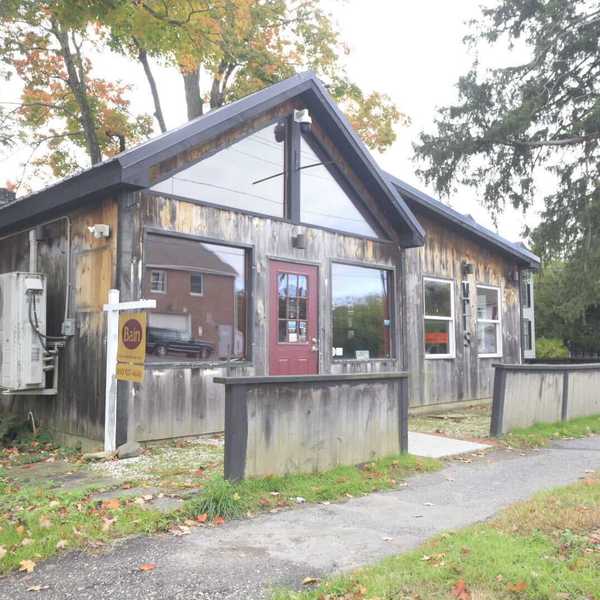
Tri-Corner F.E.E.D. in Millerton.
MILLERTON — Christophe Armero thinks talking about death is a good thing.
That’s why he started a “Death Cafe” at Tri-Corner F.E.E.D., a regular event at the South Center Street store where people are invited to enjoy coffee, cake and casual conversations about death. The next event is scheduled for Wednesday, April 29, at 6 p.m.
Armero described the cafe event as an opportunity for people to freely and openly discuss death with no agenda.
“The more you know about death, the more comfortable you are with death,” Armero said. “The better use you’ll be able to make of your limited life.”
The conversations serve as a form of meditation, Armero said, drawing on the work of Swiss sociologist Bernard Crettaz. Englishman Jon Underwood further developed these ideas in 2010, creating the Death Cafe model and hosting the first event at his home in England in 2011.
Since then, more than 23,000 Death Cafe events have been held across the globe, according to deathcafe.com, including Armero’s first in Millerton on March 25.
Those interested in attending the upcoming Death Cafe event in April at Tri-Corner F.E.E.D. can sign up by searching for “Millerton Death Cafe” on www.eventbrite.com.
Armero said his recent Death Cafe was the first held in Millerton in more than a decade. A series of gatherings took place in 2013 and 2014 at Irving Farm Coffee House on Main Street, with a handful of additional events in nearby Falls Village and Great Barrington in 2019 and 2020. While interest in Death Cafes has grown, offerings remain scarce within 100 miles of Millerton.
Death Cafes aim to get people talking openly about death and dying, Armero said, but are not intended to serve as grief counseling sessions. Participants are encouraged to steer the conversation in whatever direction they feel comfortable — a central tenet of the Death Cafe philosophy, according to the organization’s website.
“There’s no therapist here telling you what to do,” Armero said. “Everyone here is talking from their own experiences and sharing their stories.”
Death Cafe allows individuals to host their own events under its name and list them on the organization’s website, provided they adhere to its guiding principles. Chief among those are that gatherings have no set agenda, remain confidential and include cake.
Armero said he hopes the conversations will draw a diverse group of participants, and by that measure, the first event in March was a success. He said many attendees are facing an anticipated loss and come seeking to better prepare.
“We had young people, middle-aged people and old people at this meeting,” Armero said. “It was pretty cool how we had a little bit of everything.”
While Death Cafes are not therapy, Armero said the conversations can benefit people anticipating a loss, those who have recently experienced one and even those who have not. He added that while the concept may seem morbid, the conversations themselves are not.
“It’s just regular people who want to know about death,” Armero said.
One common topic at Death Cafes is the process of dying, Armero said. What happens to a person under end-of-life care or in hospice is not commonly discussed, he said, leading to increased strife for family members or loved ones watching someone die.
Armero’s Death Cafe is sponsored by Tri-Corner F.E.E.D. and East Mountain House, a Salisbury, Connecticut, based end-of-life care provider that offers an alternative to hospice care.
East Mountain House operates under Buddhist-influenced philosophies that emphasize meditation and encourage regularly reflecting on death, Armero said. He added that his own experience with Buddhism and meditation led him to Death Cafes and has helped him process grief in his own life.
Armero’s first experience with a significant loss came in 2012 when his son died of suicide at age 19. Armero described that loss as a terrible shock that set him down the path of exploring grief and death and eventually becoming a certified bereavement counsellor and running a suicide bereavement support group online with his wife, Jennie Baird.
Armero and Baird, who live in Sharon, Connecticut, now spend their retirement making chocolate under the name Mudgetown Chocolate in Tri-Corner F.E.E.D.’s kitchen on South Center Street and volunteering with community organizations across New York and Connecticut.
Armero is also registered as a death doula, a term that refers to people who guide terminal patients and older people through the final stages of life just before death. Armero considers death to be one of his passions, after more than a decade of studying grief and counselling people through bereavement.
Armero hopes the Death Cafe can promote an appreciation for death, or at least more comfort with it.
“The more aware you are of death, the less it scares you and the better you can deal with it,” Armero said. “Your own and the death of your loved ones.”

Want more of our stories on Google? Click here to make us a Preferred Source.
Jennifer Almquist
The parking lot of The Little Red Barn Brewers in Winsted was full on Wednesday, April 8, as more than 100 people from 43 Connecticut towns — including New Haven and Vernon — arrived carrying personal treasures for a live taping of “Audacious LIVE Show & Tell.”
Chion Wolf, host and producer of Connecticut Public’s “Audacious,” and her crew, led by production manager Maegn Boone, brought the program to the packed brewery for an evening of story-driven conversation and shared keepsakes.
Reflecting on the evening’s spirit, Wolf, a four-time Gracie Award winner from the Alliance for Women in Media Foundation, said: “To me, Audacious — and Connecticut Public — are about making space for people to be fully themselves: curious, vulnerable, weird, honest, all of it. ‘Show & Tell’ feels like that spirit brought to life.”
Attendees clutched mementos — sentimental, unusual and sometimes humorous — hoping for a chance to step onto the small stage and share their stories.
Caroline Christensen of Winsted carried a large conch shell and told the audience about nearly losing her fiancé to a storm tide while he struggled to retrieve the shell she wanted.
Gerry Griswold, a wildlife rehabilitator and educator from White Memorial Conservation Center in Litchfield, brought a Victorian taxidermied pet dog in a glass case.
When Tim Dwyer of Coventry showed a vintage T-shirt featuring “Bill the Cat,” Wolf rolled up her pants leg to reveal a matching cartoon tattoo.
Author Christine Ieronimo drove from Plymouth with a photograph of her late grandmother, Florence De Mario, holding her beauty contest trophy as a young woman, along with the original silver cup engraved with “Interstate Rhode Island and Connecticut Beauty Contest, September 28, 1929.”
The evening blended humor, nostalgia and vulnerability, with food and drinks provided by Nils Johnson, co-founder of the brewery, which has become a lively gathering place in
Winsted.
Jessica Severin de Martinez, Robyn Doyon-Aitken, Meg Fitzgerald and Vanessa de la Torre were also part of the Connecticut Public team that helped produce the event. Connecticut Public is home to Connecticut Public Radio and Connecticut Public Television.
Lucy Nalpathanchil, vice president for community engagement, said the organization hosts “Audacious LIVE Show & Tell” events around the state to connect with residents and reach new audiences.
“We’ve hosted them so far in Winsted, Willimantic, Hartford and Stamford,” Nalpathanchil said.
“If your readers have thoughts about where the next one should be held, they can email ideas to events@ctpublic.org,” she said.
Wolf summed up the night simply: “We held the space, sure, but those who attended made the magic. People walked in as strangers carrying meaningful objects from their lives, and by the end of the night, the room felt warm, open and deeply connected. That’s public radio at its best.”
Sarah Belzer
Marge Parkhurst with a collection of historic nails recovered from wall cavities during restoration work.
Walls still surprise me. If you look hard enough, you can find buried treasure.
— Marge Parkhurst
After nearly 50 years of painting some of Litchfield County’s oldest homes and landmark properties, Marge Parkhurst has developed an eye for the past—reading the clues left behind in stenciled vines, forgotten bottles and newspapers tucked into walls, each revealing a small but vivid piece of Connecticut history.
Parkhurst was stripping wallpaper in a farmhouse in Colebrook — the kind of historic home she has spent decades restoring — when she noticed something odd. Three layers of paper had already come off — each one a different era’s idea of decoration — and beneath them, just barely visible under dull, off-white plaster, a pattern emerged.
“At first it just looked like old paint,” said Parkhurst, who has been painting and restoring historic homes in Litchfield County for decades. “Until I realized it was a stencil, a beautiful pattern that repeated.”
She kept going carefully — a wet sponge, hot water, a little fabric softener — peeling back until she could see it clearly. A climbing vine emerged, applied in vertical runs to give the wall the look of wallpaper. Someone had signed it. The signature was faint, tucked above the baseboard in the corner, not fully legible. But the date was clear: 1870.
Parkhurst, owner of Cottage & Country Painting Co., has worked in enough old houses to develop a practiced eye for what they conceal — understanding that layers of paint, paper and plaster in a 19th-century New England home form a kind of compressed archive of the people who lived there.
The stencil bore a strong resemblance to what historians call Moses Eaton-type stenciling — a tradition of itinerant craftsmen who traveled New England in the early 1800s with portable kits of cut-pattern stencils. Their trade flourished because imported wallpaper was expensive. Stenciling offered the same visual effect at a fraction of the cost.
“These stencilers typically worked for a combination of cash, food and lodging,” Parkhurst said. “Their compensation was modest by any standard.” She paused, “He was a tradesman. But the work he left behind — that’s art.”
The vine pattern was dull with age but still legible. One section had survived intact beneath the layers of paper. The homeowners chose not to paint over it — instead building a wooden frame around it, a small window into 1870.
“Preservation means protecting something to prevent further deterioration,” she said. “Restoration means returning something to a previous state. In that room, we preserved what was there.”

A Station’s Secrets
Not every discovery is decorative. Some are written into the bones of a building.
Parkhurst’s own home in Colebrook is a former railroad outbuilding moved from Canaan in 1920. Scraping the trim revealed it had once been sage green — and beneath that, a warm orange-brown soaked into the wood grain. “Old paint was made more like a stain back in the 1800s,” she said. “It penetrated the wood rather than sitting on top of it — so there’s never a shine.”
Up in the attic, eye bolts still anchored in the framing mark where cables stabilized the building during its move a century ago.
The most memorable find came by accident. Cutting open a wall under the stairs, she found a clear glass bottle sealed with a glass stopper held by a rusted wire. The label read: Hartmann Brewing Co., Bridgeport, Conn. It took days of careful oiling to free the stopper. Inside: a handwritten list of sandwiches and drinks, a postage stamp still attached. Not treasure. But a treasure just the same.
“I worked for days to get that thing open — and it was just somebody’s lunch order.”
Newspapers stuffed into wall cavities, hand-wrought nails, paint layers thin as stain — over 50 years, Parkhurst has cataloged the details that tell a trained eye when a house was built and by whom. Litchfield County’s architecture is unusually varied: Georgian and Federal-style houses on Litchfield’s Main Street, industrial buildings along the rivers in Torrington and Winsted. “Each town has its own fingerprint,” she said.
The most consequential mistake she sees is changing a home’s character. “When you paint over stained woodwork, you hide the details. You can’t get them back.” She has talked more than a few owners out of it. Some have listened.
Not long ago, Parkhurst and her grandchildren gathered a few small objects, wrote a letter and tucked it into a wall of her Colebrook home. Someone will find it — a record of people who were once here.
“Walls still surprise me,” she said. “If you look hard enough, you can find buried treasure.”
In a county full of houses whose walls hold untold stories — stenciled by traveling tradesmen, nailed together by farmers, papered over by housewives following the fashions — Marge Parkhurst has spent a lifetime reminding us that history doesn’t only live in museums. Sometimes it’s hiding just behind the wallpaper.
Sarah Belzer is a writer, editor and creative director whose career has crossed journalism, advertising, film and cultural commentary. Managing Editor of The American Rant and founder of Jump Advertising, she has spent three decades shaping narratives for media and national and global brands. Marge Parkhurst is the owner of Cottage & Country Painting Co. She can be reached at marge@cottageandcountryct.com or 860-379-4748.
Mike Cobb
On Sunday, April 19, at 4 p.m., Close Encounters With Music (CEWM) presents On the Wings of Song at the Mahaiwe Performing Arts Center in Great Barrington.
The program focuses on Robert Schumann’s spellbinding song cycle Dichterliebe (“A Poet’s Love”), a setting of sixteen poems by Heinrich Heine that explores love, longing, and the redemptive power of beauty. Featured artists include John Moore, baritone; Adam Golka, pianist; Miranda Cuckson, viola; and Yehuda Hanani, cello.
In a recent interview, Artistic Director Yehuda Hanani said,“Audience members will bask in the glow of Romanticism at its apex with Robert Schumann, Clara Schumann, Felix Mendelssohn and the poet whose verse underlies their music—Heinrich Heine.‘In beautiful May, when the buds sprang, love sprang up in my heart: in beautiful May, when the birds all sang, I told you my desire and longing.’”
Dichterliebe strips away the distance between singer and listener, capturing the age-old themes of love and betrayal with exquisite sensitivity. Romanticism here is at its most personal and refined.
Heine’s poetry also captivated Felix Mendelssohn, who set several of the poet’s verses to music, including the iconic “On the Wings of Song,” which lends the concert its title. Mendelssohn’s majestic Piano Trio in D minor—one of the towering chamber works of the nineteenth century—completes the program. Radiant, urgent, and expansive, the trio reflects the composer’s unwavering belief in the possibility of a harmonious, enlightened world and the triumph of beauty through music.
“How can you not fall in love with a song cycle about a sorrowful knight that begins with these beguiling sentiments? This is the start of Dichterliebe, or Poet’s Love, Robert Schumann’s musical rendering of Heine’s Lyrical Intermezzo.Alas, like many love stories, it does not end well. Cupids weep and mourn, and the poet packs his love andhis suffering into a coffin that will be thrown into the sea—so heavy that twelve giants must carry it. All the various states of Poet’s Love—a hothouse of responses to flowers, dreams and fairy tales—end in anger, bitterness, resignation and bewilderment. Yet, despite love betrayed, ardent faith in the power of art leads the way to a harmonious and better world. A timely message,” Hanani added.
On the Wings of Song weaves together poetry and music, intimacy and grandeur, offering audiences a rare opportunity to experience Romantic masterpieces in the uniquely close, immersive spirit that defines Close Encounters With Music.
After each performance, audiences are invited to an “Afterglow” reception to meet the artists and mingle with fellow music lovers. Select concerts will also be available online, extending CEWM’s reach to listeners far beyond the Berkshires.
For tickets and information, go to mahaiwe.org

Want more of our stories on Google? Click here to make us a Preferred Source.

Want more of our stories on Google? Click here to make us a Preferred Source.