Thank you!
Your support is sustaining the future of local news in our communities.

Pine Plains school district enlists community members to study future of Cold Spring school

Pine Plains school district enlists community members to study future of Cold Spring school
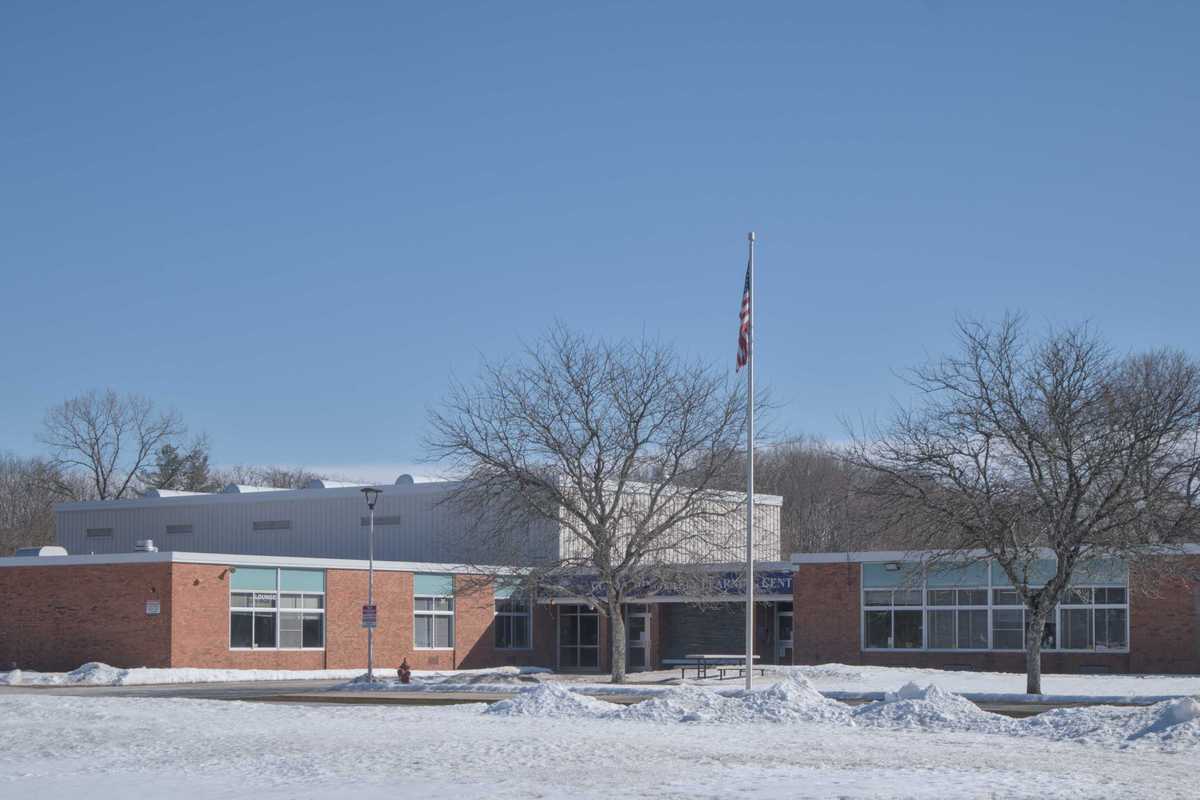
Cold Spring Early Learning Center on Homan Road in Stanford. Pine Plains school district officials proposed closing the building last year citing budget constraints and declining enrollment.
Photo by Nathan Miller

PINE PLAINS — Superintendent Brian Timm explained again why he thinks Cold Spring Early Learning Center should close at a meeting of a newly-formed committee that now has to decide if he’s right.

The Building Utilization Advisory Committee met for the first time on Thursday, March 12, after the Pine Plains Board of Education elected to officially organize the advisory committee at a February meeting. Timm walked members of the committee through the facts and figures he had presented to Town Boards within the school district and the Board of Education itself in previous months.

Timm described a school district contending with declining enrollment, increasing employee healthcare costs and a potential loss in up to $4 million in state funding.

Committee members responded to Timm’s presentation by requesting more data on staffing district-wide, budgetary impacts and the district’s current and projected building utilization.

The district enrolled 791 students this year, down from a peak of nearly 1,500 students in 2002. Despite those declines, instructional staff counts have remained flat — dropping by just three positions over the past six years even as enrollment fell by more than 100 students.

Timm said those figures relate directly to the budget, where payroll and benefits comprise 77% of the district’s expenses. He told committee members that healthcare costs alone are expected to rise more than 10% every year indefinitely — an added burden of more than $1 million annually.

And revenue is threatened, too, Timm said. He said more than 400 of the school districts across New York State are grandfathered into receiving more state aid than entitled to. That’s due to a provision known as “hold harmless” that Timm said Governor Kathy Hochul has previously sought to eliminate. Under hold harmless, the state is barred from ever reducing a school district’s state aid, even if demographic shifts mean the communities no longer qualify for the same level of funding.

Losing hold harmless could cost Pine Plains up to $4 million in lost revenue, Timm said.

“To lose $4 million in one year — or even $2 million in one year — that is extremely, extremely impactful,” Timm said.

Committee members asked Timm to bring several additional datasets to subsequent meetings. He confirmed that additional information on non-instructional staffing figures — including transportation, custodial and kitchen staff and costs — would be included in the next presentation. Timm said he would present a detailed building analysis that examines whether Cold Spring’s population can be absorbed by Seymour Smith Intermediate Learning Center in Pine Plains.

The committee also touched on the district’s longer-term goals for campus buildings, suggesting Seymour Smith may close eventually and all the district’s students may be consolidated into Stissing Mountain Jr./Sr. High School in Pine Plains. Timm said he’s not opposed to developing a long-term plan, but it would have to be in conjunction with a short-term recommendation for action within the next one to two years.

Timm set a September deadline for the committee to deliver a short-term recommendation to the Board of Education — in time to inform next year’s budget process.

“I think we need a short-term plan before we do next year’s budget,” Timm said. “Otherwise we’re going to be in a pretty tough spot.”

The committee’s next meeting date will be Thursday, March 26.

Latest News

Farm & Friends: a holiday market that gives back

The Farm & Friends holiday market returns Nov. 21 and 22, featuring local makers, food producers and seasonal gifts.

Provided

According to PBS, “More than 5 million people have lost their Supplemental Nutrition Assistance Program, or SNAP, benefits since President Trump’s so-called One Big Beautiful Bill passed last year.” Combined with rising costs and new eligibility requirements, these cuts have placed additional pressure on families struggling to make ends meet. As more people turn to food banks and pantries for assistance, local farms are playing an increasingly important role in meeting that need. Hungry Reaper Farm in Morris, for example, supplies food and CSA shares to a variety of nonprofit organizations and schools.

In Dutchess County, The Webatuck Valley Farm Collaborative is working to strengthen the pipeline from farms to foodbanks. Led by Rock Steady Farm, Sweet Freedom Farm and Wildseed Community Farm and Healing Village, the collaborative hopes to double the infrastructure capacity for at least 15 local farms. This will allow them to increase supplies for food pantries and regional schools while expanding the farms’ reach to industrial buyers and distributors. By their estimation, the food hub “will supply and impact 9 school districts, 13 food pantries, and partner with 6 institutional buyers and 8 aggregators and distributors.”

Keep ReadingShow less
google preferred source

Want more of our stories on Google? Click here to make us a Preferred Source.

Under the big top at Full Circus Farm

Under the big top at Full Circus Farm

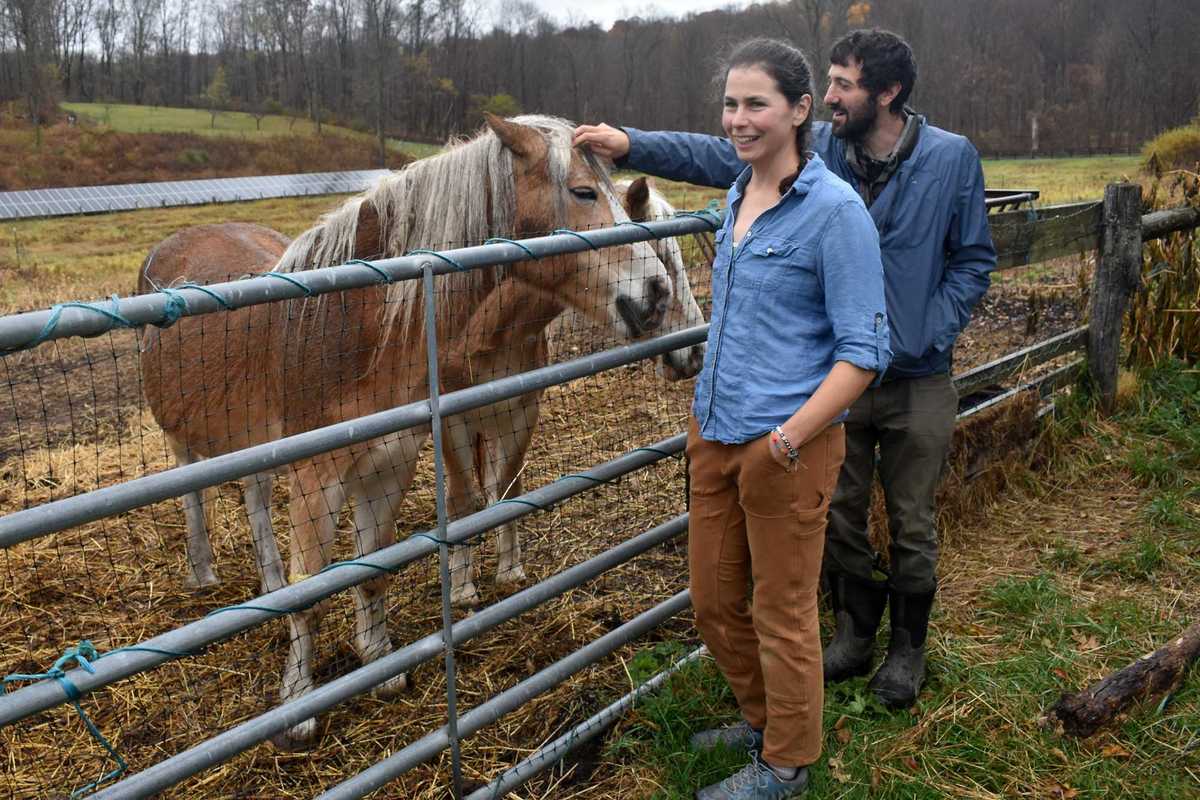
Miriam Goler and Mark Stonehill with their Haflinger horses, Sunshine and Sandy, at Full Circus Farm in Pine Plains.

L. Tomaino

We share this farm with such amazing human and nonhuman neighbors.
— Mark Stonehill

For Mark Stonehill and Miriam Stonehill Goler, the founder of Full Circus Farm in Pine Plains, farming has always been about more than what comes out of the ground.

“From the very beginning, we’ve envisioned the farm as a place not only for food production, but also merriment and community,” they said.

Keep ReadingShow less
At Ancram Center, community takes center stage
Ancram Center staff and teaching artists after the ceremony.From left to right,Simone Stevens, Sarah Katan, Jeffrey Mousseau, Erin Krom and Chris McCoy.
Provided

At the Ancram Center for the Arts, the stage has been host to numerous award winning professional actors, but it also often belongs to a neighbor with a story to tell. Other times, the performance moves out of the theater altogether, transforming a pond, a field or a corner of town into a stage.

That commitment to bringing theater into the community — and the community into the theater — has earned the Ancram Center the Larry Murray Award for Community Outreach and Support through Theater, one of the Berkshire Theatre Critics Association’s annual Berkie Awards.

Keep ReadingShow less
The Cornwall Whale resurfaces in West Cornwall

The Cornwall Whale is the brain-child of visual and experiential designer Lindsay Stadig.

Provided

There’s something oddly familiar yet intangibly foreign about the Cornwall Whale. It’s not an interiors store, even though there are chairs and furnishings for sale. It’s not an art gallery, though there are paintings and sculptures occupying every corner of the space. It’s not a boutique, even with locally handmade shoes and carefully selected garments. No, The Cornwall Whale is something truly unique in the world of the truly unique.

The enigmatic shop popped up in the early winter of 2025 at the Hughes Memorial Library, right on the bank of the Housatonic River in West Cornwall. It is the brain-child of visual and experiential designer Lindsay Stadig.

Keep ReadingShow less
google preferred source

Want more of our stories on Google? Click here to make us a Preferred Source.

google preferred source

Want more of our stories on Google? Click here to make us a Preferred Source.