North East continues review of proposed zoning changes

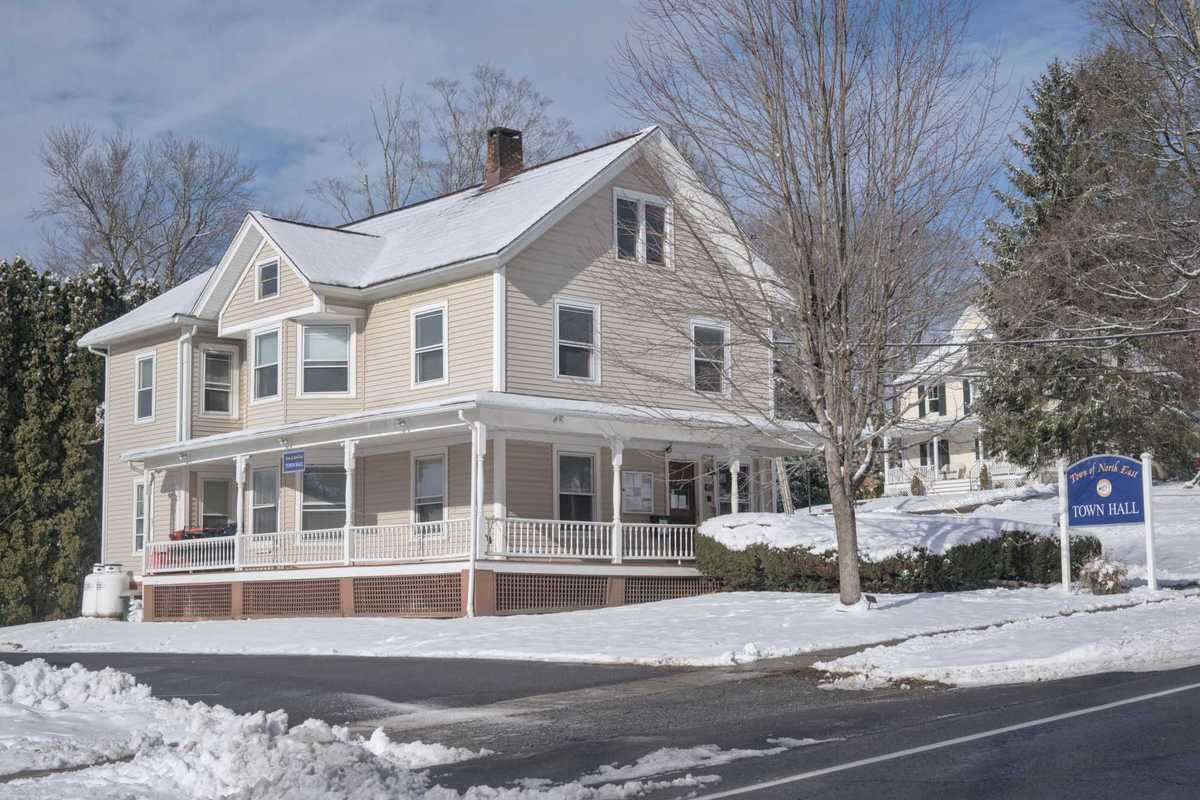
North East Town Hall on Maple Avenue in Millerton.
Photo by Aly Morrissey
North East Town Hall on Maple Avenue in Millerton.
MILLERTON — The lengthy process of reviewing and updating zoning regulations in the Town of North East continued on Tuesday, Aug. 26, as the Board of Supervisors pored over proposed changes in definitions and language for almost two hours at a special board meeting.
The meeting, held at the Annex of the NorthEast-Millerton Library, was another in a series to allow the board to weigh in on the work of the Zoning Review Committee, which by design has focused primarily on the town’s commercial district.
A public hearing eventually will be scheduled to air the proposed changes, which are geared to aligning the current code, which dates to the 1970s, with the vision outlined in the 2019 Comprehensive Plan.
Supervisor Chris Kennan thanked the committee for the work it has done over the past four-plus years and noted that the group of the same six volunteer committee members have met close to 100 times in carrying out their work, led by Edie Greenwood, chair of the Zoning Board of Appeals.
“We’ve been waiting for Warren to go through this,” Kennan said, referring to Town Attorney Warren Replansky, who asked questions of the board and the ZRC, which was present.
“This work likely will have the longest term significance of anything this board would do in its current term,” Kennan said at the outset.
The discussion was driven by Replansky who focused on details of the suggested changes. That included not only what would or would not be allowed under zoning, but also how it is described in the regulation language.
Replansky noted that litigation arising over zoning matters often pivots on language used. Throughout the discussion he suggested tweaks to wording that would clarify intent.
For example, “what is the definition of public infrastructure?” he asked. Sidewalks should be included as an example, and all agreed.
Board member Meg Winkler noted that the proposed language calls for “no more than 12 outdoor seats” for outdoor dining. “Maybe we should allow for up to 20 or leave it to a decision of the Planning Board,” she said.There seemed to be consensus on that point.
There were seemingly countless points to deliberate: What is the definition of a golf course? And the definition of a hotel? What is the intent in not allowing motels? Junkyards are not permitted, period. What about food trucks? It was agreed to look at the regulations of the Village of Millerton covering food trucks with an eye to possibly adopt them.
The group was asked “What is the definition of a medical clinic?” And also, whether to use “affordable housing” or “workforce housing,” and there seemed to be consensus to use “affordable” but include “also known as ‘workforce’ housing.”
During public comment, Ed Downey, a member of the ZRC, encouraged the board to continue to use the word “affordable” because “in our community the needs are spread across a lot of different sectors. It’s not just people in the workforce.” He cited retirees as an example.
The board ran out of the allotted time and will take up discussion of the proposed changes at the next board meeting on Sept. 11.
Downey also took the opportunity to appreciate the fact that this is the 40th year that Warren Replansky has advised the town, noting the attorney’s experience in zoning matters.
“We’re a very fortunate town,” he said.
The board reviewed a proposed three-year IT contract with Professional Computer Associates. Town Supervisor Chris Kennan stressed the need for an exit clause, and Town Attorney Replansky will review the language before a vote on Sept. 11.
Finally, the applicant for the proposed country inn has revised his application, clarifying plans are limited to agri-tourism, not hotel development. The board signaled it wants to move forward quickly, with a decision expected Sept. 11 after legal and zoning review.
Nathan Miller

Wassaic-based cannabis grower Douglas Broughton in his basement greenhouse at his home on Old Route 22 on Sunday, May 17.
MILLERTON — A cannabis dispensary planned for Main Street is facing lengthy delays that the Wassaic-based grower behind the project attributed to bureaucracy at the Office of Cannabis Management.
Doug Broughton, who operates a commercial cannabis farm at his home on Old Route 22 in Wassaic, plans to open a retail wing of his licensed cannabis microbusiness at 32 Main St. in downtown Millerton. Broughton first announced the plans earlier this year, targeting March and April openings that were later pushed back
He now hopes to open the shop in early summer, but said he can’t peg a specific date due to delays at New York State’s Office of Cannabis Management.
Broughton attributes sluggish administration at OCM to interference from larger cannabis businesses. Those businesses, he said, consume much of the agency’s time and resources, creating delays that can place significant financial strain on smaller microbusinesses like his own.
He said selling his cannabis wholesale to retailers has been keeping him afloat as he pays $1,800 per month on rent for the space on Millerton’s Main Street. Despite that, he’s confident the quality of his products and his shop will make up for the wait once it’s over.
“We have a lot of options and we can be very competitive,” Broughton said, adding he believes his cannabis is of a higher quality and better value than larger, corporate producers. “They threw huge amounts of money into bullying their way into a market and now nobody wants their weed.”
Broughton’s business has also faced other challenges. Rising fuel and commodity prices due to the Trump administration’s conflict with Iran have increased shipping costs, cutting into Broughton’s wholesale profits.
Those price hikes hit Broughton in multiple ways, affecting the cost to purchase packaging for his cannabis and the cost to ship it to retailers.
“I just got containers. I ordered a year ago and the shipping cost would be $2.50,” Broughton said. “Now, it was $6.50.”
The situation isn’t dire, though. Standing in his basement greenhouse in his Wassaic home, Broughton explained that he’s only utilizing just over one-tenth of his legally allowed grow area.
Under OCM regulations, licensed microbusinesses such as Broughton’s are allowed up to 5,000 square feet of mixed-light growing space, his preferred growing method.
Mixed-light growing means Broughton uses a combination of artificial and natural light to grow his cannabis plants. He said he exercises scientific precision over his crops, manipulating artificial light color, humidity levels, nutrients and temperature to ensure his ideal product.
Broughton said he uses just over 600 square feet of his allotted growing space currently, so the business has plenty of room to expand to cover rising costs. But Broughton encouraged proponents of small business and legal cannabis to write to state officials about the effects of long licensing periods on small businesses.
“If people want to get this open, write a letter,” Broughton said. “I’m wholesaling still. It’ll be fine, but I’m excited to get it open.”
Graham Corrigan

Millbrook Vineyards & Winery’s winemaker Ian Bearup surveys ongoing landscaping work from the wedding loft on Monday, May 18.
MILLBROOK — The owners of Millbrook Vineyards & Winery are changing how visitors may use their property, ending a longtime policy that allowed guests to bring their own food, beverages and lawn chairs onto the vineyard grounds.
The changes come as the winery introduces new seating areas, expanded food offerings and updated visitor accommodations ahead of the summer season.
To support the shift away from open lawn-style seating, the winery is installing several designated seating areas across the property. A newly created adults-only patio will feature Adirondack chairs, private tables and sofa seating available for a small table fee that has not yet been finalized. Guests will also be able to reserve tables in advance, though walk-ins will still be welcome.
Additional picnic tables are also being added to the winery’s existing all-ages seating area.
Weekend food trucks are scheduled to return beginning June 1, but they will now be supplemented by expanded local food offerings inside the winery’s renovated tap room space, now renamed The Overlook. Local producers, including Millbrook Beef & Dairy and Chaseholm Farm, will offer cheese, charcuterie and prepared foods.
“We want to reinvigorate the brand,” said Ian Bearup, a winemaker at the vineyards.
The changes come during a period of broader transition for the wine industry, which has seen declining consumption levels following a pandemic-era surge, according to the International Organisation of Vine and Wine. Owner John Dyson recently reduced his stake in a California winery to refocus on Millbrook.
Millbrook’s winemaker Bearup said the renewed focus on Millbrook Vineyards & Winery exemplifies Dyson’s commitment to his hometown. “We take a lot of pride in still keeping agriculture in Dutchess County,” Bearup said. “This pullback has forced us to ask, how can we change things? And how can we still stay authentic to who we are, which is really just a family farm winery.”
Bearup acknowledged some visitors may be unhappy with the changes, but said growing crowds have made it increasingly difficult to manage the property during busy weekends.
“It’s gotten difficult for us to oversee the grounds during busy weekends,” Bearup said. “There’s a lot of liability. There’s a lot of garbage, and the grounds get quite beat up.”
The winery said visitors will still have access to the property’s ponds, trails and vineyard views, but the new seating arrangements are intended to better organize crowds and reduce wear on the grounds.
“We’re already hearing from a lot of upset people, which I completely understand,” Bearup said. “But we can’t operate this business as a park anymore, unfortunately.”
Graham Corrigan
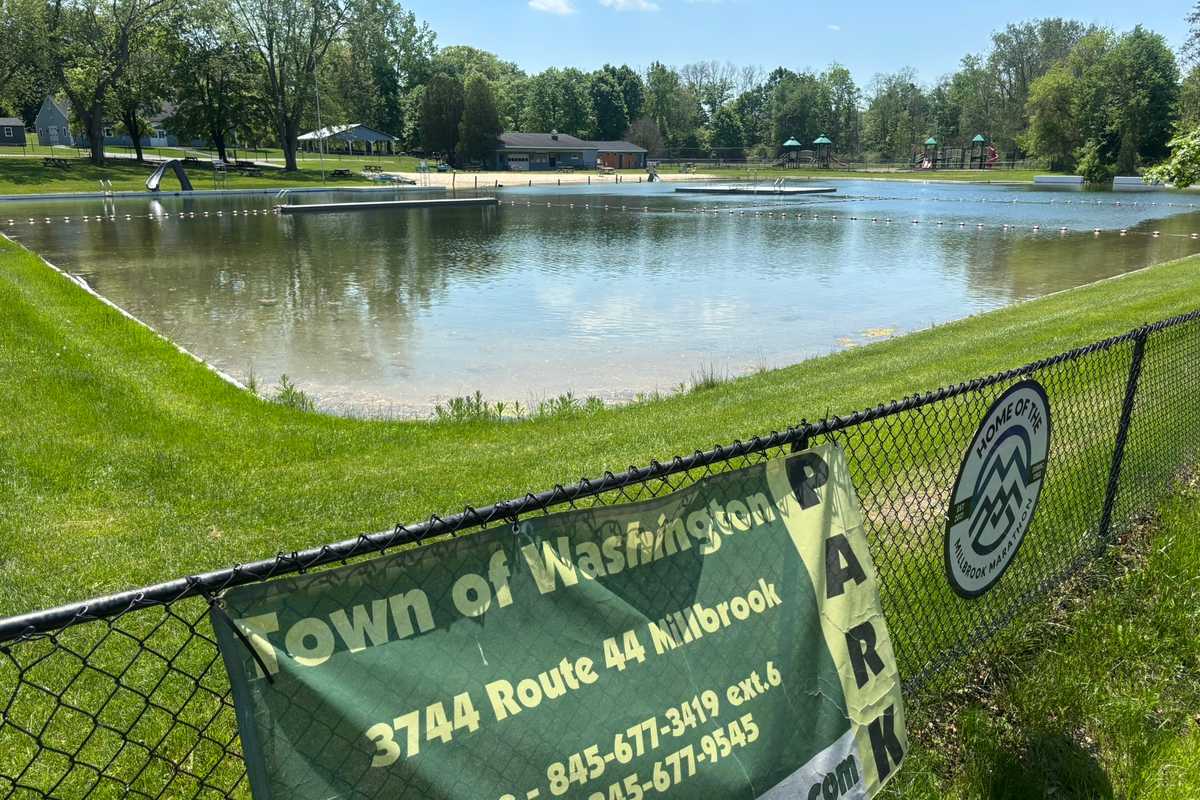
The Washington town pool in the hamlet of Mabbetsville along Route 44 sits ready for the start of the 2026 season.
MILLBROOK — Members of the Washington Town Board are calling for upgrades to the town’s recreation area in Mabbetsville along Route 44, saying the park’s roughly 80-year-old pool is outdated and increasingly difficult to maintain.
Former Washington Councilmember Mike Murphy presented a new report to the Town Board during its regular meeting on Wednesday, May 13, detailing the needed updates to the park.
His report is part of a larger Washington project called the Recreation Area Strategic Planning Committee. Starting in 2024, Murphy and a committee of 11 community members undertook a comprehensive evaluation of the property, focusing on the town pool and its facilities. “It’s nobody’s fault,” Murphy said. “But over the years, it’s just aged out.”
The committee was made up of various community experts including contractors and environmentalists. The group used last year’s Community Day to field suggestions from local residents, asking what changes they’d like to see at the park.
An online survey followed, and the committee compiled those suggestions for the town board. Suggestions included indoor facilities, a children’s playground, a dog park and pool improvements.
The Town Park consists of the pool and several athletic fields. The town bought the lower part of the property in 1946 for $16,000, and it became a municipal pool soon after. The athletic fields were added in 2006.
The 29 acres “are a jewel within the town,” Murphy said. “We need to figure out how to get people to use it.” But the pool’s aging infrastructure has made maintenance and upkeep unwieldy. It also lacks modern amenities popular in other municipal pools, like splash pads or fountains. Millerton and Newburgh, Murphy noted, both included those elements in their new pool plans.
Washington has more serious fixes to make, like updating the pool’s filtration system. One estimate Murphy received approximated that cost at six figures. “The tax structure of this community will never be able to handle the major costs that are coming down the road,” Murphy said.
Instead, the Committee to Re-Imagine the Town Park proposed several non-structural ways to stimulate the park’s activity, and resulting revenue: extended hours, a third pavilion, more athletic facilities, and an easier way to access the park.
Currently, there’s only one way in or out of the park. It makes for a crowded drop-off — especially when summer camp is in session. Murphy said connecting the park’s entrance to Little Rest Road to the west is one feasible solution.

Want more of our stories on Google? Click here to make us a Preferred Source.
Nathan Miller
A Life Flight medical helicopter carried a man to Westchester Medical Center after he sustained injuries to his foot caused by lawn mower blades.
MILLERTON — A man was flown by helicopter to a regional hospital Friday after a lawn mower caused injuries to his foot.
New York State Police troopers arrived at 43 Scenic View Drive in the Scenic View trailer park at 3:15 p.m. on Friday, May 15, after a 52-year-old man had gotten his foot stuck in the blades of his lawn mower.
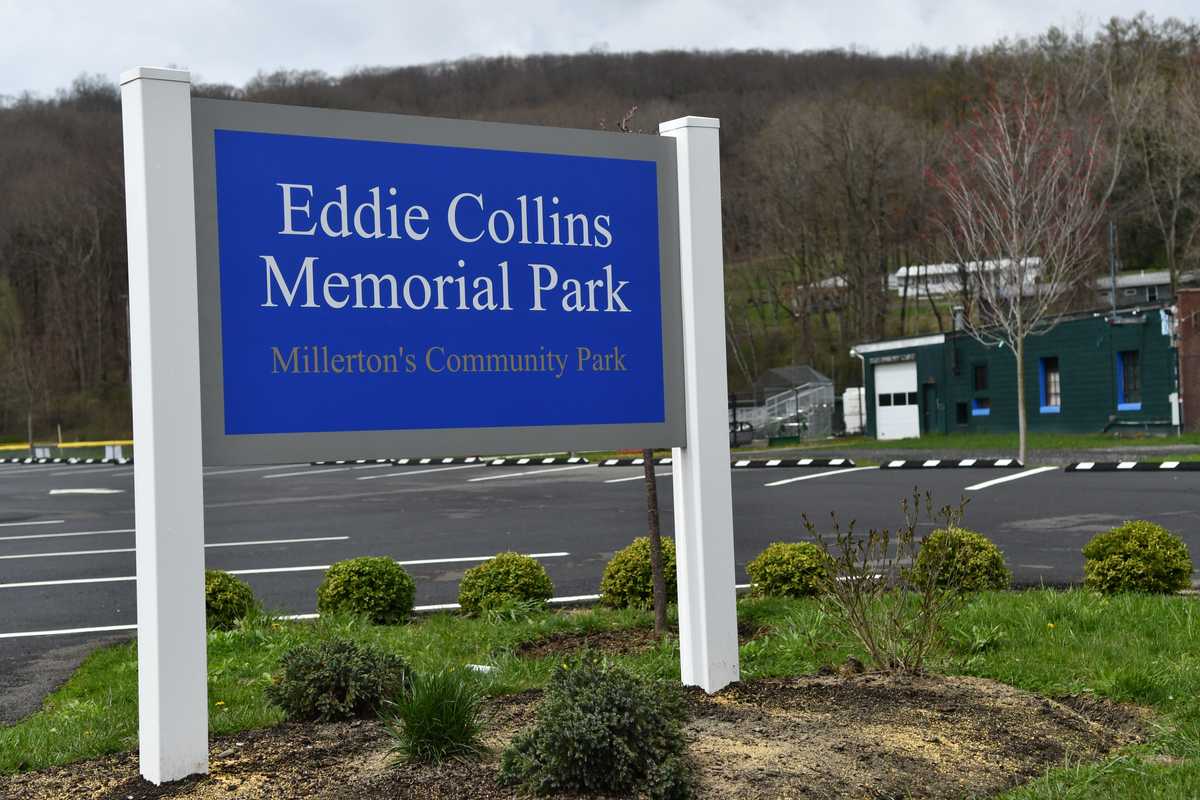
A police spokesperson said the man sustained serious injuries. A helicopter operated by private ambulance company Life Flight landed in Eddie Collins Memorial Park to transport the man.
He was taken to Westchester Medical Center for treatment. The man’s identity and current conditions are unknown as of press time.
Leila Hawken

Enhancing educational opportunities for students in the Millbrook Central School District since 2001, the Millbrook Educational Foundation took part in the Millbrook Volunteer Fair on Saturday, May 16. Residents were invited to learn about volunteer opportunities with the foundation and a variety of other local and regional organizations. The event, now in its fifth year, was held at the Millbrook Library.
Christine Bates
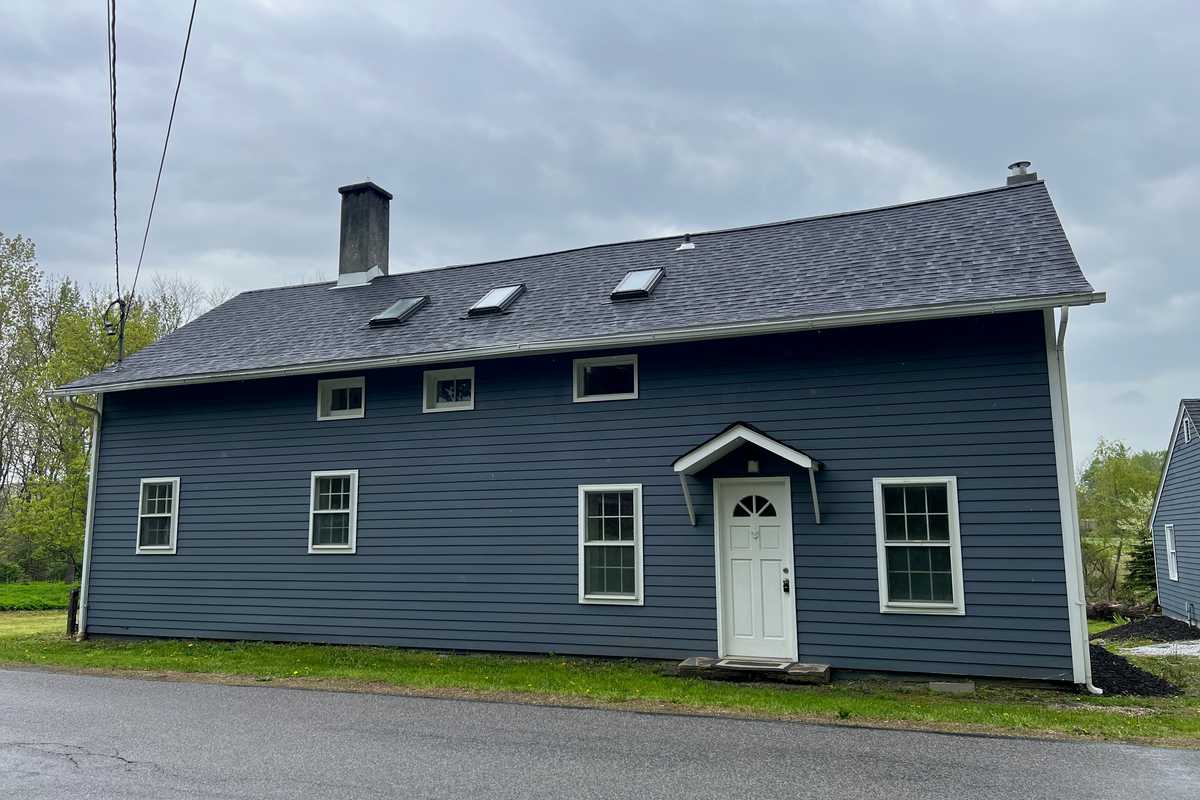
Known as the “Ice House,” 12 State Line Road on 3.81 acres was sold by the mortgage holder after standing vacant for years. The property was later renovated and resold for $400,000 on April 15.
MILLERTON — North East’s housing market continued to cool this spring, with home prices holding relatively steady and sales activity slowing compared with the post-pandemic surge that drove prices sharply higher across the region.
The 12-month trailing median sale price for residential properties in the Town of North East, including the Village of Millerton, was $420,000 for the period from May 1, 2025, through April 30, 2026. That figure remained essentially unchanged month-to-month, but marked the second consecutive year of declining annual median prices.
The residential median includes all types of housing sales — from modest village homes to large estates with significant acreage — but excludes commercial properties and vacant land sales. Among the higher-end transactions during the period was the sale of 5-15 Homestead Lane for $3.1 million.
Outside the village, where homes are generally situated on larger parcels, the median sale price reached $575,000. Within the Village of Millerton, where lots are typically smaller, the median price for the 10 homes sold during the period was $410,000.
The townwide median price of $420,000 was down 2% from the $430,000 median recorded during the 12-month period ending April 30, 2025. It was also 4% below the median recorded the year before that, continuing a gradual market slowdown following the price increases seen during and immediately after the COVID-19 pandemic.
Sales activity has also slowed considerably. North East recorded 24 residential transactions on a trailing 12-month basis at the end of April, down from 37 sales during the previous year.
Housing inventory showed modest improvement entering the spring market. In early May, 14 homes were listed for sale in North East, including four properties with asking prices above $1 million. Among them was the Hudson Valley Magazine “design home,” listed for $3.99 million.
Only two residential properties were listed for sale within the Village of Millerton in early May. Meanwhile, four commercial properties remained on the market in the village, along with eight parcels of vacant land throughout the town.
Town of North East March and April property sales
710 Smithfield Road — 23.89 acres were sold on April 20 for $190,000.
26 South Center St. —An investment property in the Village of Millerton was sold on April 15 for $700,000.
12 State Line Road — 3 bedroom/2 bath renovated home on 3.8 acres sold on April 15 for $400,000.
5-15 Homestead Lane — 3 bedroom/2 bath home built in 1950 on 258 acres sold on March 27 for $3.1 million.
Town of North East and Village of Millerton closed sales for March and April from realtor.com with property details from Dutchess Parcel Access. Median price and activity calculations for all residential properties from NY State Sales Web transfers through February 2026 with updated residential sales for March and April. Current market data from One Key MLS. Compiled by Christine Bates, Real Estate Advisor with William Pitt Sotheby’s International Realty, Licensed in Connecticut and New York.
Want more of our stories on Google? Click here to make us a Preferred Source.
Want more of our stories on Google? Click here to make us a Preferred Source.