All around the world, companies — mainly non-global petroleum companies — are turning to high tech to develop sustainable fuels.
What exactly are sustainable fuels, since we all know you cannot get something for nothing?
I think a better definition for “sustainable” when it comes to oil production and products is “minimal impact” or “balanced impact.” And sometimes a small country desperately worried that every square inch of their environment is connected to what production spews out turns to high tech to resolve the issue of balance. Such is the case in Switzerland.
The only thing Switzerland gets for free is sunlight — and they are looking to make carbon-neutral (remember my definition of balanced impact?) aviation fuel using sunlight.
A Swiss startup, heavily funded by Swiss Airlines and Lufthansa, backed by one of the world’s best tech universities in Zurich (ETH), is called Synhelion. An obvious name for what they are planning to make: fuel for jets from sunlight.
Now, here’s the thing, they will start production next year and by the end of the decade they will be producing 230 million gallons from the one plant. There has already been ground-breaking for a duplicate plant in Spain, with more to come.
Their process works like this: Solar radiation is reflected by a mirror field and concentrated onto a receiver on a tower where it creates temperatures of 2,730 Fahrenheit.
The solar heat is then fed into a thermos-chemical reactor that converts water and collected atmospheric CO2 gas into syngas.
Then, using the established Fischer-Tropsch process, that gas is converted into liquid kerosene (also known as jet fuel).
Now, here’s the clever part of their process: They have measured, in testing, that the amount of CO2 released when you burn their jet fuel — and it is exactly the same amount of CO2 they remove from the atmosphere to make the fuel.
Like I said, balanced impact. Oh, and the price? Within 5% of existing jet fuel — 5% cheaper. The big petroleum companies are keeping a watchful eye.
In case you are wondering how a small country like Switzerland can have such good engineers, it’s all about education.
Being neutral, they can spend far more of their GNP on schools and education. And, yes, they make some very special tools and components.
Did you know, for example, that only a Swiss team of welders can maintain the turbines at the bottom of the Hoover dam?
They have superior technical know-how to allow them to reweld the turning shafts of those turbines without having to stop them.
Education pays.
Peter Riva, a former resident of Amenia Union, now resides in New Mexico.






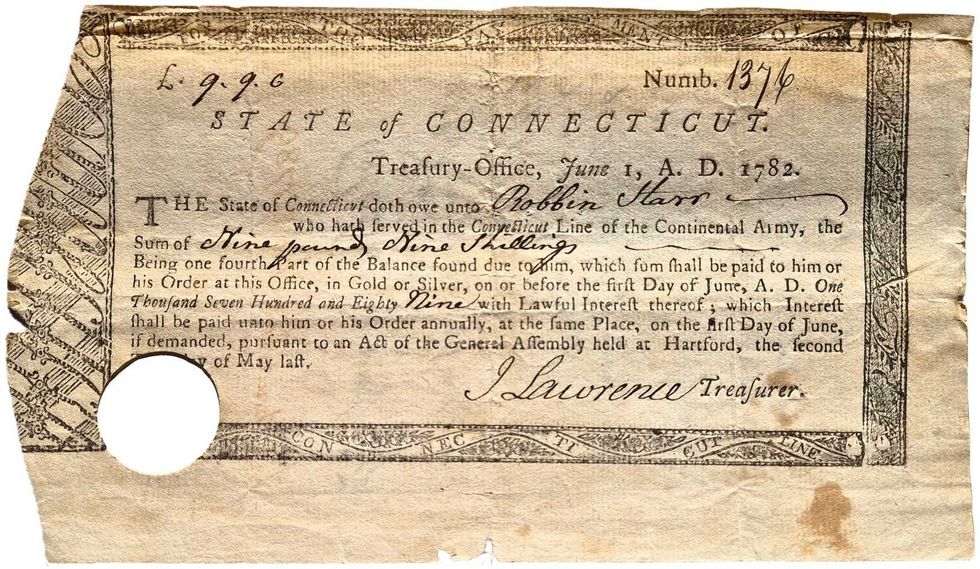 Pay Bill for Robin Starr’s service in the Continental Army.Courtesy the Alex Breanne Corporation
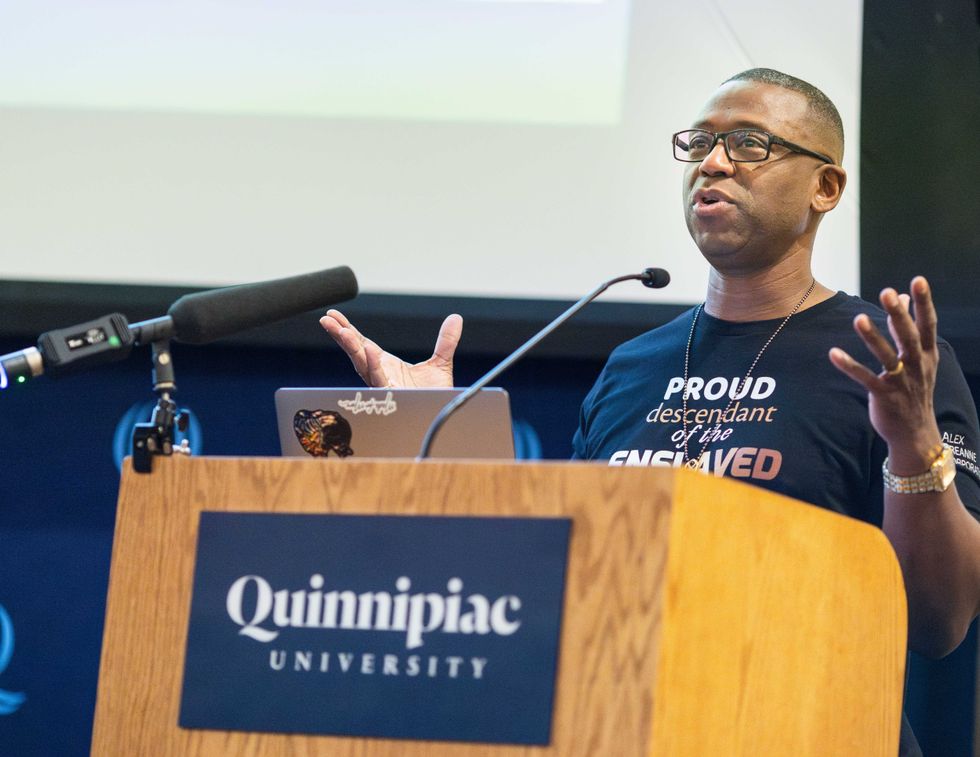 John Mills speaking at Quinnipiac University.Courtesy the Alex Breanne Corporation
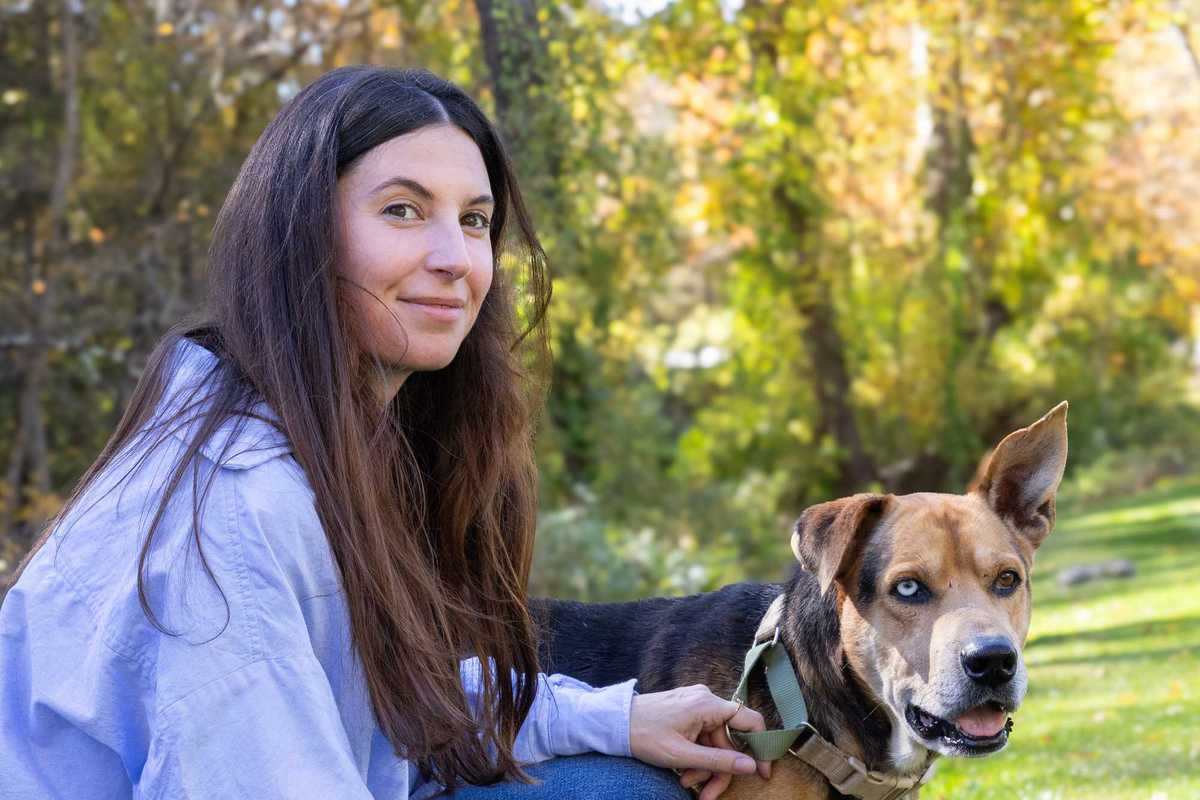
 Stephanie Saetta,with her rescue dog George and Blue (left), a shepherd mix awaiting his forever home.Madi Long