

MILLERTON — The Village of Millerton board of trustees held a special meeting on Wednesday, May 21 that drew an unusually large crowd. Nearly 20 residents and supporters showed up to urge officials to adopt a local law aimed at protecting immigrants, including undocumented community members.
The law, as proposed by meeting attendees, would limit cooperation between local law enforcement and U.S. Immigration and Customs Enforcement.
While no resolution was reached, Mayor Jenn Najdek agreed to schedule a follow-up special meeting where the public can speak with Village legal counsel and explore the proposal in a more practical, informed setting. The yet-to-be scheduled meeting is expected to take place sometime in June, according to Najdek.
The meeting addressed ongoing ICE activity in the Hudson Valley and throughout the country, primarily reports of arrests made without judicial warrants and alleged misidentifications. Millerton’s police department, which operates on a limited, part-time basis, is not typically involved in immigration enforcement, but residents said clear local guidelines are necessary before an event or arrest occurs.
“Our village has a moral imperative to do everything in its power to protect the rights and dignity of immigrants who live and work in our community,” said Barbara Graham, a Millerton resident of 14 years.
Graham spearheaded an email to Mayor Najdek and the Village board that to get on the Board’s agenda. Co-signed by six Millerton residents and 11 supporters, the letter urged the board to “affirm its commitment to justice, constitutional rights, and community trust.”
Wearing a homemade lapel pin that read, “Well-being for all beings,” Graham read aloud from the group’s letter. Najdek then opened the floor for public comment.
“I don’t think anybody here is asking the Village to tell the police how to do their job,” said Bill Kish of the Town of North East. “What we’re asking is that the Village provide clear guidance in the form of local law…that unless a judicial warrant is provided, the police will not use any of their resources to help.”
Eliot Ramos, a Village resident, added, “Newcomer or lifelong local, adopting a law that bars our police from collaborating with ICE is an act of partnership and moral leadership that honors due process.”
Trustees and community members alike noted the limited effect a law of this nature might have at the local level. Still, the response from meeting attendees was unanimous. Andres Vialpando, who said he was born and raised in Millerton, noted a law would carry weight even as a symbolic gesture.
“I’d be proud to say that my village is standing up for what I would call good and healthy laws,” Vialpando said. “I support this initiative, even if it seems like, at some level, it could be unnecessary.”
Though the discussion was scheduled for 15 minutes, it continued for nearly an hour. Following public comment, Najdek, the four Village trustees and Police Chief Joseph Olenik addressed the concerns.
They noted the cost of legal consultation — estimated at $5,000 according to Najdek — could strain an already tight budget. Officials also noted the potential repercussions of adopting such a law, including the loss of federal funding for infrastructure projects like sidewalks and sewer upgrades.
“We’re doing our work, applying for grants, applying for funding, getting projects completed,” said Najdek. “My concern is that we’re putting a spotlight on us that could impact funding over the next five years. It’s a real concern for a village of our size.”
Throughout the meeting, questions arose about the legal interplay between local, state and federal jurisdictions. Residents pressed for specifics about what would happen if ICE entered the village. Chief Olenik offered a limited response.
“At this point in time, I would be assisting them,” he said. “I wouldn’t be making the arrests, but I would be assisting them with whatever they would need us to do as Village PD.”
He added that he would not hinder an investigation or withhold information from the State Police, the Sheriff’s Office or ICE.
Weighing the risks and rewards of pursuing such a law, Najdek responded emotionally: “I want to do my job. I want to keep my head down. I want to do the right thing for the Village the best I can.”
Other items addressed during the special meeting included the approval of $99,498.99 in vouchers from April and May; the delivery and acceptance of department reports; approval of previous meeting minutes; and a discussion of Express Bill Pay, a new software system that will allow residents to pay utility bills online by credit card or e-check.






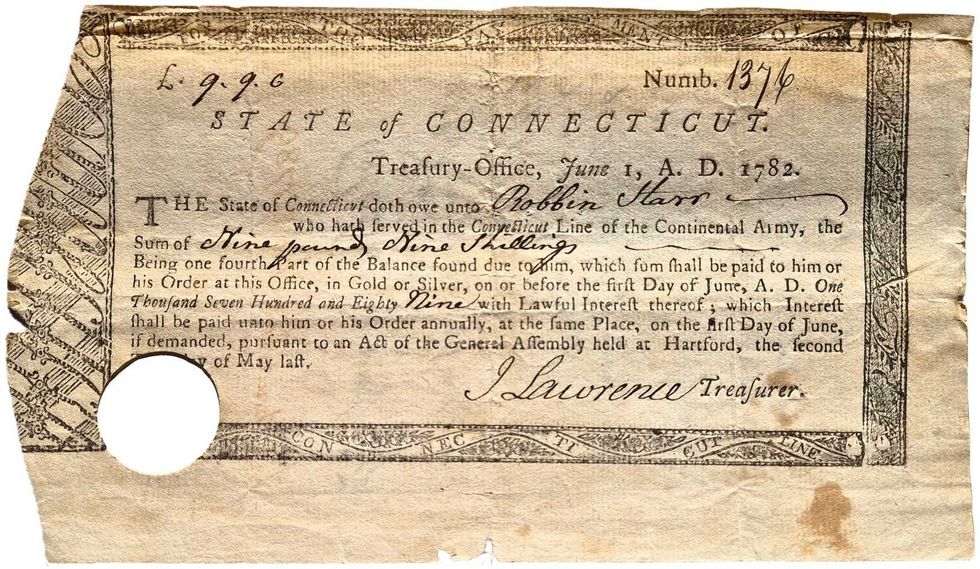 Pay Bill for Robin Starr’s service in the Continental Army.Courtesy the Alex Breanne Corporation
 John Mills speaking at Quinnipiac University.Courtesy the Alex Breanne Corporation

 Stephanie Saetta,with her rescue dog George and Blue (left), a shepherd mix awaiting his forever home.Madi Long


Village Trustees hear call to adopt law to limit local cooperation with ICE
Barbara Graham of Millerton speaks to Village trustees, Mayor Jenn Najdek and Millerton Police Chief Joseph Olenik during a May 21 special meeting.