This May, approximately 385 years after Dutch noble houses, their scullery maids and footmen alike, rushed greedily to acquire the prized perennials, Salisbury, Conn., had its own little burst of tulip mania.
The 17th-century fever (and fall) for these flowers has been styled as a metaphor for every kind of asset bubble in the 20th and 21st century — from the subprime mortgage boom to the tizzy for cryptocurrency and NFTs.
But setting speculative markets aside, it’s easy to see why the tulip and its painterly petals, independent of economic theory, has captured the imagination for centuries, held dear by famed florists and Flemish Baroque masters like Jan Davidsz de Heem.
So it’s no wonder that, when English gardener and Salisbury, Conn., resident Pom Shillingford started her first floral business venture, she made cut tulips the star opening offer.
English Garden Grown, Shillingford’s locally cultivated, cut-stem service offers something unique for a growing number of subscribers: a perfect eight weeks of decor-ready flowers that look like you grew them yourself.
Shillingford teamed up with Matt Sheehan, a farmer who lives in Sharon, Conn., and Brooklyn, N.Y., and is the husband of “The Vintage Baker” cookbook author Jessie Sheehan. Together, they set out to provide subscribers with a month of weekly buckets of fresh tulips, followed by four weeks of peony buckets.
Fellow Brit (and the executive chef and co-owner of The White Hart Inn) Annie Wayte was so smitten with the blossoms that she sold English Garden Grown extras at Provisions at The White Hart in Salisbury.
Sitting in her pale petal-pink kitchen on Salisbury’s Main Street in early June, Shillingford, tall and slender, infectiously gregarious and effortlessly chic in summer chinos and flip-flops, traced all of her botanical inspiration to her childhood. She’s lived in Salisbury with her husband, David, and their three children since 2012, but grew up in Hampshire — yes, the same Southeast English countryside county that Jane Austen called home. Her mother was a gardener and her grandmothers were gardeners.
“I didn’t even know you could buy flowers at a store until my late teens,” Shillingford recalled with a laugh. With so much growing in everyone’s yard, what was the need? And the floral styling of the day? It was all about Constance Spry, who designed the arrangements for the wedding of Wallis Simpson to the Duke of Windsor — and for Queen Elizabeth II’s coronation.
Having spent her youth surrounded cozily by farm-fresh flowers, Shillingford was shocked when she moved from Hampshire to London.
“Everyone used this company called Interflora to send these horrendous arrangements: stiff, stark, scentless, with no character. Roses and rigid irises and all that floral foam. Flown-in from who knows where — unsustainable and environmentally devastating …”
Surrounded by her four dogs — two grown black Labradors, an excitable black puppy, and a lone, grande dame pug — Shillingford elaborated on her goal of filling her subscribers’ homes with quintessentially English arrangements (no American zinnias here!) that were timely for the season and completely locally grown. No easy job in the short New England season.
“I get on Instagram, and in February in England, the daffodils are coming up, the crocuses, the hellebores, everything is blooming and gorgeous and green. And here in the states we wait, and we wait, and we wait …”
With the spring slip this year from bitter mud-and-frost to blistering heat, Shillingford and Sheehan felt the slam of the East Coast’s extreme climate shifts.
“The first week in June was really the first time I felt on top of my garden, but by then the tulips are gone, alliums are done, peonies are half over. We’re heading into the end of the summer by July.”
Her biggest help in the project came from a winter online course during the pandemic held by Floret Flower Farm in Washington State’s Skagit Valley.
Shillingford patriotically maintains that no American has fully captured the British style when it comes to garden design and floral decorating. But it was Floret’s Erin Benzakein who inspired the launch of English Garden Grown.
Benzakein, who is as well-known to flowerheads as Martha Stewart is to household DIY fans, is famous for her bursting, color-focused blooms and ethical sustainability in her farming.
Still, Shillingford’s heart belongs to the Brits. Among her heroes is Arthur Parkinson, the 20-something, social media, new generation successor to the grand tradition of English gardening — who struck up an unlikely letter-writing friendship as a child with the youngest Mitford sister, the Dowager Duchess of Devonshire.
The gardens of Chatsworth House, the late Duchess’s home in the Derbyshire Dales, is the luxurious daydream for many growers, Brit and Anglophile alike — Shillingford included. Although, “Debo,” as she was known in the Mitford clan, had her own detractors.
As she wrote in her 2010 memoir, “Wait For Me!,” “I was proud of the new border … planted with clashing bright-red plants and a few orange flowers — a startling antidote to the pastel colors favored by garden designers. I took Cecil [Beaton] to see it. ‘It’s awful!’ he bleated. ‘It’s a retina irritant.’”
Even among the tastemakers, there’s no accounting for taste. So if tightly twisted tea roses are the thing for you, that leaves more wildly arranged, and wildly captivating, buckets of tulips for the rest of us.
To learn more about English Garden Grown and to get on the subscription list for the 2022 spring season, follow @english_garden_grown on Instagram.
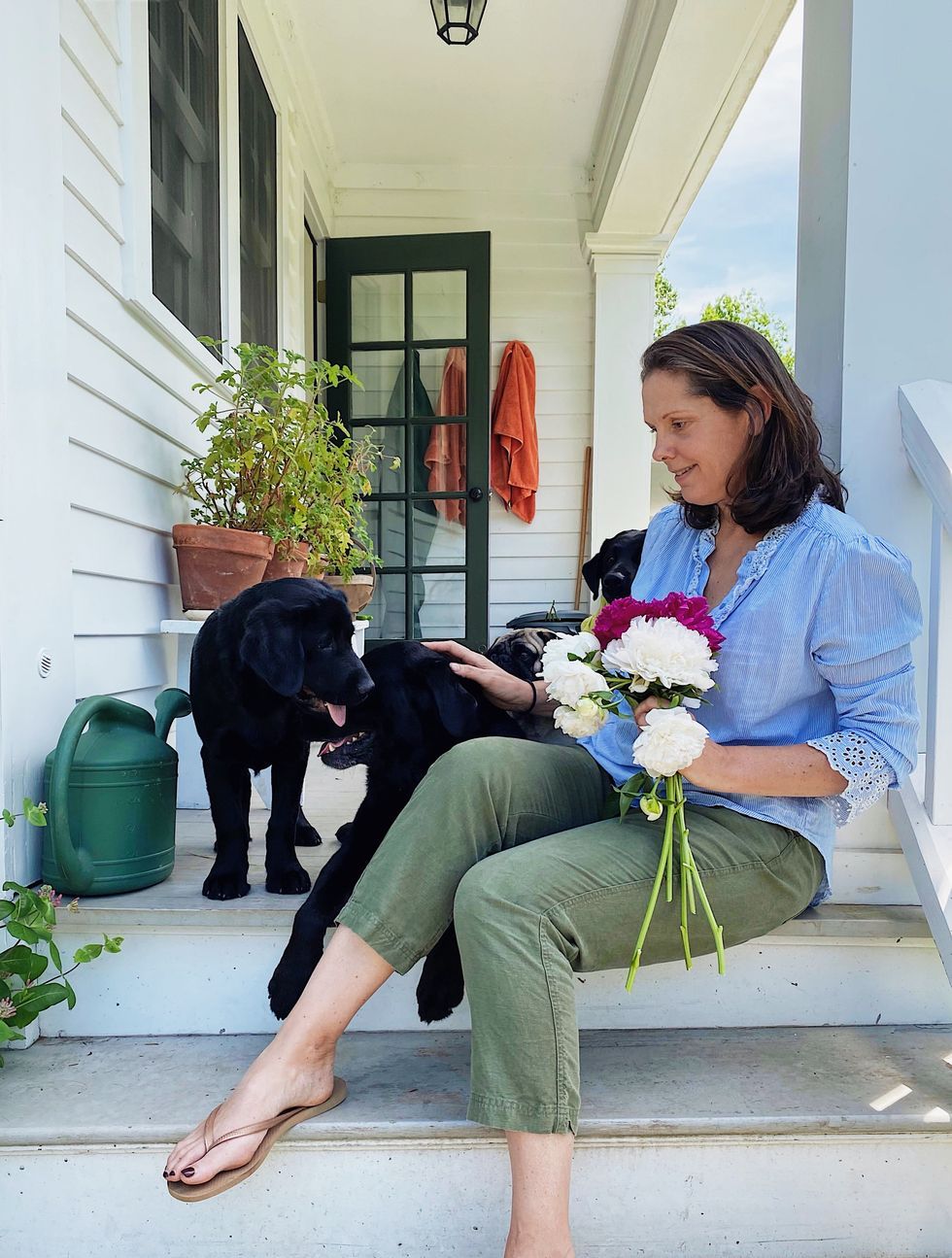
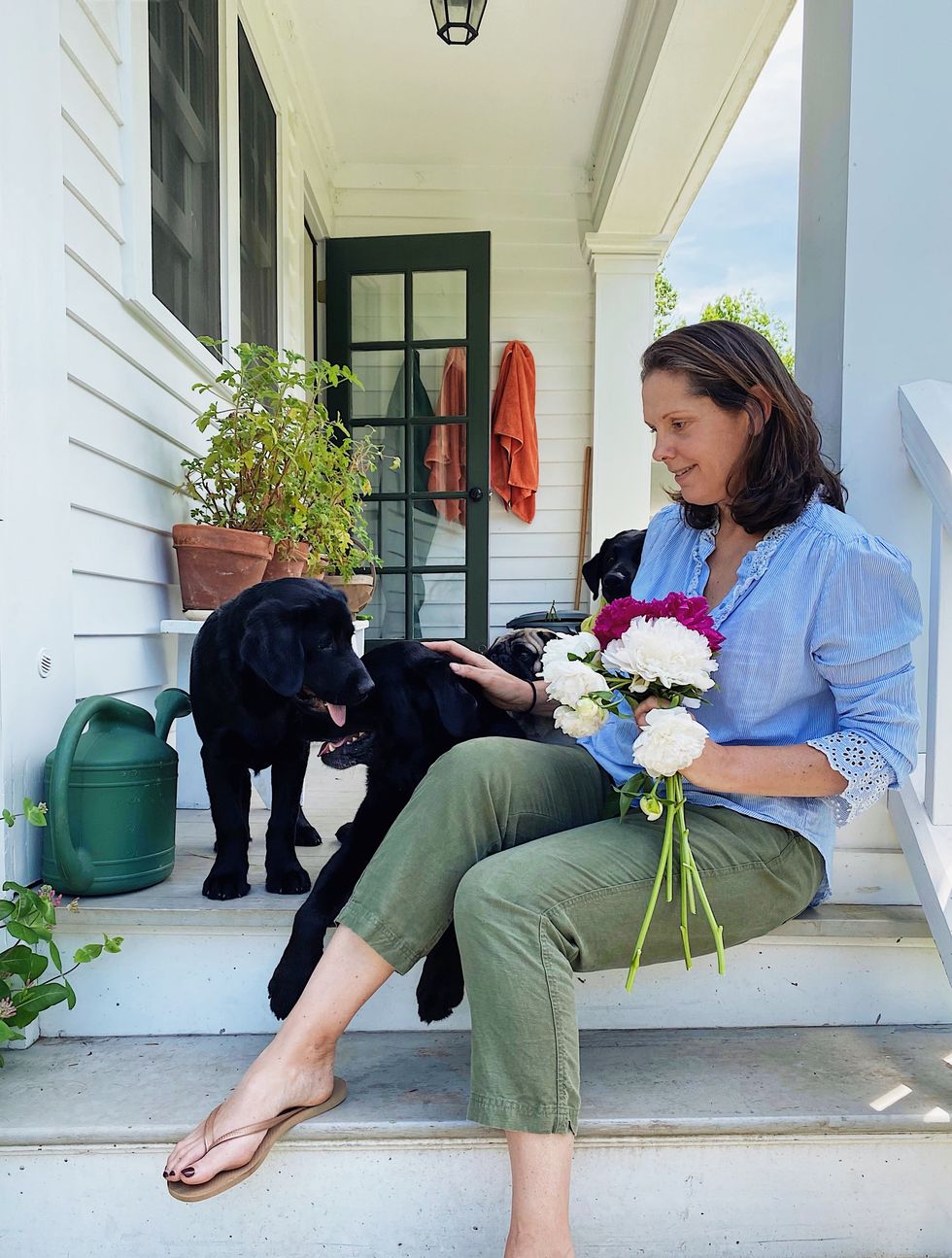
Pom Shillingford brings a love of all things English (including dogs, gardening and cricket) to her life in Litchfield County, Conn. Photo by Alexander Wilburn
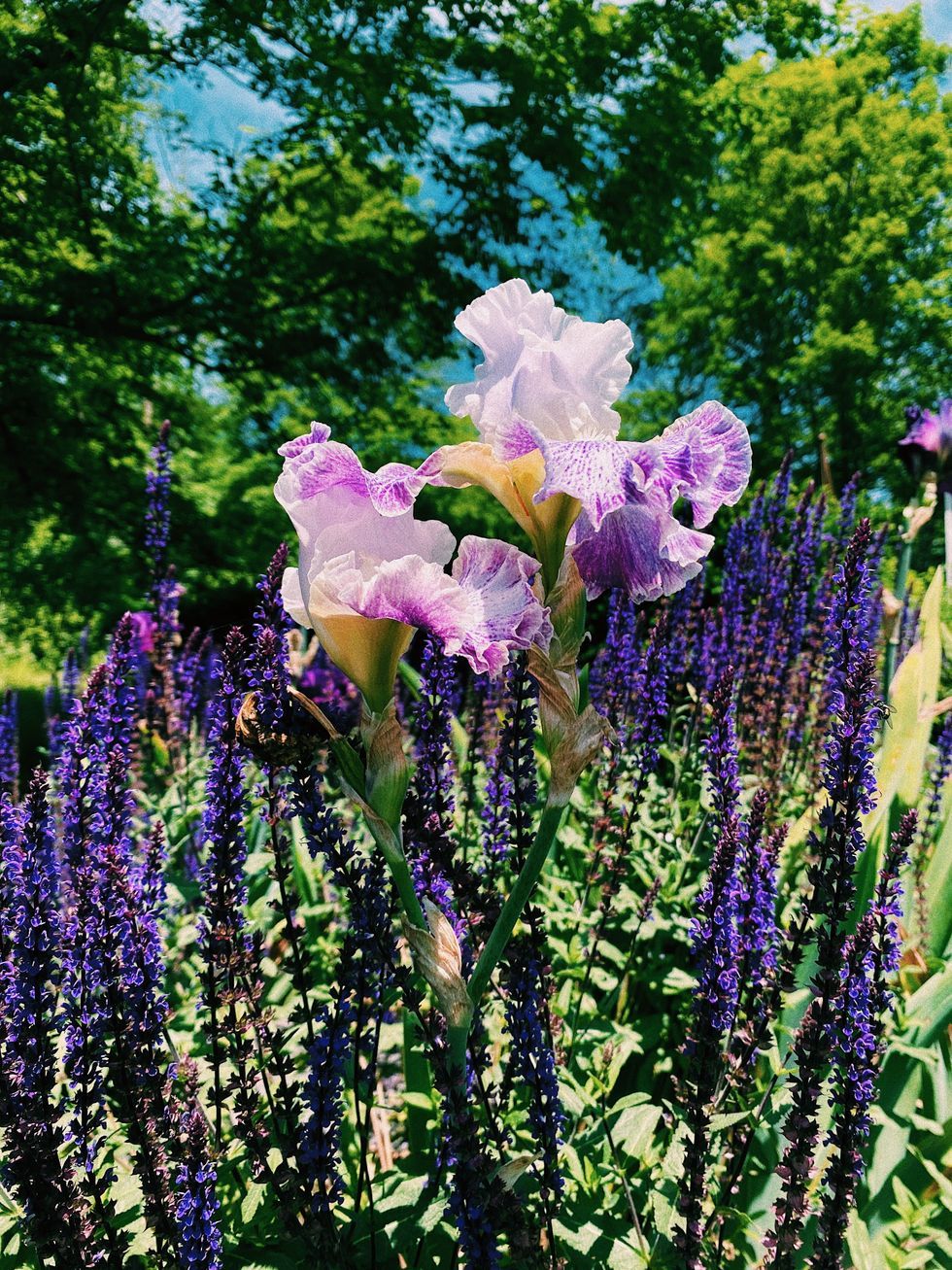
Pom Shillingford is producing luscious blooms and selling them through her new company, English Garden Grown. Photo by Alexander Wilburn






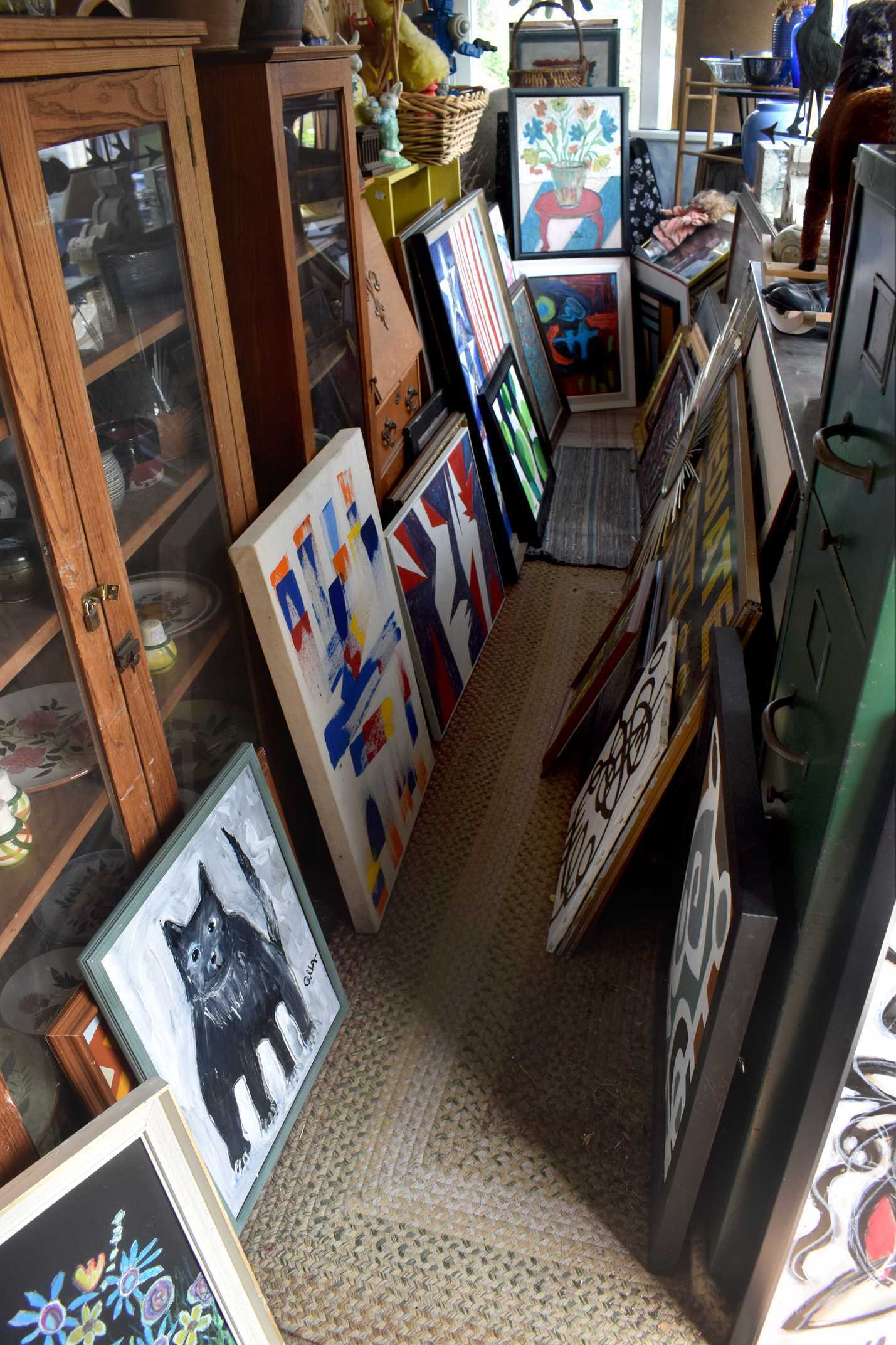 Cella’s paintings are tucked in almost every available space thoughout Little Store Antiques. L. Tomaino

 Jerron Paxton & Nora Brown at Oldtone Music Festival in 2025.Reed Shuzts