Bringing Du Bois home: a tribute in bronze

Sculptor Richard Blake in his studio at work on his sculpture of W.E.B. Du Bois.
Provided


Sculptor Richard Blake in his studio at work on his sculpture of W.E.B. Du Bois.
“I believe in Liberty for all men: the space to stretch their arms and their souls, the right to breathe and the right to vote, the freedom to choose their friends, enjoy the sunshine, and ride on the railroads, uncursed by color; thinking, dreaming, working as they will in a kingdom of beauty and love.” —W.E.B. Du Bois
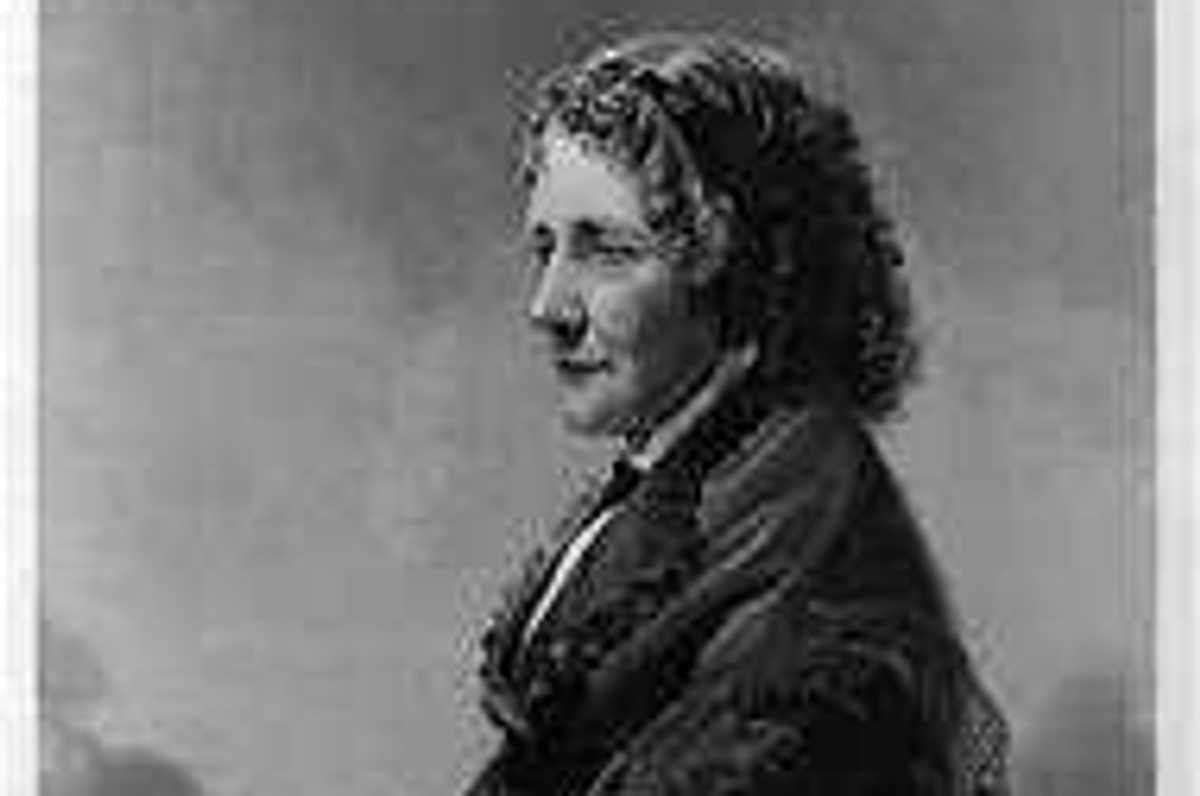
On Saturday, July 19, a life-sized bronze sculpture of W.E.B. Du Bois will be unveiled at 2 p.m. in front of the Mason Public Library on Main Street in Du Bois’ hometown of Great Barrington, Massachusetts.
All are welcome to attend this free public event, the highlight of a weekend-long celebration. Speakers include former Massachusetts Governor Deval Patrick, Pulitzer-prize winning biographer of Du Bois David Levering Lewis, ,\and Imari K. Paris Jeffries from Embrace Boston whose mission is, “To dismantle structural racism through our work at the intersection of arts, culture, community, research and policy.”
William Edward Burghardt Du Bois, arguably the father of the civil rights movement in America, was one of the founders of the NAACP, the nation’s oldest civil rights organization, in 1909. The first Black American to earn a Ph.D. from Harvard University, he was a ground-breaking sociologist, and author of sixteen books, including his 1903 series of essays, “The Souls of Black Folk.” He graduated from Searles High School in Great Barrington in 1884. The community of the local Congregational Church, next to the Mason Public Library, supported the boy’s early education.
The arc of his life was extraordinary, from young Willie Du Bois working at the Great Barrington A&P, matriculating at Fisk University and Harvard, receiving the Lenin Peace Prize, having a national holiday celebrated on his birthday in China, to his death in his adopted country of Ghana, the day of the 1963 March on Washington. News of his death elicited a moment of silence from the 260,000 gathered near the Lincoln Memorial.
DuBois attended The Amenia Conference of 1916 and 1933, early meetings of the NAACP at Troutbeck. DuBois wrote: “The Amenia Conference was a symbol. Because of our meeting, the Negro race was more united and more ready to meet the problems of the world than it could have been without these beautiful days of understanding. How appropriate so tremendous a thing should take place in so much quiet and beauty there at Troutbeck, a place of poets and fishermen, of dreamers and farmers. Those who write the history of how the American Negro became a man must not forget this landmark event.”
Artist Richard Blake, recipient of the National Sculpture Society’s Medal of Honor, created the bronze sculpture that will sit centrally on a curving Sheffield marble bench in the redesigned library plaza. Blake reflected, “My public sculptures commemorate social activism and those who have fought for social justice. I want to shed light on overlooked American heroes.”
“This moment represents years of dedication from many people,” said Ari Zorn, co-chair of the W.E.B. Du Bois Sculpture Project. “We are bringing Dr. Du Bois home in a way that invites everyone to sit with him, reflect with him, and carry forward his legacy. This sculpture isn’t just a monument — it’s a space for justice, remembrance, and stewardship.”
July weekend events include two programs hosted by Chesterwood, the historic home of sculptor Daniel Chester French, plus the fourth annual Du Bois Forum Roundtable at Jacob’s Pillow. The Unveiling Ceremony includes music featuring Wanda Houston, Gina Coleman, and the Randall Martin Band, with a performance of the Black National anthem, “Lift Every Voice and Sing,” a song used as a rallying cry during the Civil Rights Movement of the 1950s and 1960s.
Martin Luther King, Jr., an admirer of Du Bois, honored him in a speech at Carnegie Hall, “Du Bois the man needs to be remembered today when despair is all too prevalent. His love and faith in Negroes permeate every sentence of his writings and every act of his life.”
More information is available online at webduboissculpture.org
Ralph Fedele sits at a desk in the historic Irondale Schoolhouse, which he led the effort to relocate to downtown Millerton.
MILLERTON — After serving for 12 years on the North East Town Board, Ralph Fedele says he has only one regret.
“I wish I could be called a ‘local,’” he joked with a warm, booming laugh.
Fedele moved to Millerton from New York City 37 years ago, in 1988, and has since worn many hats — volunteer, historian, advocate, elected official — yet he still doesn’t believe he’s earned that title.
“I’m a transplant,” he said matter of factly. “I’m from the city.”
Before settling in Millerton, Fedele spent 25 years working in merchandising at JCPenney.
His roots, however, trace back to Rhinebeck, where he grew up on a 97-acre farm and enjoyed what he describes as an idyllic childhood.
“It was marvelous,” he said, with a twinkle of nostalgia in his eyes. As a boy, he climbed apple trees, spent hours in the family barn’s hayloft, played with neighbors until sunset, and helped his Sicilian grandmother — his nonna — in the garden. Today, Fedele wears her ring. “Any time I’m a little depressed or I want to remember,” he said, “I can talk to her.”
Growing up with an Italian grandmother sparked a lifelong love of history and culture. That curiosity eventually took Fedele to Italy, where he visited the church in which his grandmother was baptized. “Because I love history so much, I wanted to know where my grandmother was from, so I traveled to her village in Sicily.”
Along the way, he uncovered another piece of family history. His great-grandfather, Giovanni Nicolini, was a noted Italian sculptor whose work still stands outside Palermo’s Teatro Massimo, the largest opera house in Italy. Fedele later made a pilgrimage there and photographed his ancestor’s name on the bronze plaque outside of the theater.

The Irondale Schoolhouse
Years after settling in Millerton full time, Fedele was driving north on Route 22 when he spotted an old, classic building and couldn’t stop thinking about it.
“It was in dire straits,” he recalled. “Right on the road, but beautiful. I remember thinking, ‘Wouldn’t that be a great building to move into the village?’”
That moment would eventually turn into Fedele’s lasting legacy.
He left his post at the North East Historical Society to found Friends of the Irondale Schoolhouse, leading an eight-year effort to “move, restore, and repurpose the building.”
Supervisor Chris Kennan said the project remains inseparable from Fedele’s name. “Every time I pass by the Schoolhouse, I think of Ralph,” Kennan said. “It was his vision and persistence that enabled this dream to become a reality.”
Fedele joked that people may have thought he was crazy during the lengthy restoration. “I was a tyrant,” he said with a laugh. “I really made sure that we were able to get it done.” The effort required coordination with the state, the county, village and town officials, and his newly assembled nonprofit board.
As a self-proclaimed history buff, Fedele didn’t stop at the restoration. He found a list of students in old records and did what any determined historian would do. He opened the telephone book and started making calls.
Eventually, he tracked down one of the schoolhouse’s original students — Mary (Mechare) Leitch — who, at the age of 101, returned to the building after renovations were complete.
“It was a marvelous time,” smiled Fedele. “I was so happy to see her.”
‘Trust is earned’
Today, even though he won’t call himself a local, Fedele is a familiar fixture in town. You can find him each week enjoying conversation and a cup of coffee at Talk of the Town Deli, or getting stopped in town by neighbors and friends for a chat.
“I have gained the trust and confidence of a lot of people,” Fedele said. “It comes a little bit at a time. Trust is earned.”
Not only has Fedele served as a town board member, he has volunteered for Townscape and served as the president of the North East Historical Society. He was also one of the first advocates of preserving history by fixing toppled gravestones at the Spencer’s Corners Burying Ground.
His service was formally recognized at his final Town Board meeting through a resolution commending his three four-year terms as councilman, citing his “good humor, kindness to all and deep concern for the community’s senior citizens and for those living on fixed incomes.”
An emotional Fedele addressed the room with a mantra he often repeats. “When you leave, leave this place a little bit better than you found it,” he said. “That’s what I have always tried to do.”
Neighbors react
During the public comment, several residents stood to thank Fedele.
Claire Goodman, a member of the village Zoning Board of Appeals and Townscape volunteer, said Fedele was among the first to welcome her to Millerton.
“Whether we’re standing out in the cold, scrubbing tombstones at Spencer’s Corners, or ringing the bell at the schoolhouse, you always have such grace and you’re such a gentleman.” She added, “The way you laugh, it opens my heart.”
Kathy Chow, who serves on the Conservation Advisory Council and the Climate Smart Task Force, referred to Fedele as a “pitbull,” adding, “We all have hard things that we do, and we keep pushing at it, but you’re the one who makes me think I can keep going.”
Fedele describes his retirement from the town board as bittersweet. “I’m going to miss this,” he said. “I really am.”
Mad Rose Gallery on Route 44 in the Village of Millerton is decked out with lights and decorations to celebrate the holiday season.
MILLERTON — The Village of Millerton is inviting residents and businesses to enter its annual house decorating contest, with judging now underway through Dec. 28.
Awards will be presented in several categories, including Best Lights, Most Creative, Best Overall and Best Commercial Front.
Entries will be evaluated by a panel of judges using established criteria. Creativity will be judged based on originality, variety of materials used and the use of homemade vs. commercially made decorations. Appearance will consider color coordination, balance and overall attractiveness, while effort will reflect the time and energy put into preparation and presentation.
Judging will be conducted by drive-by observation between 6 p.m. and 11 p.m., and displays must be clearly visible from the street side of the house at night. People and pets may not be included as part of the design.
Winners in each category will receive a gift basket, gift certificates and recognition in The Millerton News. Awards will be distributed on Friday, Jan. 9, 2026.
The contest is open to residents and businesses in the Village of Millerton and the Town of North East. Entry forms can be obtained from Village Hall or at villageofmillerton-ny.gov.