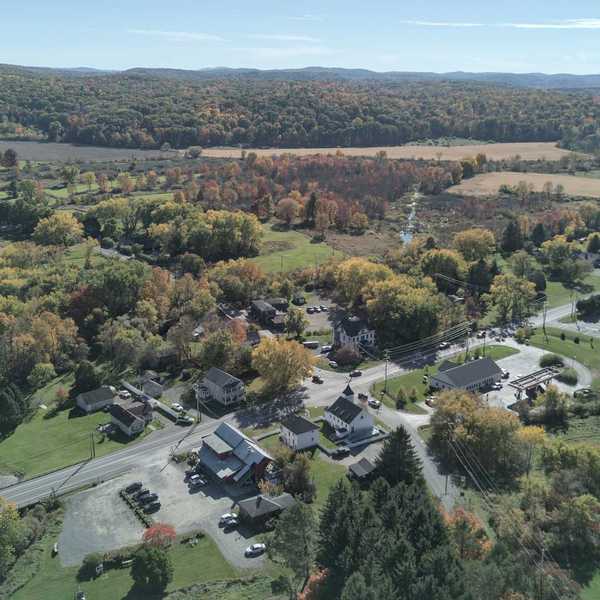
AMENIA — After waiting patiently for Town Engineer John Andrews’ report, the Town Board was informed as to how much it would cost to upgrade the Lavelle Road pump house and generator at the board meeting held on Thursday, March 18, at 7 p.m.
Though he identified himself as a New York State licensed engineer and highlighted his years of service as engineer to the Amenia Planning Board, Andrews said this was the first time he’s worked on a water district issue. He explained he was asked to do a quick evaluation of the Lavelle Road pump station, which he described as a small, wood frame pumping station located at the end of Lavelle Road in the middle of the town’s water system. He also said that the pump house contains controls for two wells on the town property surrounding the structure.
After doing an evaluation of the site, Andrews said it became evident that there are some issues with the structure and its inside components. Along with describing that section of Lavelle Road as low and wet, he mentioned the pump house contains a chlorination system, one well and all the controls for the two wells inside the structure. As a consequence, he said there’s a high degree of both moisture and corrosion. With water pumping stations — especially ones associated with chlorine — Andrews said there’s a great deal of moisture involved, he said all the small electrical contacts and equipment inside the pump house structure are highly vulnerable to corrosion.
Andrews talked about how replacing the station in kind with certain other improvements was considered as an option. In replacing the current structure, he said the town would have to build a bigger building that would need a minimum of two separate rooms inside, one of which would keep all the electrical and water components away from the chlorine components. Other factors to be considered include removing the well that’s physically located inside the existing pump house structure and installing a chlorine contact tank to treat the water.
Though he didn’t conduct an evaluation of the entire water system, Andrews said he included a section in his cost estimate regarding potential alternatives and considered that replacing the entire pump house is “not in the overall best interest of the system as a whole.”
Andrews said it might be more prudent for the town to look at its overall water system. Given the amount of money the town wants to spend on the pump house upgrade, Andrews suggested it might be better to evaluate other places to spend money, perhaps using it to improve the station instead of replacing it.
In conducting a construction cost estimate that included the replacement of the existing pump house, Andrews said preliminary estimates said it has to be a 15-by-15 foot structure; he recommended both precast concrete for the structure and installing a chlorine contact tank. Other related costs included the costs of well improvements; demolition and removal; electric services; and shifting the water system to the replacement structure.
While the total construction cost was calculated at $236,670, Andrews reminded the board of the added percentages added to construction costs, such as engineering design approval, water operator and legal costs. Altogether, he said the net project comes to $336,000 for the replacement of the current 8-by-10 foot building.
Recommending that the board sit down and come up with alternative avenues for an expenditure of this size, Andrews suggested, as one option, that the town might be able to drill two new wells, take the existing wells offline and perhaps spend less than $336,000.
“I think what the board needs to do is take this under advisement, consider whether it’s prudent, and perhaps authorize a little more detailed study to see what the options to simple replacement are,” Andrews said, “and I think that’s a better expenditure of time and effort.”
When asked by town Supervisor Victoria Perotti for recommendations, Andrews said he typically works with the environmental engineering company Leggette, Brashears & Graham, Inc., which previously served as the hydrogeologists for Silo Ridge Field Club’s water supply; he offered to reach out to the company to get a proposal regrading well drilling for the board.









 Meg Sher, executive director of the David M. Hunt Library in Falls Village.L. Tomaino