Amenia Town Board approves 470-acre Wassaic trails project

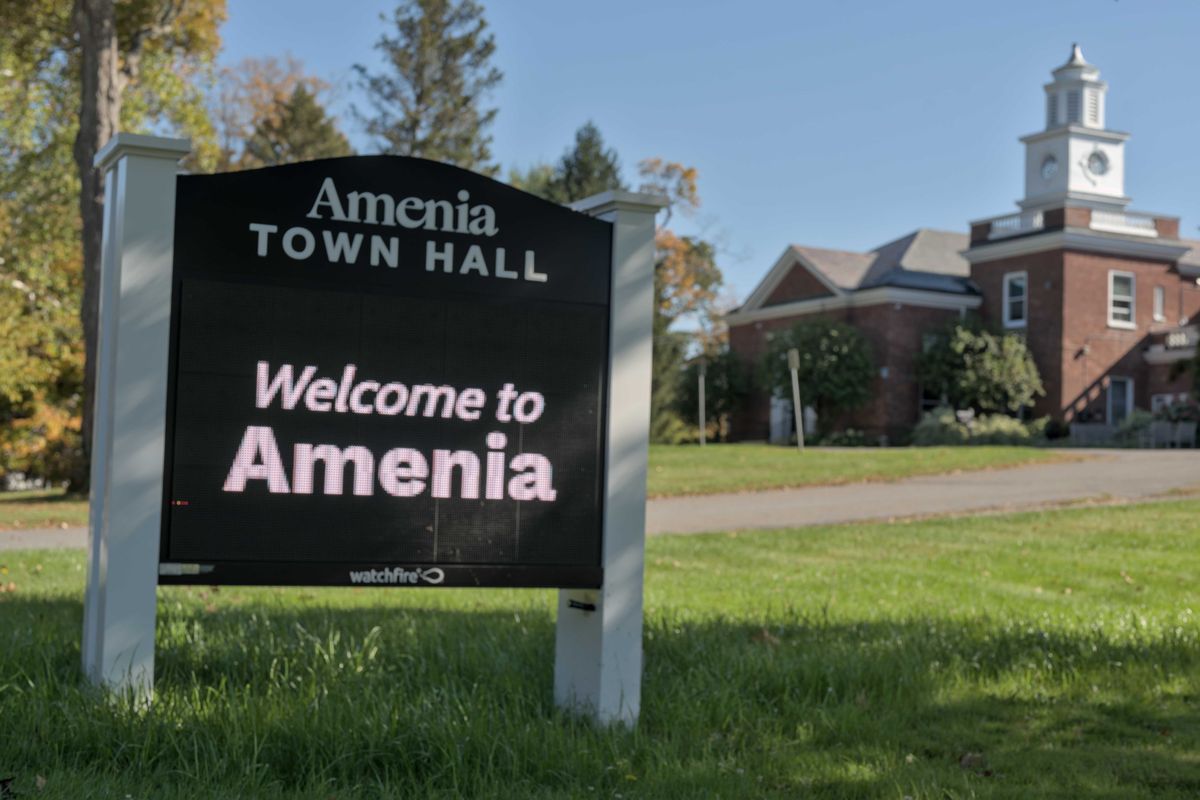
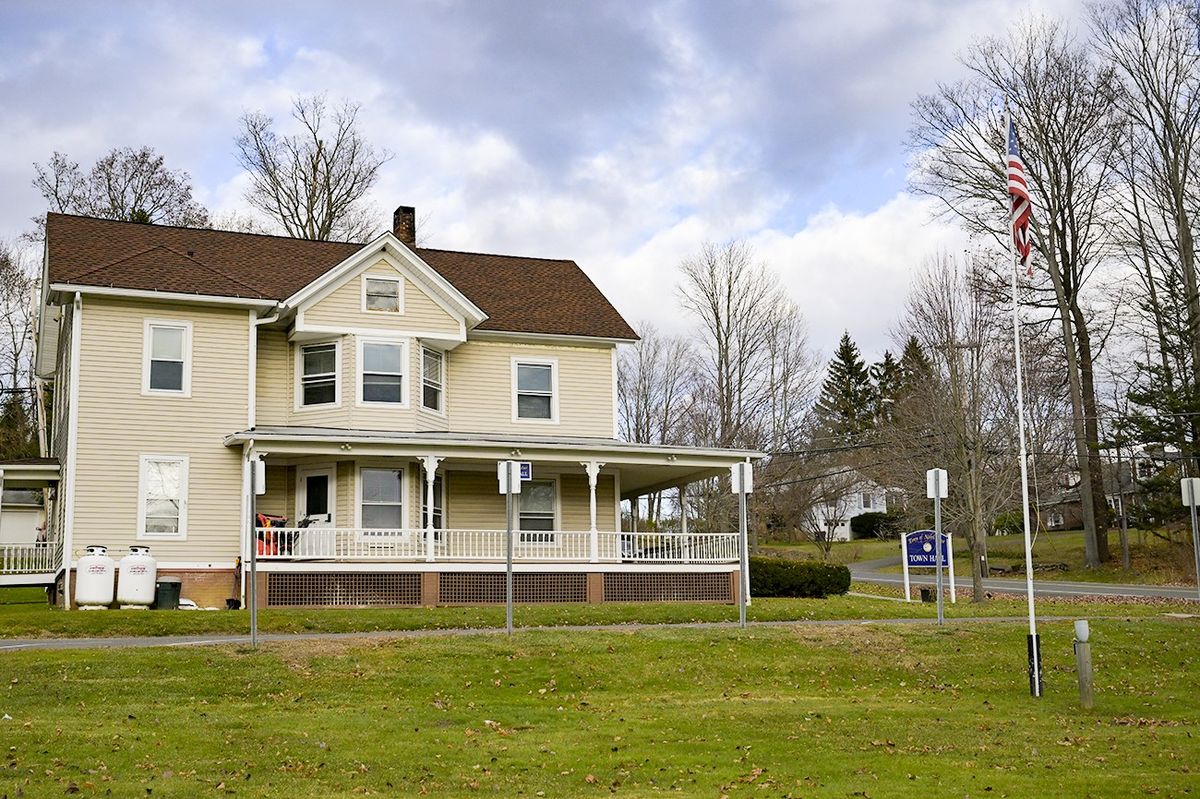
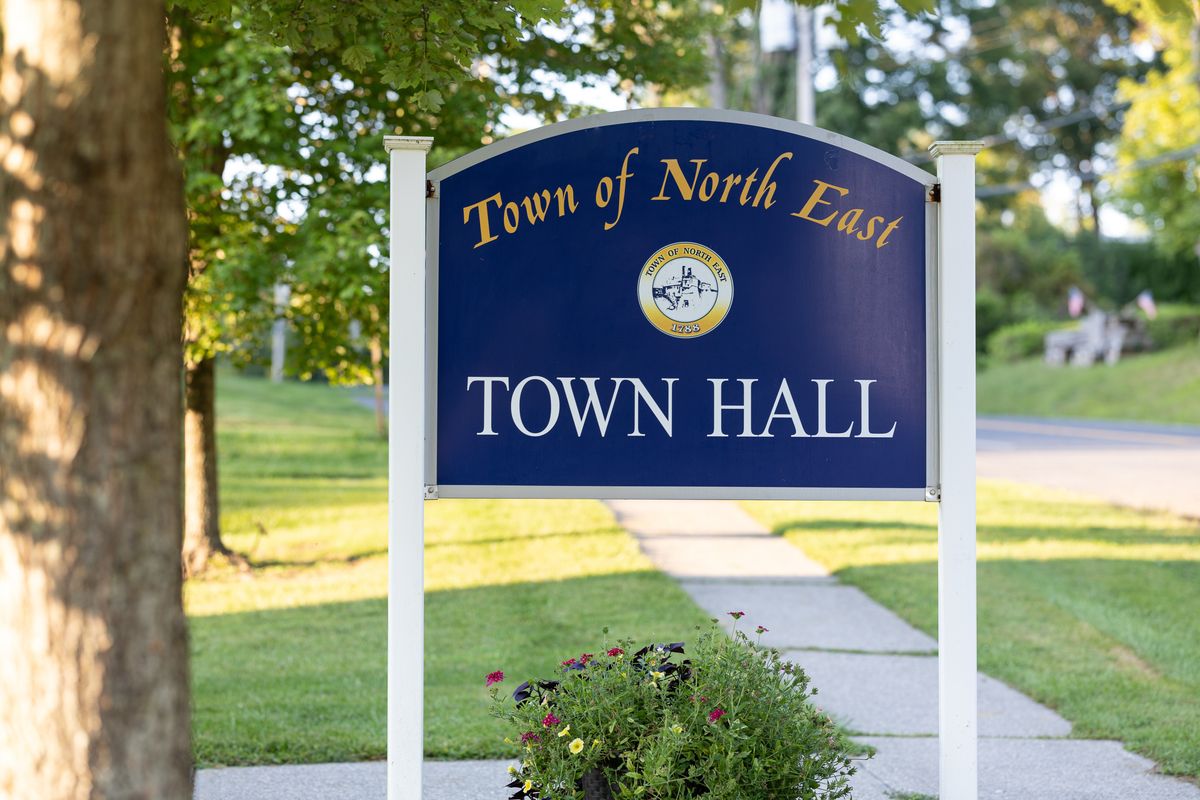
Amenia Town Hall on Route 22.
Photo by Nathan Miller

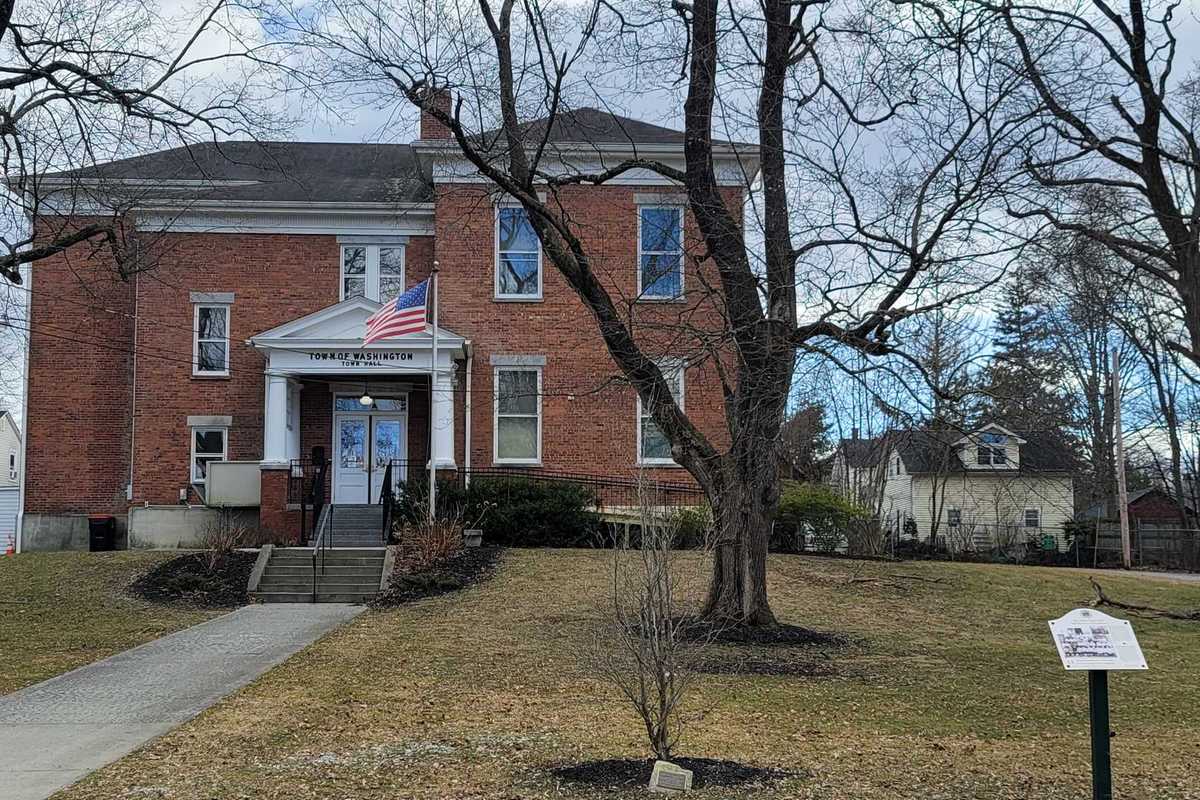
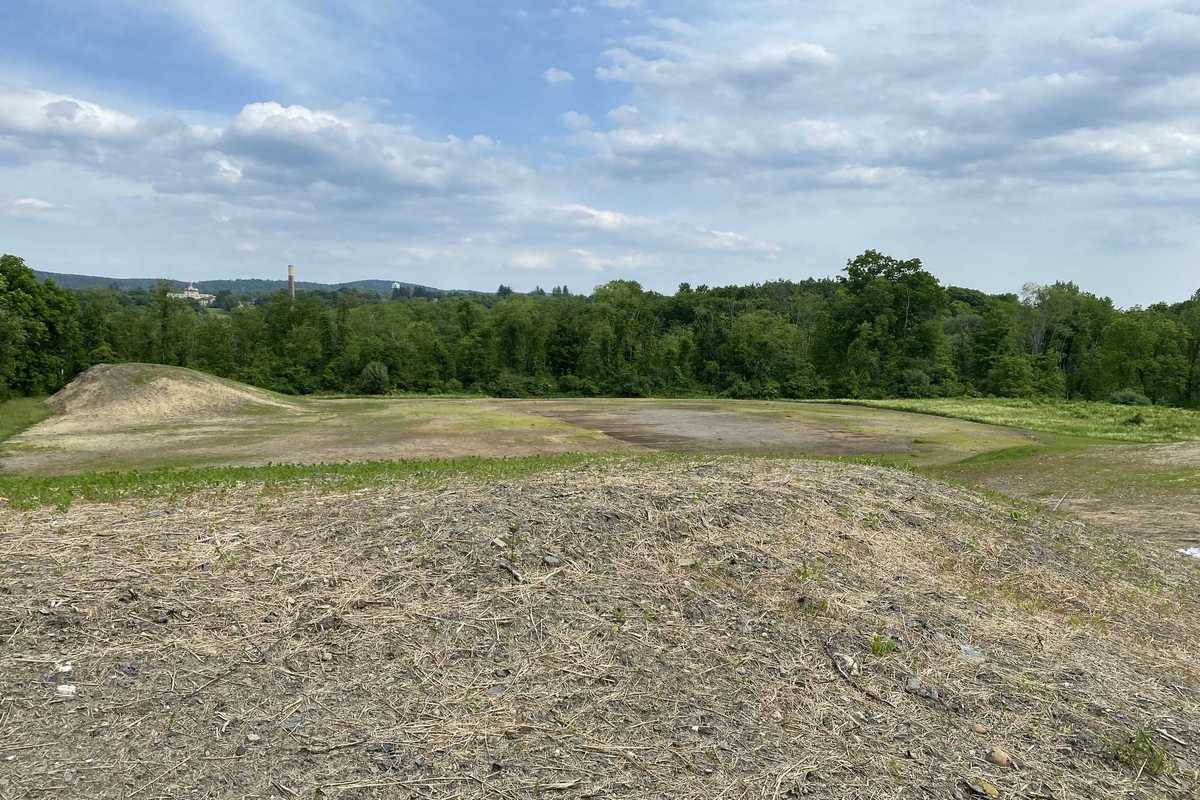
AMENIA — Town Board members gave unanimous approval to a trail project in Wassaic that would add 12 miles of hiking and biking trails across 470 acres of forested land.
Following months of consideration and approvals obtained from local and county officials, the Northern Red Oak Trail project won unanimous approval for a special permit from the Town Board at its meeting on Monday, March 9.
The meeting had been rescheduled from the Town Board’s regular meeting date of Thursday, March 5, due to inclement weather.
First proposed in July 2025, the recreational trail project will include about 470 acres along Old Route 22 to create 12 miles of hiking and biking trails traversing three contiguous parcels of land. Trails will be three feet in width with minimal impact to the land. Boardwalks will be installed only where necessary. A gravel parking area is planned to accommodate 12 to 15 cars.
A public hearing on the project was held on Thursday, Feb. 19, when a few residents voiced concerns over visual impact amid generally positive feedback.
The project is supported by Hollyhock Foundation, a New York City organization that focuses in part on environmental solutions to combat greenhouse gases. The nonprofit entity guiding the project is Northern Red Oak, LLC.
Report on AI
Exploring the use of artificial intelligence as an assist with town business, the Town Board heard a report from technician Matthew Hamm who presented aspects of AI that can streamline workflow, save time and reduce paperwork for staff.
The Town Hall uses Microsoft 365 systems, making Co-Pilot the logical AI system to explore. Hamm said that the Co-Pilot program is easy to navigate.
“It’s a digital multi-tool,” Hamm said, noting that AI can help with grant writing and researching available grants the town could apply for. Budget analysis is another strength of the systems. AI can also aid in communication, adept at language translation and simplification of legal terms, Hamm explained. He suggested starting small, as with a single grant.
“AI is not a shortcut,” Hamm cautioned, “It’s important to know exactly what you’re asking. As with any tool, it’s only useful if you use it correctly.”
Adequate funding for town recreation programs was of concern to Councilmember Nicole Ahearn who reminded the Town Board of the history of using Cell Tower revenue to support the Recreation Commission’s programs.
Ahearn recalled that when the Recreation Commission was formed in 2005, the town passed a resolution stating that the Cell Tower Fund would be used for Recreation. But in 2011, the policy changed so that only $1,200 would be given to Recreation with the remainder to be placed into the General Fund.
The Recreation Commission is not being awarded grant funding, Ahearn noted, although she acknowledged that the town’s operating budget is largely supported only by tax revenue.
Councilmember Vicki Doyle suggested that recreation funding be discussed when budget proposals are being developed and that the town could decide on an amount for capital funding to assist the Recreation Commission’s planning.
“There should be a capital reserve fund for recreation, but it should be a thoughtful process,” Doyle said.
Recreation Commission chairman Judy Moran noted that her department had asked for funding to hire the services of a grant writer.
Moran noted that for the current year’s budget, recreation was asked to cut its budget, and the budget was cut as much as possible.
“We cut the budget,” she said. “But it’s hard to constantly beg.”
Although a resolution to fill the vacant seat on the Town Board had been prepared to be considered at the meeting, the item was withdrawn from the agenda in the opening minutes of the meeting at Doyle’s suggestion. The vote to withdraw the resolution was unanimous. No reason was offered for the action. The vacancy that will expire in December 2027 occurred when Town Board member Rosanna Hamm won election in 2025 to serve as Town Supervisor.
During public comment, resident Jim Wright spoke in support of naming Charlie Miller to fill the vacant seat, citing Miller’s years of town service and skill at securing grants to fund capital projects. Resident Judy Moran spoke briefly to oppose the resolution that would have filled the seat.
The Town Board has been operating as a four-member board, rather than five, since the death of councilmember Paul Winters in early 2025.
Aly Morrissey
MILLERTON — Though the Irondale District lies just outside of the Village of Millerton, it has become the center of a divisive conversation as the Town of North East continues to review a significant overhaul of its commercial zoning code.
Irondale, officially known as the Highway Business district under current town code, is a small stretch along Route 22 south of the village that some officials and residents believe could support additional businesses, while others argue development there could undermine efforts to boost Millerton’s existing downtown.
The issue emerged during the public hearing on the commercial zoning code overhaul, which has remained open since Jan. 8.
During the Jan. 8 public comment period, Kathy Chow, a North East resident and chair of the Millerton Climate Smart Task Force, urged the town to encourage artisan workshops and food-based businesses in the Irondale area, suggesting it could become a hub for small industry and capture Route 22 traffic.
Since then, board members from the town and the village have weighed in, discussing possible types of permitted businesses in Irondale and the potential impacts.
Irondale is currently zoned for highway-oriented commercial uses rather than village-style retail or restaurants. Permitted businesses include auto body shops, building materials sales such as lumberyards, construction equipment sales and rentals, mobile home and farm machinery sales, transportation terminals, warehouses and wholesale operations.
Councilwoman Meg Winkler has advocated expanding those uses to include restaurants, bakeries and small retail businesses, arguing the area already functions as a natural extension of the village, citing the existing Agway and Napa Auto Parts along the Route 22 corridor north of Millerton’s downtown.
Winkler said the town’s 2019 Comprehensive Plan encourages expanding commercial opportunities and believes allowing small-scale businesses there could strengthen the local economy.
“I stand firm on my decision and it’s not out of disrespect to the ZRC, and it’s not personal,” Winkler said. “It’s rooted in my belief as a businesswoman – and after talking to residents and business owners who want the flexibility in this district – that it would boost the economic vitality to the village and town.”
Others on the board, however, said expanding retail uses outside the village could weaken Main Street by diverting customers away from Main Street.
Town Supervisor Chris Kennan said the ZRC intentionally designed the district to support larger highway-oriented businesses while concentrating retail and restaurant activity in the village center.
“The goal of the ZRC was to support the village as in Main Street and not to provide shopping opportunities on Route 22 where people could just keep driving down 22 and not turn into the village,” Kennan said.
He added that protecting the village’s commercial core is part of what makes Millerton distinct from other communities.
Deputy Supervisor Chris Mayville said he has mixed feelings about the proposal and wants to better understand its long-term implications for planning and development in Irondale.
“If we’re working to expand the boulevard in the village,” Mayville asked, “why would we think mirroring development in the other direction would help that?”
Edie Greenwood, who chaired the ZRC throughout the process, said the group intentionally left the Irondale district unchanged in order to keep the process manageable.
“My approach was to simplify and not get into boundary changes,” Greenwood said, noting that broader conversations about commercial development along Route 22 will likely occur during the next phase of zoning work.
Councilwoman Rachele Grieco Cole said the debate seems like a chicken and egg dilemma.
“There’s tension between wanting the downtown to look and function a certain way and attract enough customers,” Cole said, adding that there is a risk of being too restrictive rather than drawing in as much business as possible.
Kennan ultimately attempted to pass a resolution to maintain the existing ZRC language, which would keep the current limitations in Irondale. The board did not adopt the resolution and will instead pick up the conversation during a regular meeting of the Town Board on Friday, March 20.
Village board members weigh in
Village officials also raised concerns about the proposal during a March 9 village board meeting, where Mayor Jenn Najdek warned that expanding retail and restaurant uses in the nearby Irondale district could create what she referred to as a “fly-by” scenario, diverting traffic and customers away from Main Street.
Trustees agreed the change could undermine long-standing efforts to concentrate commercial activity in the village center, particularly as plans move forward for the expensive wastewater infrastructure project intended to support future development in the Boulevard District.
The board said it plans to collectively draft a formal letter to the Town of North East board outlining their concerns.
Aly Morrissey
Robin Wall Kimmerer inspired the audience with her grassroots initiative “Plant, Baby, Plant,” encouraging restoration, native planting and care for ecosystems.
Robin Wall Kimmerer, the bestselling author of “Braiding Sweetgrass” and a member of the Citizen Potawatomi Nation, urged a sold-out audience at the Cary Institute of Ecosystem Studies on Friday, March 13, to rethink humanity’s relationship with the natural world through gratitude, reciprocity and responsibility.
Introduced by Cary Institute President Joshua Ginsberg, Kimmerer opened the evening by greeting the audience in Potawatomi, the native language of her ancestors, and grounding the talk in a practice of gratitude.
“Gratitude is the doorway to reciprocity,” Kimmerer said.
Kimmerer, also a mother, botanist and professor, said that Indigenous wisdom does not have to be at odds with Western science, but rather it can help humans reframe the way they understand the Earth.
She also reflected on the personal journey that led to her lifelong commitment to promoting a lens of Indigenous wisdom in Western science. As a young woman entering the field of botany — then largely dominated by men — she said her path in academia was not always welcoming as a female Native scientist.
“It has been a lifelong journey,” she said. “I was born a botanist.”
Throughout the lecture, Kimmerer described how Indigenous ecological knowledge — rooted in observation, experience and ethical responsibility — can complement scientific inquiry and help solve today’s environmental crises.
She pointed to global data showing that about 80 percent of the planet’s remaining biodiversity is found on lands stewarded by Indigenous peoples, many of whom remain under threat from continued colonization and development.
A central theme of the evening was the concept of the “Honorable Harvest,” a code of practical ethics that governs what humans take from the natural world. Its principles include never taking the first one, always asking permission, taking only what is needed, minimizing harm and giving something back.
“Science is a great way to listen for the answer,” Kimmerer said, referring to the practice of asking permission of the natural world and paying attention to ecological limits.
By the end of the talk, Kimmerer turned to the question she said she hears most often: “What can I do?”
Her answer included a call to reciprocity and action. She urged audience members to consider their own “human gifts” and how those gifts might be used in service of the Earth. For example, Kimmerer said she uses her own gift of storytelling to distill complex information and inspire people to think differently about the living world.
“The Earth asks us to change,” she said.
Kimmerer left the audience with a call to action through her latest initiative. In contrast to the slogan “drill, baby, drill,” she said she has helped launch “plant, baby, plant,” a grassroots initiative that encourages people to support the living world through restoration, native planting and care for ecosystems.

Want more of our stories on Google? Click here to make us a Preferred Source.
D.H. Callahan
"There is no better feeling than working through something with your own brain and your own hands." —Melissa Gamwell
In an age of automation, Melissa Gamwell is keeping the human hand alive.
The Cornwall, Connecticut-based calligrapher is practicing an art form that’s been under attack by machines for nearly 400 years, and people are noticing. For proof, look no further than the line leading to her candle-lit table at the Stissing House Craft Feast each winter. In her first year there, she scribed around 1,200 gift tags, cards, and hand drawn ornaments.
Each piece makes a gift, a note or even a Christmas tree seem more personal, more considered, and more connected to humanity. Since then, demand for her personalized, hand-lettered tags, ornaments and cards has only grown, appearing in mailboxes across the region and at shops like the Cornwall Whale and Marton & Davis in Chatham, New York. Her precision is remarkable, and to watch her create these one-of-a-kind pieces is an art all unto itself.
In recent months, we’ve seen a deluge of stories on digital replacement. Data managers, bankers and even therapists are being replaced by computer programs in mass waves of layoffs. But what many still find surprising about the proliferation of nonhuman competitors in the job market is how it’s affecting the arts. Illustrators, animators, photographers, musicians and even on-screen actors are being supplanted by bots touted as “artificial intelligence agents.”
But calligraphy — and handwriting in general — has been in the crosshairs of mechanical progress for centuries. There was a time, if you can believe it, when writing anything required ink, paper and sometimes even a living, breathing human scribe. No typewriters, no word processors, no voice-to-text programs.
Then came Gutenberg’s printing press. Sure, it changed the world for the better, ensuring a greater distribution of ideas, and helping spark some of the most important political movements in history. But it also marked one of the first moments when technology replaced the artistic work of the human hand. Over the centuries, printers, designers and technologists have continued to innovate. Today, with Photoshop or Illustrator, an entire universe of alphabets exists, from ornate and embellished to precise and futuristic — all designed to replace the human hand.

Yet, despite this centuries-long assault from technology, Gamwell has found her own way to thrive. Largely self-taught, she combines her drawing and industrial design background with an old-school New England childhood in Maine that involved “very tangible, hands-on, creative problem-solving using many materials.” Raised by “parents who loved antiquarian books, often filled with hand-written dedications,” hers was the kind of upbringing in which “traditional practices were cherished and flaunted” — a time and place with “hand-painted lettering on churches, street signage, the stones in beautiful churchyard cemeteries, and log books.”
Those early impressions have stayed with her, heightening her appreciation of sometimes overlooked details.
“There’s so much ephemera floating around with traces of beautiful handwriting to see everywhere, even now in Connecticut,” she said.
Even in a digital age, she keeps technology at a distance.
“You will not find ChatGPT on my phone, and you will usually not find my phone on me,” she said. Instead, she opts for a notebook, a scrap of paper or the back of a receipt. Sometimes, she goes even further, gathering black walnuts from trees on her property to make the specialized ink for her practice.
Gamwell’s approach to her craft is also philosophical. “There is no better feeling than working through something with your own brain and your own hands, even if you find it less exemplary than you would hope. And it only uses the water you’re already consuming. Do you need to convey an idea? Draw it, however horrific or childish. Write it, even if you never learned proper grammar — because you’ve always had programs do it,” she said.
“Sometimes I think that everything I like is ‘historic’ but it’s really that I just find more value in the traditional methods, which are still alive and well, and desperately in need of stewards for the future.”
After nearly 400 years of pressure, it’s encouraging to see handwriting — an art form that once seemed destined for obsolescence — still thriving, one careful stroke at a time. And thanks to Gamwell, perhaps there’s a new generation of observers, collectors and future calligraphers ready to carry it forward.
D.H. Callahan is a voice actor, creative director and trail steward. He lives with his wife, artist Lane Arthur, in West Cornwall, Connecticut.
Natalia Zukerman
The cast of “The Addams Family” from Northwest Regional School District No. 7 with Principal Kelly Carroll from Ann Antolini Elementary School in New Hartford at Botelle Elementary in Norfolk.
Nearly 50 students from across the region are helping bring the delightfully macabre world of “The Addams Family” to life in Northwestern Regional School District No. 7’s upcoming production. The student cast and crew, representing the towns of Barkhamsted, Colebrook, New Hartford and Norfolk, will stage the musical March 27 and 28 at 7 p.m., with a 2 p.m. matinee on March 29 in the school’s auditorium in Winsted.
Based on the iconic characters created by Charles Addams, the musical follows Wednesday Addams, who shocks her famously eccentric family by falling in love with a perfectly “normal” young man. When his parents come to dinner at the Addams’ mansion, two very different families collide, leading to an evening of secrets, surprises and unexpected revelations about love and belonging.
For director Ann DeCerbo, the show’s mix of humor, spectacle and heart made it an ideal choice for a high school production.
“It’s funny and a little spooky, but underneath that it’s really about family, acceptance and learning to embrace what makes us unique,” she said.
The large cast and crew also made the musical a good fit for the school’s thriving theater program.
“What’s impressed me most is the level of commitment,” DeCerbo said. “These students are balancing school, sports, work, family, lessons, driver’s ed. The list goes on and on. But they show up ready to work and to support each other.”
Senior Gustavo Zurita stars as Gomez Addams opposite Ivy Wallace as Morticia. The cast also includes Kaileigh Grant as Wednesday and Domonic Salz as her love interest Lucas Beineke, along with Maribelle Roach as Uncle Fester, Violet Swanson as Alice Beineke, Levi Swanson as Mal Beineke, Krystal Janak as Grandma Addams, Lorelai DeCerbo as Pugsley Addams and Juan Pablo Urbina Labarrere as Lurch.
Behind the scenes, students are also responsible for set construction, lighting, sound, costumes and stage management, essential elements in creating the Addams family’s famously eerie home.
“We started by really embracing the color palette for the show,” said DeCerbo. “Black and white with very purposeful pops of color. This is the biggest set we’ve had on the NWR7 stage in as long as I can remember.”
While the story is packed with humor and gothic charm, DeCerbo said its message resonates strongly with teenagers.
“High school can be a time when people feel pressure to fit in and meet external expectations,” she said. “This show does a great job of showcasing how much we all have in common while also celebrating individuality.”
That spirit, she added, is part of what makes theater such an important space for students.
“One of the things I appreciate most about theater is that it offers a really welcoming environment where students feel comfortable being exactly who they are,” she said.
Ultimately, DeCerbo hopes audiences come ready to laugh and leave with a reminder that every family has its quirks.
“First and foremost, I hope they have fun,” she said. “But beyond that, I hope audiences leave with a reminder that families and communities don’t have to look the same to work. There’s a lot of joy in celebrating what makes people unique.”
Robin Roraback
Garth Kobel, Art Wall Chair, Mary Randolph, Frank Halden, Ruth Giumarro, Project Chair, Maria Bulson, Barbara Lobdell, Sherry Newman, Elizabeth Frey-Thomas, Donna Heinz around “The Green Man.”
In honor of National Quilt Day, a tradition established in 1991, Hunt Library’s second annual quilt show, “Quilts of Many Colors,” will open Saturday, March 21, with a reception from 5 to 7 p.m. The quilts, made by members of the Hunt Library Quilters, will be displayed through April 17. All quilts will be for sale, and a portion of each sale goes to the library.
At the center of the exhibit is a quilt the Hunt Library Quilters collaborated on called the “Quilt of Many Colors,” inspired by Dolly Parton’s song”Coat of Many Colors.” Each member of the Hunt Library Quilters made two to four 10-inch squares for the twin-size quilt, with Gail Allyn embroidering “The Green Man” for the center square. The Green Man, a symbol of rebirth, is also a symbol of the library, seen carved in stone at the library’s entrance. One hundred percent of the sale of this quilt benefits the library.
Ruth Giumarro, who led the Hunt Library Quilters in this project, explained that the quilting group started last year with the theme “Playing With Art,” which was inspired by children’s book illustrator Eric Carle. Giumarro said, “We had so much fun last year that everyone said, ‘Let’s do it again!’”
“This has been exciting,” said Giumarro. “We started off small with seven people. This year more people came, and there are more who want to come.” The range of experience varies from none to years of sewing and quilting. All are welcome; be a resident of Falls Village is not required.
“It’s all practice,” explained Giumarro, who has been sewing since she was in seventh grade. “Getting a straight line is hardest.”
On March 6, the quilters gathered at Hunt Library to bring their own creations for the show and admire the finished “Quilt of Many Colors.” After looking at each other’s quilts and pricing them, they celebrated with cake.
The Hunt Library is located at 63 Main St. in Falls Village. More information is available at huntlibrary.org

Want more of our stories on Google? Click here to make us a Preferred Source.

Want more of our stories on Google? Click here to make us a Preferred Source.
Public hearing on Silo Ridge recreational facility extended amid lighting debate