Millerton, North East to explore shared public works services

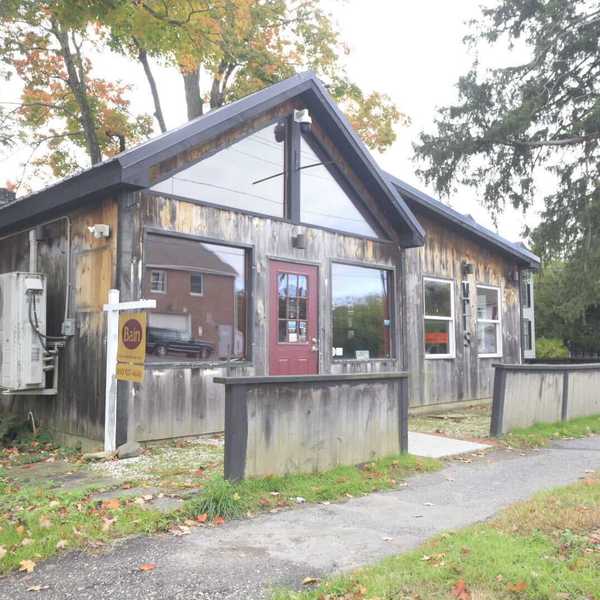
The Millerton village offices on Route 22.
Photo by Aly Morrissey

The Millerton village offices on Route 22.
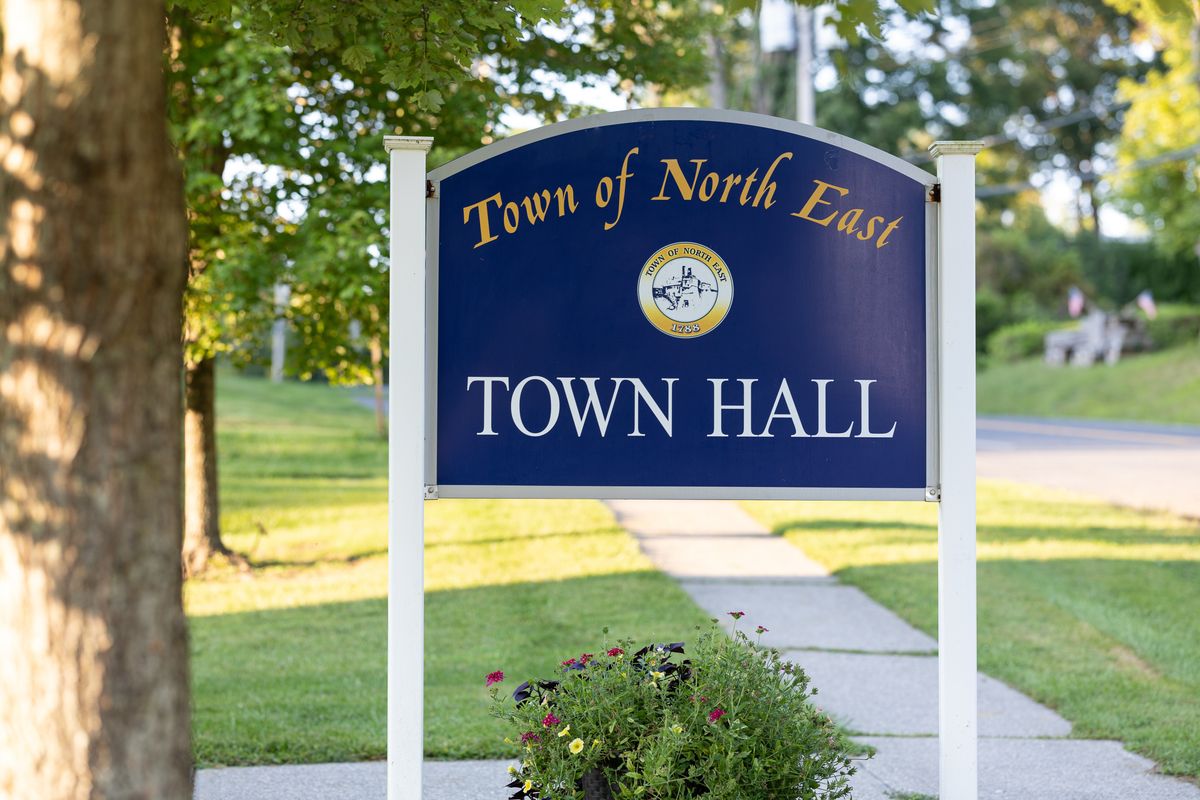
MILLERTON — Village trustees are expected to begin talks with Town of North East officials about sharing highway department and public works services.
Millerton Mayor Jenn Najdek reported to trustees during their regular meeting on Tuesday, April 28, that she had discussed the idea earlier that day with town officials and Dutchess County Commissioner of Public Works Bob Balkind. The conversation centered around the town’s impending search for a new Highway Superintendent after the sudden passing of Bob Stevens in March after 28 years in the role.
Najdek said part of that conversation had to do with the potential to share some highway services between the town and the village, saying both municipalities are in a place to think about doing things differently while key roles remain officially vacant.
“This is really the first step in figuring out how we move forward,” Najdek said. “I think both the village and the town are in a position right now to do something maybe a little different.”
Village trustees appointed Police Chief Joe Olenik to head up the village’s Department of Public Works in September 2025 on an interim basis after Peter Dellaghelfa resigned from the role. Olenik has been leading both the public works department and the police department since.
Najdek said officials are not considering a complete merger of the departments, but merely seeking to explore how some services can be shared to reduce costs and improve efficiency. Balkind has offered to assist the town and the village in these discussions, Najdek said.
A date has not yet been set for the joint workshop meeting of the village and town boards, but officials expect the talks to begin in the coming weeks.
Trustees finished the April 28 meeting by voting to hire James Horton as a laborer for the village Department of Public Works.
Earlier in the meeting, trustees approved a temporary suspension of Millerton’s alcohol open container ban within Eddie Collins Memorial Park during the planned 175th anniversary celebration.
Additionally, trustees unanimously approved a resolution that would allow sales and consumption of alcoholic beverages during village-sponsored events within Eddie Collins Memorial Park from July 9 to July 19. Najdek explained the resolution would allow vendors to more easily obtain one-day alcohol sales permits from the state for the event.
Officials said alcohol sales and consumption will be limited to a cordoned area of the park and outside beverages will be prohibited. Hard liquor will not be sold, Najdek said. Vendors, including Roe-Jan Brewing and Willa, will be selling canned beer, ciders and seltzers at the park during the planned celebration.
Following that approval, trustees approved the use of a $4,000 anonymous donation to help fund the 175th anniversary celebration.
The Village of Millerton’s 175th anniversary party will be a 10-day celebration of the anniversary of the arrival of the New York & Harlem Railroad in 1851.
Robin Roraback
Jessica Lee, owner of Rosemary Rose Finery, at the opening of its new location on Main Street in Millerton on Saturday evening, May 2.
MILLERTON — Rosemary Rose Finery, a jewelry and artisan goods shop, has officially moved to 50 Main St. in Millerton after two years on Main Street in Salisbury.
The new location is shared with Common Place Craft Workshop, which had operated craft workshops out of the space that was formerly occupied by BES — a gift and home decor shop that ceased operations at 50 Main St. earlier this year. Owner Meg Musgrove had been seeking a partner to continue and expand the workshop and retail concept.
On May 2, a “Grand Re-opening” of the combined space attracted crowds of people browsing, buying, laughing and talking among glittering showcases filled with jewelry and other items.
The walls of the shop displayed screen-printed wall hangings, vintage objects, pottery, greeting cards and botanical displays. In the back, the workshop space was set with refreshments from neighboring restaurant Willa.
It was serendipitous when Jessica
DeCarlo Lee, owner of Rosemary Rose Finery, found out that Musgrove, screen printer and proprietor of Common Place Craft Workshop, was looking for a new partner to share the space at 50 Main St.
Lee had been outgrowing her shop in Salisbury, longing for more space in which to hold her herbal workshops. She met with Musgrove, and everything aligned for the two to join forces in Millerton.
Musgrove is a designer who produces a line of colorful hand-made, screen-printed cotton products in Millerton. They include original patterns in bright panels and sets of fabric items for the home that feature pillows and dishtowels. Her business, Meg Musgrove Printshop, sells retail and wholesale.
She had been giving workshops for about a year in the shop and didn’t want to give it up.“People were coming back time and time again,” Musgrove said, adding the workshops became “more about a gathering space for people to come together.I am very glad for it to continue.”
For her part, Lee, a jewelry designer and herbalist, is excited to begin a five-week Community Supported Agriculture workshop in which participants will build their own “apothecary package,” explained Lee.“They will make their own and a few extra to sell,” Lee said. The proceeds will be donated locally.
The packages will contain eight different kinds of seasonal herbal medicines such as foraged wild tea, seasonal bug spray, healing balms and lotions, bitters to aid digestion, herbal sea salts, tonics, syrups, and tinctures. Lee hopes to have sixty apothecary packages to sell. She and her students will work out pricing and who will receive the proceeds.
Both artists also have their work for sale in the shop.Musgrove’s colorful screen-printed wall hangings and home décor share the space with Lee’s jewelry designs, vintage jewelry, herbal tinctures, lotions, and apothecary items.
Her original jewelry design remains a centerpiece of her business.“The last two years, sales in custom jewelry got going,” Lee said. “I’ve been doing more custom designs and engagement rings.”She also does jewelry repair.
Some upcoming workshops are “Dorodango, A Meditative Craft,” “Essential Oil Distilling and Herbal Scent Making,” “Herbal CSA Series” and “Make a Block-Printed Checkerboard.”
Workshops are taught by Lee, Musgrove and other area artists such as Katharyn Crippen Shapiro, Erica Recto and Kate Selengia.
Lee and Musgrove ask that anyone interested in participating register in advance.
To find out more about the workshops and register, visit commonplacecraft.square.site
For more about Rosemary Rose Finery, visitwww.rosemaryrosefinery.com
For more about Meg Musgrove and her designs, visit
megmusgrove.com
Nathan Miller
Dutchess County Association of Highway Superintendents President Todd Martin praised Bob Stevens’s lifelong service to the Town of North East on Friday, May 1.
MILLERTON — Highway Superintendents and road crews from across Dutchess County came together for a tribute to Bob Stevens on Friday at the North East Town Garage on Route 22.
Stevens served as the Highway Superintendent for the Town of North East for 28 years. He died suddenly on March 30.
The lunch served as a venue for Stevens’s colleagues in road crews across the county to remember him and praise his legacy of service. Stevens worked for North East’s road crew for 40 years, mostly as the superintendent.
Todd Martin, president of the Highway Superintendent’s Association of Dutchess County, said Stevens was eager to assist others at all times. He remembered Stevens would lend trucks to neighboring communities during times of need.
“If you needed something or didn’t know something, you’d call Bob,” Martin said. “He’s a really good guy. He’s going to be very missed.”
Martin and the superintendent’s association organized the gathering, providing food from Stevens’s favorite spots — Talk of the Towne Deli in Millerton and Deano’s Pizza in Lakeville, Connecticut.
Town and county officials kicked off lunch with brief remarks and a prayer from the Rev. Dr. Anna Crews-Camphouse.
Dutchess County Executive Sue Serino and Deputy Executive Gregg Pulver also spoke about Stevens. Serino said that, although she didn’t know Stevens personally, she admired his service to the Town of North East. Pulver praised his work to construct the town garage on Route 22 that became the new home of the North East Highway Department in 2024.
“He didn’t care about it for himself,” Pulver said. “He cared about it for his guys.”
Following the remarks, the visiting road crews dined on sandwiches, shrimp, Swedish meatballs and a cake inspired by oatmeal cream pies — a Little Debbie snack cake that Stevens always kept at hand. Martin explained the buffet was inspired by Stevens’s frequent meals at Deano’s and Talk of the Towne. The Swedish meatballs, Martin said, were a frequent homemade comfort food.
“So we had somebody in town make a whole big crock pot of Swedish meatballs,” Martin said. “It’s all their comfort foods.”
North East Town Supervisor Chris Kennan thanked the superintendent’s association for organizing the gathering. He described Stevens as a kind, considerate and private man, and said the gathering of road crew colleagues was an appropriate honor.
“Bob’s dedication to the Highway Department and to the Town of North East — to its roads and its residents — was legendary,” Kennan said. “He gave much more than he received.”
Graham Corrigan
John Scutieri, left, and Cindy Dunleavy will retire from the furniture business once all the stock in their Millerton store has been sold.
MILLERTON — After 11 years in Millerton, North Elm Home Furnishings is preparing to close its doors.
Co-owners John Scutieri and Cindy Dunleavy announced a “retirement sale” last week as they plan to close the store when the building’s lease ends in August.
“It was either retire now or sign another commercial lease,” Scutieri said. “And neither one of us wanted to work another five or 10 years.”
North Elm has been the town’s interior design hub for the last decade. After a long tenure at Riley’s Furniture, Dunleavy and Scutieri left the store in 2015 to start North Elm Home on Route 22.
The building, a rustic wooden barn erected in 1979, had previously housed Johnson’s Antiques. The couple rehabbed the space and expanded the offerings to include new and refurbished home goods.
With retirement on the horizon, Scutieri and Dunleavy are looking forward to spending time with their grandkids, golfing, and traveling.
“We’ve made a lot of good friends, and it’s a bittersweet feeling for us,” Scutieri said. “But ultimately, all businesses either come to an end or get handed off, and in this case, it’s time to retire.”

Want more of our stories on Google? Click here to make us a Preferred Source.
Millerton News
SHARON - Robert Edward Leibrock, age 69, of Sharon, CT passed away on May 1, 2026. He was the loving father of Robert W. Leibrock, Holly Leibrock, Heather Emberlin, & Cole Leibrock.
Bob was born August 12, 1956, the son of the late William and Virginia (Mead) Leibrock.
He graduated from Greenwich High School and spent his career as an arborist with the Town of Greenwich. He also ran his own business, B&B Tree, and was continually involved in a variety of real estate endeavors.
Family was central to Bob’s life, and when his children were young, he made time to coach their sports teams and be a constant presence in their lives.
After moving from Greenwich to Sharon in 1999, Bob proudly established Cobblestone Farm, a family farm with cows, horses, goats, chickens, pigs, and various other animals. Known to his grandchildren as “Pa”, he found great joy in sharing farm life with them, including endless tractor rides.
Bob maintained a lifelong connection to northern Maine, where he began traveling as a child to the family’s hunting cabin, Camp Leibrock . Over the years, it became a place of comfort, tradition, and enduring friendships.
He spent countless days there hunting, fishing, and enjoying time with family, and took pride in refurbishing an old dairy farm. Bob also loved introducing friends from Glenville to the area, sharing with them a place that meant so much to him.
He is survived by his sons Robert (Lorinn) and Cole (Carly), and daughters Holly (George) and Heather (Jason); nine grandchildren: Mackenzie and Hadley Casey; Weston Leibrock; Ella and Faye Emberlin;
Emmerson, Beckett, Thatcher, and Kinley Leibrock; his brother Doug; nephew Martin; and son-in-law Ethan
Casey. He is also survived by his former wife, Shirley Hoffkins, with whom he shared many years raising their four children.
He was predeceased by his brothers William and Martin and his sister Linda.
Calling hours will be held at the Kenny Funeral Home in Sharon, CT on May 11, 2026 from 4pm-6pm.
A graveside service and burial will be held at Greenwood Union Cemetery at 215 North Street, Rye, NY 10580 on
May 12, 2026 at 11am. A celebration of life will immediately follow the burial ceremony at George Seafood & Steakhouse, 2 S. Water St., Greenwich, CT 06830.
Memorial contributions may be made to The Corner Food Pantry, 80 Sharon Rd North East, Lakeville, CT 06039.
The Kenny Funeral Home has care of arrangements.
Graham Corrigan
Signs with bright red text warn visitors that public access to Dover Stone Church through Thomas Whalen’s property is closed until further notice.
DOVER PLAINS — Public access to the famed hiking destination Dover Stone Church has been closed after a Dover resident took action to limit access to the trail from his property.
Signs proclaiming “no public access” in bright red lettering appeared at the trail’s entrance along Route 22 in Dover Plains this week. The signs also feature a QR code that leads to a statement by the property owner, Thomas Whalen.
The main public entrance to the trail crosses over Whalen’s property at 3149 Route 22 in Dover Plains.
The issue is twofold: Whalen, an attorney whose family has owned the adjoining property for generations, has requested that the town insure the part of the trail that crosses his land. He also wants Dover to handle maintenance of the trailhead.
Dover’s town supervisor, Rich Yeno, responded to the signage with a statement posted to Facebook. “Town board members and I have agreed to rectify several issues that the landowner has brought to our team’s attention,” Yeno wrote, “and a price amount to get the entrance back to use.”
The dispute dates back to 2018, when Whalen first filed an objection over the heavy pedestrian traffic and litter. The town claimed the short lane leading to the trailhead was a public right of way. Whalen v. Town of Dover, however, ruled in the homeowner’s favor in 2024. Whalen was awarded $100,000, and the town was asked to provide a certificate of insurance. Whalen said he is still waiting on the insurance, and claims the town does not plow the lane leading up to the trail entrance.
Still, the trail remained open through 2025 — until Whalen learned of plans to connect Stone Church to the Seven Wells, another hiking site that was recently acquired by the town of Dover. “That goaded me to take action,” he said. “I’m waiting for them to make good the agreement, and they’re making these plans.”
Yeno’s statement sounds committed to resolution. “We will fix and do whatever it takes,” he wrote. “Our legal team has worked daily on this and we are ready to go with the deal we have presented along with our partner and supporter in this property, Dutchess Land Conservancy.”
Whalen insists he is not seeking to block access permanently. Rather, he’s looking for a solution to a problem that will ensure the site’s maintenance and safety for future generations. “I’d like to make the entrance very attractive,” he said, “with plantings and maybe a garden.” But the trail needs more oversight: “While most people are just nature lovers,” Whalen said, “there’s a lot of after hours hanging out that is very bothersome.”
The Stone Church is named for its unique rock formation, a cathedral-like cave opening that rises over 300 feet in elevation. The interior contains waterfalls and dazzling shafts of light, with a rocky ledge known as “the pulpit.” Hikers follow a stream and must use bridges and stone steps to access the site, which was purchased by the Dutchess Land Conservancy in 2004.
Debra A. Aleksinas
Poverty in the Northwest Corner doesn’t define an entire town. Instead, it exists in quieter pockets — apartments above storefronts, income-restricted housing and older homes where seniors and working residents struggle to keep pace with rising costs. This series examines where financial hardship exists in Region One towns, what is driving it and how communities are responding.
SHARON, Conn. — In a region often associated with affluence, hunger relief organizations say pockets of poverty are deepening, with as many as four in 10 households struggling to cover basic needs, according to regional estimates.
A weeklong fundraising campaign beginning May 11 will ask diners at local restaurants to help address that gap by funding the purchase of fresh food from local farms for distribution to area pantries.
Supported by more than a dozen restaurants and cafes across the tri-corner region, the Nourish Neighbors campaign raises funds to support that effort — connecting restaurants, farms and hunger relief efforts.
“We expect to have about 15 restaurants participate, from Champêtre in Pine Plains all the way to the Falls Village Inn,” said Chris Armero, an organizer of the campaign. “Not many people know that four out of 10 of our neighbors have trouble paying their bills.”
The effort is led by Tri Corner F.E.E.D. (Food Equity, Education and Distribution), the Sharon-based nonprofit behind Nourish Neighbors, founded in 2023 by former Q Farms owners Linda and James Quella. The organization is advancing a model to expand access to fresh, locally grown food while supporting farmers and small businesses — a concept organizers say is increasingly needed in the tri-corner region, where many households are struggling to meet basic needs.
Tri Corner F.E.E.D. operates a local storefront at 56 South Center St. in Millerton, where food is priced on a sliding scale. It offers farm-fresh meats, seasonal vegetables, prepared foods, coffee and baked goods.
“We really want to reduce barriers for people to be able to afford nutritious, local food,” said Blake Myers, director of food programs at the Tri Corner F.E.E.D. Market.
About 75 people shop there weekly, she said, with roughly 50 relying on it as a primary grocery source.
Demand rising at local food pantries
Local food pantries — including The Corner Pantry in Lakeville, North East Community Center (NECC) in Millerton and St. Thomas Episcopal Church in Amenia — have reported sustained increases in demand since the pandemic, even as emergency supports have receded and funding sources have tightened.
That pressure has exposed a broader challenge across the region: not only how to meet immediate need, but how to provide consistent access to nutritious food in a way that is sustainable for both households and the local agricultural economy.
Tri Corner F.E.E.D.’s approach centers on strengthening those connections, said Linda Quella, who previously farmed land in Sharon and sold her produce primarily via farm stands and farmers markets.
She said the experience underscored how difficult it is for farmers to earn a living through local sales alone.
“We were going to farmers markets three times a week,” Quella said. “People don’t realize how much you have to sell to earn a living as a farmer.”
She added, “Everybody that was buying our food was very well off.”
That realization led to conversations with hunger relief organizations, including the NECC in Millerton and its food programs director, Jordan Schmidt.
With food pantries held twice a month, Quella saw an opportunity to host a pop-up market with the organization.
“We could tell it was a need,” Quella said. “It became clear this would be welcome in this community.”
Quella also researched a study from United Way that collected data from households that struggle to cover basic costs. Her efforts helped inform Tri Corner F.E.E.D.’s sliding scale model.
“Through that study, we found that farmers can’t afford to discount products. They need full price for their product,” Quella said. “And that consumers needed nutrient-rich food but didn’t have access to it.”
Quella describes Millerton as a food desert, noting the closure of the town’s only food market there several years ago.
Program pays
farmers upfront
Tri Corner F.E.E.D. also purchases produce and other goods through its Food Sovereignty Fund, which was established to buy directly from farmers and distribute those goods to local food pantries — ensuring access to fresh food while providing farmers with a stable, guaranteed market.
Farmers are paid in advance for their harvests, offering financial stability and encouraging participation in food distribution programs. The fund also connects farms with local food pantries, schools and community centers — to deliver fresh produce to underserved populations.
Participating farms include, in addition to Adamah Farm, Rock Steady Farm, Sky High Farm and the Ten Mile Farm Foundation, among others across Connecticut and New York.
Surplus crops
benefit communities
At Adamah, a nonprofit CSA (Community Supported Agriculture program), connected to the Isabella Freedman Jewish Retreat Center, the model allows members to buy a share of a farm’s harvest upfront in exchange for regular distributions of fresh produce throughout the growing season — helping redirect surplus crops into the community.
“In 2025, we sold a few items a week through Tri Corner, including cherry tomatoes, zucchini and herbs,” said Janna Siller, farm director and advocacy coordinator at Adamah.
Siller said the region produces abundant food, yet many residents rely on distant grocery stores due to cost barriers or limited access.
“Tri Corner is helping bridge that gap,” she said.
Adamah also raises funds to donate produce to local pantries, sometimes delivering close to 1,000 pounds of food in a single day.
Restaurant patrons
pay it forward
That same model extends to the upcoming Nourish Neighbors campaign.
“When you visit a participating restaurant or business, you have the opportunity to pay it forward,” Myers said, adding that proceeds go to Tri Corner’s Food Sovereignty Fund.
Supported local pantries include The Corner Pantry in Lakeville, North East Community Center in Millerton and St. Thomas in Amenia.
“This is especially urgent as demand for their services has risen just as federal and state support has come under pressure,” Armero said.
Even as the program expands, Quella said, the scale of need continues to outpace available resources. Rising living costs strain both households and farms, leaving programs like Tri Corner F.E.E.D. to shoulder a growing share of the region’s food access needs.

Want more of our stories on Google? Click here to make us a Preferred Source.

Want more of our stories on Google? Click here to make us a Preferred Source.