MILLERTON — The Village of Millerton board of trustees held a special meeting on April 3 to review budgetary items and to set a date for a public hearing on the budget. The public hearing will be held on Monday, April 14 at 6 p.m.
The trustees spent much of the session in review and assessment. As a result, the mill rate, briefly discussed at the previous meeting, was clarified the day after the meeting with village clerk Lisa Cope.
According to Cope, the proposed mill rate for this year is 4.32922. Last year the mill rate was 4.22248. The difference is an increase of 2.53% from the previous year’s budget. The assessed valuation of Village of Millerton properties increased to 122,207,680.
While Najdek has described the year as “difficult” due in part to the Feb. 3 fire at the Village Water and Highway Building on Route 22, she confirmed multiple checks totaling over $200,000 in insurance monies have since been received by the Village, but what has been forwarded so far will cover only so much of the losses. She remained optimistic, however, about the completion of the budget, which could feasibly be adopted at the upcoming public session. “I am hoping the proposed budget at the public hearing will be received well,” she said afterwards. “I think we all take pride in our Village and all want to have a minimal burden on the taxpayers while trying to provide the necessary services.”
The two items slated for emphasis in the budget are salaries and insurance. A conversation on salaries was tabled at the meeting, but Najdek maintained the ongoing goal is to remain mission-oriented and fiscally sensible. She also stressed the need for quality staff, saying, “The driving factors are prioritizing employee salaries and benefits to ensure we can retain our employees.”
Staff retention concerns were also echoed during the evening by Millerton police chief Joseph Olenik, who appeared before the trustees to propose a $2.00 per hour increase for police officers, which would bring their hourly wage to $28.50. Trustee Dave Sherman cited concerns about the increase, and discussion continued regarding a lower hourly rate of $28.00 per hour instead.
Additionally, Olenik spoke of the need for two ballistic vests, stating that no grant money had been made available for their purchase. Following the conclusion of Olenik’s comments, Najdek agreed to meet with him at a later date to follow up on his concerns.
Among the categories discussed during the evening was general revenue, which included a discourse on the EV charging station, with Najdek proposing a climb from its current funding. General expenses more or less remained the same. The topic of water was tabled with Najdek citing the unknown variables ahead and the need to focus on the reconstruction of the Water and Highway Building. “We’re doing the best we can,” she said.
In her follow-up email with the News, Najdek elaborated on the fiscal realities in the aftermath of the fire as related to the budget, saying, “We are committed to building back, and while I’m sure insurance won’t cover everything, I think all of the board members kept that in mind while working through the process.”




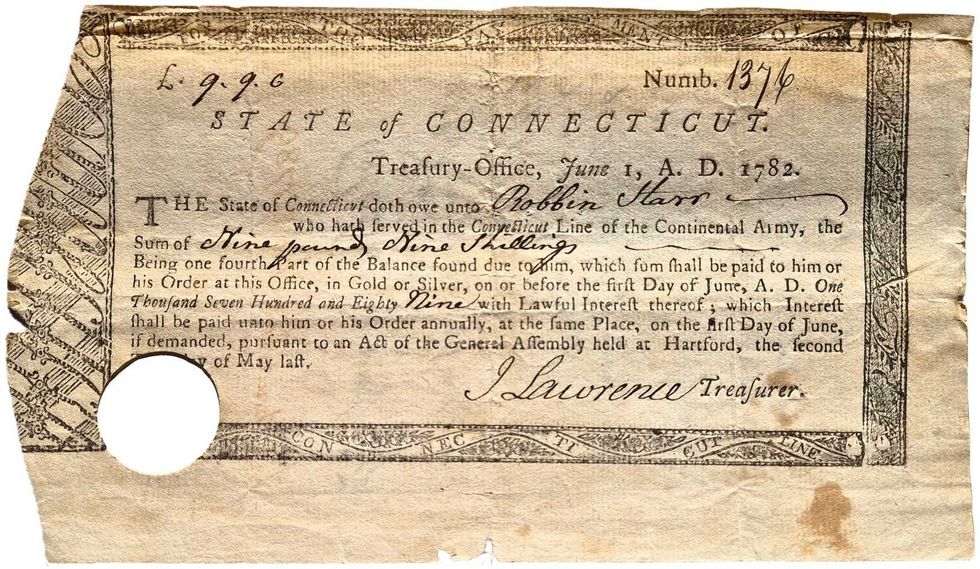 Pay Bill for Robin Starr’s service in the Continental Army.Courtesy the Alex Breanne Corporation
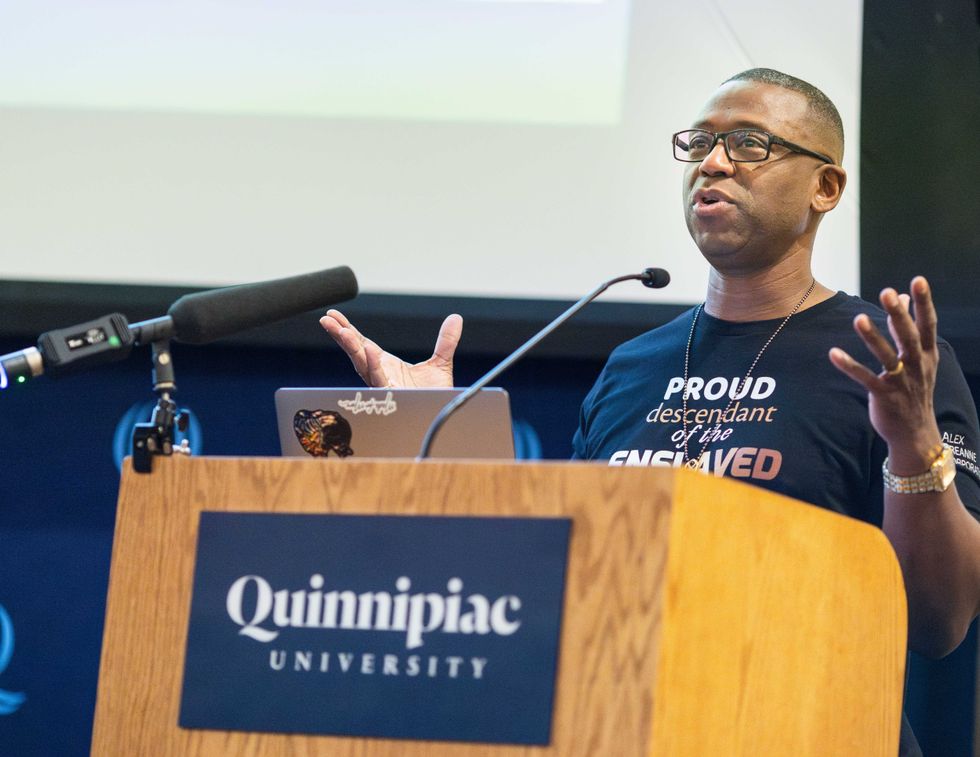 John Mills speaking at Quinnipiac University.Courtesy the Alex Breanne Corporation

 Stephanie Saetta,with her rescue dog George and Blue (left), a shepherd mix awaiting his forever home.Madi Long