CORNWALL — Tim Prentice, architect turned kinetic sculptor, died at home in Cornwall on Nov. 25, 2025, at the well-lived age of 95.
Born in New York City on Guy Fawkes Day in 1930, Tim was the son of Theodora (“Dody”) Machado and architect Merrill Prentice. That same year, his parents bought a 150-year-old house in Cornwall, and Tim’s connection with the town as his lifelong “spiritual home” began.
He attended Rumsey Hall in Cornwall Village, the Brooks School, and Yale College. While at Brooks, a field trip to the Addison Gallery in Andover proved quietly decisive: in the lobby hung a mobile by Alexander Calder, which moved in response to otherwise invisible air currents. Tim was riveted. Decades later, that moment would resurface as destiny.
Graduate school was postponed by four years of Navy service during the Korean War. Tim served as a bombardier navigator with the Sixth Fleet, flying off aircraft carriers on grueling eleven-hour missions and navigating using a demanding three-star fix, an experience that left him with a sailor’s respect for wind, balance, and motion.
After the war, he returned to Yale, earning a Master’s degree at the School of Art and Architecture. He studied with the modernist Paul Rudolph and took Josef Albers’s famed color class not once, but twice.
In 1960, Tim married Marie Bissell in her parents’ backyard in Canton, Connecticut. Both were enthusiastic amateur folksingers. In 1963, they were sent by the State Department on a goodwill journey through Asia and East Africa, guitar and banjo in hand, sharing and gathering new melodies to carry home.
In 1965, back in New York City, Tim co-founded the award-winning architectural firm Prentice & Chan with Lo-Yi Chan from I.M. Pei’s office. Among many projects, Lo-Yi designed middle-income housing for NY State, and Tim designed houses in Connecticut.
During this time, Tim also became a member of MOMA’s Committee on Architecture and Design and President of the Municipal Art Society, where he helped lead a successful campaign to save Grand Central Terminal from demolition.
In 1975, Tim left the firm to pursue his new career in sculpture in the living room of his apartment and, on weekends, in a century-old ice shed on their farm in Cornwall. He taught architecture at Columbia and continued to design and remodel houses in the Cornwall area — over 60 all told. His architecture balanced international modernism with a deep affection for the plainspoken New England barn and, often, a wry sense of humor. Among his creations were a pool house shaped like a miniature Parthenon, complete with Elgin Marbles rendered in plywood, and a new house masquerading as a renovated hay barn.
Tim’s big break came in 1976 with a nearly three-ton commission for AT & T. More than 150 commissions followed throughout the U.S. and the world. Ranging from the 230-foot-long ‘Red Zinger’ in Hartford’s Bradley Airport to a set of turning circles for Renzo Piano’s Aurora Place in Sydney, Australia. He also made dozens of smaller sculptures that sold like hotcakes at local shows and exhibits.
In the mid-1980’s, Tim and Marie moved to Cornwall full-time and became involved with local affordable housing initiatives.Tim co-founded the Cornwall Housing Corporation (CHC), organized the annual House Tour benefit, and designed several houses for the CHC’s parcel program. Additionally, he spearheaded an unsuccessful but passionate effort to save the Greek Revival Rumsey Hall building in Cornwall Village, which, prior to demolition, was listed on the National Register of Historic Places.
In 2012, Tim and longtime associate David Colbert formed Prentice Colbert, Inc., to continue the adventure of making large-scale site-specific pieces.
A monograph, Drawing on the Air, was published in 2012. Tim received the Connecticut Governor’s Arts Award in 2014 and was honored in 2021 with a solo exhibit at the Aldrich Contemporary Art Museum in Ridgefield.
In the 1990’s, Tim developed macular degeneration, but he never stopped working as his eyesight diminished.In 2024, the American Macular Degeneration Foundation’s Vision & Art Project premiered a film about his life, aptly titled The Air Made Visible.
Whimsy, playfulness and music were an important part of Tim’s life. For decades, he created an annual calendar for family and friends and was a frequent illustrator for the Cornwall Chronicle, where his drawings tended to skewer local issues. The Prentice barn was legendary for everything but cows: instruments constructed out of plywood and PVC tubing, concerts, picnics, weddings, art shows, memorials, anniversaries, birthdays, songfests, family reunions, raucous hootenannies, and even as a test site for a‘bolt-together’ house.
He is survived by his two daughters, Nora and Phoebe, and by his adored grandchildren, Zeke and Zed Homer. His infinitely beloved wife, Marie, predeceased him in 2018.
One of Tim’s favorite reflections captures the arc of his life:
The engineer wants to minimize friction to make the air visible.
The architect studies matters of scale and proportion.
The sailor wants to know the strength and direction of the wind.
The artist wants to understand its changing shape.
Meanwhile, the child wants to play.
Donations can be made to: The Cornwall Housing Corporation: P.O. Box 174, Cornwall, CT 06753
No memorial is planned yet.
Thank you to all of Tim’s great caregivers.
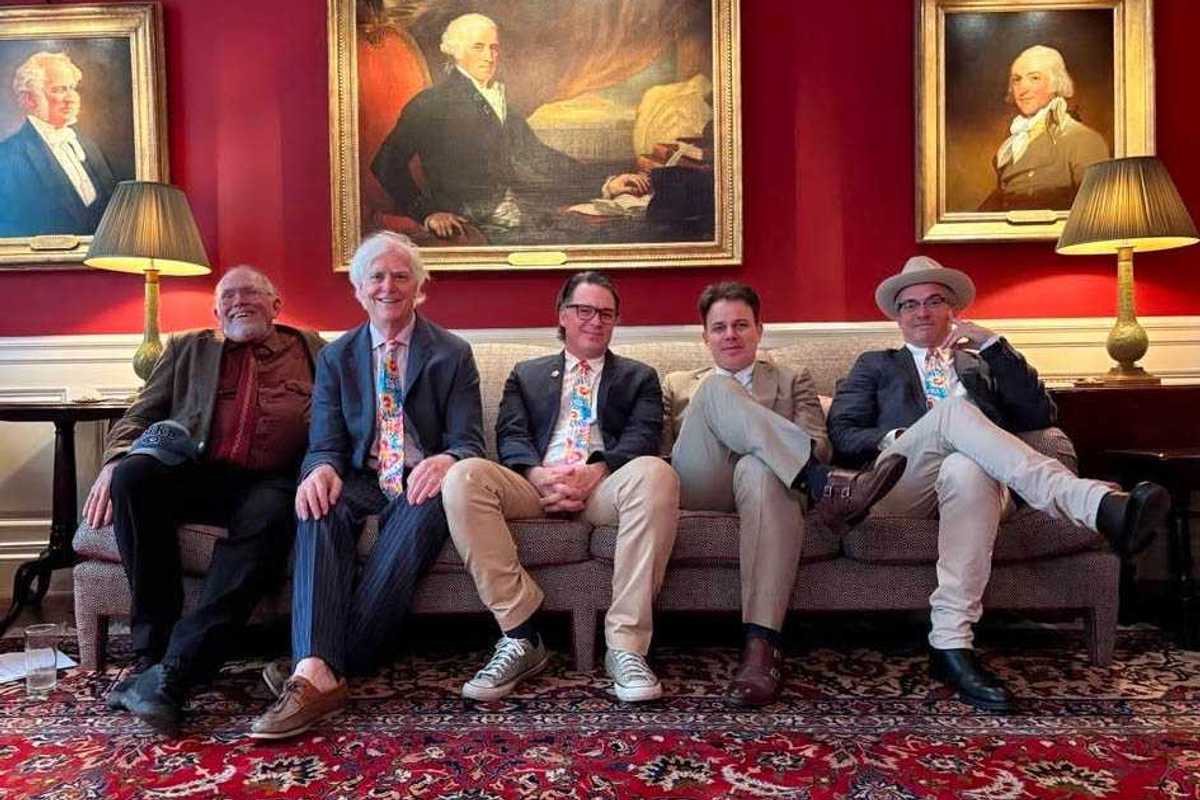
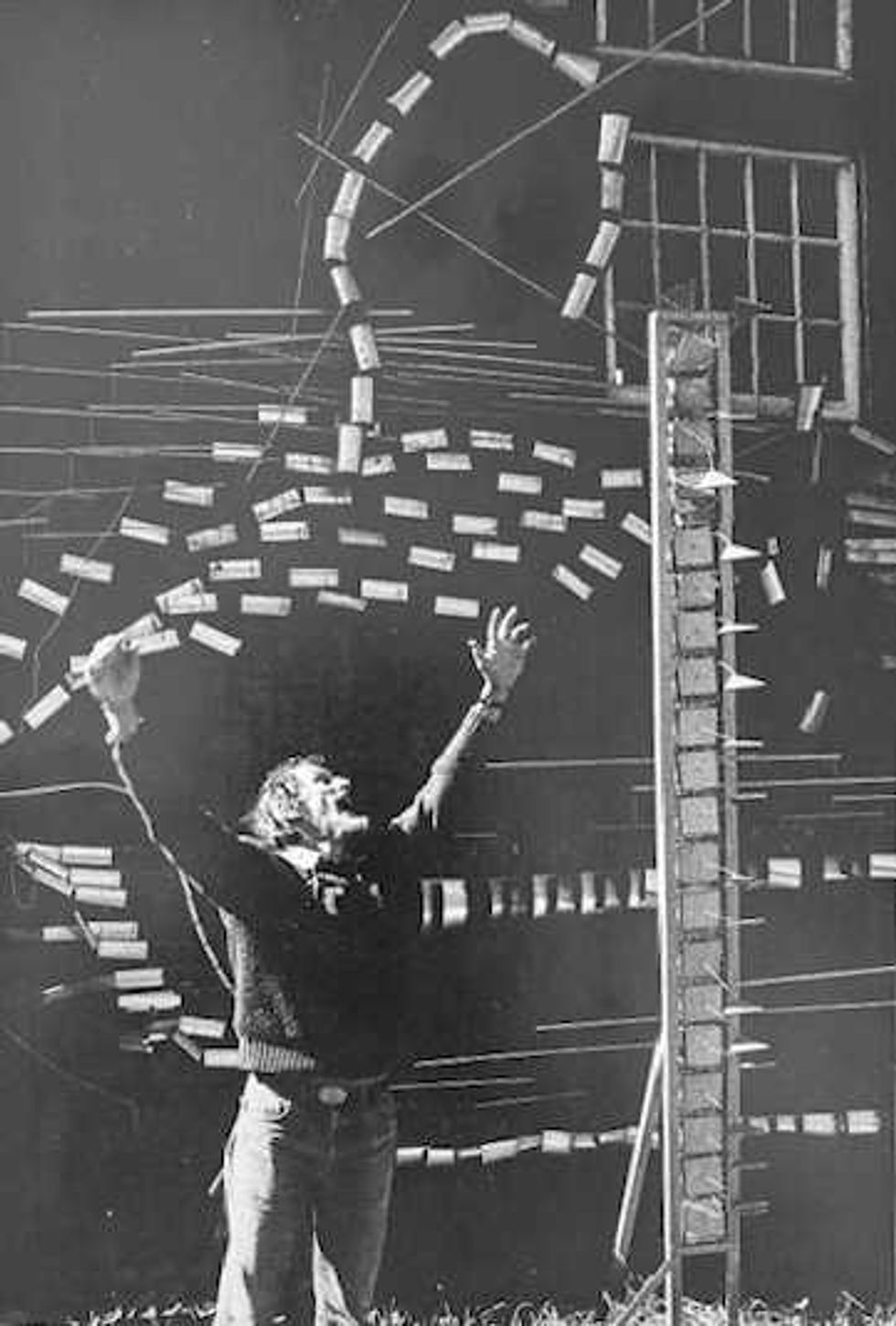 Photo by Nick Jacobs






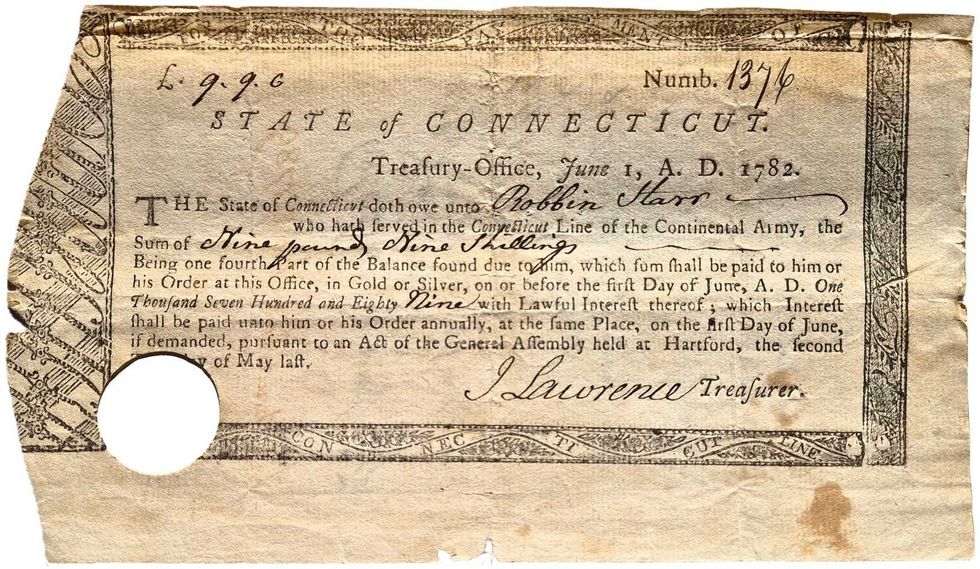 Pay Bill for Robin Starr’s service in the Continental Army.Courtesy the Alex Breanne Corporation
 John Mills speaking at Quinnipiac University.Courtesy the Alex Breanne Corporation
 Stephanie Saetta,with her rescue dog George and Blue (left), a shepherd mix awaiting his forever home.Madi Long