Washington officials eye improvements to town pool

The Washington town pool in the hamlet of Mabbetsville along Route 44 sits ready for the start of the 2026 season.
Photo By Graham Corrigan


The Washington town pool in the hamlet of Mabbetsville along Route 44 sits ready for the start of the 2026 season.
MILLBROOK — Members of the Washington Town Board are calling for upgrades to the town’s recreation area in Mabbetsville along Route 44, saying the park’s roughly 80-year-old pool is outdated and increasingly difficult to maintain.
Former Washington Councilmember Mike Murphy presented a new report to the Town Board during its regular meeting on Wednesday, May 13, detailing the needed updates to the park.
His report is part of a larger Washington project called the Recreation Area Strategic Planning Committee. Starting in 2024, Murphy and a committee of 11 community members undertook a comprehensive evaluation of the property, focusing on the town pool and its facilities. “It’s nobody’s fault,” Murphy said. “But over the years, it’s just aged out.”
The committee was made up of various community experts including contractors and environmentalists. The group used last year’s Community Day to field suggestions from local residents, asking what changes they’d like to see at the park.
An online survey followed, and the committee compiled those suggestions for the town board. Suggestions included indoor facilities, a children’s playground, a dog park and pool improvements.
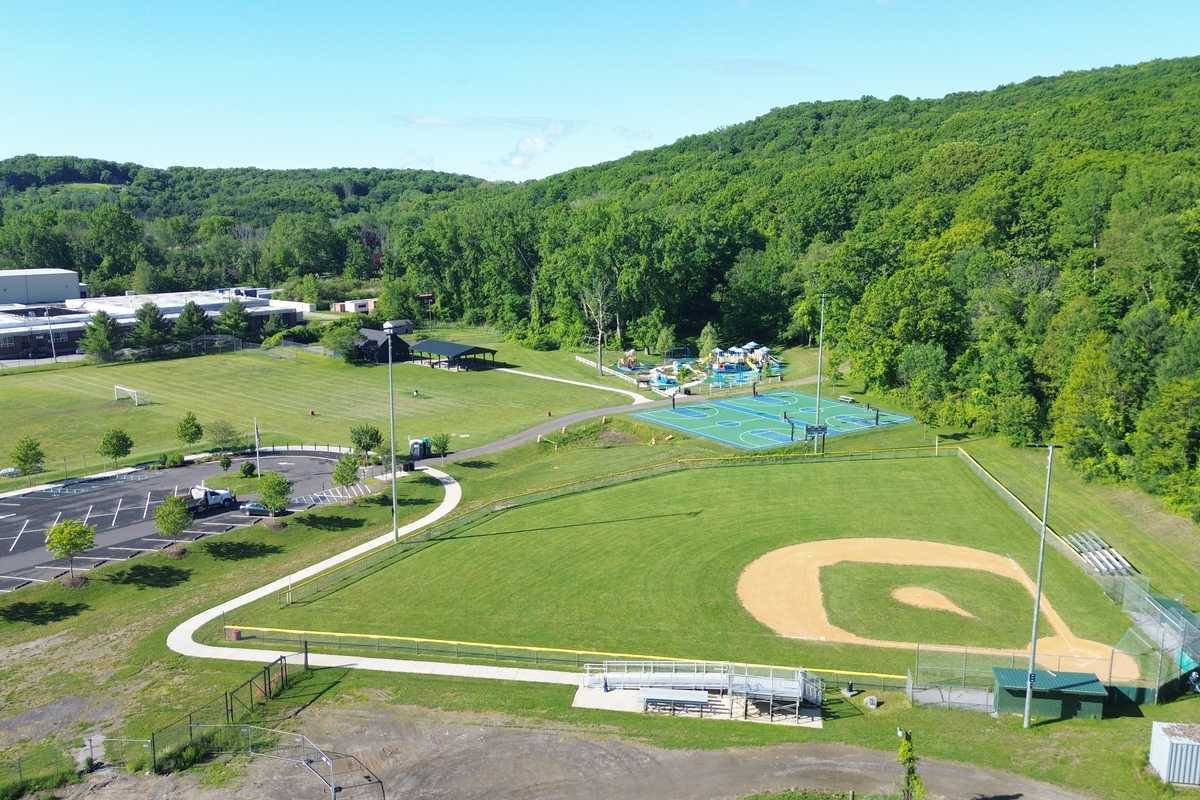
The Town Park consists of the pool and several athletic fields. The town bought the lower part of the property in 1946 for $16,000, and it became a municipal pool soon after. The athletic fields were added in 2006.
The 29 acres “are a jewel within the town,” Murphy said. “We need to figure out how to get people to use it.” But the pool’s aging infrastructure has made maintenance and upkeep unwieldy. It also lacks modern amenities popular in other municipal pools, like splash pads or fountains. Millerton and Newburgh, Murphy noted, both included those elements in their new pool plans.
Washington has more serious fixes to make, like updating the pool’s filtration system. One estimate Murphy received approximated that cost at six figures. “The tax structure of this community will never be able to handle the major costs that are coming down the road,” Murphy said.
Instead, the Committee to Re-Imagine the Town Park proposed several non-structural ways to stimulate the park’s activity, and resulting revenue: extended hours, a third pavilion, more athletic facilities, and an easier way to access the park.
Currently, there’s only one way in or out of the park. It makes for a crowded drop-off — especially when summer camp is in session. Murphy said connecting the park’s entrance to Little Rest Road to the west is one feasible solution.
Nathan Miller
Mindy Yang points to wildflowers growing at Silverbrook Manor, the Millbrook home where she and her husband, William Harris, operate a community-supported agriculture operation.
MILLBROOK — The scent of citrus, emanating from a discreet diffuser tucked along the wall, fills the air upon entering the historic farmhouse at Silverbrook Manor, where perfume expert Mindy Yang and her husband, William Harris, have started to build a life centered on regenerative agriculture and education.
It’s a fitting introduction to the couple and their property — a centuries-old farm that raised dairy cattle before the American Revolution and horses for decades afterward. Over glasses of cold water infused with mint from their garden, the couple described the property as a collision of eras and visions, blending Yang’s passion for scents, food and natural medicines with Harris’s interior design skills and love of history.
At Silverbrook Manor, a property on Route 82 near the Cornell Cooperative Extension campus, Yang and Harris are building what they describe as a community-centered farm focused on regenerative agriculture and education.
After Washington officials recently determined the operation could proceed without a special-use permit, the couple resumed plans they had been developing since purchasing the property in 2021. They have restored former horse paddocks into native wildflower habitat and begun working with experts in regenerative and Indigenous agriculture, with plans to eventually offer educational tours and operate a private community-supported agriculture program.
The history of the space looms large for Yang and Harris. They pieced together the home’s history through research and documents and photographs discovered beneath floorboards and in the attic.

Harris said the house’s documented history dates back to before the Revolution.
“When Paul Revere was running down the street yelling ‘the British are coming,’ someone was here milking cows,” Harris said.
During the late-1800s and early 1900s, the home was owned by an actress named Katherine La Salle and her husband, Wentworth Bacon, a World War I veteran and dairy farmer who corresponded with President Franklin D. Roosevelt to voice his concerns about the dairy industry at the time.
The house reflects its storied past. Harris has taken care to establish design motifs that are at once modern and referential to the house’s history.
Modern art — some painted by Harris himself — and chic furniture mix and mingle with original crown molding, ornate fireplaces and vintage flooring that signal the house’s age.
For Yang and Harris, stewardship of the land and stewardship of the house go hand in hand — impulses that drew them both to regenerative farming.
Yang’s CSA concept was born out of dissatisfaction with the traditional model. She described typical CSAs as being transactional. That transaction gets food to people who want it, but they leave with vegetables and still have to rely on growers and suppliers to get more. Teach someone to fish, however, and the world might actually start to change, Yang said.
Yang’s CSA would center education and sharing knowledge. She has a vision that includes an intimate and private group of members taking advantage of the green space, walking through the fields and gardens, and learning and teaching others about how to forage for wild food and how to grow vegetables, herbs and medicinal plants.
“Nobody’s learning anything, nobody’s getting their hands dirty,” Yang said. “We can make the most beautiful painting and collect the most beautiful things but we don’t get to share with anyone.”
The CSA operates on a tiered subscription model. Currently, the so-called Farm Club offers a community share level — designed with individuals and families in mind — for $85 per month, a merchant share tier for $120 per month and a creative share tier — geared toward chefs, educators, herbalists and the like — for $285 per month.
Yang said there are currently only three members in the CSA. The couple had waited to fully advertise the CSA until regulatory hurdles with the Town of Washington had been cleared.
In April 2026, Yang and Harris received a letter from Washington’s zoning code enforcement officer advising them to seek a special use permit from the Planning Board under the town’s regulations on private clubs and educational institutions. The pair appeared before the Planning Board in June, but were told their operation didn’t qualify as a private club — which typically refers to country clubs or other recreational organizations that operate a clubhouse for social gatherings — or an educational institution, which refers to things like boarding schools and colleges.
In fact, Planning Board members took the position that the couple’s proposed operation is covered by right under New York State law and the town’s zoning code, and told Yang and Harris to carry on with the CSA operation.
Now, the couple are pressing forward with their goals, albeit slowly and methodically.
Outside the old farmhouse, Yang’s garden and greenhouse look like barely-controlled wildness — which is exactly the point.
Yang centers regenerative farming techniques that work to improve soil health and local ecology. Her commitment to naturalist practices runs deep — she even refuses to use a tractor on the property for fear of compacting soil too much and a desire to emit as little harmful chemicals as possible.
Yang and Harris emphasized the influence that indigenous farmers have had on their philosophy and techniques. Yang mentioned the “three sisters” — corn, beans and squash — and how planting them all together creates a synergy that helps each of the plants thrive despite being in such close quarters to each other.
She takes that approach throughout the garden, ditching herbicides and pesticides for pest-deterring plants like marigolds and other aromatic flowers.
Yang invites those who are interested in joining the CSA to visit silverbrookmanor.com to learn more about the operation and pricing. The couple emphasized a private, intimate approach to membership, saying they plan to vet all applicants before accepting any applications.
Millerton News
Dick Hermans, right, celebrating Oblong Books’ 50th birthday.
FALLS VILLAGE — The Lakeville Journal and The Millerton News will present the 2026 Estabrook Community Leadership Award to Dick Hermans at the annual Jubilee celebration on October 11 at the Sharon Playhouse.
The award honors outstanding leadership in community service. Joan Osofsky and Suzanna Hermans are serving as co-chairs of the event. More than 50 community members, reflecting Dick’s wide influence and his support of writers, editors and publishers, have joined the Host Committee to support both Dick’s recognition and the annual fundraising effort for The Lakeville Journal and The Millerton News.
A co-founder and longtime steward of Oblong Books, Dick has spent decades championing writers, readers, and independent bookselling. Equally important, he has generously—and often quietly—devoted his time, energy, and leadership to strengthening Millerton and the surrounding communities. His contributions have included leadership roles and active involvement with the Harlem Valley Rail Trail, the Millerton Business Alliance, the Irondale Schoolhouse, and his long-running New Harmony radio program on WHDD/Robin Hood Radio.
“I am honored by this award from The Lakeville Journal and The Millerton News,” said Hermans. “I feel lucky to live in a region with so many remarkable nonprofit organizations and civic leaders working every day to strengthen our communities. Any contributions I have made have been possible because I have had the privilege of working alongside generous, committed people who care deeply about where we live.”
“Dick’s community leadership is a model for us all,” said James Clark, Publisher and CEO of The Lakeville Journal and The Millerton News. “For decades, he has devoted his time, energy, and resources to causes that improve the quality of life in our region. He has done so with humility, generosity, and a deep belief in the value of community. We are delighted to honor Dick with the Estabrook Community Leadership Award and to celebrate his remarkable contributions.”
The award was inspired by Mary Lou and Robert Estabrook, who owned the newspapers from 1970 to 1986 and later served as dedicated board members. Committed to public service, they believed that publishing independent, high-quality local journalism was only one way to strengthen a community. In addition to their own nonprofit work, they also celebrated the contributions of fellow citizens who did the same. During their stewardship, the newspapers flourished, and Robert Estabrook’s editorials were twice nominated for the Pulitzer Prize.
Nathan Miller
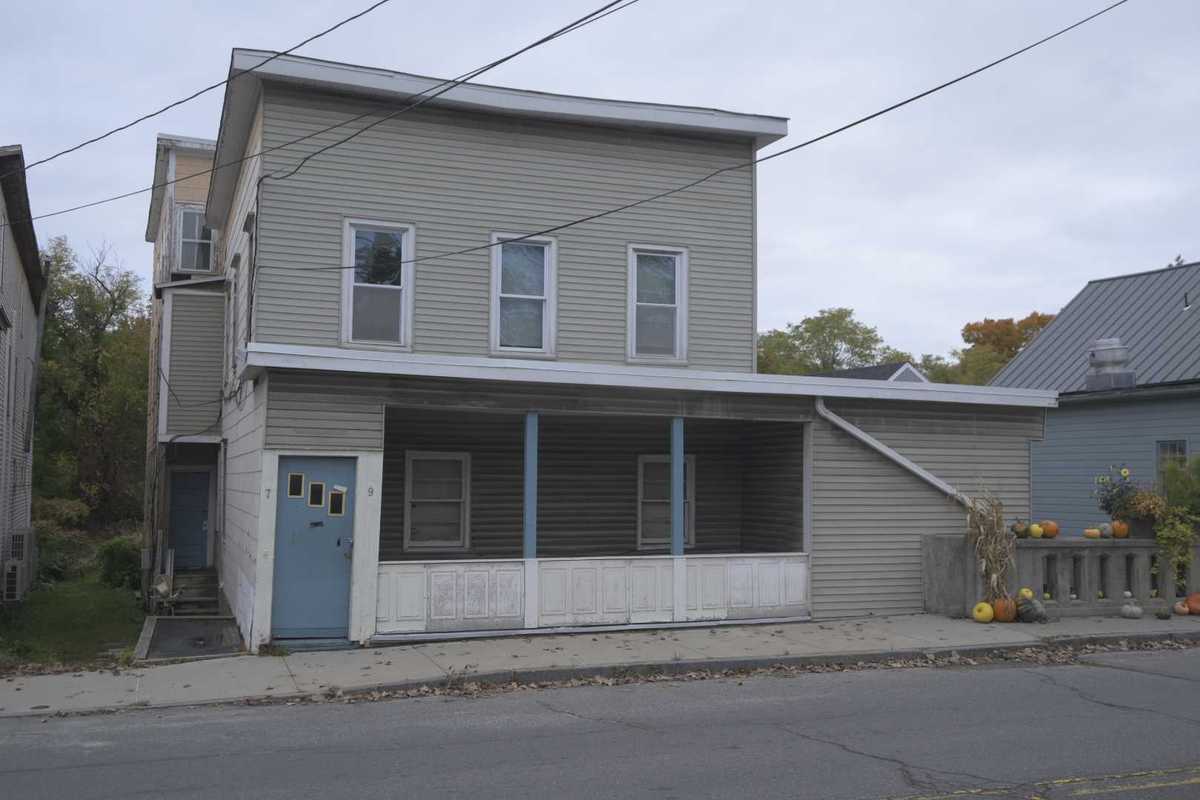
MILLERTON — Eight apartments could become the first homes built under North East’s new Route 44 zoning regulations, marking the start of a development strategy designed to bring housing to the town’s commercial corridor.
Local petroleum distributor GRJH Inc. presented plans to the Planning Board on Wednesday, June 24, to convert a two-story office building it has owned since 1997 into an eight-unit apartment building.
Lauren Simons and her daughter, Lilly, presented the plans that would include five one-bedroom apartments, two two-bedroom units and one studio. One of the units would be designated as “affordable.”
The proposal is the first residential project made possible by the town’s recent zoning overhaul. Volunteers spent more than four years drafting a new commercial zoning code with a central focus of bringing housing opportunities to a part of town that has long been seen as underdeveloped. Lauren Simons said she expects to finish the project by spring 2027 pending approval from town officials.
With the project now before the Planning Board, Lauren Simons said the building’s exterior, parking lot and roadside sign would remain unchanged.
Planning Board members requested additional information after noting the plans did not show the existing site conditions, including the parking lot and other exterior features.
“If we approve the site plan and it’s there then we can’t bother you later,” said Dale Culver, chair of the Planning Board. “I would rather see a little more detail now rather than any problems for you later.”
Discussion later turned to sewage capacity and sidewalk requirements.
Planning Board member Bill Kish questioned whether the property’s septic system could accommodate eight apartments, noting that the proposed municipal wastewater system would likely not serve the building and that sewage demands for eight residential units would be substantial.
Simons responded that the building was originally constructed as a high-volume restaurant in the 1980s, with parking and a septic system designed to handle significantly greater demand. She said septic consultants have evaluated the system and determined it can support the proposed eight apartments.
The proposal also prompted a broader discussion about ambiguities in the town’s new zoning code.
Board members questioned a provision requiring developers along Route 44 to build sidewalks, noting there are no sidewalks adjoining the property and raising concerns about how future sections would connect.
Board member Leslie Farhangi said applicants have previously addressed similar situations by granting sidewalk easements and constructing sidewalks later as neighboring properties develop.
Board member Charles Sternberg called attention to two seemingly unrelated and conflicting code sections outlining regulations for multi-family dwellings.
The board ended the discussion with requests for additional details on the site’s existing conditions including septic system, exterior lighting, landscaping, interior floorplan details and information on options for a sidewalk. The application is expected to come before the board for a second round of discussion in July.

Want more of our stories on Google? Click here to make us a Preferred Source.
Lucia Landolo
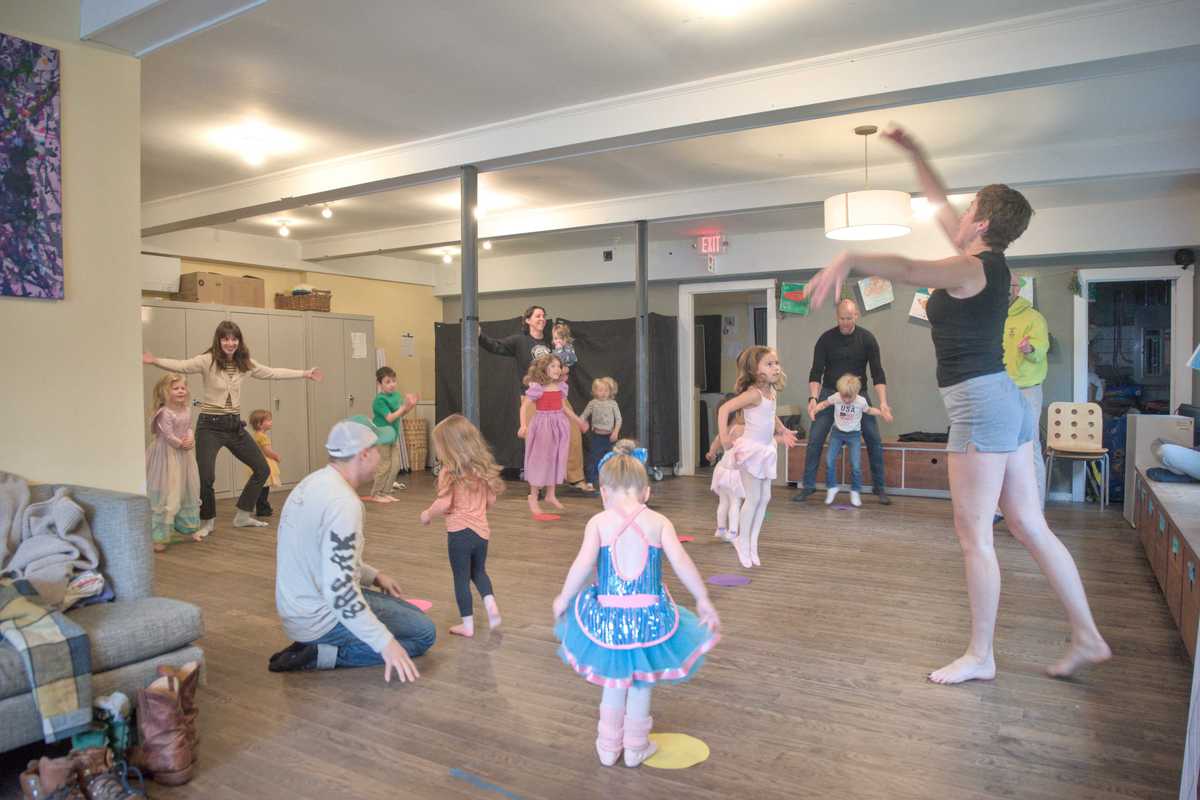
Karina Powers teaches the Dances of Chihuahua workshop class in the Stissing Center’s Banning Hall. She led a group of five children and their supporters, teaching them about the region of Chihuahua and walking them through a cultural dance.
PINE PLAINS — Children and families from across the Taconic region learned the cultural dances of Chihuahua, Mexico, as part of a series of events geared toward children throughout the summer.
Karina Powers of Red Hook’s Dance and Theater Arts Center and the Stissing Center for Arts and Culture held the “Dances of Chihuahua” workshop on Saturday aimed at teaching children in the community about Hispanic dances and culture.
Powers is a professional dancer and singer who received her master’s degree in Mexican Folklore Dance from Escuela de la Danza in Baja, California, Mexico. She is an active member of the Millbrook community where she teaches classes that educate people on Mexican culture and performing arts.
The workshop was held at the Stissing Center for Arts and Culture’s Banning Hall, where larger performances are held for members of the community. Powers began by showing families photographs of her history as a dancer and singer, as well as the traditional clothing worn by dancers in Chihuahua.
Powers said that as an artist you can learn to feel the energy from other people by seeing the emotions through their movement.
“I think it’s best for the people to get educated about folklorical dance from Mexico. It’s very important to me, because I do it with passion, with a lot of respect, and it’s what I want to show to them,” Powers said.

As the workshop continued, families gathered on the stage as Powers walked through the steps while incorporating how they are historically important to the region of Mexico. The children and their parents were able to learn the dance while being immersed in the culture of Chihuahua.
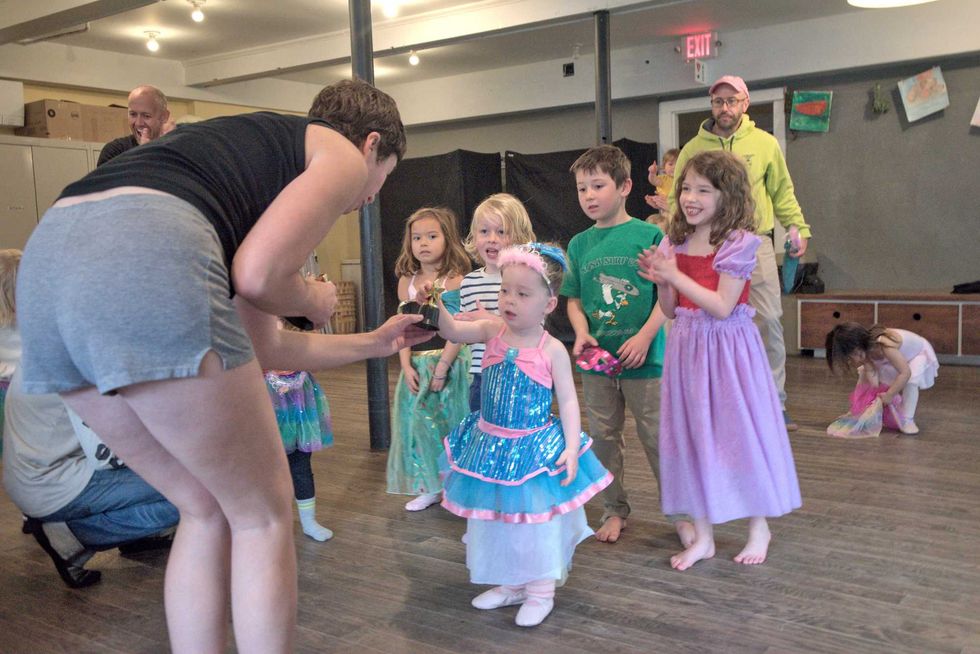
Powers taught the families about folklorico shoes, the specific footwear that dancers wear for Mexican folk dancing. She explained that the footwear and clothing are important for dancers to safely perform fast-paced movement on wooden floors, and she allowed a child to wear one of the skirts during the workshop.
The “Dances of Chihuahua” event was held as part of the Stissing Center’s Summer Children’s Series, which is a program that includes diverse programming for kids. They have workshops, presentations, plays and educational events open to all children in the community and made possible by the Center’s donors.
Jose Vazquez Nava is an Event Production Intern at the Stissing Center. He said this event is important for community members in the Hudson Valley because it appeals to a culture that is not regularly showcased and involves children in more diverse programming.
“I think having these programs are so important, not only for children, but we could probably encourage kids who want to pursue dancing or a career in media arts,” Vazquez Nava said. “Centers like ours bridge that gap between a kid learning math or learning a new culture or art, which is very important.”
Powers showed the children and their families a choreographed routine with music while teaching them certain traditions that dancers follow. She explained that dance is not only physical, but emotional. She emphasized dancers making noises and screaming during their performances to get the audience’s attention and treat the performance like a celebration.
The Stissing Center for Arts and Culture’s Summer Children’s Series runs until Aug. 22, 2026. Each Saturday they hold free or “pay what you can” events sponsored by the Bank of Millbrook and Sugar Hill Farm. The events feature live music, storytelling and interactive workshops.
Powers said it is important to honor and respect this form of dance as it takes years to learn not only the artform, but the history behind it.
“Mexico is art, Mexico is history, Mexico is culture, and the way some people show it is not right,” Powers said. “For me, it’s very important to be educated because we have to take this with honor and respect.”
Leila Hawken
Cristian Canmano presented an engaging Dinosaurs Rock program complete with genuine prehistoric artifacts, educational and entertainment for both kids and adults at the Millbrook Library on Saturday, June 27.
Millerton News
FALLS VILLAGE, Conn. — LJMN Media, Inc., publisher of The Lakeville Journal and The Millerton News, has announced the addition of three new members to its board of directors: Elyse Harney Morris, Thomas Trowbridge III and Karsten Moller. The appointments reflect the organization’s continued commitment to strong local journalism and community engagement.
Harney Morris, of Salisbury, is the co-owner of a leading regional real estate firm and comes from a family with deep roots in the Northwest Corner. She has served on the boards of numerous local organizations, including Indian Mountain School, the Salisbury Grove Committee, and the Salisbury Volunteer Ambulance Service, and has long been active in conservation and community initiatives throughout the region, including Project SAGE and the Dutchess and Columbia Land Conservancies.
Trowbridge, of Sharon, is an attorney, civic leader, and author who served for many years on the board of the Hotchkiss Library of Sharon, including as its president during the restoration and expansion of the library’s historic building. A graduate of Yale University and the University of Michigan Law School, he spent much of his legal career with prominent New York law firms.
Moller, of Salisbury, has held senior leadership positions in international finance, investment banking and asset management, including roles with Goldman Sachs, JPMorgan-affiliated Highbridge Principal Strategies and the Securities Industry and Financial Markets Association. He currently advises organizations on investor relations, fundraising and strategic partnerships and has been an active supporter of regional nonprofit organizations.
“Elyse, Tom and Karsten each bring valuable experience, strong community ties and a commitment to the future of local journalism,” said CEO and Publisher James H. Clark. “We are grateful for the knowledge and perspective they bring to our mission.”

Want more of our stories on Google? Click here to make us a Preferred Source.

Want more of our stories on Google? Click here to make us a Preferred Source.