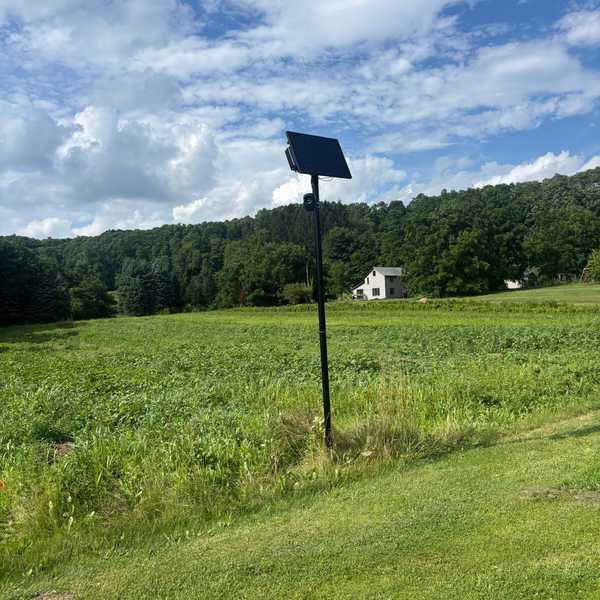
Did you notice that some sugar maples lost their leaves far earlier this fall than others, missing out on the color parade? The leaves wilted from dull yellow to brown in August before falling off in early September. Where we live, it has happened for several years to a few older maples near the house.
I called two arborists to get as accurate a diagnosis as possible by phone and received two opinions on the issue, both involving fungal pathogens. Skip Kosciusko, a West Cornwall arborist, diagnosed the problem as verticillium wilt, which he says has reached pandemic levels among the area’s sugar maples. “It looks like we have climate conditions that prevent the really cold air from settling in the winter. Cold is helpful in killing the fungus deep inside the tree.” Verticillium wilt enters through the roots and blocks the tree’s vascular system, preventing water from reaching the leaves. It will most often kill the tree, especially young or poorly maintained ones.
Chris Roddick, formerly head arborist at the Brooklyn Botanic Garden, blames anthracnose. You may be familiar with the way anthracnose affects sycamore trees, a type of maple. Infected sycamores lose their first set of leaves in early spring, after which another set grows back. In the case of sugar maples infected with anthracnose, the leaves fall in August — about six weeks early — and they do not grow back until the following spring. We don’t yet know what this shorter life cycle will mean for the long-term viability of infected trees.
Skip has been treating infected sugar maples with a product called Kphite, which he describes as a salt from the minerals potassium and phosphate, known as phosphonate. He has found that it works well on beech trees, too, but he does not claim it is a cure. Rather, it bolsters trees’ natural defense mechanisms and their ability to deal with fungal infection. This product is available only to commercial entities, so homeowners need an arborist for its application.
Chris does not use any fertilizers on trees aside from compost. He is concerned about the long-term effects and unintended consequences of chemicals — even mineral supplements — that can leach into the water supply. He is “okay” with trees dying, and he’s “not doing nothing”; instead of applying chemicals, he is planting other species. His approach encourages a diversity of native plants so he can see what thrives in this new environment.
“Understanding disease pressures in plants is difficult. We often isolate an individual maple tree and see what happens. It’s different in the woods or for a stand of trees — here we have a system. If you manipulate one, you have consequences for the others. We think there are things to be done; we just don’t know what.” What we do know: fungi are quickly adapting to a warming climate, and changes in precipitation patterns may also favor fungal spread to trees.
As with humans, plants require minerals for healthy functioning. Humans can eat nutritious food or take supplements for overall health or to improve immunity; plants rely on the soil. There seem to be at least two reasons why plants are not getting what they need. One is that necessary nutrients have been depleted from the soil. Research suggests this may result from the recent Asian jumping worm infestation. The worms voraciously ingest soil — and the minerals that would otherwise be available to plants. In doing so, they turn the topsoil into a porous texture best described as coffee grounds. Rain can more easily wash through soil in this state, carrying away nutrients trees and other plants rely on.
A second reason is that trees may no longer be able to access needed minerals. This can happen if naturally acidic soil becomes alkaline or vice versa. Plants thrive at certain pH levels; a shift can inhibit nutrient absorption. We are seeing soil chemistry change in our woodlands as invasive plants proliferate. A 2003 study examined forest soils and mycorrhizal fungi associated with sugar maples and found that “a profound change in the mycorrhizal system will be one component of the potential ecosystem effects of invasion of new forest habitat by nonnative earthworms.” Mycorrhizae are the underground fungal threads that help trees share and trade nutrients. The study found that Asian jumping worms are breaking up the mycorrhizal network that helps sugar maples share and trade nutrients. (See theungardener.com for full citations of this and other studies.)
Can trees wait for science to help them? Should we experiment with possible solutions without understanding the full consequences, even if doing so might save trees? What actions do we take in the face of continuing species decline? It’s a subject we are obliged to explore here in the Northwest Corner, where so much of our experience relies on the view-enhancing, shade-giving, wind-breaking, habitat-restoring tree population.
Dee Salomon ‘ungardens’ in Litchfield County.
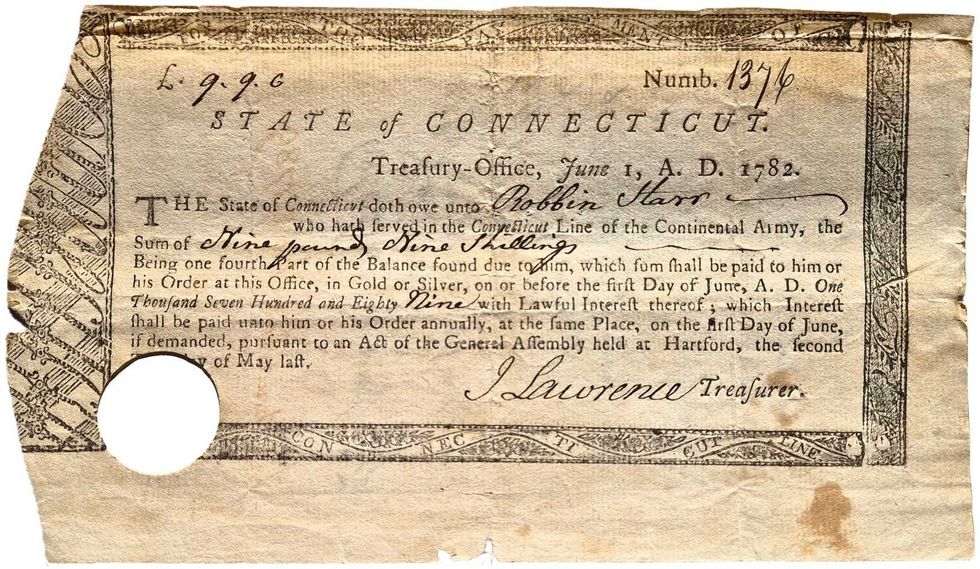 Pay Bill for Robin Starr’s service in the Continental Army.Courtesy the Alex Breanne Corporation
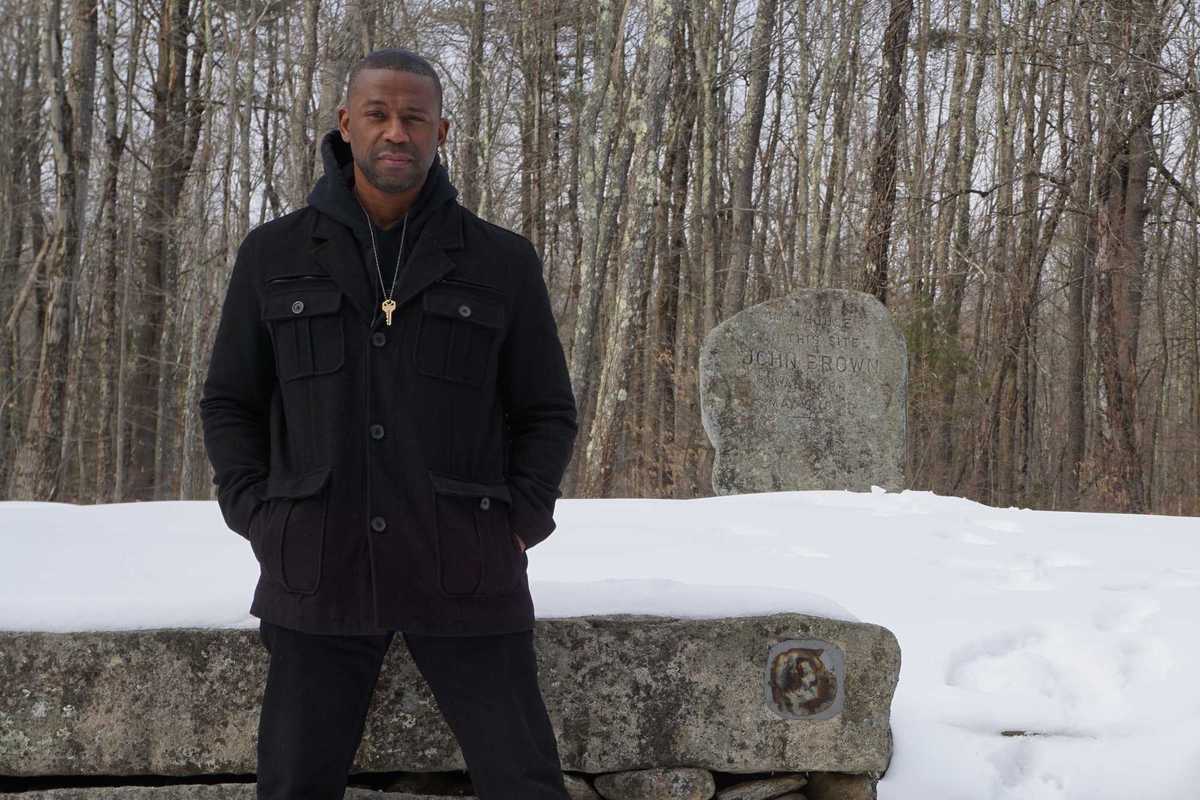
 John Mills speaking at Quinnipiac University.Courtesy the Alex Breanne Corporation

 Stephanie Saetta,with her rescue dog George and Blue (left), a shepherd mix awaiting his forever home.Madi Long