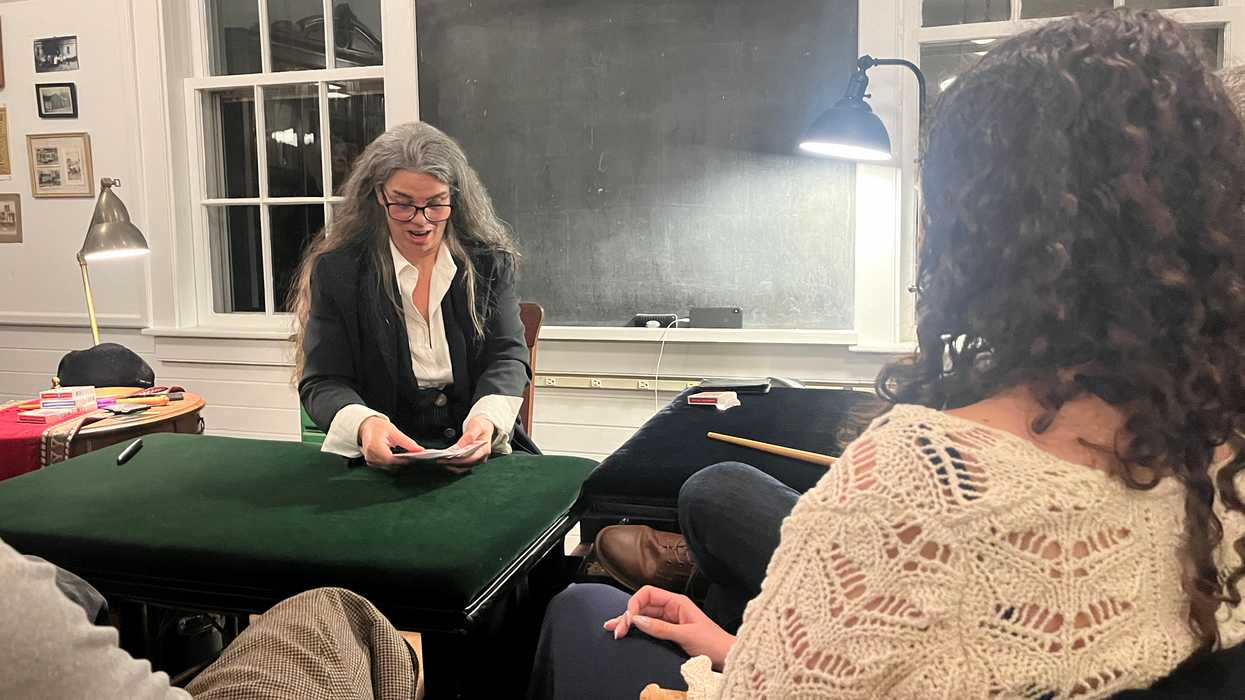
Sinclair’s show explores the ways women have been practicing forms of magic for centuries, and there is plenty of history to tell.
Belinda Sinclair is the kind of magician who impresses people who don’t like magic. Her tricks are mind-boggling. Her stories are captivating. And if she picks you to write your name on a card, get ready to be wowed. Repeat attendees of her shows, of which there are many, take almost as much delight in watching new jaws drop as they do in seeing an illusion reach its astonishing conclusion.
Since the summer of 2025, Sinclair has been baffling local audiences at the Hughes Memorial Library in West Cornwall, but her magical run comes to a close at the end of August.
For 45 years, Sinclair, a New York City native, has been hosting small, intimate performances in the “Conjuring Room,” her Victorian parlor in Hell’s Kitchen. It’s a place made for magic, with built-in surprises designed to disorient. But the Hughes Library doesn’t have the same potential to perplex. The room is, as the name suggests, a library, with shelves packed tightly with old books. Some of those books, stocked by Sinclair herself, dive into the history of women and magic. That particular topic is the organizing principle of her show.
Today, we live in a world with large-scale magic productions from household names like David Blaine. Penn & Teller and Criss Angel had widely popular television series, while performers like magician and comedian Justin Willman have found audiences on Netflix. David Copperfield, the most commercially successful magician in history, only recently had his 25-year Las Vegas residency cancelled, after allegations connected to the Jeffrey Epstein investigation resurfaced. But very few women, arguably none, have reached the highest levels of fame in the magic world.
Sinclair’s show explores the ways women have been practicing forms of magic for centuries, and there is plenty of history to tell. Her head is simply full of historical anecdotes and interpretations. She seems to know everything there is to know about magic and how, over the centuries, it has been feared and misunderstood.
It’s knowledge she acquired through decades in the world of magic. Sinclair got her start by accident. After graduating from New York City’s High School of Performing Arts, she was hired to entertain a long business conference as a clown. Despite having no clowning experience, she did so well that she was hired for a party on the spot where she was expected to perform magic. She didn’t know a single trick. So she headed to Tannen’s, the legendary Manhattan magic shop that is still open to this day, and asked them to teach her.
She was so captivated by the first trick she learned that she soon began illustrating the shop’s newsletter, the “Trickune.” Soon, she had worked her way into the world of magic. But her trajectory seemed limited. Women in magic were, and frequently still are, relegated to the role of “lovely assistant,” and Sinclair was no exception. She played along, laughing at the bad jokes and flirting with the right men, all the while knowing she could perform better than most of them.
Soon, she stopped playing along. She started developing her own routines. She became increasingly proficient with a deck of cards. She practiced and practiced and practiced. Eventually, the magic establishment took notice of this young magician with the audacity to be a woman.
As her reputation grew, so did the challenges she faced. Breaking into the inner circles of magic is no easy task, but Sinclair knew that if she wanted to be taken seriously, she needed to impress the people at the top. The Magic Circle, a prestigious British society whose members have included Penn & Teller, Stephen Fry and King Charles III, evaluates prospective members through a rigorous performance examination that includes required tricks. Sinclair earned a perfect score of 100 out of 100, proving not only that a woman could perform magic, but that she could perform it as well, if not better, than anyone.
As remarkable as her skills are, there’s a lot more to Sinclair than magic. She’s a ceramicist, hypnotherapist, author, game creator, actor and coder. But perhaps most importantly, she’s a teacher.
Sinclair thrives on helping others navigate through whatever obstacles life throws their way. For a time, that meant helping military veterans with PTSD transition to civilian life. She teaches children how to code so they can build their own websites. She works with unhoused children, using magic to boost their confidence. But if she has her way, the most important lesson she can teach is that with the right amount of work and determination, anyone — and especially little girls — can do the impossible.



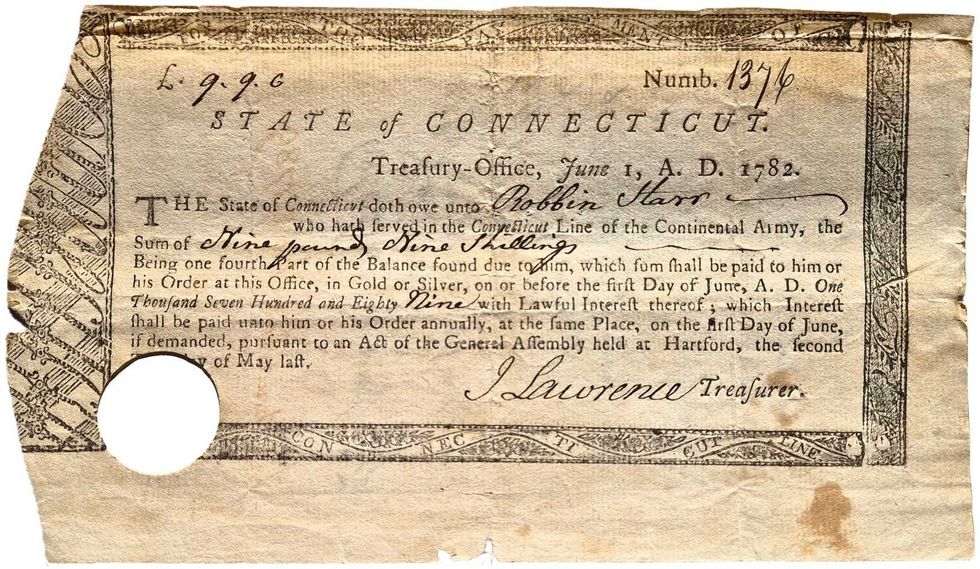 Pay Bill for Robin Starr’s service in the Continental Army.Courtesy the Alex Breanne Corporation
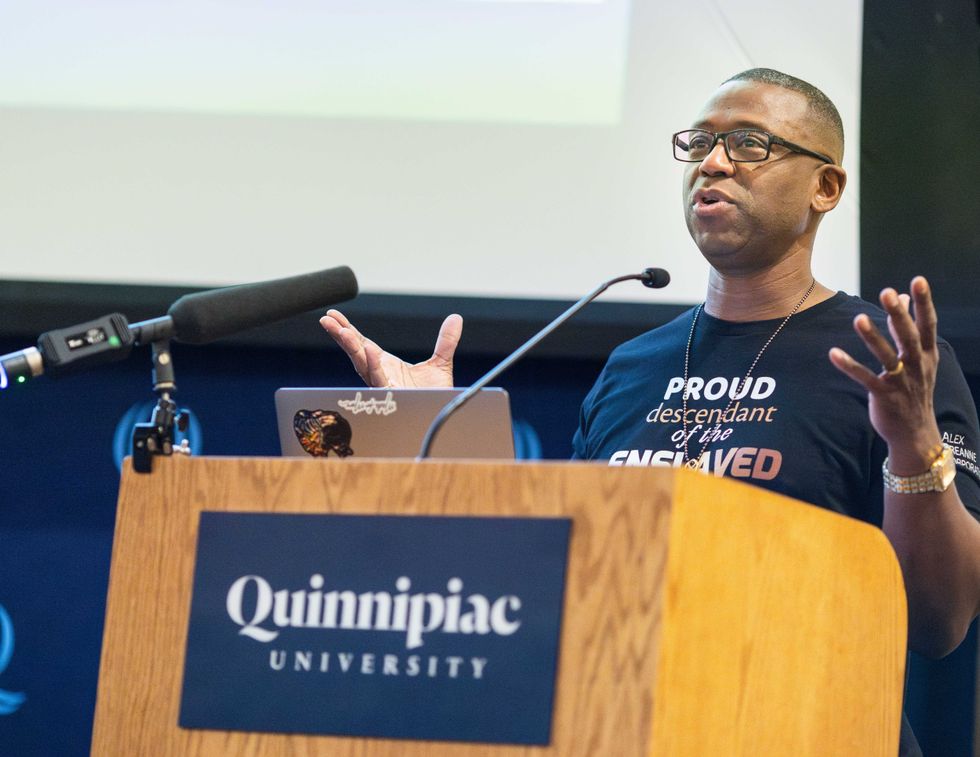 John Mills speaking at Quinnipiac University.Courtesy the Alex Breanne Corporation