On Saturday, Oct. 24, at the Cornwall Historical Society, author and genealogist John Mills will breathe new life into the stories of some of Connecticut’s more underappreciated patriots. The reason these heroes were forgotten? They were Black.
At a time when white colonists were fighting for their own liberty and political independence, many Black men who fought alongside them remained enslaved. Some risked their lives only to return to bondage. Though enslaved people were promised freedom from both sides of the Revolutionary War in exchange for their service, Great Britain, too, was still deeply dependent on slavery. For Black people in America, the war presented both extraordinary risks and uncertain paths to the freedom that white colonists were demanding for themselves.
One systemic consequence of slavery is the loss and obscuring of the histories of those who were enslaved. Records were often not kept about where Africans had been stolen from or who they were related to. Families were torn apart, leaving nothing but the faintest traces of the past. The delineation point, where genealogists can no longer trace histories back, is refered to this as the “document wall.”
Today, 250 years after the signing of the Declaration of Independence and more than 160 years since the Emancipation Proclamation, there is a growing effort to restore some of the history stripped from enslaved people and their descendants. Among the leaders of these efforts is Mills, president of the Alex Breanne Corporation, a nonprofit organization that works to identify previously anonymous Black Americans from history and connect them with their living relatives.
The work began with Mills’ sister, who started digging into their family’s past in the 1990’s and introduced him to this emerging world of genealogy. Through that process, the Mills family discovered their great-great-grandfather, Ned Mills, who had been enslaved in Texas. His last name came from his final enslaver and remains the family surname. Through their research, they found that the document wall directly affected their ancestor, who learned of his liberation on June 19, 1865, now commemorated as Juneteenth.
“For the first time,” Mills writes on his website, “American slavery wasn’t something that had happened to anonymous people in a history book. It had happened to my family.”
The discovery gave Mills a familial pride he had been missing for years. That pride fueled his desire to help others find their own history. In 2023, Mills received his certificate in genealogical research from Boston University. He has used his expertise to help descendants of enslaved people uncover histories they never dreamed of learning.
To do this, he uses a process called “reverse genealogy,” identifying a person from the past and working forward to discover their descendants. Along the way, Mills has found some remarkable people who fought for freedom on American soil, some of whom were never freed.
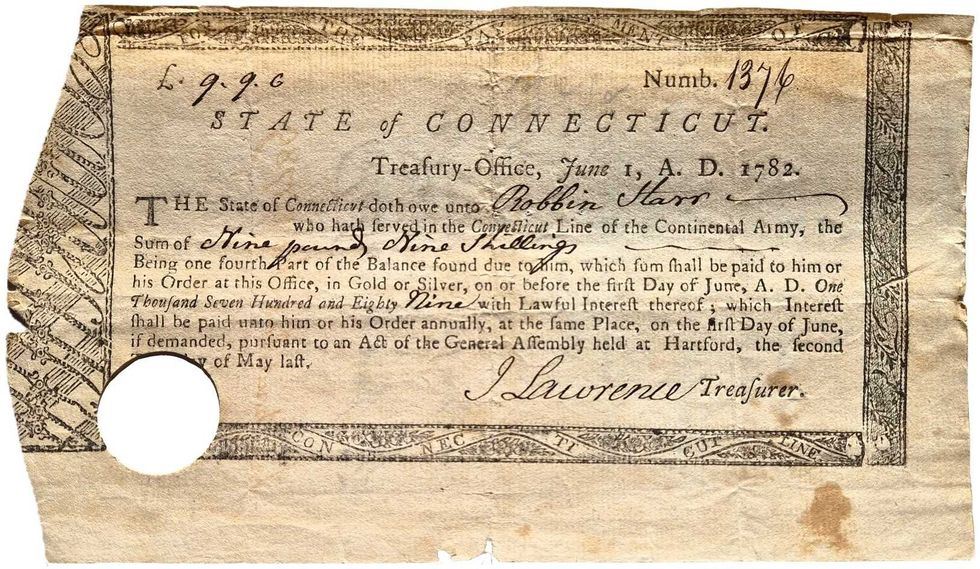 Pay Bill for Robin Starr’s service in the Continental Army.Courtesy the Alex Breanne Corporation
At the Cornwall Historical Society event, Mills will present the stories of four Connecticut families: Job Lathrop of Norwich, the son of Pirmus Armes, about whom Mills has published a book; Prince Mortimer of Middletown, also the subject of a book by Mills;, the three sons of London Wallace of Simsbury; and Robert “Robin” Starr of Danbury, who later lived in Cornwall and Sharon.
A few years ago, Cornwall Consolidated School social studies teacher Will Vincent reached out to Mills for research guidance on a local history project his students were undertaking. Together, they learned about Naomi Freeman of Cornwall. After purchasing an acre of land on Great Hollow Road in 1828, Naomi Freeman became the first Black female landowner in Cornwall.
The students petitioned the town to rename a road after the historic Cornwall resident In April 2025, Great Hollow Road was officially renamed Naomi Freeman Historic Road. U.S. Rep. Jahana Hayes joined Mills and the Cornwall Consildated School students for a presentation of their research.
Since then, Mills has guided the students in their quest to learn more about Starr’s story. Starr was a Revolutionary War soldier who joined the Continental Army to earn enough money to buy his own freedom, receiving the Badge of Merit in the process. The stories of his descendents’ services are equally worthy of their own books.
In recognition of Mills and the students’ work, First Selectman Gordon Ridgway proclaimed Feb. 8 as Robin Starr Day.
Preregistration is required for the event at the Cornwall Historical Society. To learn more about Mills’ work, visit
alexbreanne.org.
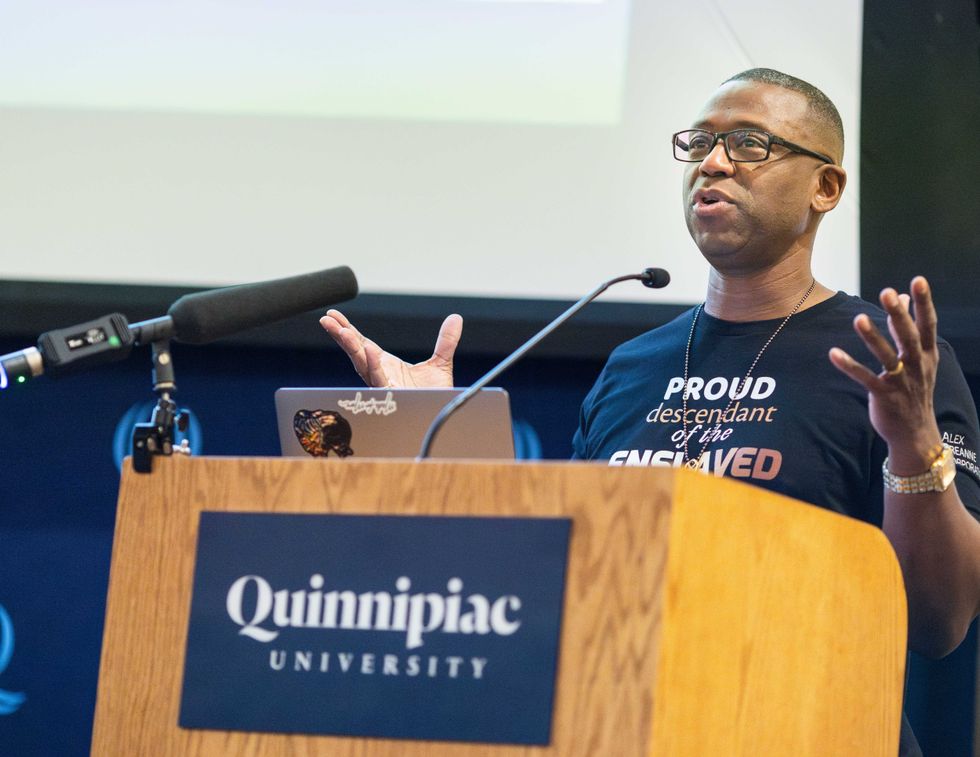 John Mills speaking at Quinnipiac University.Courtesy the Alex Breanne Corporation

 Stephanie Saetta,with her rescue dog George and Blue (left), a shepherd mix awaiting his forever home.Madi Long