It’s a joyful process. —Susan Schneider
A beautiful September morning found Susan Schneider of Shandell’s working in her Ashley Falls home studio, while linen cocktail napkins she had marbled the day before hung on a line outside her back door. Her helpers, dogs Daisy and Stubbs, are never far from her.
“Marbling,” Schneider explained, “the art of floating paint on a liquid and printing it on a medium, has been around for hundreds of years.”
She has been creating lampshades for 25 years and has settled in Ashley Falls, where she is renovating a barn behind her house for a larger studio. Her mission: “Changing the view on plain white lampshades, one at a time!”
Besides using marbled paper, she uses papyrus, silk and hand-painted papers for the shades.
Shandell’s on Main Street, offers a large selection of marbled decorative home items on its website — trays, coasters and bookends, to name a few — as well as scarves and belts. Schneider will also customize items and creates custom wallpaper, gifts and favors for weddings and special events. She offers consultations by appointment.
Schneider explained how she began making lampshades.
“I was in business as an antiques and textile dealer, needing lampshades at the time (the early 1990s). I had a dealer who used to make lampshades. She was moving and sold me everything she had in her barn for making them. Arcs, templates for lampshades, and tools.”
Schneider used the marbled paper from the endpapers of old books to make small lampshades.
“I collected those voraciously.”
The papers were too small for the larger lampshades she wanted to make. To get paper in the size she needed, she decided to learn how to marble.
That was 10 years ago. She now has 20 tanks for marbling, including one 10-foot tank that allows her to make 3 yards of fabric at a time.
As she demonstrated the marbling process, making covers for journals, it was easy to see why she “got hooked.”
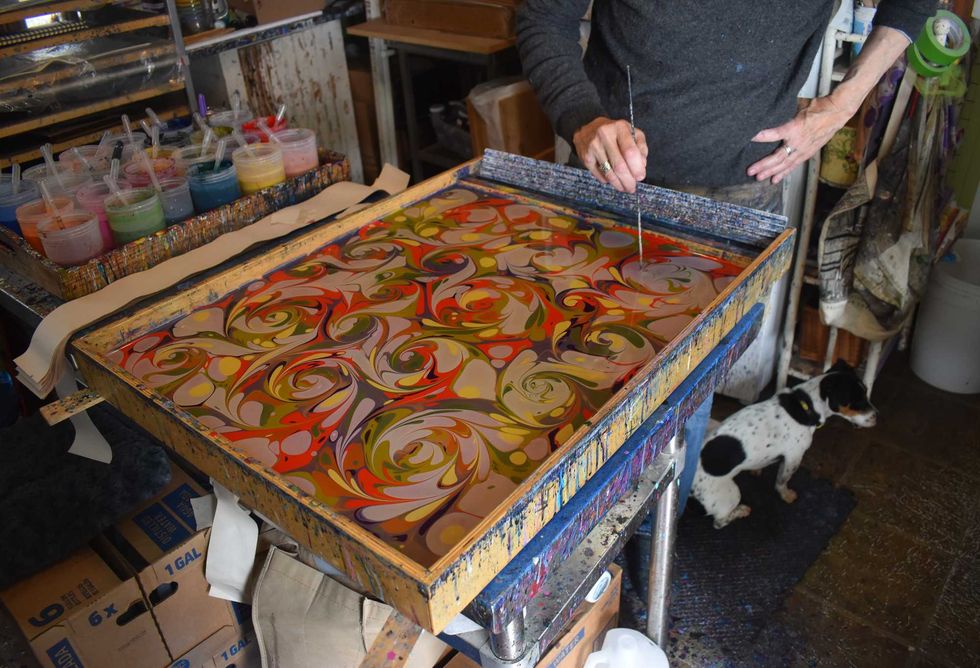 Susan Schneider, owner of Shandell’s, creates a variety of products with marbleized surfaces in her Ashley Falls studio.L. Tomaino
She explained that marbling takes a couple of days of preparation. She prepares water mixed with carrageenan the night before so that it thickens and becomes a viscous liquid onto which the acrylic paints can be dropped. Paper or fabric must also be prepared with alum, which “makes the paint stick,” she said, a day or two ahead of time.
When she was ready to start, Schneider first used a level to make sure the tank was even. Then she pulled a squeegee across the surface of the carrageenan mixture to break the surface tension, followed by strips of newsprint for the same purpose. She also dipped small pieces of newsprint into the mixture.
“The hardest thing to teach people is to break the surface tension first,” she noted.
Next, she used droppers to place rows of paint onto the mixture.
“It’s a joyful process,” she said as she chose more colors. “It’s totally the pleasure of the colors.”
She explained, “The colors are stopped from spreading by the surface tension.”
Then she added newsprint around the edges of the tank to break the tension again and added another layer of color. Next, she used a marbling comb, slowly dragging it back and forth across the width of the tank to create a feather-like design.
Combs come in many sizes, with teeth spaced at different intervals and in different patterns. She chose another comb to drag through the length of the tank, making the design more intricate before laying two pieces of paper on the surface. After a second or two, she lifted them, perfectly capturing the pattern, and carried them to the sink for a rinse with water.
Once she squeegeed away the paint left in the tank, she was ready to begin the process again.
Next, she created a different type of design, dripping colors in a less ordered array, then twirling them into curving lines and circles with a thin rod.
When the surface was ready, she laid a journal cover on top, then lifted it out, covered in a vibrant pattern of swirling colors.
For observers, the process can seem magical.
Schneider loves to share the delight of marbling by teaching classes at Dewey Hall in Sheffield. Upcoming classes will be held Nov. 20, 21 and 22. Beginning in November, she will also offer private classes in her home studio. Schneider had never pictured herself having a business like Shandell’s, but she discovered a passion for creating, as she says, “things that make you smile.”
For more information about her work and upcoming classes or to contact her for a consultation, visit shandells.com.




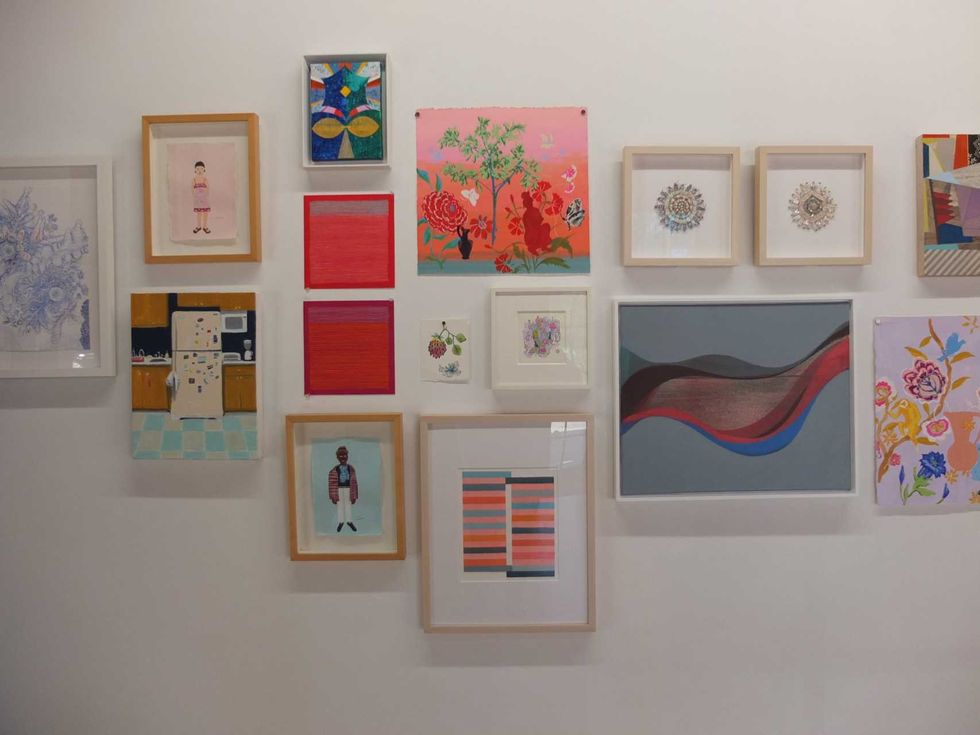 Part of “Cool & Collected” at Kenise Barnes in Kent.D.H. Callahan
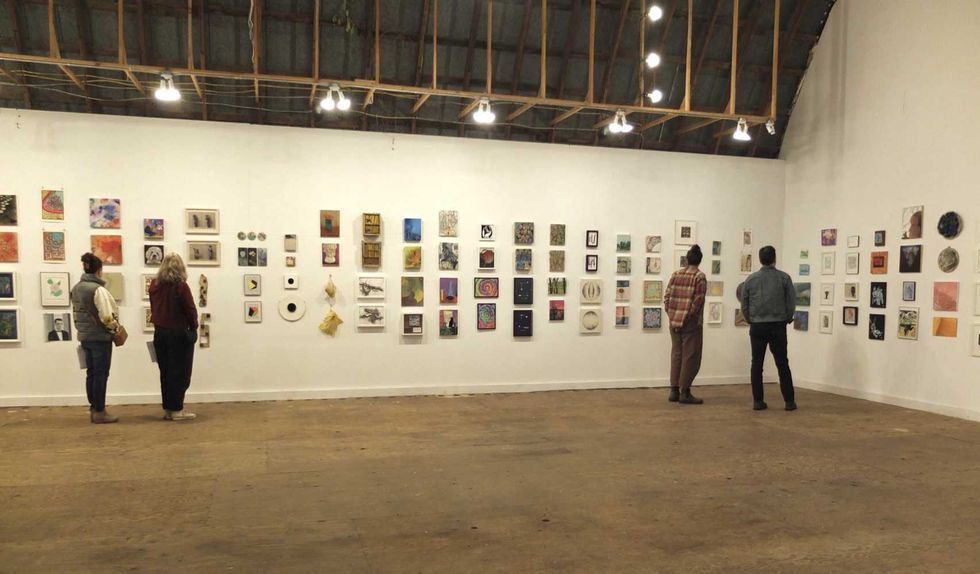 The Re Institute’s Holiday Show features more than 400 works by over 200 artists through Dec. 6, with a closing party from 1 to 4 p.m. that day.D.H. Callahan
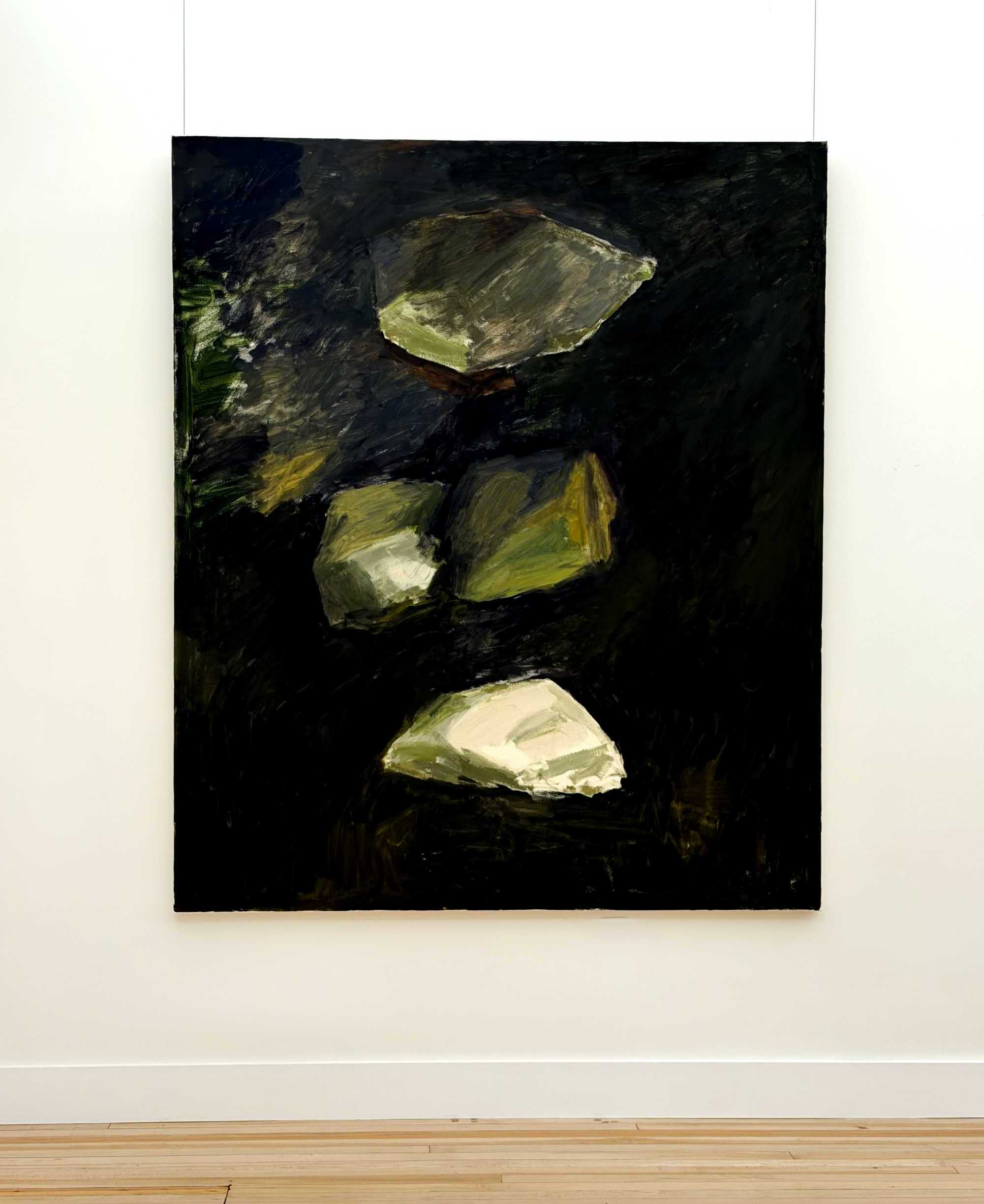 “From Ground to Gravity,” 2026, Oil on Canvas, 77 x 65 inchesProvided
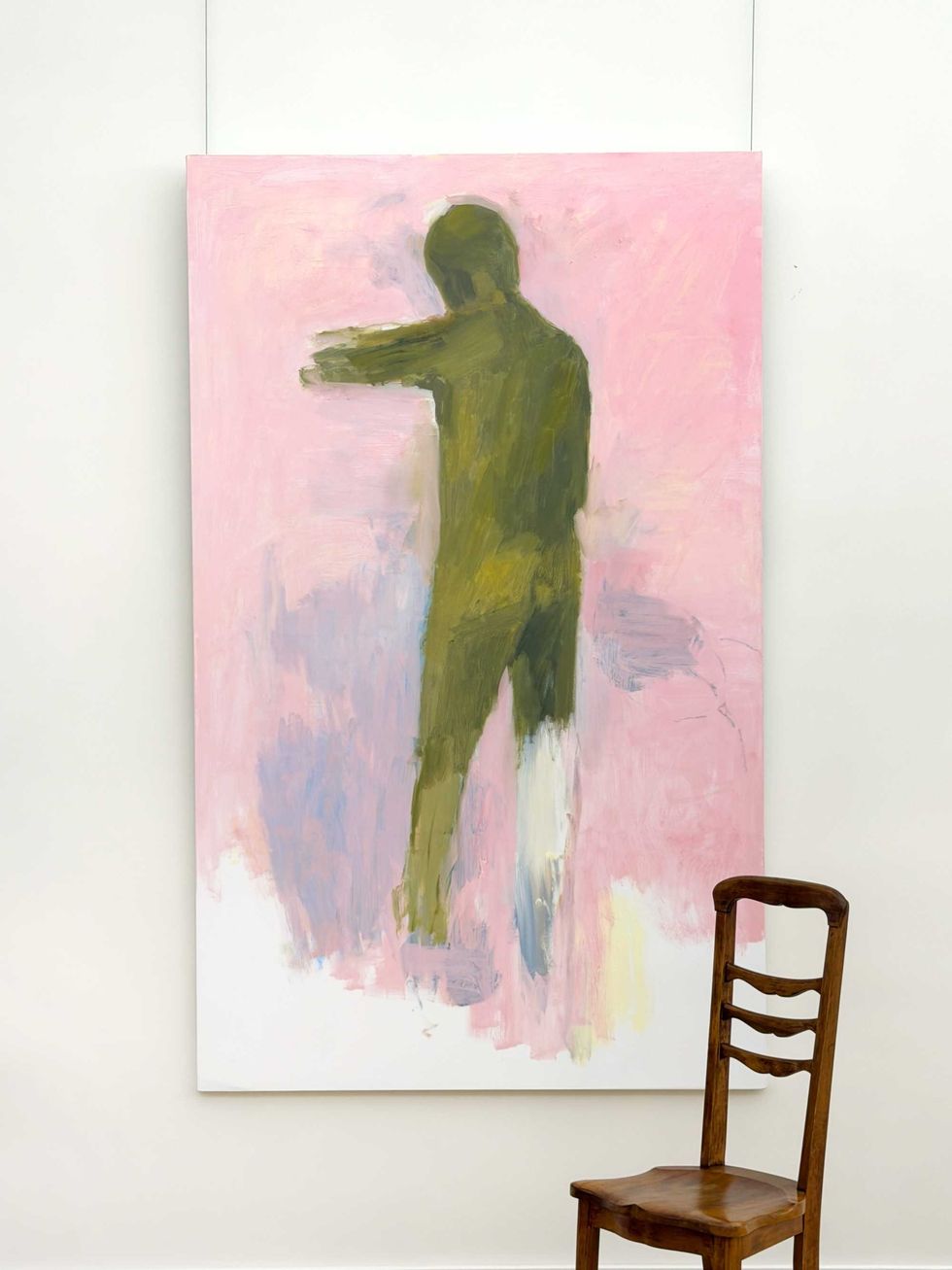 “Nature Eternal,” 2026, Oil on Canvas, 77 x 47 inches.Provided