POUGHKEEPSIE — A resolution requiring Dutchess County to cover its deactivated Flock Safety cameras was unanimously advanced in the Dutchess County Legislature Tuesday, Oct. 13. That will include cameras in Millerton and Amenia, even if they're on private property.
The cameras, which capture the license plates of passing cars, were decommissioned after a public forum in Pleasant Valley last month. Following that meeting, Dutchess County District Attorney Anthony Parisi and Sheriff Kirk Imperati announced on Sept. 25 that roughly 60 cameras owned by the county would be immediately deactivated. The cameras are to be physically removed by Oct. 25.
The measure passed in the County Legislature means covering cameras the county owns, leases, operates or funds.
When asked whether the resolution would apply to cameras on private property, District 19 County Legislator Chris Drago confirmed that the resolution “will apply to all County contracted cameras, no matter where they may be placed.”
In Northern Dutchess, the Flock cameras on private property were installed as part of contracts made with the Dutchess County Sheriff’s Department.
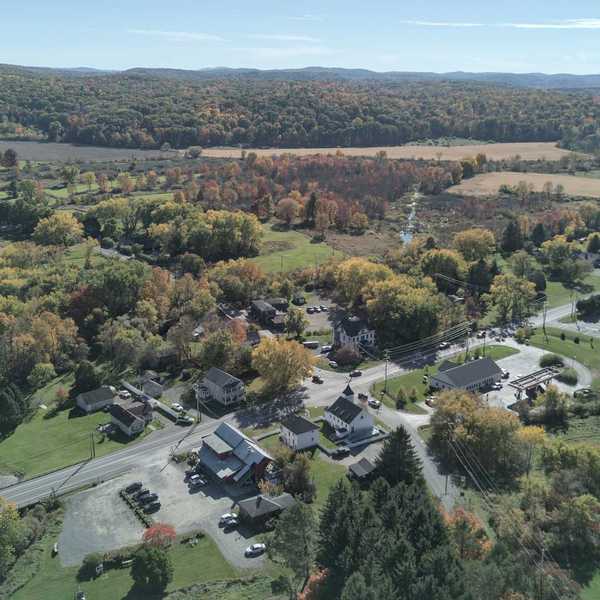
In Millerton, the Flock camera is along Route 22 on Silamar Farm, which is owned by Julie Schroeder. As of Monday, Oct. 12, Schroeder said no one has been in contact with her about the camera’s removal. But Schroeder said she was open to having the cameras covered. “They can do that. Hopefully, they’ll figure it out,” she said. “I don’t really care.”
Previously, when private property owners have expressed a desire to have their Flock camera removed — as was the case of Flock cameras in Pine Plains and Milan — law enforcement has agreed to do so, but the physical removal can take 30 days.
This new resolution to cover the cameras was introduced by Drago as a backstop rather than an immediate order. It would take effect only if the cameras are still mounted after the removal deadline. In that case, county officials would have seven calendar days, counted from the deadline of Oct. 25 or the resolution’s adoption, to cover each device with opaque material that causes no damage.
District 25 Legislator Eric Alexander, who organized the public forum, said that “at the Flock forum, citizens expressed great urgency about eliminating surveillance cameras in Dutchess County. Now they are demanding certainty about when they will be physically removed.”
Drago said the resolution aims to “give residents visible assurance that the cameras are no longer operating … Covering the Flock cameras is a small act, but an important step toward restoring public trust by demonstrating respect for residents’ privacy and freedom.”
District 16 Legislator Yvette Valdés Smith, who chairs the legislature, added, “I stand firm on the idea that mass surveillance has no place in our community...I’m proud to support not only removing these cameras, but also covering them so it is abundantly clear they are no longer collecting any of our data. This is a great example of the public making their needs clear to their representatives, and our job as elected officials is to listen and respond.”
The full county legislature is scheduled to take up the resolution Tuesday, Oct. 13, at 6:30 p.m. in Poughkeepsie. If it passes and the removal proceeds on schedule, the covers may never be needed. But the measure aims to offer a measure of accountability on the county’s promise that the cameras will stop capturing license plates by the agreed-upon date.
Frustration with the cameras is growing across the region, rising to vigilantism.
On Sunday, Oct. 11, a 26-year-old Rhinebeck man was charged with setting a brush fire and damaging a Flock camera. John K. Coleman is accused of setting the camera on fire, which led to the brush fire. He was charged with criminal mischief and arson. Before Dutchess County turned off their cameras, Connecticut towns like South Windsor, Windsor, Milford and Newtown already ended agreements with Flock.








 Meg Sher, executive director of the David M. Hunt Library in Falls Village.L. Tomaino