Thank you!
Your support is sustaining the future of local news in our communities.

Tangled: Trout unlimited, bass optional

Tangled: Trout unlimited, bass optional

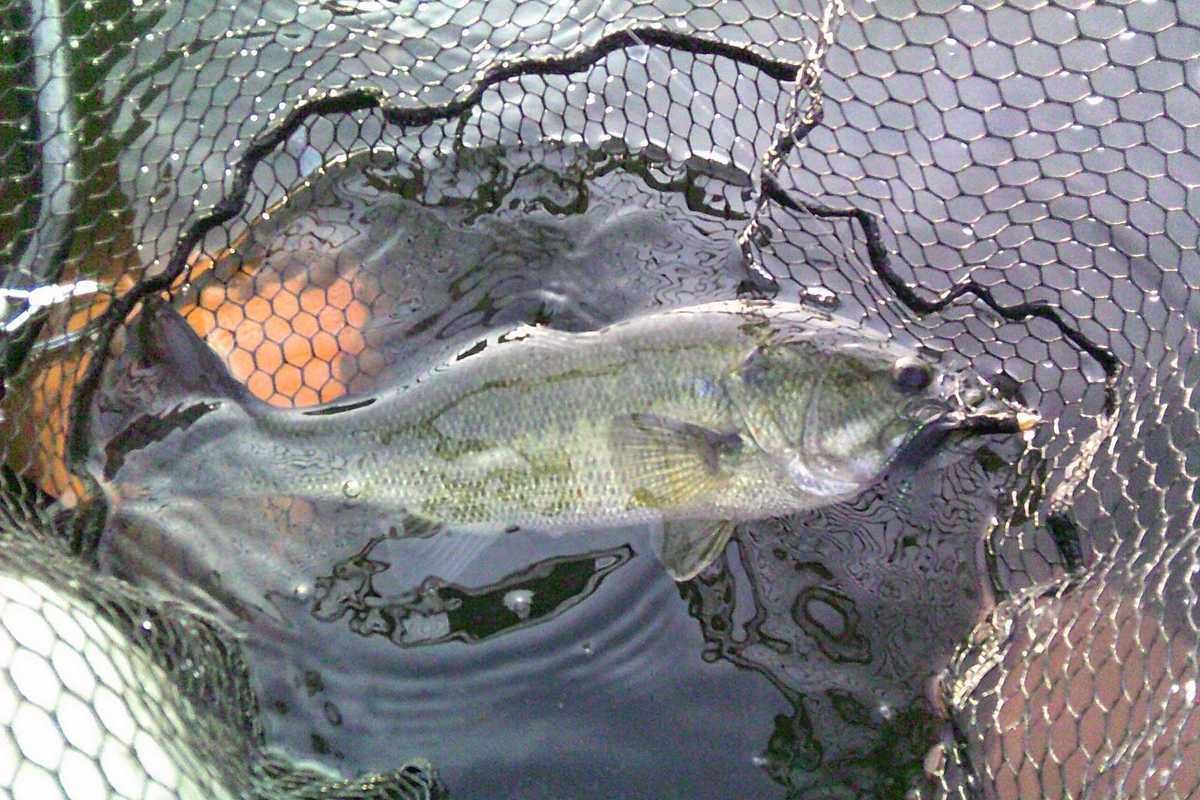
Eddie Curtis of New Jersey casually caught and released a Housatonic River smallmouth bass of modest size during a Trout Unlimited smallmouth bass event at Housatonic Meadows State Park Saturday, Aug. 16.

Patrick L. Sullivan

I moseyed down to Housatonic Meadows State Park late Saturday morning on Aug. 16 for a Trout Unlimited smallmouth bass event put on by the Mianus chapter.

“Wait a sec,” you say. “If it’s Trout Unlimited, why are they fishing for smallmouth bass?”

The answer is two-fold.

First, the Housatonic River in summer is primarily a smallmouth fishery. The water is too warm for trout but it doesn’t bother the bass much.The trout are hiding out in the thermal refuge areas and are off-limits until mid-September.

Second, the word “unlimited” suggests wiggle room.

When I rolled in there was a small pop-up tent with the words “Trout Unlimited” on it set up by the upper parking lot. Being a trained observer, I spotted this vital clue almost immediately.

There was a folding table under the tent. It was empty, but it seemed likely there would be food on it at some point.

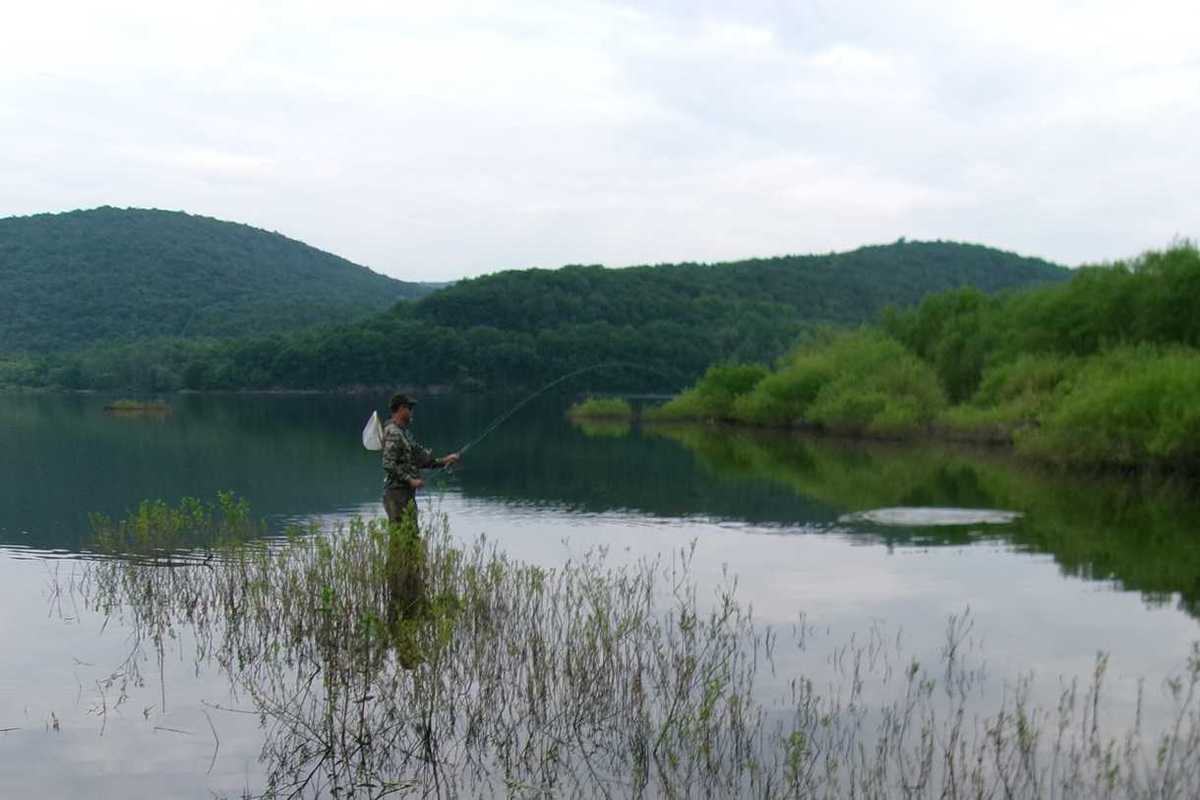
Trained observers are also patient. I tabled the food question and motored down to the lower parking area, where I beheld half a dozen men with fly rods casting into the low, slow river with varying degrees of proficiency and enthusiasm.

The nearest to me turned out to be Eddie Curtis, who hails from southern New Jersey. “About 15 minutes from Philly,” he said.

Curtis was a fortuitous choice of subject. Chatty and easy-going, he embarked on an angling monologue that included adventures on salt and fresh water and an incisive critique of fish and game practices in his home state.

All the while he chucked lazy downstream casts. On about every tenth one, he hooked a smallish smallmouth bass.

I asked him what fly he was using. The answer -- a black Wooly Bugger -- wasn’t surprising. That’s a standard pattern for this kind of fishing. Almost a cliche.

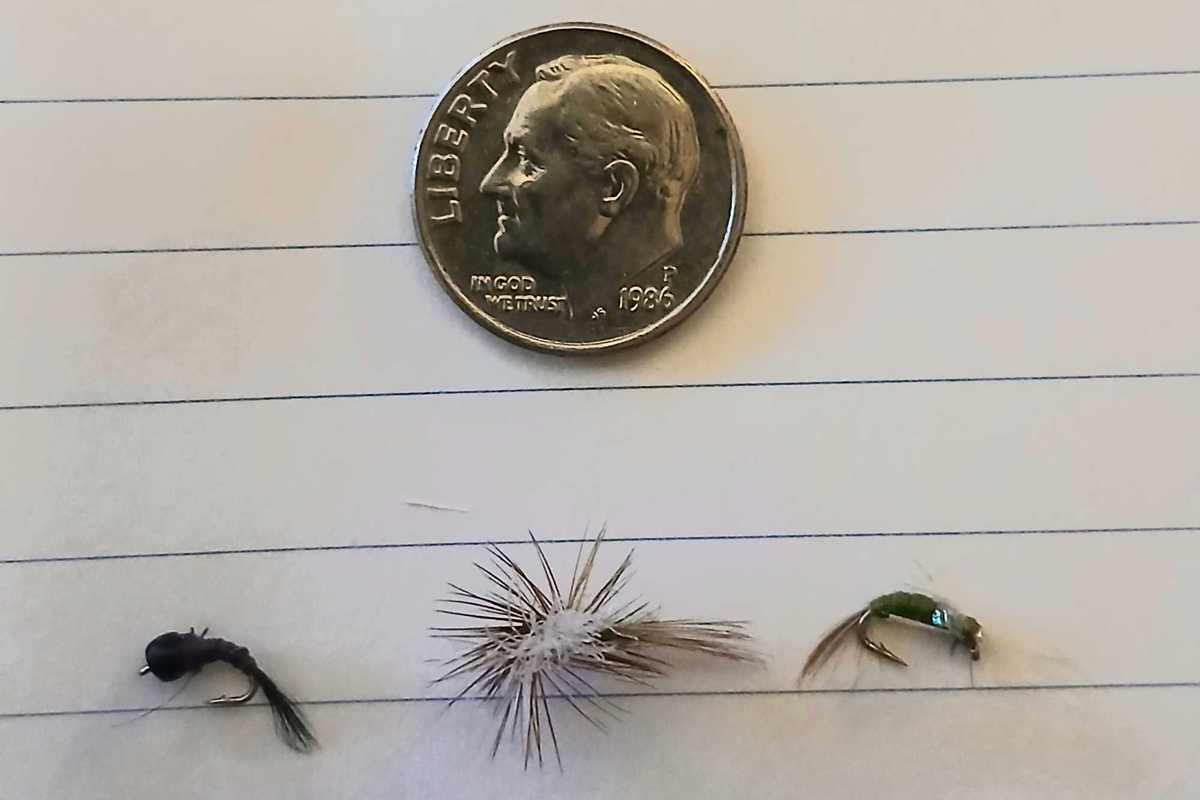
Curtis was using a black Wooly Bugger with an unusual feature — a little propeller or spinner.Patrick L. Sullivan

But this was different in that it had a little propeller attached just below the hook eye.

I last saw something like this in the mid-1990s in New Mexico, where a rustic saloon I just happened to be in had a small display case of standard trout flies with the same kind of propellers attached. The brand name was “Pistol Pete.”

Curtis said they work almost too well. He jerked his thumb behind him and said “He ties them for me.”

I resolved to catch up with “he” when everybody took a break.

I ambled back to the car and exchanged camera and notebook for rod and vest.

I tried four different flies, two surface and two subsurface, and failed to move anything.

Not anxious to perform the Walk of Shame, I tried a black Wooly Bugger, no propeller.

That did the trick.

Back up at the tent my finely honed instincts proved correct.Food had materialized, in the form of two giant submarine sandwiches, a couple of jumbo bags of potato chips, and sodas.

Gerald Berrafati was in charge of this. He is the chapter coordinator for the Mianus Trout Unlimited chapter, and he was talking a mile a minute about various dam removal and stream reclamation projects in his bailiwick.

Since the state of Connecticut east of New Hartford and south of Torrington is a complete mystery to me, I had only a vague idea where these places were.

But it sounded good.

Antoine Bissieux, who does business as “The French Fly Fisherman,” made a cameo appearance. Some years back he was with a couple of sports on the Hous in similar circs — warm, low, late summer -- and I swapped him a handful of mop flies for a sampler of his perdigon nymphs. If he remembered this he didn’t let on.

The six or eight of us at the tent did a number on the chow and talked some guff between bites. The sandwiches were good. So was the guff.

Warren Nesteruk of Southbury (I think) said his wife was giving him a hard time about having so many fly rods.

I asked how many he had.

“Fifteen,” he replied.

When I informed him I had something like 80 rods, he grew thoughtful, as if my awful example might buy him some space.

Then it struck him.

“You’re not married, are you.”

One loose end remained. I hate loose ends, and I wanted to find the fellow who added propellers to his flies.

But they had left.

So if you read this, Eddie Curtis of south Jersey, drop me a line. I’d like to find out if they really do work almost too well.
Latest News

Millerton wine shop owner organizes charity wine tasting for local child

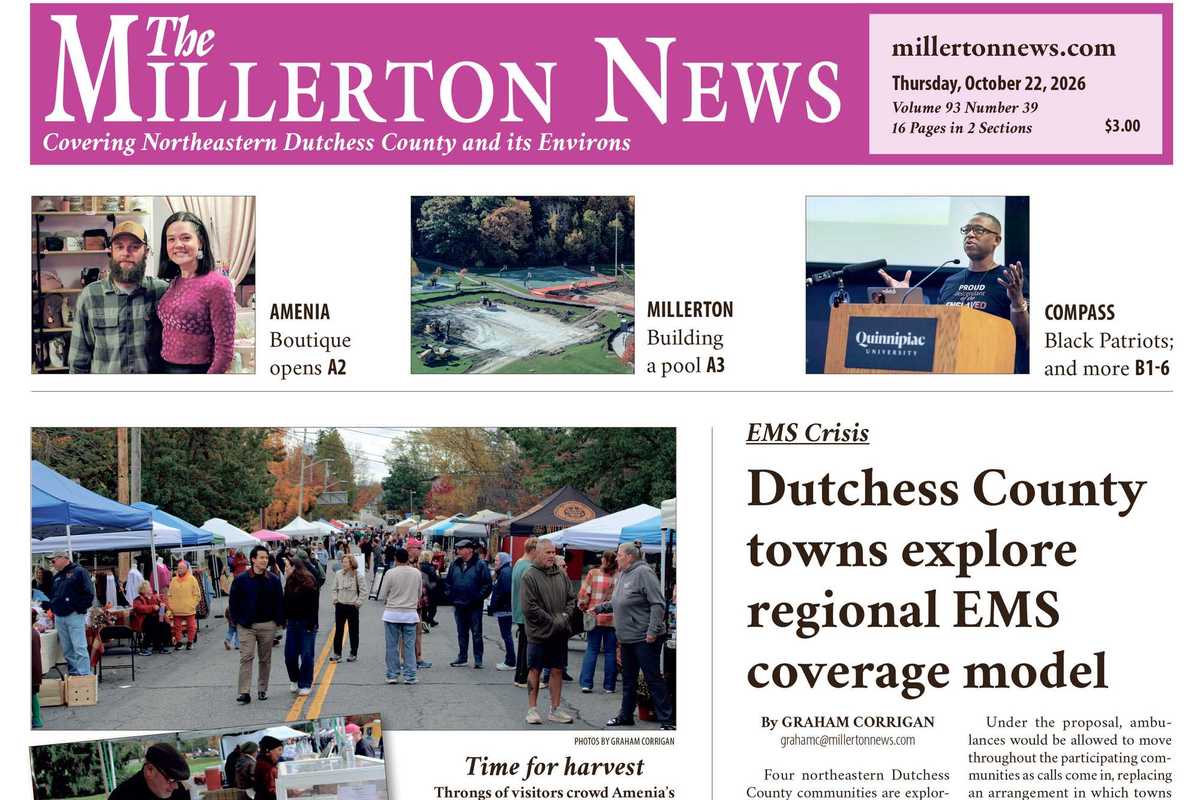
Millerton Wine & Spirits owner Chris Jeans has organized a charity wine tasting to benefit the family of Crew Slater, a Millerton native with congenital kidney disease. The wine tasting is set for Thursday, Oct. 29, from 6 to 8 p.m. at Pasture Kitchen on Route 44 just east of the Village of Millerton.

Illustration provided

MILLERTON — Two local business owners have joined forces to put on a charity wine tasting benefitting Millerton's Slater family.

Crew Slater, a 5-year-old Millerton native, needs a kidney transplant to survive congenital kidney disease. Millerton Wine & Spirits owner Chris Jeans and Pasture Kitchen founder Austin Cornell have organized a charity wine tasting at Pasture Kitchen on Route 44 next Thursday, Oct. 29, from 6 to 8 p.m.

Keep ReadingShow less
Cornwall Historical Society celebrates Connecticut’s Black patriots

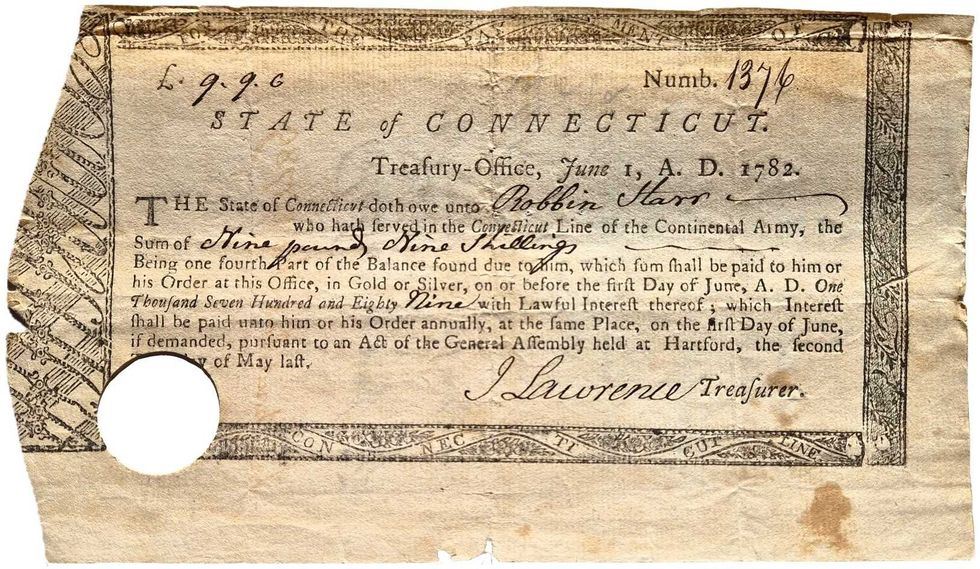
On Saturday, Oct. 24, at the Cornwall Historical Society, author and genealogist John Mills will breathe new life into the stories of some of Connecticut’s more underappreciated patriots. The reason these heroes were forgotten? They were Black.

At a time when white colonists were fighting for their own liberty and political independence, many Black men who fought alongside them remained enslaved. Some risked their lives only to return to bondage. Though enslaved people were promised freedom from both sides of the Revolutionary War in exchange for their service, Great Britain, too, was still deeply dependent on slavery. For Black people in America, the war presented both extraordinary risks and uncertain paths to the freedom that white colonists were demanding for themselves.

Keep ReadingShow less
google preferred source

Want more of our stories on Google? Click here to make us a Preferred Source.

A sanctuary for second chances

A sanctuary for second chances

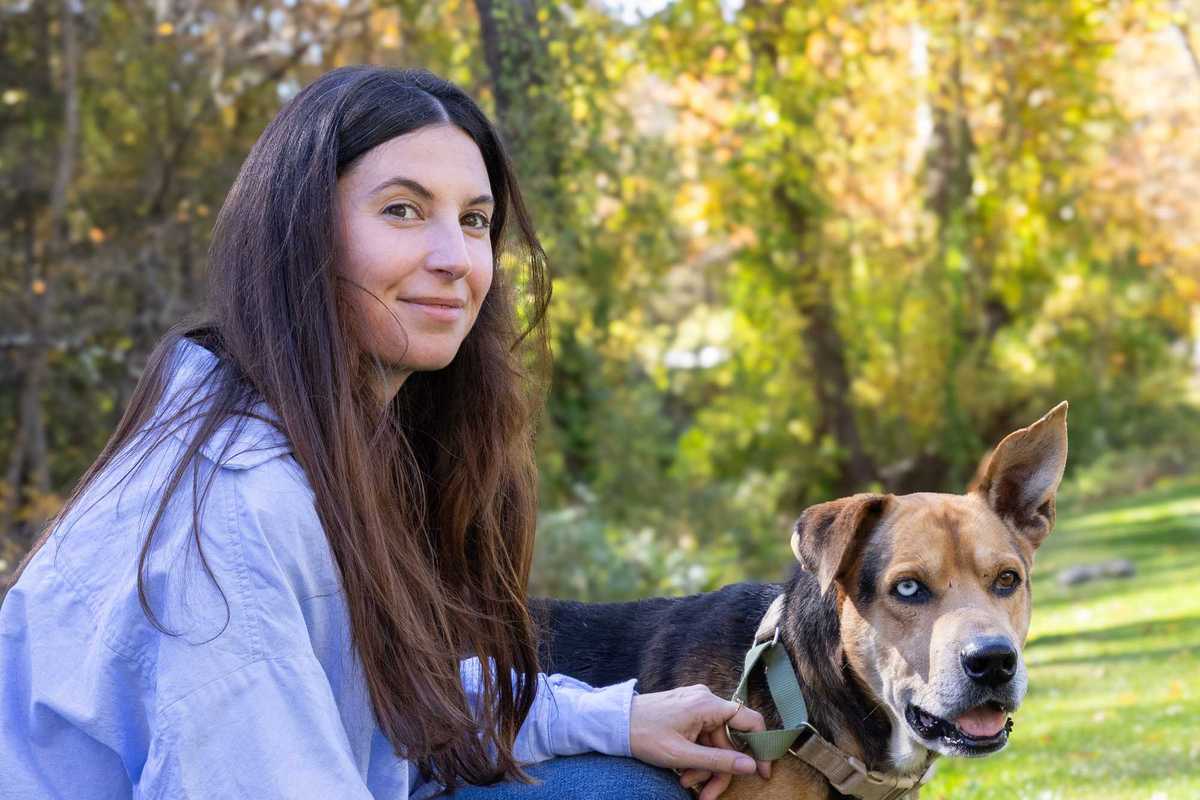
Stephanie Saetta runs Charlie Chicken Bones, a sanctuary in Salisbury.

Madi Long
You only get one or two of these soul connection dogs, so I do this in his honor.
— Stephanie Saetta

Stephanie Saetta has spent much of her life caring for others. A physician at White Plains Hospital, she has another calling at home in Salisbury — one that has four legs and a wagging tail. She runs Charlie Chicken Bone Sanctuary, a nonprofit dog rescue that brings dogs from overcrowded pounds and the streets of Texas to foster homes in northwestern Connecticut, where they can begin again.

The sanctuary is named for Charlie, the dog who taught her how special a bond between a person and rescue animal can be.

Keep ReadingShow less
Big ideas come to Lenox for inaugural field festival

Hunter Runnette, founder and board chair of field, has spent years fostering arts and cultural programming in the Berkshires.

Provided

What do joy, gardening, artificial intelligence, the American experiment and the creative process have in common? Quite a lot, as it turns out, at least when some of the world’s most compelling thinkers get together to talk about them.

From Friday, Oct. 23, through Sunday, Oct. 25, Lenox, Massachusetts, will host the inaugural field festival, a three-day gathering of writers, artists, scholars and cultural figures at Shakespeare & Company. Billed as a festival of ideas, entertainment, learning and discovery, field brings together an impressive roster of voices to explore everything from the deeply personal to the profoundly political.

Keep ReadingShow less
The Pink House AM is serving up community

Mare Rubin and Maggie Levine of the Pink House AM.

Madi Long

It all started with a yoga class. Mare Rubin was working on her second act after leaving the Upper West Side, where she’d raised a family and worked in corporate marketing. Newly empty nesters, she and her husband decided to move to the wilds of northwestern Connecticut, where they had spent 15 years as weekenders, to see what life in the woods had in store for them.

Rubin started teaching yoga classes at the Union in West Cornwall, a space designated by the town of Cornwall as a community hub with couches, Wi-Fi, occasional events and a growing yoga class schedule. She was adjusting well but missed one important thing about city life: a casual coffee shop.

Keep ReadingShow less
google preferred source

Want more of our stories on Google? Click here to make us a Preferred Source.

google preferred source

Want more of our stories on Google? Click here to make us a Preferred Source.