SHARON — In 2021, the Connecticut Department of Energy and Environmental Protection (DEEP) began a process of removing hundreds of trees it deemed potentially hazardous from the state’s parks and picnic areas, citing concerns over public safety.
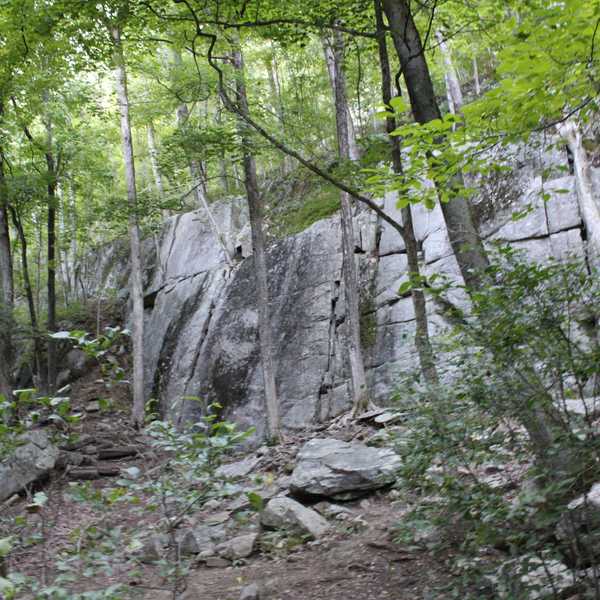
This endeavor included Housatonic Meadows State Park in Sharon, where citizen environmentalists said 100 trees — 75 pine and 25 century oaks — were removed, including one that was more than 170 years old.
In their place, one may now notice a few native saplings populating the area’s parking lot — 17, to be exact — that will, in a few generations, grow to replace those that were lost.
It’s the work of the Housatonic Meadows Preservation Action, a group including Katherine Freygang, a retired botanist, board member for the Cornwall Conservation Trust, commissioner for the Cornwall Conservation Commission and representative for Sustainable CT; Bruce Bennett, the co-founder and former owner of Kent Greenhouse, a licensed arborist, tree warden for Kent and assistant tree warden for Cornwall; and Mike Nadeau, who owned an organic landscaping company in Fairfield County for 46 years and now serves as a commissioner for the Sharon Energy and Environment Commission.
The group’s goal is to correct what Nadeau called a “very bad judgment call” on part of DEEP.
Among the species cut down were white oak and red oak, which make up a portion of the young trees the group planted last year.
But Bennett said the trees near the parking lot are “only the beginning.”
“The next phase of this is to install our wetland plants into the rain gardens. And then we’re going to replant the bank with native trees,” he said.
The beds for rain gardens, which will help to clean the water runoff that drains from the parking lot into the Housatonic River, were laid by the group in the fall. Over the next month, those rain gardens will be populated with 1,700 small starter plants, including monkey flower, fairy candles, Joe Pye weed, native goldenrod, New England aster, golden Alexander, strawberries and mountain mints.
And that’s where volunteers come in.
The group is seeking helpers to dig holes, cut flats, plant the seedlings and assist in transporting soil in wheelbarrows and buckets, which volunteers are asked to bring if they’re able.
Five volunteers will be needed for each three-hour shift throughout June, starting Friday, June 2 from 9 a.m. to 12 p.m. and 1 p.m. to 3 p.m. Saturday, June 3, Sunday, June 4 and subsequent weekends in June will have the same schedule.
“We want people to come with their gloves, boots and shovels,” Freygang said, adding that anyone interested in signing up can reach out to her via email, kfreygangml@gmail.com. The mailing list will also be used to provide important updates on the project.
The group has been opposed to the tree removal project since its inception.
“Even though we tried to stop [DEEP] at one point, there were only two left,” Bennett said. “They were perfectly healthy trees. There was nothing wrong with them.”
In order to determine what makes a tree truly hazardous, Bennett said one requires advanced training as an arborist, including the International Society of Arboriculture’s Tree Risk Assessment Qualification, or TRAQ. He has this credential, but said that those who determined which trees had to go did not.
With the help of local government over the last couple of years, the group was able to form the basis of what it called a “pretty good policy” that now requires an arborist with TRAQ designation to determine whether they can or cannot cut down a heritage tree. (The policy falls short, the group said, because there’s no set definition for a heritage tree.)
Coming from diverse backgrounds in ecology and plant sciences, the trio stressed the importance of trees and native flora to the environment and those species that call it home.
“The loss of these trees represents a loss of wildlife habitat not only just things like birds, but so many bugs. Oaks are the number one botanical item that supports biodiversity,” Freygang said.
She cited the entomologist Doug Tallamy, who estimates that there are 900 species supported by oak trees, both above ground and underneath it.
Trees also collect and store carbon through a process called carbon sequestration, which helps to reduce that amount of carbon in the atmosphere and, in turn, reduces the impact of climate change.
In Housatonic Meadows, the replanted trees will one day help to shade the river, provide a habitat for many types of fish and hold up the bank to keep it from crumbling — an endeavor aided by the rain gardens, too. And it isn’t only the woodland critters that benefit from trees, the group said: They also add a recreational value to the park that humans can enjoy.
“Something that can’t really be measured is the spiritual well-being you feel when you walk among beautiful, old trees,” Nadeau said.





 Dick Hermans in the Oblong Bookstore on Millerton’s Main Street in 1985.Provided

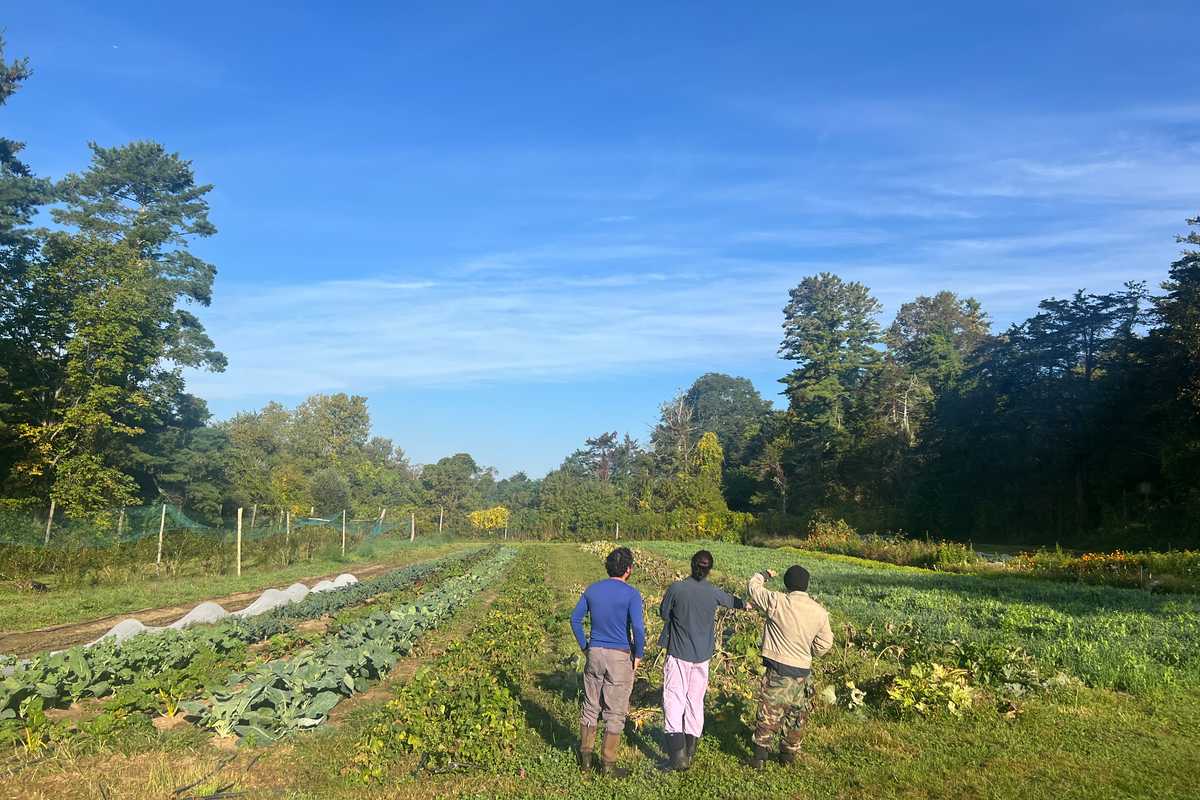
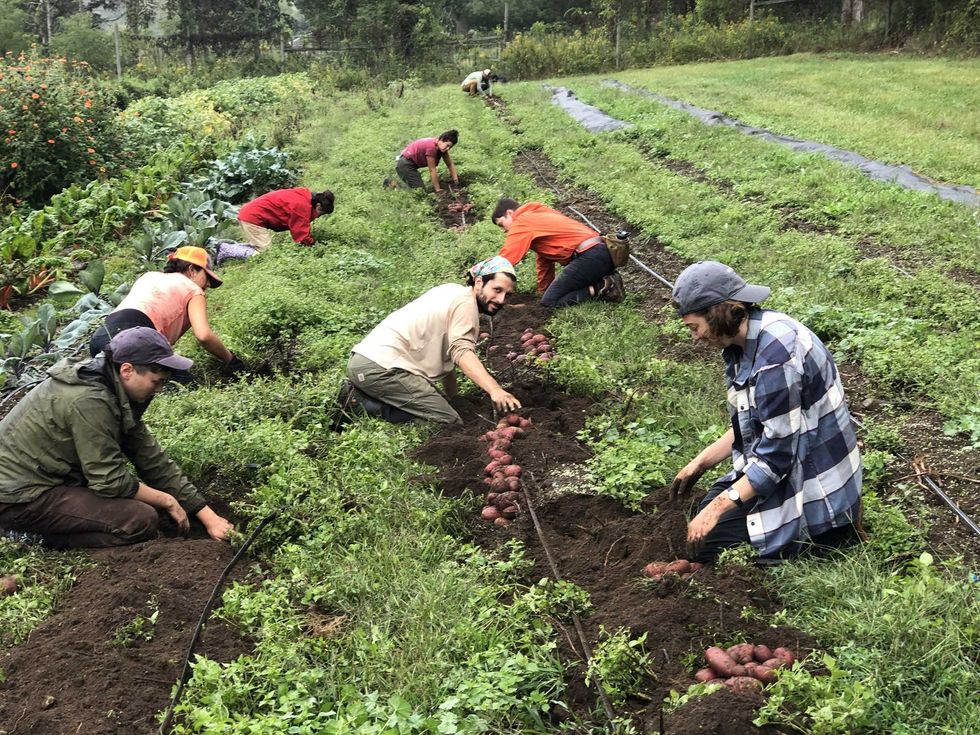 Fall storage crop harvests amid soil building cover crops at Adamah Farm in Falls Village. Janna Siller