Thank you!
Your support is sustaining the future of local news in our communities.

Sharon man brings Death Cafe to Tri-Corner F.E.E.D., sparks conversations about dying

Sharon man brings Death Cafe to Tri-Corner 
F.E.E.D., sparks conversations about dying

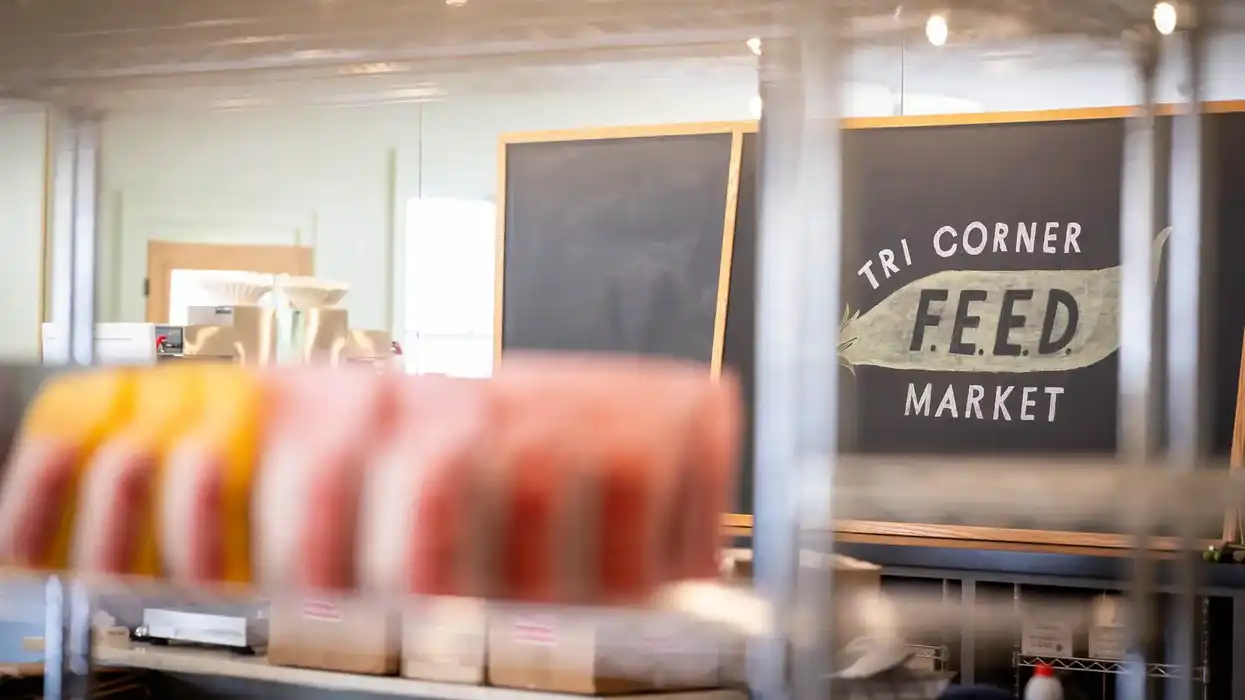
Tri-Corner F.E.E.D. in Millerton.

Aly morrissey

MILLERTON — Christophe Armero thinks talking about death is a good thing.

That’s why he started a “Death Cafe” at Tri-Corner F.E.E.D., a regular event at the South Center Street store where people are invited to enjoy coffee, cake and casual conversations about death. The next event is scheduled for Wednesday, April 29, at 6 p.m.

Armero described the cafe event as an opportunity for people to freely and openly discuss death with no agenda.

“The more you know about death, the more comfortable you are with death,” Armero said. “The better use you’ll be able to make of your limited life.”

The conversations serve as a form of meditation, Armero said, drawing on the work of Swiss sociologist Bernard Crettaz. Englishman Jon Underwood further developed these ideas in 2010, creating the Death Cafe model and hosting the first event at his home in England in 2011.

Since then, more than 23,000 Death Cafe events have been held across the globe, according to deathcafe.com, including Armero’s first in Millerton on March 25.

Those interested in attending the upcoming Death Cafe event in April at Tri-Corner F.E.E.D. can sign up by searching for “Millerton Death Cafe” on www.eventbrite.com.

Armero said his recent Death Cafe was the first held in Millerton in more than a decade. A series of gatherings took place in 2013 and 2014 at Irving Farm Coffee House on Main Street, with a handful of additional events in nearby Falls Village and Great Barrington in 2019 and 2020. While interest in Death Cafes has grown, offerings remain scarce within 100 miles of Millerton.

Death Cafes aim to get people talking openly about death and dying, Armero said, but are not intended to serve as grief counseling sessions. Participants are encouraged to steer the conversation in whatever direction they feel comfortable — a central tenet of the Death Cafe philosophy, according to the organization’s website.

“There’s no therapist here telling you what to do,” Armero said. “Everyone here is talking from their own experiences and sharing their stories.”

Death Cafe allows individuals to host their own events under its name and list them on the organization’s website, provided they adhere to its guiding principles. Chief among those are that gatherings have no set agenda, remain confidential and include cake.

Armero said he hopes the conversations will draw a diverse group of participants, and by that measure, the first event in March was a success. He said many attendees are facing an anticipated loss and come seeking to better prepare.

“We had young people, middle-aged people and old people at this meeting,” Armero said. “It was pretty cool how we had a little bit of everything.”

While Death Cafes are not therapy, Armero said the conversations can benefit people anticipating a loss, those who have recently experienced one and even those who have not. He added that while the concept may seem morbid, the conversations themselves are not.

“It’s just regular people who want to know about death,” Armero said.

One common topic at Death Cafes is the process of dying, Armero said. What happens to a person under end-of-life care or in hospice is not commonly discussed, he said, leading to increased strife for family members or loved ones watching someone die.

Armero’s Death Cafe is sponsored by Tri-Corner F.E.E.D. and East Mountain House, a Salisbury, Connecticut, based end-of-life care provider that offers an alternative to hospice care.

East Mountain House operates under Buddhist-influenced philosophies that emphasize meditation and encourage regularly reflecting on death, Armero said. He added that his own experience with Buddhism and meditation led him to Death Cafes and has helped him process grief in his own life.

Armero’s first experience with a significant loss came in 2012 when his son died of suicide at age 19. Armero described that loss as a terrible shock that set him down the path of exploring grief and death and eventually becoming a certified bereavement counsellor and running a suicide bereavement support group online with his wife, Jennie Baird.

Armero and Baird, who live in Sharon, Connecticut, now spend their retirement making chocolate under the name Mudgetown Chocolate in Tri-Corner F.E.E.D.’s kitchen on South Center Street and volunteering with community organizations across New York and Connecticut.

Armero is also registered as a death doula, a term that refers to people who guide terminal patients and older people through the final stages of life just before death. Armero considers death to be one of his passions, after more than a decade of studying grief and counselling people through bereavement.

Armero hopes the Death Cafe can promote an appreciation for death, or at least more comfort with it.

“The more aware you are of death, the less it scares you and the better you can deal with it,” Armero said. “Your own and the death of your loved ones.”

Latest News

Wassaic Project co-founder Eve Biddle presents her “Field Notes”

Artist Eve Biddle and Tremaine Gallery Director Terri Moore.

D.H. Callahan

On Wednesday, Sept. 2, the Tremaine Gallery at the Hotchkiss School in Lakeville opened its new show, “Field Notes,” with works by multidisciplinary artist Eve Biddle.

Biddle is best known in the area as one of the founders of the iconic Wassaic Project in the hamlet of Wassaic, New York. The project, which is part art incubator, part gallery, part studio and a whole lot of community, is housed in an old converted grain elevator right next to the Metro North train tracks. It’s credited by many as the spark that revitalized the hamlet, which now boasts a craft bakery, a curated wine and liquor store, a pizza hot spot, the Lantern.

Keep ReadingShow less

Victor Cella is painting his own path

Victor Cella is painting his own path

Artist Victor Cella with his recent painting “White Dog” in his studio and shop, Little Store Antiques in Great Barrington.

L. Tomaino
If I taught art, I’d teach it in a different way. I could teach it as an awareness — how to free yourself up.
— Victor Cella

Paintings by Victor Cella of a blue dog, a flower still life and a colorful abstract greet visitors as they mount the steps to The Little Store, an antique shop he runs with his husband, John Ortisi, at 88 Main St. in Great Barrington, Mass.

The shop is filled not only with antiques but also with Cella’s paintings. People stop by to see what Cella is currently painting and to talk with him. He is known for his amiability as well as his paintings.

Keep ReadingShow less
google preferred source

Want more of our stories on Google? Click here to make us a Preferred Source.

Fear and Loathing in the Woodland

Fear and Loathing in the Woodland

Fear and Loathing in the Woodland Japanese barberry, an invasive shrub with thorny branches, provides shelter for mice and can contribute to conditions that allow tick populations to thrive.

Provided

I am tempting tick-bite fate by writing this, even from the safety of my office.

Eight people emailed me with a link to the New York Times article on ticks that ran in the Aug. 20 magazine section.My Instagram algorithm made sure that I saw the same story several times over.The article, “The Summer the Ticks Took Over,” by Benjamin Wallace reads like a horror story, engendering a kind of paranoia that sidewalk-hugging New Yorkers can easily fall prey to.The reader comments enhance the author’s terror and fall into key categories: readers who are living proof of the sometimes harrowing, life-altering consequences of a tick bite; readers’ instructive life hacks against ticks (“permethrin is your friend”); readers’ collective chant to kill the deer; and, finally, readers who question why anyone would ever go in the woods again.

Keep ReadingShow less
Oldtone brings roots music, dancing and community to Cool Whisper Farm

The Allum Ridge Boys & Ashlee at Oldtone Music Festival in 2025

Jim Wright

The Oldtone Music Festival returns Sept. 10 through 13, bringing musicians and audiences together for a four-day celebration of roots music at Cool Whisper Farm in Hillsdale.

Founded in 2015 as a one-day show in Wassaic, Oldtone moved the following year to the Schober family’s Cool Whisper Farm, where it grew into a three-stage camping festival. The festival ran annually until the COVID-19 pandemic forced its cancellation in 2020. After limited attempts to bring it back in 2021 and 2022, organizers announced in early 2023 that the festival would end.

Keep ReadingShow less
“Come From Away,” a story of kindness at Sharon Playhouse
“Come From Away” cast in rehearsal. (Back Row L to R): Jeffrey Konowitch, Meagan Lewis-Michelson, Max Bennett-Parker, Michael F. McGuirk, Tracy Liz Miller, Ricky Oliver, Cherish Love, Willie Marte (Front Row L to R) Cameron Sirian, Chelsie Nectow, Erin Lindsay Krom, Sophie Nassiri
Lynette Shy

Twenty-five years after the events of Sept. 11, 2001, the Sharon Playhouse is staging a musical about what happened in the aftermath — and about an extraordinary act of kindness in a small Newfoundland town.

“Come From Away,” the Tony Award-winning musical by Irene Sankoff and David Hein, runs Sept. 11 through 27 and concludes the Playhouse’s 2026 MainStage season. Directed by Hunter Foster, with choreography by Krystyna Resavy and music direction by Eric Thomas Johnson, the production tells the true story of the thousands of airline passengers who suddenly found themselves stranded in Gander, Newfoundland, after U.S. airspace was closed following the terrorist attacks.

Keep ReadingShow less
google preferred source

Want more of our stories on Google? Click here to make us a Preferred Source.

google preferred source

Want more of our stories on Google? Click here to make us a Preferred Source.