“I’m not a great activist,” said filmmaker Oren Rudavsky, humbly. “I do my work in my own quiet way, and I hope that it speaks to people.”
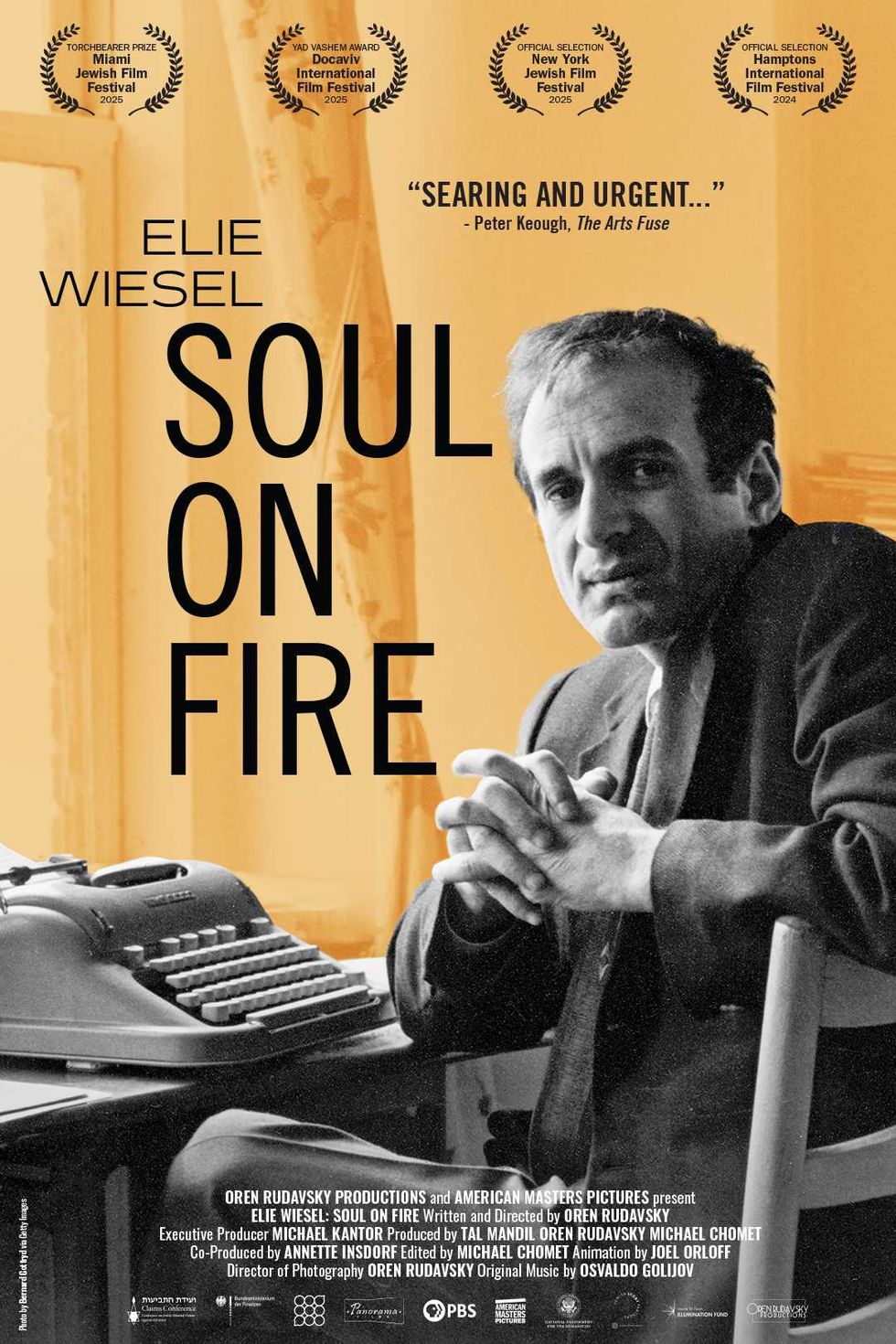
Rudavsky’s film “Elie Wiesel: Soul on Fire,” screens at The Moviehouse in Millerton on Sunday, Jan. 18, followed by a post-film conversation with Rudavsky and moderator Ileene Smith.
Rudavsky, who lives in New York City and has a home in Lakeville, has been screening films at The Moviehouse for nearly three decades. “I was the first independent filmmaker to show a film there back in 1997 or ’98,” he recalled, with “A Life Apart: Hasidism in America.” “I think I’ve shown four or five films there over the years.”
Best known for his searing 1958 memoir, “Night,” Elie Wiesel forever altered how the Holocaust would be written about and remembered. A teenage survivor of Auschwitz and Buchenwald, the Romanian-born author became an international spokesperson for memory, conscience and moral responsibility. Yet Rudavsky’s documentary looks beyond Wiesel’s public role, revealing a man who was, in the director’s words, “intensely private and profoundly public.”
Rudavsky’s connection to Wiesel is also personal. “I grew up in Boston,” he said, “and Elie started teaching there in ’77 or ’78, and my mother took a class with him.” His father was a Reform rabbi, and the family’s shelves were filled with Jewish books, including Wiesel’s, such as “Night,” “Jews of Silence,” and the volume that would later lend its name to the film: “Souls on Fire.”
“His mystical storytelling is where he’s at his best,” Rudavsky said of the book. “So eloquent and beautiful — you could pick up any page and be transported into this other world, this other realm. ‘Night’ does that too, in a horrifying way, but it achieves that same sort of consciousness change.”
Wiesel, who died in 2016 at the age of 87, would go on to establish what is now the Elie Wiesel Center for Jewish Studies at Boston University, an institution devoted to ethical inquiry, dialogue and human rights, principles that shaped both his teaching and his writing.
“One of the things that is most striking to me in living with Elie Wiesel’s work for the past four years,” said Rudavsky, “is how civilized, cultured, eloquent, soft-spoken and gentle a person he was, how loving in general a person he was.” That gentleness and quiet insistence on civility becomes one of the film’s most moving revelations.
The documentary does not present Wiesel as a saint or a monument. It lingers instead on the human questions. “How do you overcome trauma?” Rudavsky asked. “How do you live with it? Do you ever overcome it? I don’t think Elie did overcome it, but I think he learned to live with it and learned to enjoy life — sleeplessly perhaps — but he enjoyed the world.”
To evoke the inner life of memory, the film incorporates hand-painted animation by Joel Orloff, inspired in part by the illustrator Mark Podwal, who collaborated with Wiesel on several projects. “A few of the animations are inspired by his brilliant work,” Rudavsky said. “Everything else is from Joel Orloff’s imagination.”
 Provided
The technique they employed in the film was influenced by South African artist William Kentridge, whose charcoal drawings evolve through erasure and reworking. “We wanted to evoke memory through the animation,” Rudavsky explained. “Joel painted on glass, smudged it, poured water onto it.” The result is a haunting, fluid visual language, neither literal nor ornamental.
“At first, I wasn’t sure I was going to use animation,” Rudavsky explained. “But when I read portions of Elie’s autobiography, he intersperses these dreams about his family, his father, and I thought, ‘This just cries out for animation.’” The effect is striking: a fusion of conscious and subconscious, past and present.
Marion Wiesel, Elie’s wife, translator, and closest collaborator, passed away in February of last year. She was able to see the film at a screening at Lincoln Center. “She said to me, ‘I love the film, but it caused me pain because it made me fall in love with Elie all over again,’” Rudavsky recalled. “Which was heartbreaking — but for a filmmaker, what more can you really ask for?”
Marion, he added, was a remarkable figure in her own right, deeply involved in civil rights activism. A member of the NAACP in the 1950s, she encouraged Elie to look beyond the Jewish world he mostly traveled in and toward a broader global perspective.
That outward gaze was central to Wiesel’s public life. The film revisits moments when he spoke directly to political power, including his famous confrontation with President Ronald Reagan over a planned visit to a cemetery in Bitburg, Germany, where SS members were buried. “Elie lost the battle but won the war,” Rudavsky said. “Because how he spoke up was much more lasting than whatever Reagan did.” He adds that what mattered most was the tone: “It was a civil dialogue. A gentle dialogue.”
Moderating the post-screening discussion will be Ileene Smith, editor at large for Farrar, Straus and Giroux and editorial director of Jewish Lives, the prizewinning biography series published by Yale University Press. Smith worked closely with both Elie and Marion Wiesel on many books, including the new translation of “Night.” In 1986, she accompanied the Wiesels to Oslo when Elie received the Nobel Peace Prize. Her husband, Howard Sobel, served for many years on the board of the Elie Wiesel Foundation for Humanity.
Wiesel believed that memory was not passive; it was a moral act. Asked about the moral obligation to bear witness, Rudavsky said, “It’s an endless moral obligation. And we all take on what we can, which is always too little.”
And what would Rudavsky ask Wiesel now if he were still here to bear witness?
“People ask, post–Oct. 7, what would Elie have said? And I can’t speak for him but I know he would have spoken up from where he comes from. Some would have disagreed with him. But in the U.S. today, when immigrants are being shipped off to places unknown, when people trying to defend them are facing violence, even death, we all need to try to do whatever little bit there is to do.”
Even within disagreement, Wiesel believed in dialogue. Rudavsky, speaking about his relationship with Wiesel’s son, Elisha, said: “We have different political perspectives, but we’re united in saying we’ll keep talking, we’ll keep working together. It’s such a divisive time where people don’t talk to each other — they yell at each other and kill each other. That’s something Elie Wiesel certainly would have spoken up about.”
Because for Wiesel, bearing witness was not only about preserving the past. It was about refusing indifference in the present.
For tickets, visit: themoviehouse.net






 Tiffany Lemelin, shelter manager, brushing Marsala upon arrival.Provided
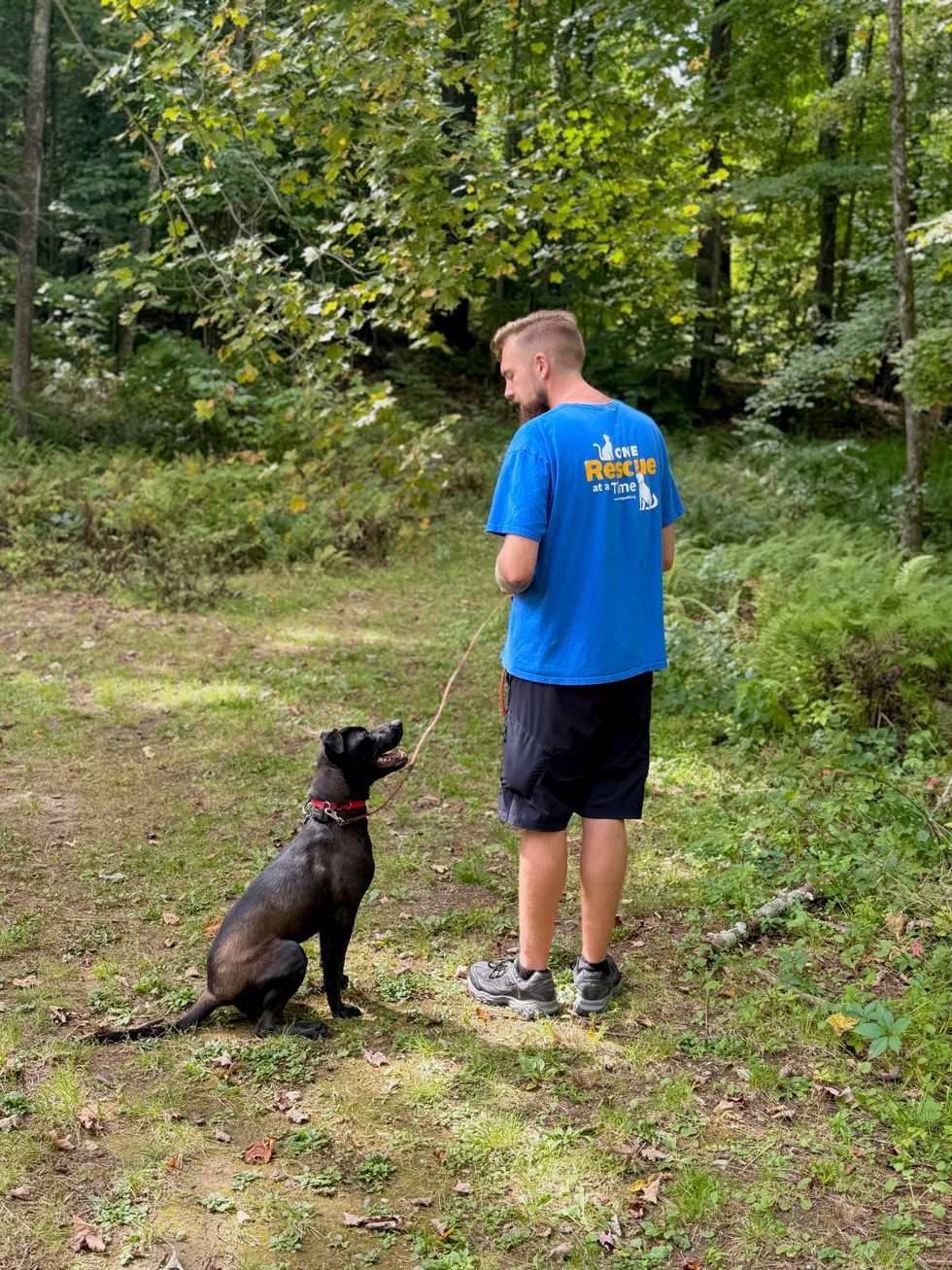 Michael DeBarba, certified dog trainer working with Marsala.Jennifer Almquist
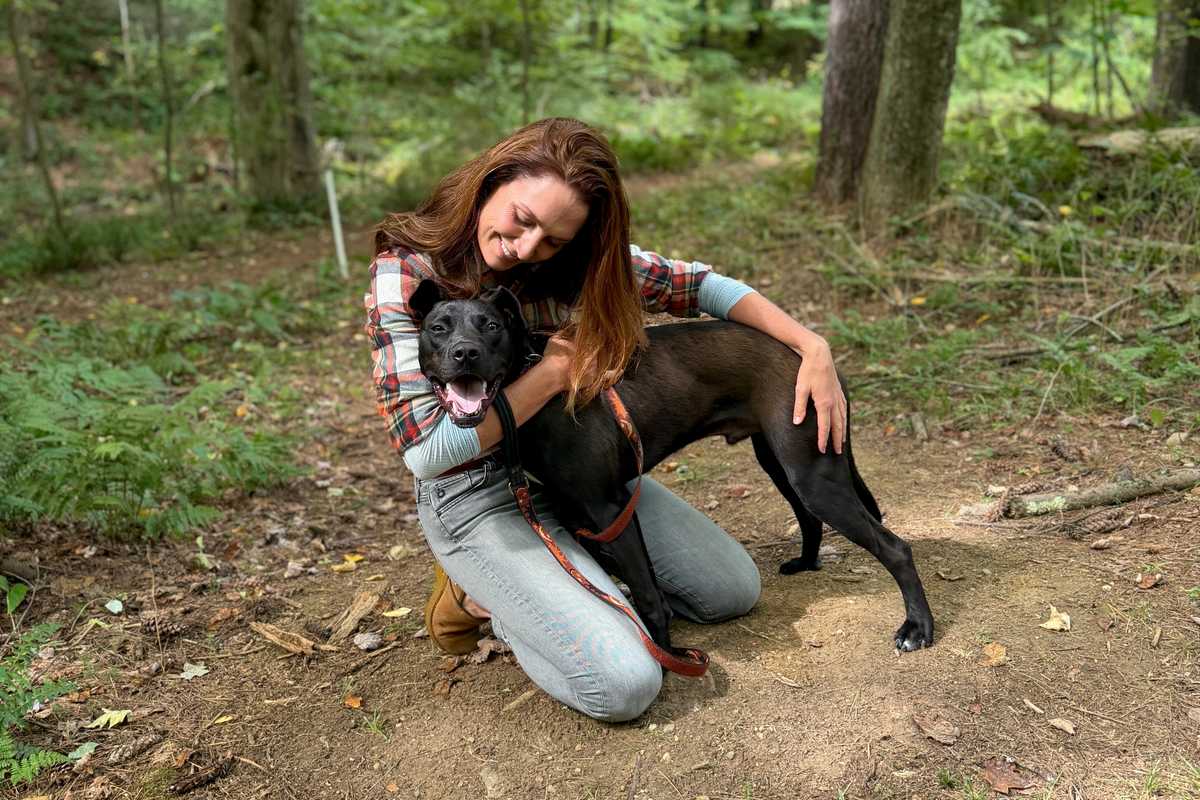 Marsala wins a heart.Jennifer Almquist
 Sadie, center, a Carolina dog, plays with her friend Negra, a terrier mix. Bella Linda, the small poodle, has since been adopted.L. Tomaino
 Wesley, a young, exuberant mix, is looking for an active home.L. Tomaino
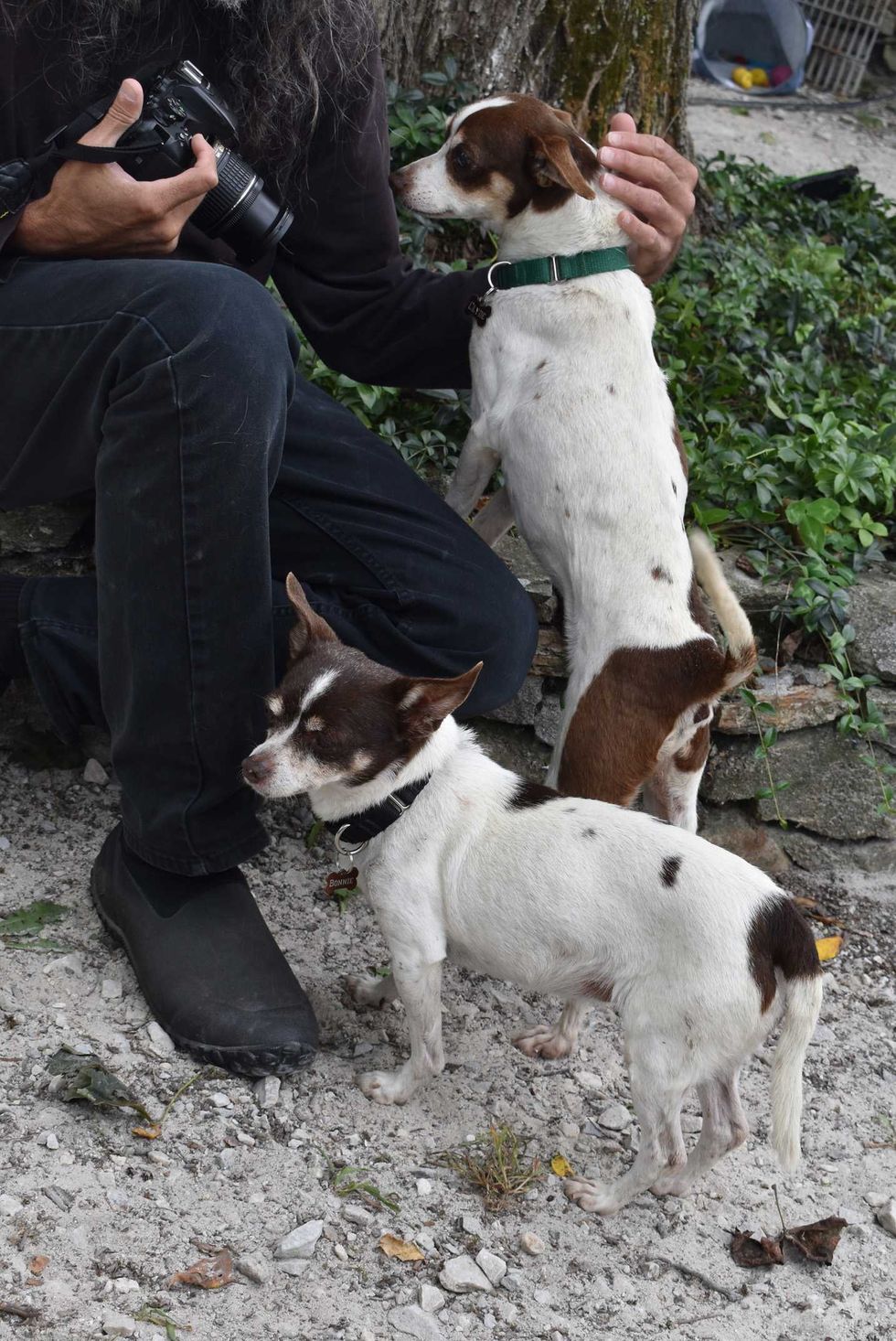 Bonnie and Clyde, an affectionate terrier pair.L. Tomaino