Neoliberalism exposed: ‘The Invisible Doctrine’ at BIFF

Neoliberalism exposed: ‘The Invisible Doctrine’ at BIFF

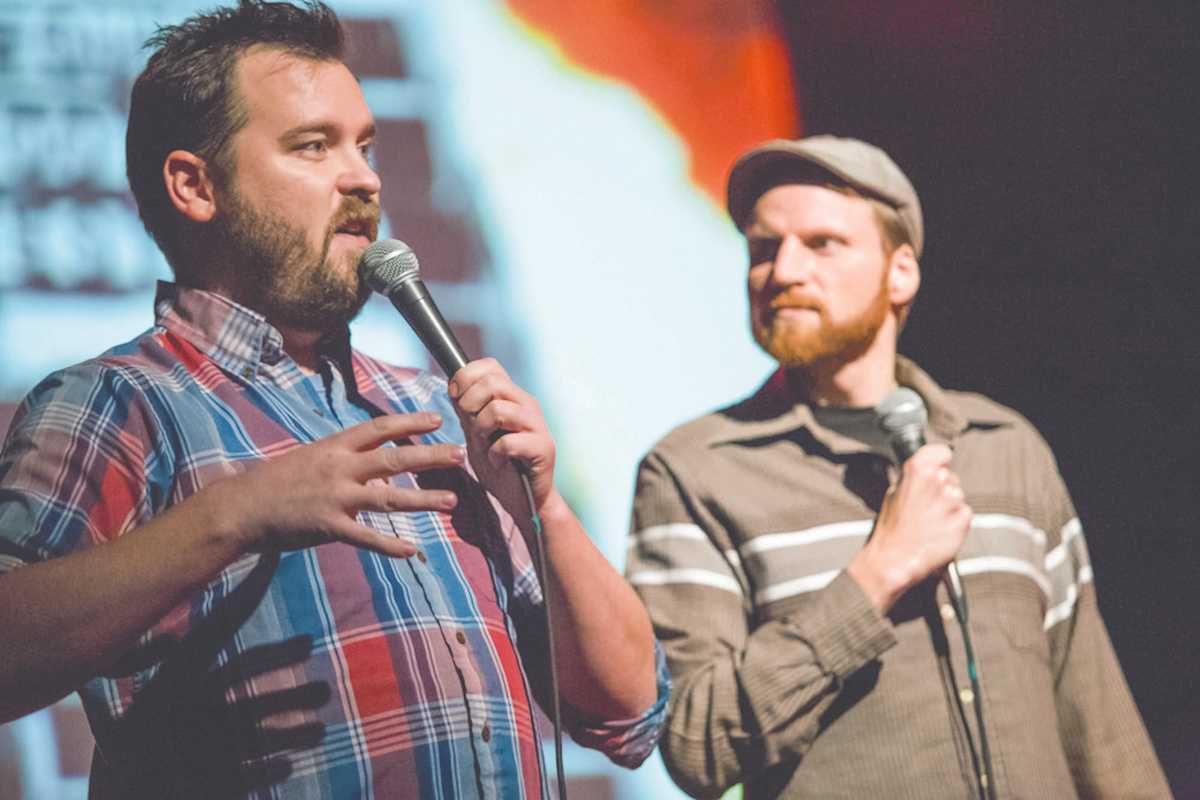
Filmmaker Peter Hutchison

Provided

On Saturday, May 31 at 4:30 p.m., “The Invisible Doctrine: The Secret History of Neoliberalism” will screen at the Triplex Cinema in Great Barrington as part of The Berkshire International Film Festival.

Based on the book by the same title, the documentary explores the work of public intellectual and author George Monbiot (“Out of the Wreckage”, “Regenesis”), and is the latest project from award-winning documentary filmmakers Peter Hutchison and Lucas Sabean (“Requiem for the American Dream (ft. Noam Chomsky)”).

Augmented by AI generated graphics and animation, the film begins with Monbiot asking,“Neoliberalism: do you know what it is?” Largely defined by competition, neoliberalism pits people against one another in a system where financial success is encouraged and failure is shameful. But Hutchinson says it doesn’t have to be that way.

“We’re seeing neoliberalism on a very extreme level right now. With Trump, there’s chaos, deconstruction of the administrative state, flooding the zone, eroding people’s faith in institutions and democracy itself. This economic growth model is incompatible with the survival of the earth. We need to look at things in a different way.”

As a documentary filmmaker and professor at NYU’s Tisch School of the Arts, Hutchinson is a skilled storyteller aware of the narratives we’ve internalized. His film suggests other models.

“There’s an experiment in Amsterdam called true cost pricing with the option to pay the standard or a slightly higher price that considers the environment, public health or labor practices. People will pay the higher price knowing what they’re buying has a direct impact,” he said.

“If we can expose a broader range of communities to all of these amazing ideas and people were able to adopt two or three of them, we could really make some fantastic movement forward,” he added.

“Human beings are the most cooperative species on the planet, and evolutionarily that has been an imperative for our survival. Otherwise, we wouldn’t be here. We’re not advocating an end to capitalism as much as we are re-envisioning our relationship to capitalism. There are plenty of models within the structures of capitalism that make people happier, strengthen community and make people feel like they have agency. The more people invest in a community the more they feel like they belong to it, which is one of the most important antidotes to neoliberalism,” he said.

The screening of “The Invisible Doctrine” will be followed by a Q&A session. For tickets to this film and more during BIFF, visit: biffma.org
Latest News

Living art takes center stage in the Berkshires

Contemporary chamber musicians, HUB, performing at The Clark.

D.H. Callahan

Northwestern Massachusetts may sometimes feel remote, but last weekend it felt like the center of the contemporary art world.

Within 15 miles of each other, MASS MoCA in North Adams and the Clark Art Institute in Williamstown showcased not only their renowned historic collections, but an impressive range of living artists pushing boundaries in technology, identity and sound.

Keep ReadingShow less
Persistently amplifying women’s voices

Francesca Donner, founder and editor of The Persistent. Subscribe at thepersistent.com.

Aly Morrissey

Francesca Donner pours a cup of tea in the cozy library of Troutbeck’s Manor House in Amenia, likely a habit she picked up during her formative years in the United Kingdom. Flanked by old books and a roaring fire, Donner feels at home in the quiet room, where she spends much of her time working as founder, editor and CEO of The Persistent, a journalism platform created to amplify women’s voices.

Although her parents are American and she spent her earliest years in New York City and Litchfield County — even attending Washington Montessori School as a preschooler — Donner moved to England at around five years old and completed most of her education there. Her accent still bears the imprint of what she describes as a traditional English schooling.

Keep ReadingShow less
google preferred source

Want more of our stories on Google? Click here to make us a Preferred Source.

Jarrett Porter on the enduring power of Schubert’s ‘Winterreise’
Baritone Jarrett Porter to perform Schubert’s “Winterreise”
Tim Gersten

On March 7, Berkshire Opera Festival will bring “Winterreise” to Studio E at Tanglewood’s Linde Center for Music and Learning, with baritone Jarrett Porter and BOF Artistic Director and pianist Brian Garman performing Franz Schubert’s haunting 24-song setting of poems by Wilhelm Müller.

A rejected lover. A frozen landscape. A mind unraveling in real time. Nearly 200 years after its premiere, “Winterreise” remains unnervingly current in its psychological portrait of isolation, heartbreak and existential drift.

Keep ReadingShow less
A grand finale for Crescendo’s 22nd season

Christine Gevert, artistic director, brings together international and local musicians for a season of rare works.

Stephen Potter

Crescendo, the Lakeville-based nonprofit specializing in early and rarely performed classical music, will close its 22nd season with a slate of spring concerts featuring international performers, local musicians and works by pioneering composers from the Baroque era to the 20th century.

Christine Gevert, the organization’s artistic director, has gathered international vocal and instrumental talent, blending it with local voices to provide Berkshire audiences with rare musical treats.

Keep ReadingShow less

Leopold Week honors land and legacy

Leopold Week honors land and legacy

Aldo Leopold in 1942, seated at his desk examining a gray partridge specimen.

Robert C. Oetking

In his 1949 seminal work, “A Sand County Almanac,” Aldo Leopold, regarded by many conservationists as the father of wildlife ecology and modern conservation, wrote, “There are some who can live without wild things and some who cannot.” Leopold was a forester, philosopher, conservationist, educator, writer and outdoor enthusiast.

Originally published by Oxford University Press, “A Sand County Almanac” has sold 2 million copies and been translated into 15 languages. On Sunday, March 8, from 3 to 5 p.m. in the Great Hall of the Norfolk Library, the public is invited to a community reading of selections from the book followed by a moderated discussion with Steve Dunsky, director of “Green Fire,” an Emmy Award-winning documentary film exploring the origins of Leopold’s “land ethic.” Similar reading events take place each year across the country during “Leopold Week” in early March. Planning for this Litchfield County reading began when the Norfolk Library received a grant from the Aldo Leopold Foundation, which provided copies of “A Sand County Almanac” to distribute during the event.

Keep ReadingShow less
google preferred source

Want more of our stories on Google? Click here to make us a Preferred Source.

google preferred source

Want more of our stories on Google? Click here to make us a Preferred Source.