Thank you!
Your support is sustaining the future of local news in our communities.

Village Board institutes some unwelcome MPD changes

MILLERTON — The mayor and the Village Board have instituted a number of procedural changes within the part-time Millerton Police Department (MPD) in order to maximize efficiency, prevent overspending and improve safety for residents and visitors during busy weekend days when village streets are full of shoppers, diners and moviegoers. That’s according to Mayor Jenn Najdek, who explained the new move is for a one-month trial basis, to see if the strategy will be effective. If not, she said, she and her board members will be willing to reassess.

Mayor wants transparency

The mayor and Deputy Mayor Alicia Sartori met in mid-November with MPD Officer-in-Charge Mike Veeder and former Officer-in-Charge Dave Rudin, still active on the force, to discuss the changes they plan to institute in January.

In an interview with this newspaper on Friday, Dec. 17, Najdek said she is aware that change is rarely welcome. She also noted that as Millerton’s new mayor, it’s normal for her to want to make improvements, as she and her trustees believe they can strengthen the MPD and better daily life for the community-at-large.

“My job as mayor — is I want to do the best job I can for the community. I live here, I was born here, I was raised here and I will probably die here. That is my goal. I have no agenda,” she said. “My goal is simply to do the best job I can for the community. You always get resistance when you make change; nobody likes change, but sometimes change is necessary.”

New protocols

The main change made thus far, confirmed at Monday night’s Village Board meeting on Dec. 13, has to do with the MPD’s patrol schedule. Because of security concerns and not wanting to show the department’s hand, the mayor, those on the joint Millerton/North East Police Committee and Veeder asked the newspaper not to publish the specific details of the new schedule.

Suffice it to say the Village Board switched the patrol schedule to cover more daytime shifts. That’s when the mayor and her trustees believe having more officers on-hand will benefit people who patronize local businesses; can assist drivers who battle for limited parking and have frequent accidents while dealing with heavy, often commercial traffic; can assist the growing number of trail users on the popular Harlem Valley Rail Trail; and be present for the many locals and visitors who regularly take advantage of the numerous village and town resources throughout the year.

“So we’re trying to put patrols on when [it’s] most helpful in the community,” said Najdek, a fan of community policing. “We’re also trying not to add shifts because we want to keep our budget within our means.”

Yet those in the MPD have expressed concern that the change in shifts could leave the shifts now left unattended vulnerable. The mayor said if that turns out to be the case, she is more than willing to re-evaluate at month’s end.

Veeder weighs in

Officer-in-Charge Veeder said he thinks the move was a bad decision, and told the board as much at its meeting.

“Basically we need to have further conversation regarding the hours that they want us to work,” he said. “I’m concerned that we’re not on when there’s the highest level of call volume and the severity of calls is worse. My biggest concern is for public safety. There was no discussion about it, no one asked our opinion about it or anything.”

Najdek said Veeder had promised to bring a report with the most active call times to the Dec. 13 meeting, but failed to do so. Veeder said the county is still compiling the information, and he hopes to have it soon.

The mayor said if the call data shows “more serious level of calls coming in on particular times, [the board] will take another look.”

“It’s a work in progress,” said Najdek, adding much of it has to do with making sure the MPD doesn’t run over budget.

Veeder wasn't convinced.

“Since I have been running the department we have been under budget every single year. It’s not a budgetary thing at all.”

Latest News

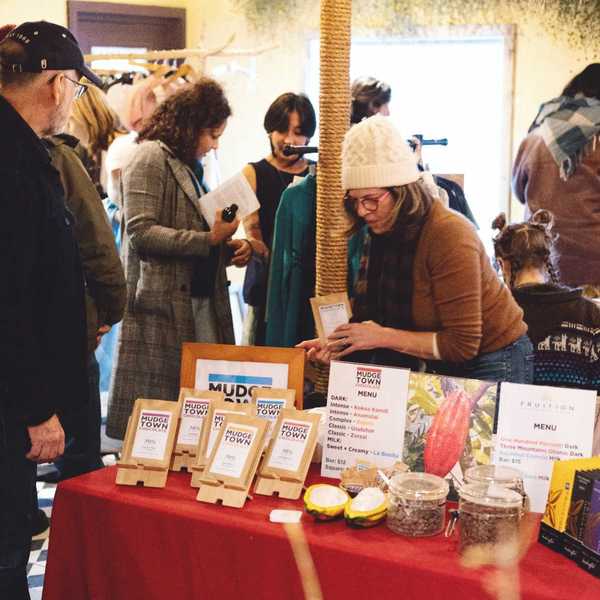
Farm & Friends: a holiday market that gives back

The Farm & Friends holiday market returns Nov. 21 and 22, featuring local makers, food producers and seasonal gifts.

Provided

According to PBS, “More than 5 million people have lost their Supplemental Nutrition Assistance Program, or SNAP, benefits since President Trump’s so-called One Big Beautiful Bill passed last year.” Combined with rising costs and new eligibility requirements, these cuts have placed additional pressure on families struggling to make ends meet. As more people turn to food banks and pantries for assistance, local farms are playing an increasingly important role in meeting that need. Hungry Reaper Farm in Morris, for example, supplies food and CSA shares to a variety of nonprofit organizations and schools.

In Dutchess County, The Webatuck Valley Farm Collaborative is working to strengthen the pipeline from farms to foodbanks. Led by Rock Steady Farm, Sweet Freedom Farm and Wildseed Community Farm and Healing Village, the collaborative hopes to double the infrastructure capacity for at least 15 local farms. This will allow them to increase supplies for food pantries and regional schools while expanding the farms’ reach to industrial buyers and distributors. By their estimation, the food hub “will supply and impact 9 school districts, 13 food pantries, and partner with 6 institutional buyers and 8 aggregators and distributors.”

Keep ReadingShow less

Under the big top at Full Circus Farm

Under the big top at Full Circus Farm

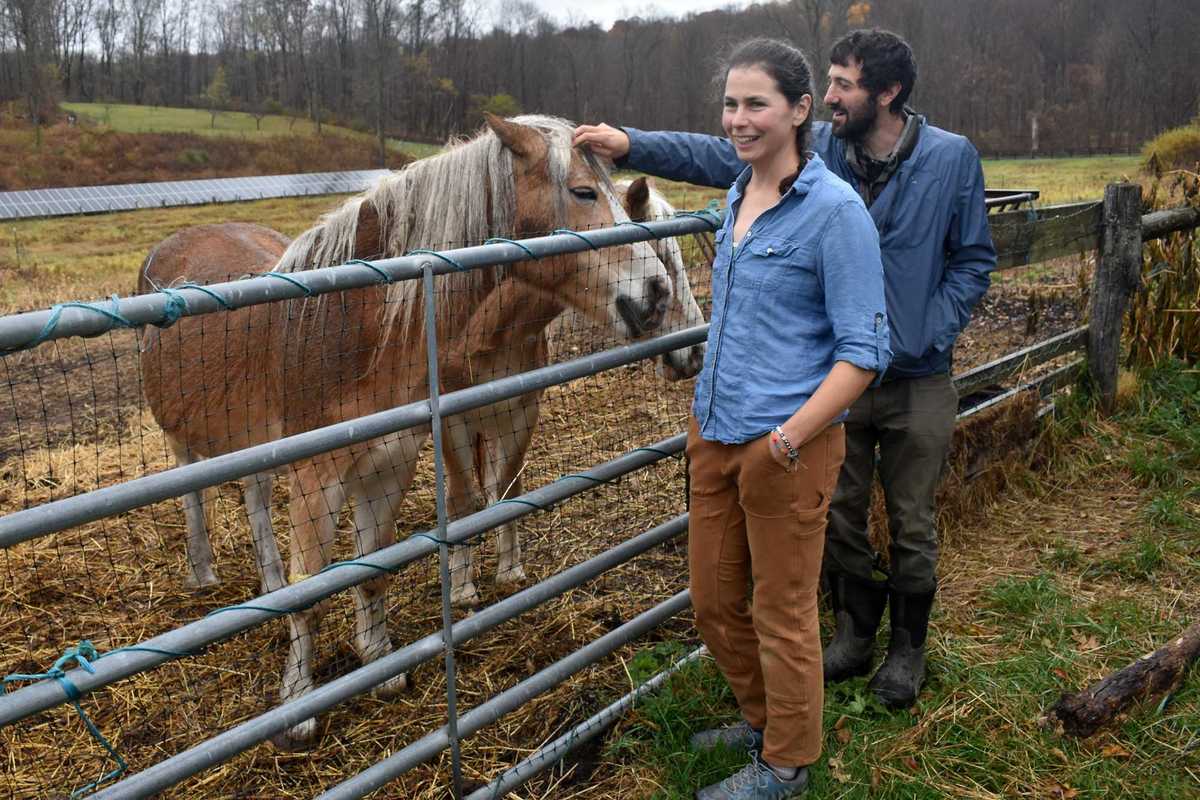
Miriam Goler and Mark Stonehill with their Haflinger horses, Sunshine and Sandy, at Full Circus Farm in Pine Plains.

L. Tomaino

We share this farm with such amazing human and nonhuman neighbors.
— Mark Stonehill

For Mark Stonehill and Miriam Stonehill Goler, the founder of Full Circus Farm in Pine Plains, farming has always been about more than what comes out of the ground.

“From the very beginning, we’ve envisioned the farm as a place not only for food production, but also merriment and community,” they said.

Keep ReadingShow less
google preferred source

Want more of our stories on Google? Click here to make us a Preferred Source.

At Ancram Center, community takes center stage
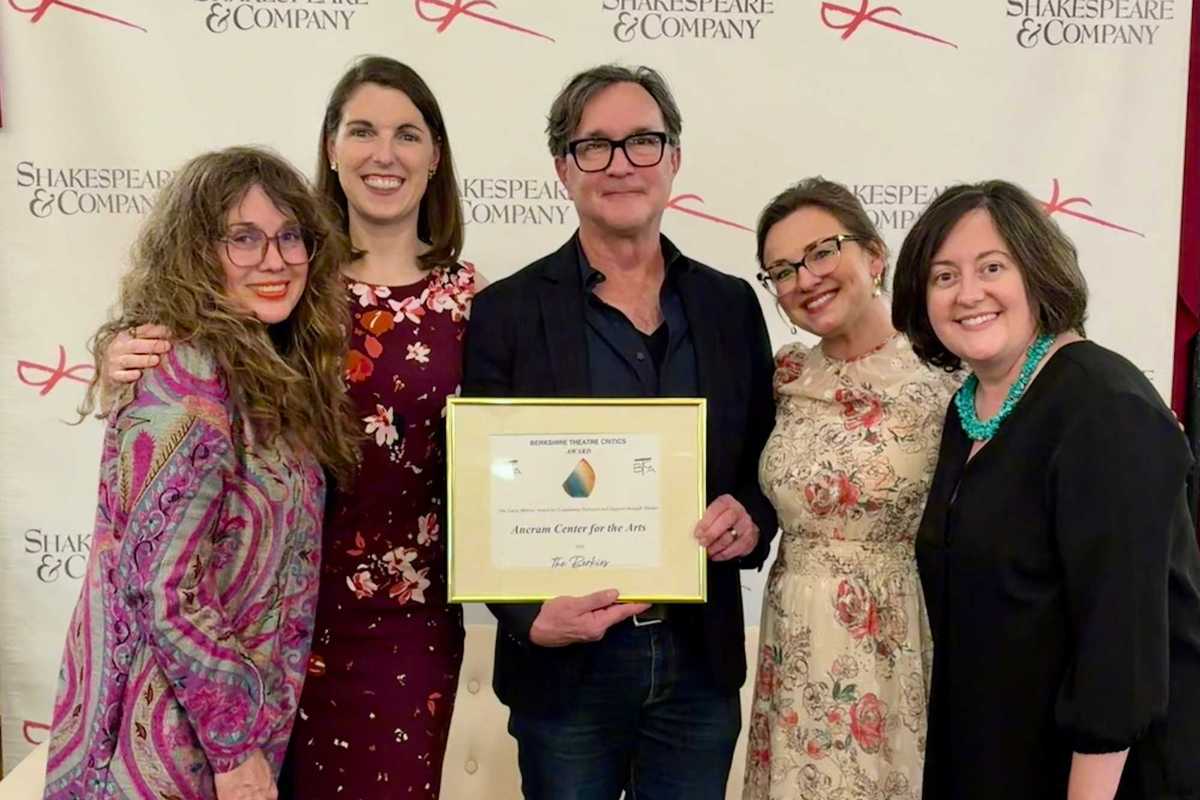
Ancram Center staff and teaching artists after the ceremony.From left to right,Simone Stevens, Sarah Katan, Jeffrey Mousseau, Erin Krom and Chris McCoy.
Provided

At the Ancram Center for the Arts, the stage has been host to numerous award winning professional actors, but it also often belongs to a neighbor with a story to tell. Other times, the performance moves out of the theater altogether, transforming a pond, a field or a corner of town into a stage.

That commitment to bringing theater into the community — and the community into the theater — has earned the Ancram Center the Larry Murray Award for Community Outreach and Support through Theater, one of the Berkshire Theatre Critics Association’s annual Berkie Awards.

Keep ReadingShow less
The Cornwall Whale resurfaces in West Cornwall

The Cornwall Whale is the brain-child of visual and experiential designer Lindsay Stadig.

D.H. Callahan

There’s something oddly familiar yet intangibly foreign about the Cornwall Whale. It’s not an interiors store, even though there are chairs and furnishings for sale. It’s not an art gallery, though there are paintings and sculptures occupying every corner of the space. It’s not a boutique, even with locally handmade shoes and carefully selected garments. No, The Cornwall Whale is something truly unique in the world of the truly unique.

The enigmatic shop popped up in the early winter of 2025 at the Hughes Memorial Library, right on the bank of the Housatonic River in West Cornwall. It is the brain-child of visual and experiential designer Lindsay Stadig.

Keep ReadingShow less

Social justice songwriting fall retreat

Social justice songwriting fall retreat

Singer, songwriter and activist Taína Asili leads a social justice songwriting retreat Nov. 20-23 at Soul Fire Farm in Petersburgh, N.Y.

Provided

Music has long been a powerful tool for protest, solidarity and social change. From civil rights anthems to contemporary songs of resistance, songwriting has helped give voice to movements and inspire collective action. Singer, composer and activist Taína Asili will explore that tradition during a four-day Social Justice Songwriting Retreat, Nov. 20 to 23, at Soul Fire Farm in Petersburgh, New York.

The retreat comes amid a renewed interest in collective singing as a form of activism. Organizations such as Singing Resistance are bringing people together across the country to use songs as tools for solidarity, nonviolent resistance and community building. The movement draws on the long history of music in social justice struggles, emphasizing the power of singing together to overcome fear, strengthen connections and inspire collective action.

Keep ReadingShow less
google preferred source

Want more of our stories on Google? Click here to make us a Preferred Source.

google preferred source

Want more of our stories on Google? Click here to make us a Preferred Source.