NORTH EAST — North East Fire District Fire Commissioner Chairman Stephen Valyou, Vice-Chairman James Schultz and Commissioners Joshua Schultz, Larry Selfridge Jr. and Jay Scasso just spent the past eight months sweating the details of how to ease those fortunate enough to receive life-saving services from the all-volunteer Millerton Fire Company into accepting the reality that within three to five years, they will have to start paying for such services. In 10 years, the fire company may be an entirely paid force due to the lack of local volunteers.
To prepare for that inevitable transition to an all-paid fire department, the fire district’s 2022 proposed budget amounts to a 58% tax increase. The amount needed to be raised by taxes by the district in 2022 is $692,805; in 2021 that number was $422,215.
The Millerton News sat down via Zoom with three of the fire commissioners (Valyou, Schultz and Schultz) to discuss the increase and the reason behind it on Saturday, Oct. 9. The commissioners said they wanted to be completely transparent with the community about why taxpayers are facing such a dramatic increase. They also wanted to let folks know the 58% spike is in lieu of what would be an even more dramatic increase if the district were to wait until a paid service takes over when that day finally arrives.
EMS already a paid service
That stark reality hit the ambulance squad back in January of 2015, when the town signed a contract with Northern Dutchess Paramedics (NDP) for $180,000. This year, North East town Supervisor Chris Kennan said that contract went up to $363,000.
“It’s the largest single line item in the budget for the town,” said Kennan. “And it’s increased steadily during that six-year period. That’s a contract that NDP negotiated with the town of Dover, the town of Amenia, the town of North East and the village of Millerton. Their fire district no longer owns an ambulance. They sold their ambulance last year, I think.”
All three agreed that the rising cost of emergency services should not be surprising, considering how much is entailed in protecting residents and their property.
Responsible planning
According to Joshua Schultz, since the North East Fire District was established in 2004, “the board has tried to minimize the amount of taxpayer impact by keeping the budget at an operating level appropriate for the given time with not a lot of preparation or planning for the future. In 2020, the board had begun discussing what we need to do to be better prepared for what’s up and coming.
“Nobody wants to admit it or accept it, but our EMS [Emergency Medical Services] went paid, and our fire service will eventually be paid as well,” he added. “We’re trying to be proactive; we’re trying to address it now rather than saddling taxpayers with a 100% increase.”
Lack of volunteers
The main challenge for the district, said James Schultz, is staffing. Considering it’s been serving the community on a volunteer basis since 1892, and really only began to struggle to recruit volunteers in the last decade or so, the commission believes the fire district has fared well throughout the years. Still, it’s at a critical juncture now where reliable service will likely be unsustainable in the very near future.
“Our role sheet shows I think 59 on the roles, but active members we’re dwindling down to very few people,” he said.
In fact, he said there are only between 16 and 27 “truly active members” in the fire company.
“Our average age is like 44,” added Schultz. “And we have one gentlemen making a lot of calls that’s 89 years old.”
That’s Bernie Silvernail, who has 72 active years in the department. A firetruck was just named in his honor at a special ceremony on Sept. 12 at the new Annex building across the street from the firehouse on Century Boulevard.
Increased call volume
“For a volunteer force we have great equipment, great facilities, but we have a staff that’s burned out by an increasing call volume,” said Joshua Schultz. “North East is experiencing more calls.”
“I would say there’s between a 20 to 25% increase in calls,” Valyou agreed. “I believe the pandemic did have an impact on that. Weekend homes have become permanent residences. If you’re here more, there’s more of a chance for the need of EMS or fire services, and we don’t have the volunteer bases coming in.”
“There are a lot of socioeconomic factors that play into the dropping off of volunteer staffing: a dwindling base of people that reside in the town of North East and village of Millerton capable of being volunteers or lack of time or interest,” said Joshua Schultz. “Or people working multiple jobs or familial commitments or they’re unable to undergo training. Just the basic training to be fire police that in my day took eight hours now takes almost 30… To be an interior firefighter… takes almost 200 hours… [that] gives you an idea of why volunteerism is on the decline, not only nationally but certainly in fire service.”
A phased approach
While a 58% tax increase might seem hefty, if the fire district did not take the approach of increasing taxes incrementally in the next couple of years, Joshua Schultz said “easily you would see a 100 or 150% increase in the budget if no step had been taken prior” when the district transitions to a paid or partially paid service in the next three to five years.
He added that while the commission doesn’t have the exact mill rate set for 2022 yet, he would “wager to say the average household with a property value of $250,000 in North East would probably see a $50 to $75 increase in its fire taxes.”
The town of North East collects taxes for the fire district in late March; the district’s fiscal year operates on the calendar year, from Jan. 1 to Dec. 31.
District expenses
Much of the district’s expenses go toward insurance, building maintenance and repair, infrastructure for the future, rotations for equipment and truck replacement. The cost of turnout gear alone costs thousands of dollars per firefighter.
The commissioners said they regularly pursue grants as they become available, though it’s been difficult. That’s why they included a line in this year’s budget for a grantwriter, to more effectively obtain the coveted funding.
“In the past we tried to do it ourselves, but grant writing is very competitive,” said Joshua Schultz. “For someone like us to work a normal job to write grants is tough, so we placed a line in the budget for a grant writer.”
County should step up
Kennan said he knows all too well how difficult it is to budget for essential services like the fire district has to, and is looking toward county lawmakers to help fill the gap.
“Our all-volunteer fire company has provided many years of dedicated service to our community,” he said. “At the same time we know that with declining numbers of volunteers, not just in our Fire Company but in smaller communities around the State, the writing is on the wall. While I hope it is not any time soon, the reality is there will be full-time, paid firefighters in our future. How that can be paid for is a critical question, and one we will be looking to Dutchess County to help solve.”
When the fire district does eventually switch to becoming a paid company, Schultz explained that “in general, not a whole lot is going to change as far as the district and its structural organization.”
He explained there will still be volunteers, the fire district will still exist, there will simply be a new, partially paid staff that will work in tandem with the volunteers. The North East Fire District will still oversee the Millerton Fire Company, its volunteers as well as the paid staff. The paid firefighters would be hired from a pool of candidates in the county from a list of graduates from the fire safety academy.
The biggest change, he said, would be in the district’s infrastructure, things like the firehouse’s sleeping quarters, a wellness center, an improved kitchen and showers. A paid staff of dedicated workers at the firehouse would get the first piece of equipment out on calls and then volunteers would work help deal with emergencies in the district. The fire commission would continue to function as it does now.
Increase taken to heart
“We definitely take our responsibility to the taxpayers wholeheartedly and this is not a decision we came to lightly,” said Joshua Schultz. “Nobody wants to increase taxes in this kind of a manner. We’re all taxpayers here. Not only do we serve oaths as a board of fire commissioners, we all pay taxes in North East or Millerton, so we also are going to be affected by this.
“A lot of care and thought, many hours of conversation, have gone into what you see now as the proposed budget,” he added. “And we openly welcome conservation with the community at our public hearing on Tuesday, Oct. 19, at 6 p.m.”
The public hearing for the proposed budget will be at 29 Century Blvd. at the new Annex.
Budget to be adopted Oct. 19
After the public hearing is held on the 19th, if no adjustments or amendments are needed to the proposed budget, the commissioners will most likely adopt the budget that night.
Copies of budget available
Copies of the North East Fire District’s 2022 Proposed Budget are available for view at the firehouse at 28 Century Blvd., the NorthEast-Millerton Library and Town Hall at 19 North Maple Ave.
Taxpayers can also email commissionersnefd@gmail.com for a copy of the budget or to express any concerns to the North East Fire Commission.





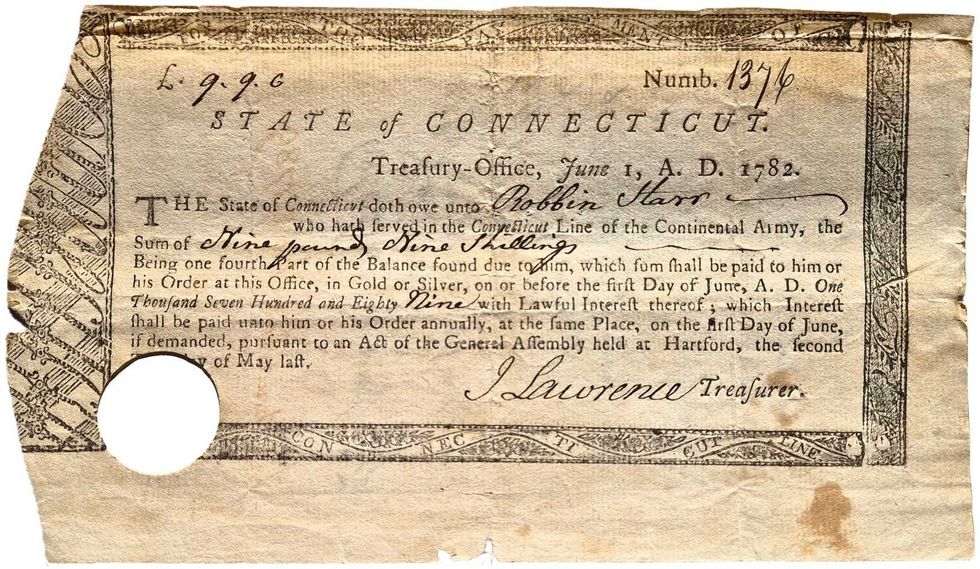 Pay Bill for Robin Starr’s service in the Continental Army.Courtesy the Alex Breanne Corporation
 John Mills speaking at Quinnipiac University.Courtesy the Alex Breanne Corporation
 Stephanie Saetta,with her rescue dog George and Blue (left), a shepherd mix awaiting his forever home.Madi Long