

Latest News
From one protester to 200: ‘No Kings’ rally draws large crowd in Amenia
Aly Morrissey
Apr 01, 2026
A protester holds a sign at Fountain Square in Amenia on March 28, where more than 200 people gathered as part of the nationwide “No Kings” demonstrations.
Photo by Aly Morrissey
AMENIA — More than 200 people gathered at Fountain Square on March 28 as part of the nationwide “No Kings” demonstrations, marking a sharp rise from what began months ago with a single protester.
The rally was part of a coordinated day of protests held across the country and around the world, including many in small towns and rural communities throughout the region. Organizers estimated more than eight million people participated globally.
Kim Travis of Amenia — who organized the rally at Fountain Square — said the demonstration reflected a dramatic shift from her early days protesting alone, when she faced threats while standing by herself.
“This started with just me, alone in June — day after day, getting threats,” Travis said. “To see it grow into more than 200 people today for this ‘No Kings’ rally in our little-bitty town of Amenia is incredible.”
She said the turnout reflected broader support across rural communities. There were several rallies in towns across Dutchess County and in neighboring Connecticut.
Travis described the mood of the Amenia crowd as both emotional and energizing.
“Our hearts are filled with joy — it’s just incredible that so many people turned out today,” she said.
She added that the message of the protest was rooted in democratic values.
“We want our country back, and we want democracy,” Travis said. “We the people serve no kings. That’s what the Constitution is all about.”

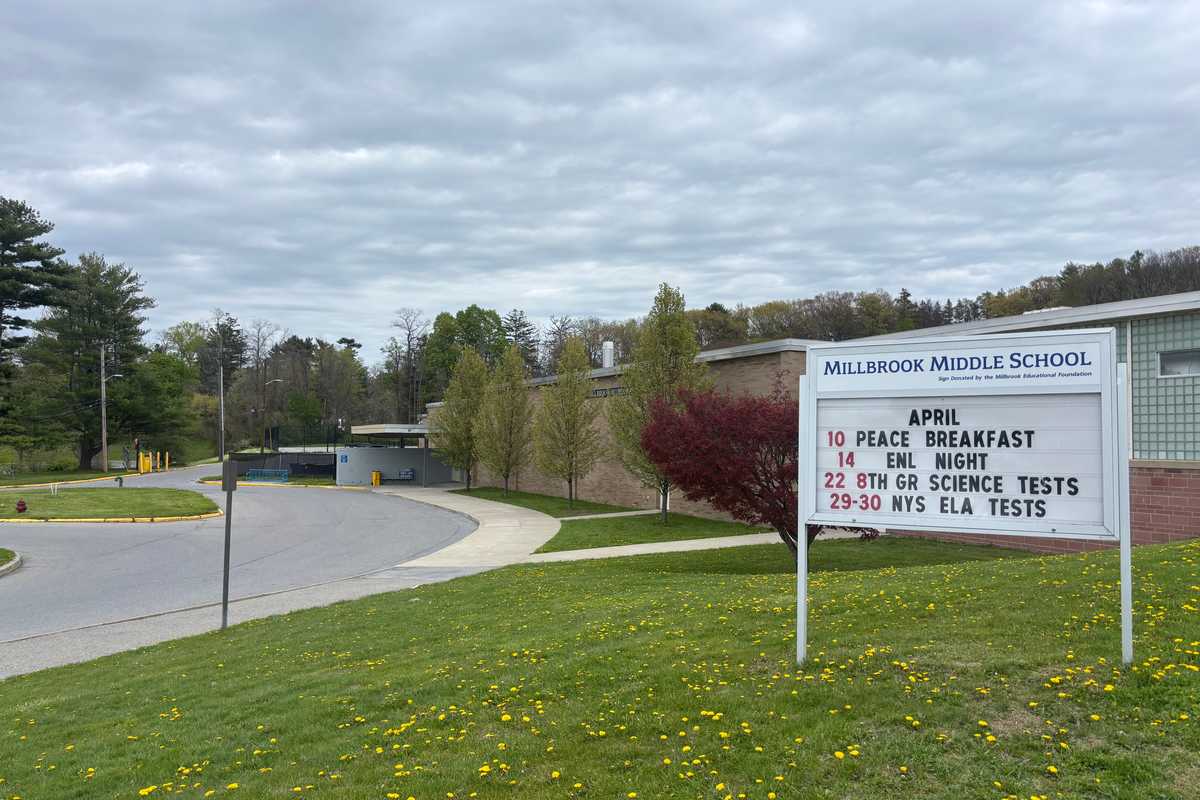
Ellie Myers, a senior boarding student at Millbrook School who lives in Brooklyn, attended the Fountain Square protests and said she has been protesting since Donald Trump was first elected in 2016.
“Showing up is really important to me, and I’m grateful to be in a community where I can support others,” Myers said. “Right now, ICE is the biggest issue. I have friends and family who have been affected — hardworking immigrants who came here for freedom and haven’t found it. That’s heartbreaking. It goes against what ‘we the people’ is supposed to mean, and it’s painful to see, both in the news and in real life.”
Myers added that she witnessed ICE in the airports during recent travel back to school and it was “heartbreaking.”
Dutchess County Legislator Eric Alexander, who represents Amenia and surrounding communities, also attended the rally, noting it followed a unanimous county resolution opposing a proposed ICE facility in the Hudson Valley.
“That wasn’t just Democrats,” Alexander said. “That was the entire legislature unanimously saying no to ICE, and a lot of that came from the voice of the people — the people we represent.”
Alexander said the size of the rally stood out, noting its growth from a single protester to a dozen regular participants and ultimately more than 200 attendees.
“I see a great sense of community, and I see a great sense of optimism,” he said. “But I also see high frustration. People are very concerned, and I think that concern is only growing as we see more and more of what’s going on in our country.”
He said the country is in a war that hasn’t sufficiently been explained to the American people, dysfunction is rampant at airports, and prices of everything from gas to groceries are soaring.
“And we don’t see an end in sight — we don’t see a plan,” he said. “These are people standing out here today saying we, as citizens, deserve to have our voices heard and to try to get some things to change.”

Several other local protests took place in Dutchess County, including in Rhinebeck, Poughkeepsie and Beacon.
Meanwhile, similar demonstrations took place across the border in Connecticut.
In Salisbury, several hundred people gathered along Route 44, where organizers set up signs and encouraged participants to share messages. In Cornwall, organizers estimated more than 300 attendees at the intersection of Route 7 and Route 4. Meanwhile, in Kent, both sides of Main Street were lined with protesters, with turnout estimated at more than 250.
As the rallies wound down, organizers such as Travis said the protests would not stop.
“A lot of the surrounding small towns showed up, too, because we want to show the rest of the country that small towns can be strong, loud and resist just as much as anyone,” she said. “And we intend to, and we’re not stopping.”
Keep ReadingShow less
A new life for Barrington Hall
Elena Spellman
Apr 01, 2026
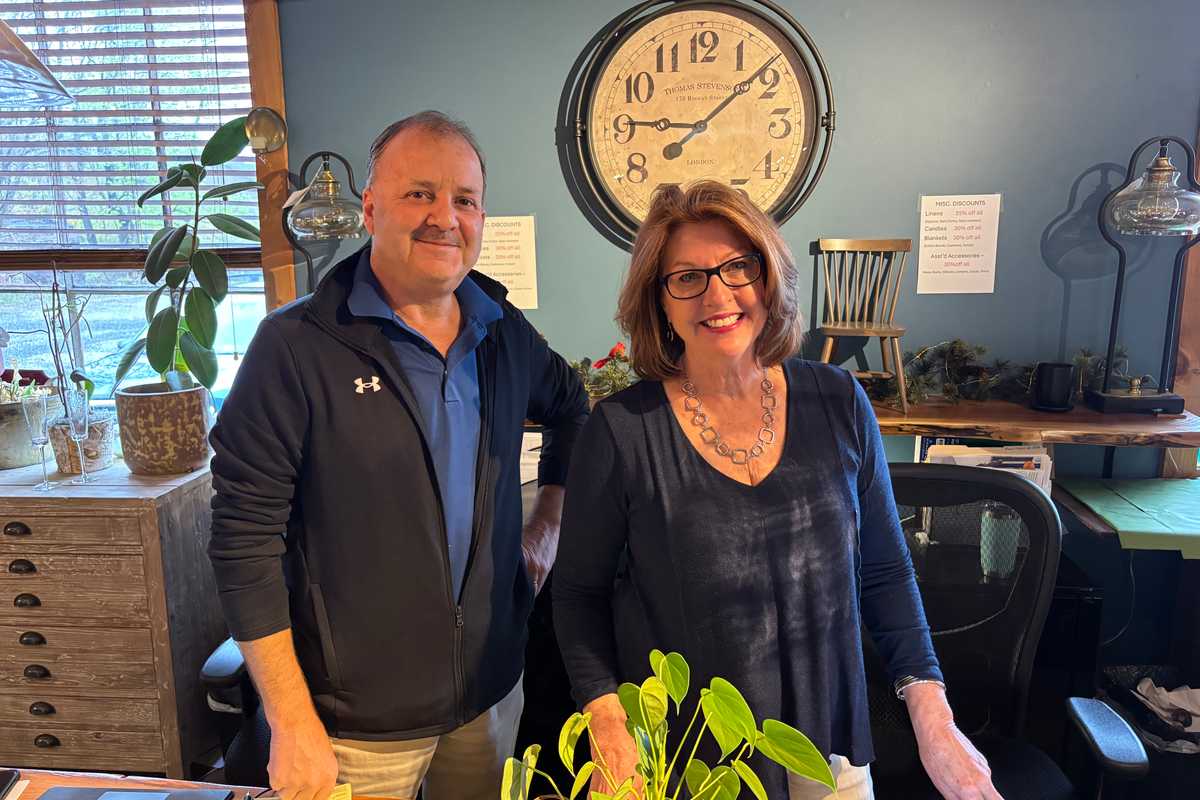
Dan Baker, left, and Daniel Latzman at Barrington Hall in Great Barrington.
Provided
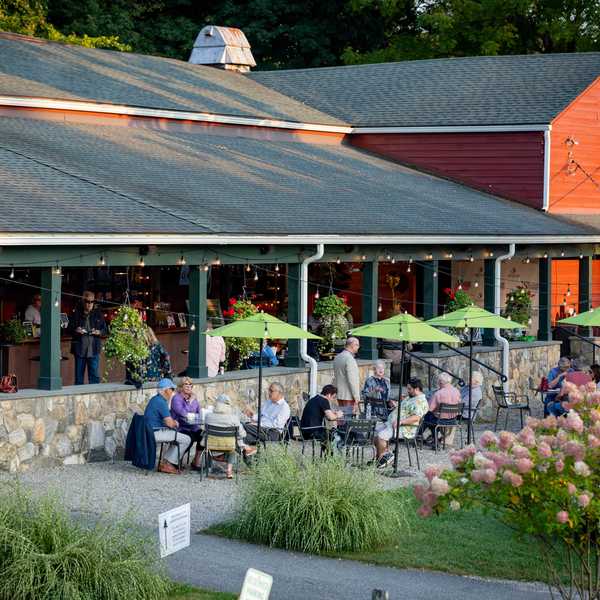
Barrington Hall in Great Barrington has hosted generations of weddings, proms and community gatherings. When Dan Baker and Daniel Latzman took over the venue last summer, they stepped into that history with a plan not just to preserve it, but to reshape how the space serves the community today.
Barrington Hall is designed for gathering, for shared experience, for the simple act of being together. At a time when connection is often filtered through screens and distraction, their vision is grounded in something simple and increasingly rare: real human connection.
The partnership behind Barrington Hall began long before the building itself. Both Baker and Latzman grew up on Long Island, spent more than a decade in New York City, and eventually found their way to the Berkshires, drawn by the desire for something different. What they didn’t realize at first was just how closely their lives had already mirrored one another.
They were born in the same hospital, a year apart. Their families had distant connections. They even played on the same soccer team — never meeting, but moving through the same spaces. It wasn’t until they became neighbors in Egremont about five years ago that those parallels came into focus.
“In hindsight, it feels inevitable,” Latzman said. “But it was actually extremely random that we ended up here.”
From the beginning, Barrington Hall was meant to be a place people return to, not for any one event, but for the experience of being there. On any given week, the space might host a jazz performance, a dance party, a songwriter circle or a children’s event. Some nights bring in touring acts. Others highlight local creatives. The variety is intentional and so is the atmosphere.
“It’s about people,” Baker said. “It’s about being present.”

Baker and Latzman are keenly aware of the world outside with its constant barrage of information, political conflicts, a culture that pulls people deeper into their screens. Barrington Hall offers a way out of that noise.
“A little bit of a bubble,” Latzman said. “A place to step away from everything else.”
During a recent event, they noticed something telling: a full room of people dancing, talking, engaged — and almost no one on their phone.
“That’s when you know something is working,” Baker said.
Taking over a beloved local space comes with responsibility, one Baker and Latzman have met by honoring the building’s traditions while also expanding them.
“We didn’t feel obligated,” Latzman said. “We felt honored.”
Part of what makes the space distinct is its versatility. Large enough to host more than 250 people, yet intimate enough to feel personal, it fills a gap in the local landscape, serving a wide range of people and bringing different groups together in the same space.
“We want people to feel like, if something’s happening here, it’s worth checking out,” Latzman said.
They are carefully balancing community access with the realities of running a business, with an eye toward the long term.
“We want this to be here in 20 years,” Latzman said.

That vision extends beyond the building itself — future collaborations, expanded programming, a growing role in shaping the cultural life of the Berkshires. But at its core, the mission remains simple: to create a place where people can gather, a place that feels alive.
And perhaps most importantly, to create a place where, if only for a few hours, people can step away from the noise of the world and enjoy being together.
When asked who they’re most excited to host next, their answer was immediate: The Mammals on April 10 and Lee Ross, a one-man party band from Massachusetts, scheduled to perform on May 1.
For more information and tickets, visit
barringtonhallgb.com
Keep ReadingShow less
Paley’s Farm Market opens season, signaling start of spring
Aly Morrissey
Apr 01, 2026
Paley’s Farm Market, located near the New York–Connecticut border on Amenia Road in Sharon, Conn.
Photo by Aly Morrissey
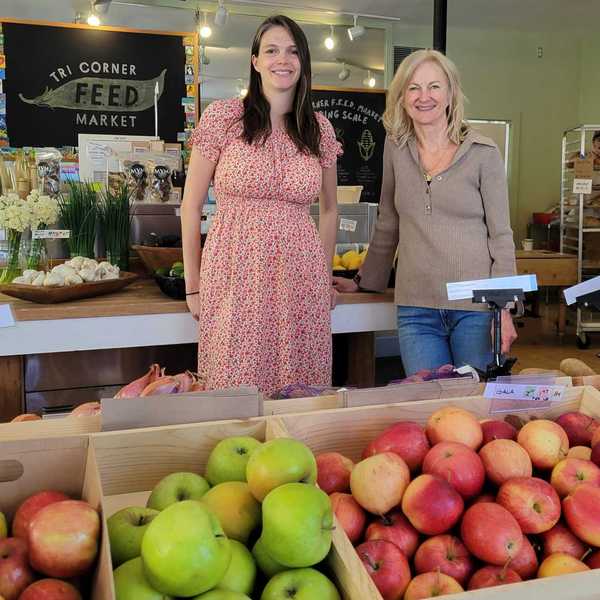
SHARON, Conn. — For many local residents, spring doesn’t truly begin until Paley’s Farm Market opens its doors, and customers turned out in force for its 44th season opening on Saturday, March 28.
Located on Amenia Road in Sharon, Paley’s is a seasonal destination for residents of New York and Connecticut and, over the past four decades, has evolved from a locally grown produce center into a full-scale garden center, farm market and fine food market.
Despite a chilly start to the day, the opening drew a steady crowd, with a full parking lot and early signs of the busy season ahead.
“It’s been going really well,” said owner Sarah Coon, who purchased the business from her brother in 2019. “It’s chilly, but we’ve had a nice turnout. The sun’s out, and that always helps.”
Mimi Harson of Sharon and Anette Cantilli of Millbrook shared an outing together to purchase flowers and plants for their deck pots.
“It’s exciting, we love Paley’s,” Cantilli said of the opening day as she filled her car trunk with pansies.
Behind the scenes, opening day is the culmination of months of preparation – much of it beginning long before winter has fully loosened its grip.
“We open our first greenhouse in early February, and that’s when the fun begins,” Coon said. “We start planting pansies then, and once you open that greenhouse, you’re committed. It’s like having a bunch of babies out there – you have to make sure nothing goes wrong.
This year’s opening comes after a particularly snowy winter that, just weeks ago, left the property covered in large mounds of snow.
“I looked around and thought, ‘I don’t know if we’re going to be able to open on time,’” Coon said. “There was snow everywhere. It was hard to even imagine. But here we are.”
Early spring offerings include rows of colorful pansies grown from seed, along with cold-tolerant vegetable starts, herbs and Easter-ready planters designed for patios and entryways. Bulbs such as daffodils and tulips are also available, along with seeds, soil and gardening supplies.
“It’s not too early,” she said of the growing season. “You can start seeds indoors now, even just on a windowsill. And if it doesn’t work, you can always come back and getplants.”
While the market’s popular prepared foods and grocery offerings will arrive later in the season, the early weeks focus on planting and preparation. Dry goods are expected in the coming weeks, followed by a gradual buildout of the full market.
New this year, Paley’s has partnered with Homegrown National Park, a national initiative promoting the use of native plants. The collaboration will help customers more easily identify native species to incorporate into their gardens.
“We think it’s going to be good for our staff and our customers,” she said. “It makes it easier for people to mix native plants into what they’re already doing.
Paley’s typically operates through mid-October, employing up to a dozen staff members at the height of the season, along with part-time and retired workers who assist with planting and maintenance.
For many, the opening marks more than just the start of a business cycle – it’s a seasonal ritual.
“We all need a little color right now,” Coon said. “And a little warmth. It’s coming.”
Keep ReadingShow less

Want more of our stories on Google? Click here to make us a Preferred Source.
Gail Rothschild’s threads of time
Natalia Zukerman
Apr 01, 2026
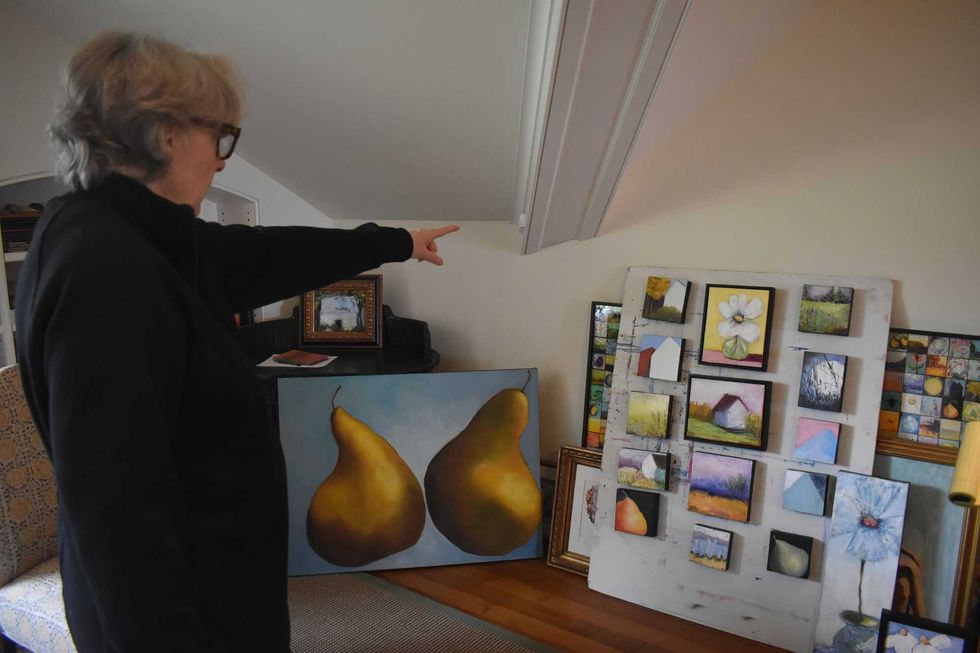
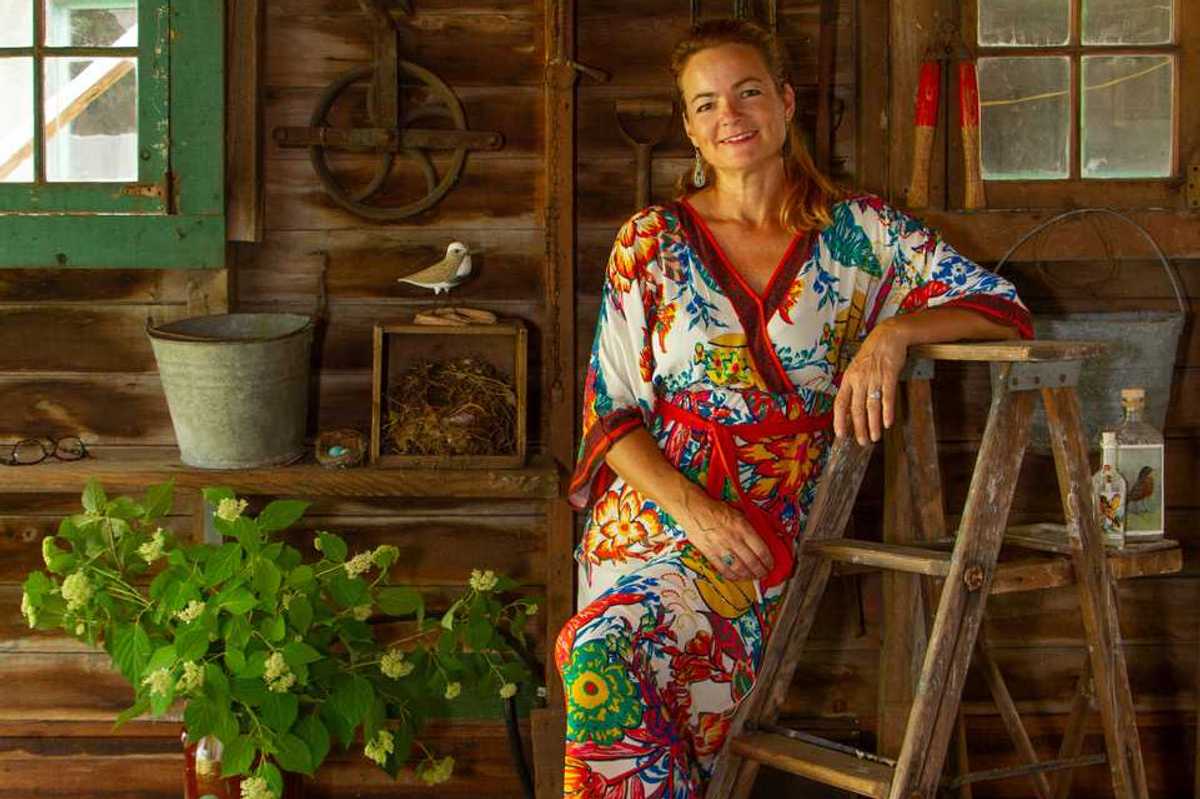
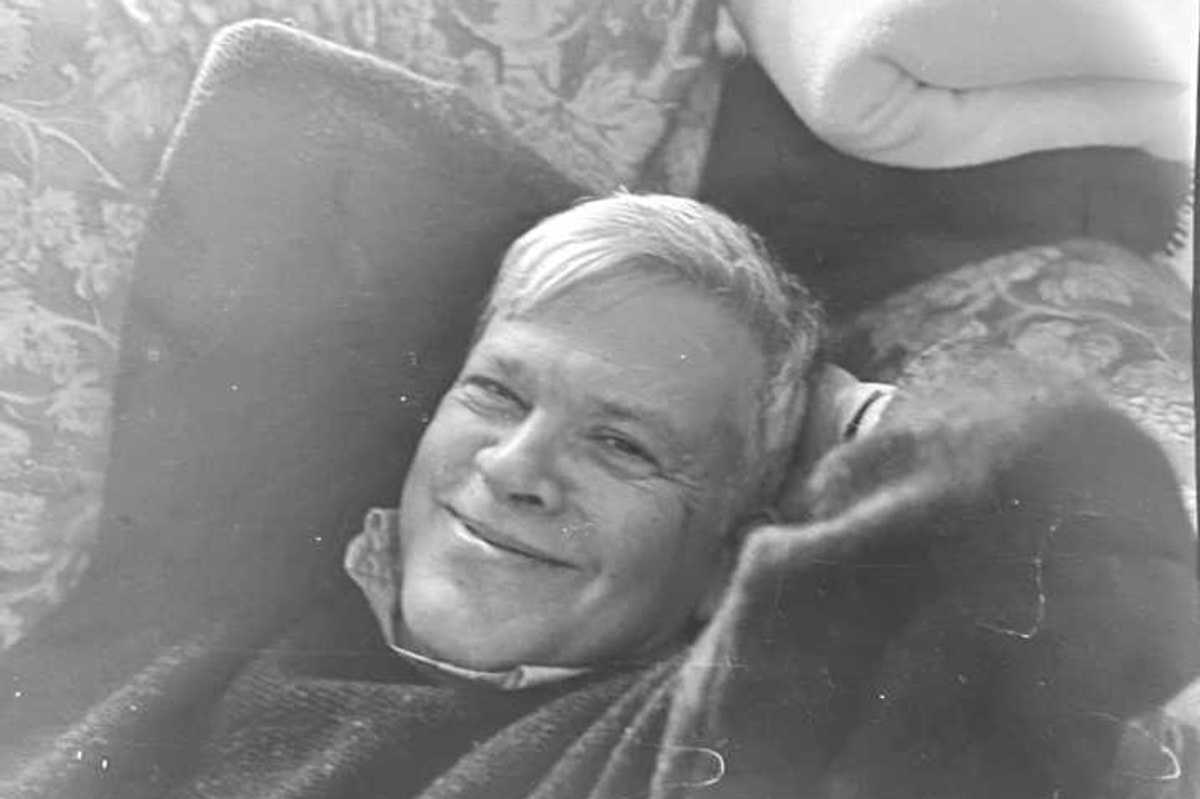
Gail Rothschild with her painting “Dead Sea Linen III (73 x 58 inches, 2024, acrylic on canvas.
Natalia Zukerman
There is a moment, looking at a painting by Gail Rothschild, when you realize you are not looking at a painting so much as a map of time. Threads become brushstrokes; fragments become fields of color; something once held in the hand becomes something you stand in front of, both still and in a constant process of changing.
“Textiles connect people,” Rothschild said. “Textiles are something that we’re all intimately involved with, but we take it for granted.”
Her work begins, often, with something small: a scrap of linen from the Judean desert, dating “to a time before the notion of ‘Israel’ or ‘Palestine;’” a fragment so diminished it barely registers as an object; or a rare indigo-dyed child’s head cloth from Tutankhamen’s tomb.
“I call them portraits of ancient linen,” she said.
Rothschild grew up in Greenwich and studied drawing and painting at Yale University. “That was kind of my first love,” she said. But she quickly veered toward something more collective, working with Peter Schumann at the Bread and Puppet Theater, building papier-mâché puppets and participating in a kind of performance-based activism that blurred art and politics.
“After Yale, I got out of school and thought‘Wait a second. I don’t want to paint anymore. I need to work with people in communities and make things.’”
She moved to Brooklyn and began working in public schools, developing projects rooted in collaboration and local history. The projects were ambitious, research-driven, and often confrontational. At the University of Massachusetts, she recalled asking students: “Did you know that Amherst was named for Jeffrey Amherst, who was responsible for giving blankets infected with smallpox to Native Americans? Why don’t we look into that?’”
There were sculptures, letters to watchdog groups, installations. She worked on four such projects a year, she said, until the pace became unsustainable. “At some point I just said, ‘I’m exhausted. I’m going back to the studio.’”
What brought her back was a book, “Prehistoric Textiles ” by Elizabeth Wayland Barber. Inside, she encountered an image of a 7,000-year-old textile, unraveling.
“It said to me, ‘this could be a great big abstract painting’,” she said. “What does it mean that this textile, this thing that used to be a Cartesian grid and over time has gone back to nature?”
That question became a kind of axis for her work. “There is this cusp between nature and culture,” she said. Early on, she avoided textiles with imagery, drawn instead to the raw language of fiber itself. But eventually, even that boundary softened. A project with the Godwin-Ternbach Museum introduced her to Egyptian textiles — Christian, pagan, Greek, Roman influences colliding in woven form.

What followed was a deepening relationship with museums and, crucially, with conservators. Institutions like The Metropolitan Museum of Art and collections in Berlin and Paris began sending her images of textile fragments, sometimes pieces she has still never seen in person.
“It’s almost easier for me to transform it when I haven’t seen it,” she said.
Her process is both precise and intuitive. She grids the canvas and the source image, drawing freehand to “honor what the object is.” For a time, she works closely from the photograph. Then something shifts. “At some point I’ll say, ‘It’s a painting. It’s got to talk to itself,’ and then I stop looking at the photograph.”
What emerges is layered, luminous and muscular. “Sometimes people say, ‘Do you miss making sculpture?’ and I say, ‘I never stopped.’”
You feel that in the surfaces: the tension of threads pulling apart, the sense that something is both forming and dissolving at once. Even the backgrounds — often ambiguous, atmospheric — are not neutral. “It’s really more about feeling the space around the object,” she said, especially as she considers how ancient fragments are mounted on modern fabrics. “I get to invent an entirely other language.”
Some of her most arresting work is on the monumental textiles of The Met Cloisters, where medieval tapestries, some towering more than a dozen feet, are slowly, painstakingly conserved. It’s in the conservation labs that Rothschild has observed the physical reality of these works: their own weight pulling them apart, threads breaking under centuries of strain. Conservators insert new threads to stabilize them and Rothschild documents this process. “There’s a kind of poignancy to their work,” Rothschild said, “because as hard as we work to conserve the objects of our past, in the greater cosmic scheme of time, it’s only temporary. There’s something beautiful about that.”
Time operates on multiple levels in Rothschild’s work. There is the time of the object —thousands of years, in some cases — and the time of the painting, which unfolds over months. “Once I start working on something, I can’t stop,” she said. “But then it’ll rest for a while and I may change it, add layers.”
And then there is the time of attention itself, the way looking can tip into obsession, into pattern-seeking that doesn’t quite turn off. Rothschild is aware of that edge.
“I have to make myself stop or I just see patterns everywhere and I can’t stop, really,” she laughed. “That’s why I’ve built in other things I need to do in my life like take the dogs for a hike or, you know, volunteer at the Sharon Land Trust… otherwise I go a little nuts. And it wouldn’t be good painting either.”
A painting session, for her, has its own its own arc. “There’s kind of a trajectory for every work session. I might be repeating something and suddenly it looks linear. The language I started painting with may change by the end and I think, ‘Oh God, I’m gonna have to go back and repaint that.’”
But then, she said, there is a pause.
“I kind of step back and say, ‘No, this painting can hold both. That’s part of its history. There’s the history of the object but then there’s the history of the painting.’”
Keep ReadingShow less
Sherman Players celebrate a century of community theater
Richard Feiner And Annette Stover
Apr 01, 2026
Cast of “Laughter on the 23rd Floor” from left to right. Tara Vega, Steve Zerilli, Bob Cady (Standing) Seated at the table: Andrew Blanchard, Jon Barker, Colin McLoone, Chris Bird, Rebecca Annalise, Adam Battlestein
Provided
For a century, the Sherman Players have turned a former 19th-century church into a stage where neighbors become castmates, volunteers power productions and community is the main attraction. The company marks its 100th season with a lineup that blends classic works, new writing and homegrown talent.
New England has a long history of community theater and its role in strengthening civic life. The Sherman Players remain a vital example, mounting intimate, noncommercial productions that draw on local participation and speak to the current cultural moment.
Sherman Players President Missy Alexander is an enthusiastic champion of the group’s history and collaborative spirit, which engages amateurs and professionals alike “to see what fun we can have” in bringing theater to all audiences. Everyone pitches in — from sets and costumes to administrative work — to bring each production to life. She calls it the “extra special sparkle” that has defined the company since its first performances in their historic church home in 1926.
The season opens in April with Neil Simon’s “Laughter on the 23rd Floor,” a comedy set in the 1950s television writers’ room during the McCarthy era. In June, the company will present a production (with live music) of the classic Broadway musical “Bye, Bye Birdie!” one of the first shows that highlighted the Baby Boomer generation and our “Kids are King” culture.
In July, The Sherman Players will debut “Restored to Reason,” a new work by local writer Elizabeth Young about Mary Todd Lincoln. Developed through the theater’s Cold Lemonade reading series, the work marks the first time the company has taken a piece from staged reading to full production, a memorable milestone in the group’s historic mission.
September brings a timely revival of the historic American courtroom drama, “Inherit the Wind.” The Sherman Players last presented this riveting account of the infamous Scopes “monkey trial” in 1966. The season concludes with a special holiday presentation of “An American Christmas Carol,” an original adaptation of the Dickens classic, written by Artistic Director Robin Frome, directed by Jane Farnol.
Alexander is quick to acknowledge that The Sherman Players is committed to supporting the broader regional arts community. “We’re closer than you think, and we all draw on the same talents and resources,” she said. “We all see and support each other’s work.”
This dedication is helping to enrich the theater-going experience for everyone, from long-established generational Sherman Players patrons to new, younger audiences looking for community connection.
The Sherman Playhouse is located at 5 Route 39 N, Sherman, Connecticut. For tickets, subscriptions and more information, visit shermanplayers.org.
Keep ReadingShow less
Millbrook, Millerton police chiefs represent rural voice in county leadership
Aly Morrissey
Apr 01, 2026
Millerton Police Chief Joe Olenik, left, and Millbrook Police Chief Keith Dworkin at the Dutchess County Association of Chiefs of Police in Poughkeepsie, New York.
Photo Provided
MILLBROOK — Millbrook Police Chief Keith Dworkin has been elected president of the Dutchess County Association of Police Chiefs, placing a rural voice in a key county leadership role at a time when smaller departments are grappling with staffing and resource challenges.
Dworkin, who has been a member of the association for five years, said the role offers an opportunity to strengthen collaboration among law enforcement leaders across the county.
“I was really happy to be able to step into this role,” Dworkin said. “It’s a great opportunity for us to maintain strong working relationships among departments and continue improving how we serve our communities.”
Dworkin’s appointment was also welcomed by Dutchess County Legislator Eric Alexander, who represents Millbrook, Amenia, Washington and part of Pleasant Valley.
“Chief Dworkin is an outstanding manager who has brought a new level of professionalism to our police force,” Alexander said. “His election to this prestigious position is clear recognition of the sophistication, commitment to community and strong leadership he has displayed throughout his career. Millbrook is lucky to have him.”
Dworkin assumes the presidency after serving as treasurer, secretary and vice president of the organization, which brings together chiefs and department leaders from agencies of all sizes across Dutchess County.
The group meets approximately five times a year, convening police chiefs, captains, lieutenants and other department heads to discuss shared challenges, legislative updates and emerging trends in law enforcement.
While departments vary in size and resources, Dworkin said many of the issues are universal.
“Whether you’re a large agency or a small one, we’re all dealing with recruitment, retention and training,” he said. “The issues may look a little different, but they often apply across the board. The goal is to work together and keep those lines of communication open.”
A key priority during his one-year term will be expanding training opportunities and ensuring departments have access to evolving tools and technologies, Dworkin said.
“We’re looking at how we can better provide relevant training to all levels of officers,” Dworkin said. “That includes working with the state and outside resources, and bringing in vendors to talk about things like records management systems and other technology that’s constantly changing.”
The association also serves as a forum for discussion around legislation and policy, often inviting elected officials to speak with law enforcement leaders.
Among the ongoing concerns is the state’s cap on earnings for retired police officers working part-time, which Dworkin said has made it more difficult for smaller departments to maintain adequate staffing.
“It hasn’t kept up with the cost of living, and it really impacts our ability to provide coverage,” he said. “Recruitment and retention continue to be major challenges, especially for smaller agencies.”
That perspective is shared by Millerton Police Chief Joe Olenik, who also participates in countywide discussions – currently serving as treasurer – and represents northeastern Dutchess communities.
“Olenik and I have gotten to know each other over the last few years, and we deal with a lot of similar challenges,” Dworkin said. “We’re smaller agencies, and we don’t always have the same resources, so working together is critical to overcoming those hurdles.”
Beyond formal meetings, Dworkin said the value of the association lies in the camaraderie and relationships built between departments.
“It’s a great collaborative effort,” he said. “It’s great to share ideas, help each other out, even in small ways. Everything we do is collaborative, and that’s what makes the association so valuable.”
Keep ReadingShow less

Want more of our stories on Google? Click here to make us a Preferred Source.
loading