Pine Plains first to allow local pot sales while Amenia drags on

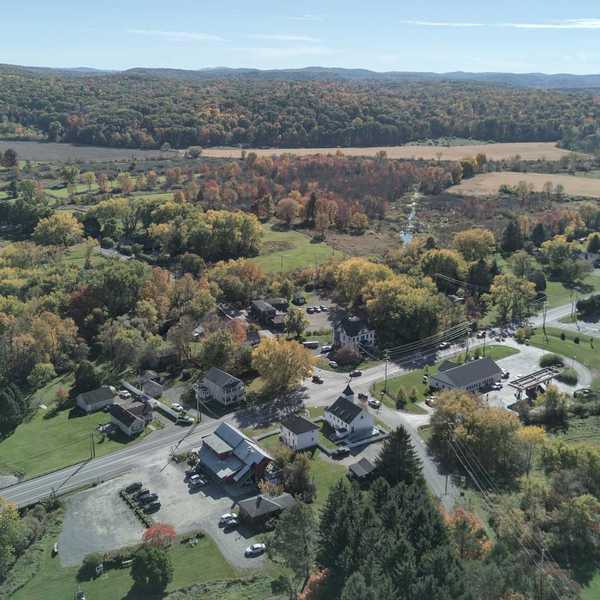
HARLEM VALLEY — With the clock ticking until New York State’s end-of-year deadline for municipalities to opt in or out of permitting cannabis dispensaries and lounges, the Pine Plains Town Board voted to allow cannabis dispensaries but not lounges at its meeting on Thursday, Sept. 16.

The Marijuana Regulation and Taxation Act (MRTA) was adopted by the State of New York in March. The MRTA legalized adult-use recreational marijuana. Former Governor Andrew Cuomo gave municipalities until Dec. 31 to decide if they would permit cannabis to be sold commercially and/or smoked on site at lounges within their borders.

Pine Plains takes action

The Pine Plains Town Board held a public hearing for the local law opting out of permitting marijuana lounges and other consumption facilities in town, closing the hearing minutes later when there was no public comment.

Attorney to the Town Warren Replansky suggested going through the environmental impact review for the local law before adopting a negative declaration to confirm the law won’t have any potential or significant environmental impacts. He also reminded the board its decision to opt out of cannabis lounges “is not an irrevocable decision — the board can change course at any time it wants thereafter and opt in.”

If the board decides to opt into either local law for permitting dispensaries or lounges, Replansky said the town will have to adopt amendments to its zoning code in the next year or two regulating uses of dispensaries and/or lounges within the town.

After further discussion, the board voted unanimously against allowing lounges, which would be akin to bars that sell alcohol, in Pine Plains.

Next, the public hearing on the local law to opt in or out of allowing retail cannabis dispensaries was opened; it closed shortly thereafter when there was no public comment.

“I think it’s a great opportunity for our town, said Councilman Matthew Zick, citing potential tax revenue and new small businesses. “If you ever go to Great Barrington, [Mass.,] every plate in the parking lot is a New York State plate… so why not make it closer?”

Referring to dispensary licenses, of which the state is only going to issue about 700 state-wide, town Supervisor Darrah Cloud said, “I feel that we would possibly lose out all together on getting one if we waited too long. The process for choosing who gets a license is going to start really soon so that the people who opt in are going to be first in line for those licenses … and the ones who opt out will be second in line and that will be a long process.”

Regulations for dispensaries are 90% written, Cloud said, adding it could be two to eight weeks before they are released. 

After some more discussion, the board unanimously decided to opt in and allow cannabis dispensaries in town.

Amenia, slow to act

Elsewhere in the Harlem Valley, the town of Amenia again deferred taking action on the MRTA at its September board meeting. Though the subject of marijuana dispensaries and lounges has been broached at its meetings in the past few months, the board has not at this time held a formal discussion on the subject, unlike many of its neighboring communities. 

Asked why, town Supervisor Victoria Perotti explained, “I have been gathering information on the law from the Association of Towns and other sources and giving it to the Town Board so that they have all the information they need to make an informed decision.”

“We’ve been hearing some public comments that people have come forward to remark on it and I think we’re busy trying to hear from different people,” said Councilwoman Vicki Doyle when asked why the board has been so reticent to discuss the law.

The topic has been broached informally at a couple of board meetings and discussed briefly by some board members but there has not been a formal discussion or a public forum, as there was in Millerton/North East and in Pine Plains prior to their public hearings on the issue.

Come Thursday, Oct. 7, the Amenia Town Board intends to introduce a resolution  on if the town should opt in or out of allowing marijuana dispensaries and/or lounges, with plans to set a public hearing shortly thereafter. 

“I do believe we should’ve had more open discussion about it,” Councilman Damian Gutierrez said. “I personally don’t know yet how I stand on the issue but I think there’s a lot of benefit on both sides, considering.”

Citing the substantial tax revenue the town could gain from opting in and the limited number of licenses expected to be issued throughout the state of New York, Gutierrez said, “I only ask that my fellow Town Board members is that they keep an open mind and not sort of base the decision on preconceived notions and hear out the pros and cons.”
Latest News

Speed cameras gain ground in Connecticut, stall in Dutchess County

A speed enforcement camera in New York City.

Photo courtesy NYC DOT

Speed cameras remain a tough sell across northwest Connecticut — and are still absent from local roads in neighboring Dutchess County.

Town leaders across northwest Connecticut are moving cautiously on speed cameras, despite a state law passed in 2023 that allows municipalities to install them. In contrast, no towns or villages in Dutchess County currently operate local automated speed-camera programs, even as New York City has relied on the technology for years.

Keep ReadingShow less
In remembrance:
Tim Prentice and the art of making the wind visible
In remembrance: Tim Prentice and the art of making the wind visible

There are artists who make objects, and then there are artists who alter the way we move through the world. Tim Prentice belonged to the latter. The kinetic sculptor, architect and longtime Cornwall resident died in November 2025 at age 95, leaving a legacy of what he called “toys for the wind,” work that did not simply occupy space but activated it, inviting viewers to slow down, look longer and feel more deeply the invisible forces that shape daily life.

Prentice received a master’s degree from the Yale School of Art and Architecture in 1960, where he studied with German-born American artist and educator Josef Albers, taking his course once as an undergraduate and again in graduate school.In “The Air Made Visible,” a 2024 short film by the Vision & Art Project produced by the American Macular Degeneration Fund, a nonprofit organization that documents artists working with vision loss, Prentice spoke of his admiration for Albers’ discipline and his ability to strip away everything but color. He recalled thinking, “If I could do that same thing with motion, I’d have a chance of finding a new form.”

Keep ReadingShow less
Strategic partnership unites design, architecture and construction

Hyalite Builders is leading the structural rehabilitation of The Stissing Center in Pine Plains.

Provided

For homeowners overwhelmed by juggling designers, architects and contractors, a new Salisbury-based collaboration is offering a one-team approach from concept to construction. Casa Marcelo Interior Design Studio, based in Salisbury, has joined forces with Charles Matz Architect, led by Charles Matz, AIA RIBA, and Hyalite Builders, led by Matt Soleau. The alliance introduces an integrated design-build model that aims to streamline the sometimes-fragmented process of home renovation and new construction.

“The whole thing is based on integrated services,” said Marcelo, founder of Casa Marcelo. “Normally when clients come to us, they are coming to us for design. But there’s also some architecture and construction that needs to happen eventually. So, I thought, why don’t we just partner with people that we know we can work well with together?”

Keep ReadingShow less
google preferred source

Want more of our stories on Google? Click here to make us a Preferred Source.

‘The Dark’ turns midwinter into a weeklong arts celebration

Autumn Knight will perform as part of PS21’s “The Dark.”

Provided

This February, PS21: Center for Contemporary Performance in Chatham, New York, will transform the depths of midwinter into a radiant week of cutting-edge art, music, dance, theater and performance with its inaugural winter festival, The Dark. Running Feb. 16–22, the ambitious festival features more than 60 international artists and over 80 performances, making it one of the most expansive cultural events in the region.

Curated to explore winter as a season of extremes — community and solitude, fire and ice, darkness and light — The Dark will take place not only at PS21’s sprawling campus in Chatham, but in theaters, restaurants, libraries, saunas and outdoor spaces across Columbia County. Attendees can warm up between performances with complimentary sauna sessions, glide across a seasonal ice-skating rink or gather around nightly bonfires, making the festival as much a social winter experience as an artistic one.

Keep ReadingShow less
Tanglewood Learning Institute expands year-round programming

Exterior of the Linde Center for Music and Learning.

Mike Meija, courtesy of the BSO

The Tanglewood Learning Institute (TLI), based at Tanglewood, the legendary summer home of the Boston Symphony Orchestra, is celebrating an expanded season of adventurous music and arts education programming, featuring star performers across genres, BSO musicians, and local collaborators.

Launched in the summer of 2019 in conjunction with the opening of the Linde Center for Music and Learning on the Tanglewood campus, TLI now fulfills its founding mission to welcome audiences year-round. The season includes a new jazz series, solo and chamber recitals, a film series, family programs, open rehearsals and master classes led by world-renowned musicians.

Keep ReadingShow less
Designing for wellness

Natural light can be a powerful tool for wellness.

Natalia Zukerman

Wellness is often framed as something we do — a dog walk, a yoga class, a healthy resolution. But as we retreat indoors in winter, we are reminded that wellness is also something we live inside. Our homes quietly influence how we breathe, sleep, focus and feel — sometimes for better, sometimes not.

Interior design for wellness is less about color and style trends and more about intentional choices. Specialty designers create spaces aligned with the health-first framework of the World Health Organization’s guidelines. But with some basic knowledge, homeowners can borrow from that playbook and embrace wellness at home.

Keep ReadingShow less
google preferred source

Want more of our stories on Google? Click here to make us a Preferred Source.

google preferred source

Want more of our stories on Google? Click here to make us a Preferred Source.