DOVER — Many people who check in on social networks may have seen recently that Concerned Citizens of Dover (CCD) invited neighbors, including specifically Millbrook and Millerton/North East, to attend the Town of Dover Planning Board meeting on Monday, Nov. 21.
Among other items on the agenda was a third public hearing for Transco’s Dover Project, the building of an energy substation in the town.
The Planning Board met discussing old business, then new business; they moved on to the public hearing portion of the meeting with the first order of business the Stonybrook Estates item, which was held over until Dec. 5, and then on to the business that attracted most of the residents who attended, the NY Transco LLC and the Dover Sub Station.
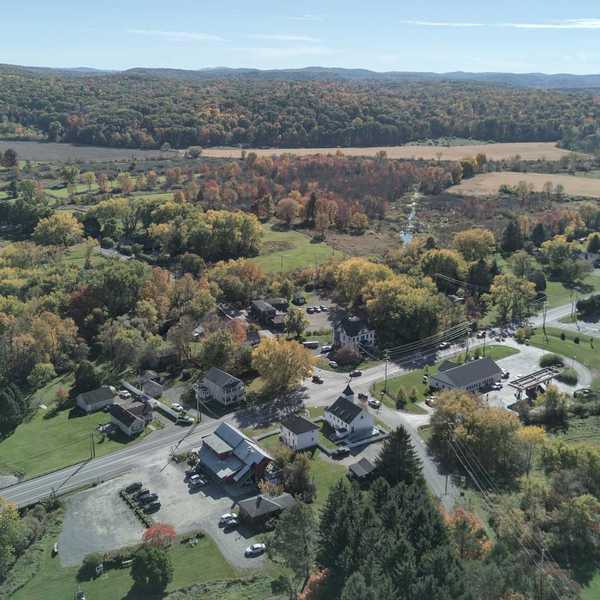
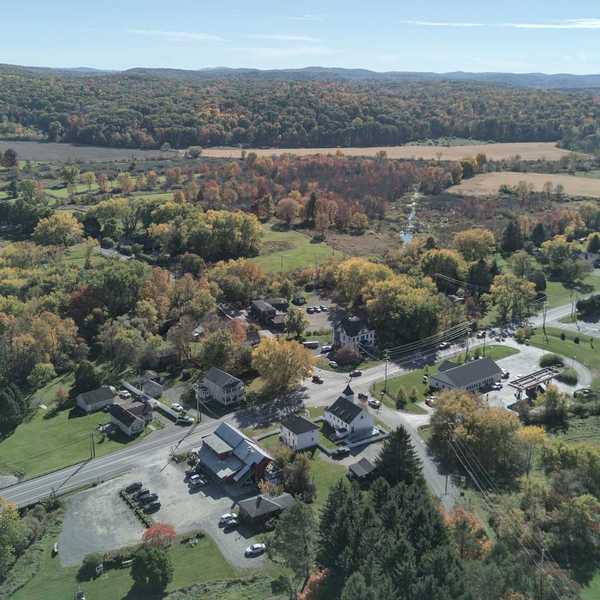
If one remembers the furor over the Cricket Valley Energy Center (CVEC) a few years ago, this is no less critical to the residents, perhaps more so, because CVEC already exists, not far from where this new station would be located, at Routes 22 and 26. CVEC uses natural gas to produce electricity.
While not as large, many people feel it will be an eyesore, that it will not benefit the town, and if anything, will have a detrimental effect on the area in many ways, including aesthetically and financially, as it will probably impact real estate values.
The Dover Station Project, as proposed by NY Transco, is described as a network upgrade electric substation, needed as New York State evolves to clean, efficient and resilient energy.
Transco says that it is the perfect — and only —site that can be used because it is the correct distance between the Connecticut border and Pleasant Valley, where another energy plant is located. It connects to Con Ed’s 398 line, has proximity to Connecticut while still being in New York State, and is on a state highway.
Transco first submitted an application to the Dover Planning Board in October 2021 for a Special Permit/Site Plan with Erosion and Sediment control. It hoped for construction during 2022-2023, and be ready to start service toward the end of 2023.
Sam Johnson, of Transco, gave a presentation which he said was in answer to the public comments heard at the prior two meetings concerning Transco and the Dover Project. He said that the station will be remotely controlled, will cause no traffic congestion, will have no night lighting and will not produce any emissions. It will be fully landscaped with 250 new plantings and a fence. The station will not block power, but will control the flow, and will be an improvement over the existing site, which was a junk yard and building materials storage site.
Transco promises that this substation will increase local tax revenue, but Concerned Citizens of Dover wants residents to take a closer look at what Transco is proposing and at its promises. On CCD’s website the group states that some power companies don’t pay their fair share of taxes, and they cite in particular CVEC.
They state: “According to an audit of the Industrial Development Agency (IDA) by Dutchess County Comptroller, Robin Lois — in 2017, CVEC should’ve paid the town $11.7 million dollars in property taxes but they paid us $109,521 dollars instead. It’s called a PILOT payment (payment in lieu of taxes).
“They should’ve paid $59 million in school taxes but they only paid $552,559 instead. Through 2050, the gas plant will have avoided paying $1 billion dollars in taxes.”
Transco says that the project will not have adverse impact on historic or cultural sources; will have an avoidance of environmental impact, or any impact on federally regulated waters. In fact, Johnson stated that there will be no use of water at all at the substation. They say it has been declared No Hazard, and they can voluntarily remove debris from a wetland buffer zone.
Many residents oppose the project because they feel it will impact the natural habitat of animals and plant life in the area, in particular the Great Swamp and Dover Stone Church. Others say that it won’t benefit Dover, but will be beneficial to Westchester, Long Island and New York City.
The CCD group also calls attention to the fact that the state, the U.S. Environmental Protection Agency and New York’s Department of Environmental Conservation already consider some of Dover disadvantaged, financially and environmentally, suffering pollution from dirty industries, nor are they happy about the existing Cricket Valley Energy Center.
Out of the many comments from those attending, only one citizen said she was in favor of the substation, commenting that when she needs light, or is cold, she likes turning on a switch and getting light or heat.
Another landowner said, “I bought this property 30 years ago to look at trees, not towers.”
Several residents mentioned the fact that the project is close to the Dover High School, which already has a problem with polluted water. Most were concerned about property values, and the demise of wildlife and the general loss of the rustic beauty.
There were some people from neighboring towns there, and Transco will again be at the Planning Board meeting on Dec. 19.



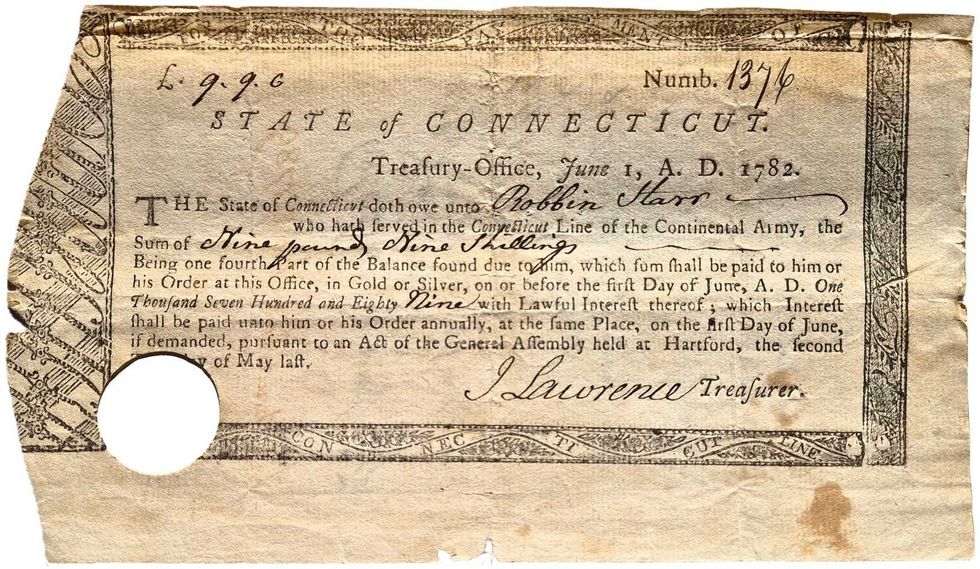 Pay Bill for Robin Starr’s service in the Continental Army.Courtesy the Alex Breanne Corporation
 John Mills speaking at Quinnipiac University.Courtesy the Alex Breanne Corporation
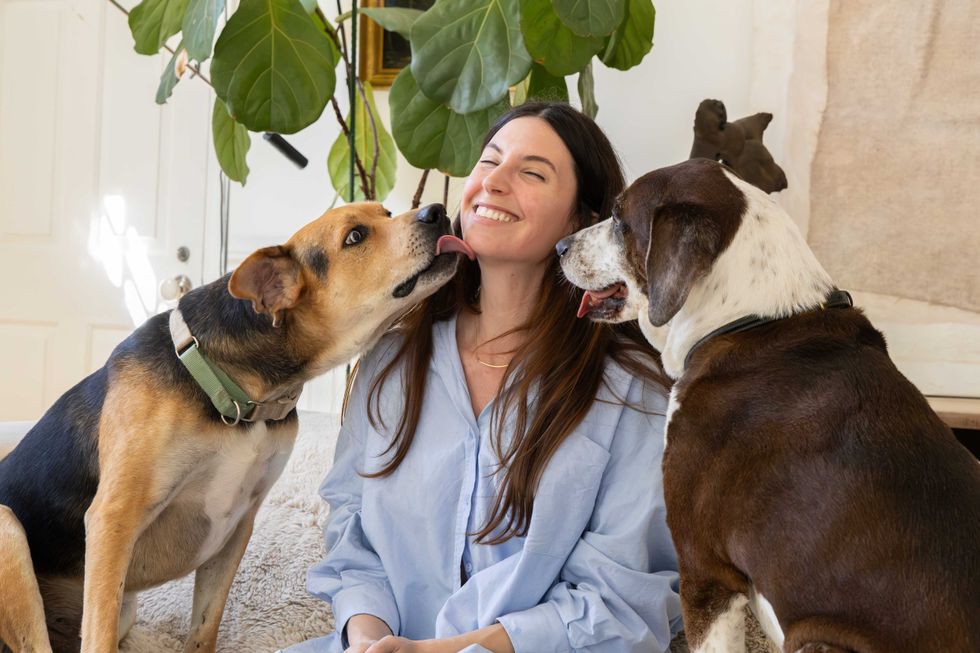 Stephanie Saetta,with her rescue dog George and Blue (left), a shepherd mix awaiting his forever home.Madi Long