The media misses some simple things in a headlong desire to ostracize the Russian economy… simple but critical parts of the puzzle spread across the globe.
For example, did you know that 25% of the world’s titanium supply comes from Russia?
Embargo that and you grind Boeing, Airbus, medical implants, the manufacture of instruments, etc., to a halt.
The list of inter-dependent products and components across the globe all have a Russian component that is irreplaceable.
The goal to bring Putin to his senses is misplaced… damaging for our economy and a failure as a weapon against Putin himself. He has no “economic sense” of anything except his power and what he sees as Russia’s rightful occupation of what was once part of the USSR.
Trying to force Putin out of office by crippling his economy and awakening the will of “the people” denies the reality that the very people who could “push” him from office are those who benefit the most from him being in office.
And Russia is not the West. Ordinary Russians for most of the last century, knew what it was like to live from day to day hoping there will be even a loaf of bread in the market. We don’t know what they experienced for far too long. They haven’t forgotten they survived decades of poverty.
In our typical Capitalist mental exercise of bringing Russia to its economic knees, we only push Putin and his supporters to a point of desperation, reinforcing the romantic Russian bear to feel threatened and, therefore (in his eyes), bravely even more dangerous. Half a million Russians, men, women and children, died stopping Hitler at Stalingrad.
The Russian people accept sacrifice for “Mother Russia,” with a ten-fold passion greater than anything Western cultures do.
The fears we have of nuclear weapons are not equally shared by Russians, especially not the elite there. It is a mistake to assume they won’t use them if backed into a corner.
What Ukraine and its people are doing is the only road forward. Helping them, supporting them up to, but not over, the limit of starting a nuclear conflict is what we need to stick to.
And stick to means being constant, brave, steadfast but not militarily engaged.
Supplies to Ukraine? You bet, but not anything seen as a game-changer causing the war there to change by our hand.
The war there must be won by Ukrainians, not us. Russia can absorb an insurgency defeat (as they did when they lost in Afghanistan), but it cannot absorb a defeat by the West without wanting to save face with the only escalation weapon at their disposal.
It is worth remembering that Russia still has the world’s largest nuclear stockpile of bombs, missiles and the delivery systems that go with it.
And they have an autocrat willing and able to deploy them, no matter the cost to his own people.
That’s the reality, one we must not lose sight of, no matter that we failed decades ago to find a way to get rid of all these weapons permanently. In that, we, and the West, failed.
That’s on us.
Putin, in a sense, has the upper hand on the end game; mutually assured destruction.
Let’s hope the Russian bear goes back into his den or maybe internal forces cause him to cease and desist.
Until that happens, our job must be to measure and evaluate the reality of Russia carefully, hold out the promise of peace if the invasion of Ukraine simply stops and, always, remain steadfast and not become nor allow warmongers on our side to escalate his madness to our demise.
Peter Riva, a former resident of Amenia Union, now resides in New Mexico.




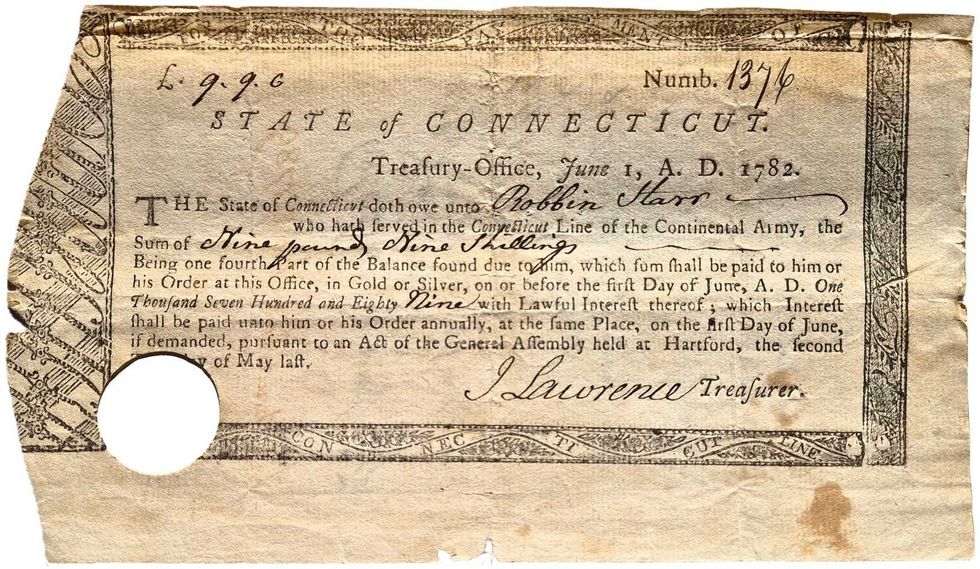 Pay Bill for Robin Starr’s service in the Continental Army.Courtesy the Alex Breanne Corporation
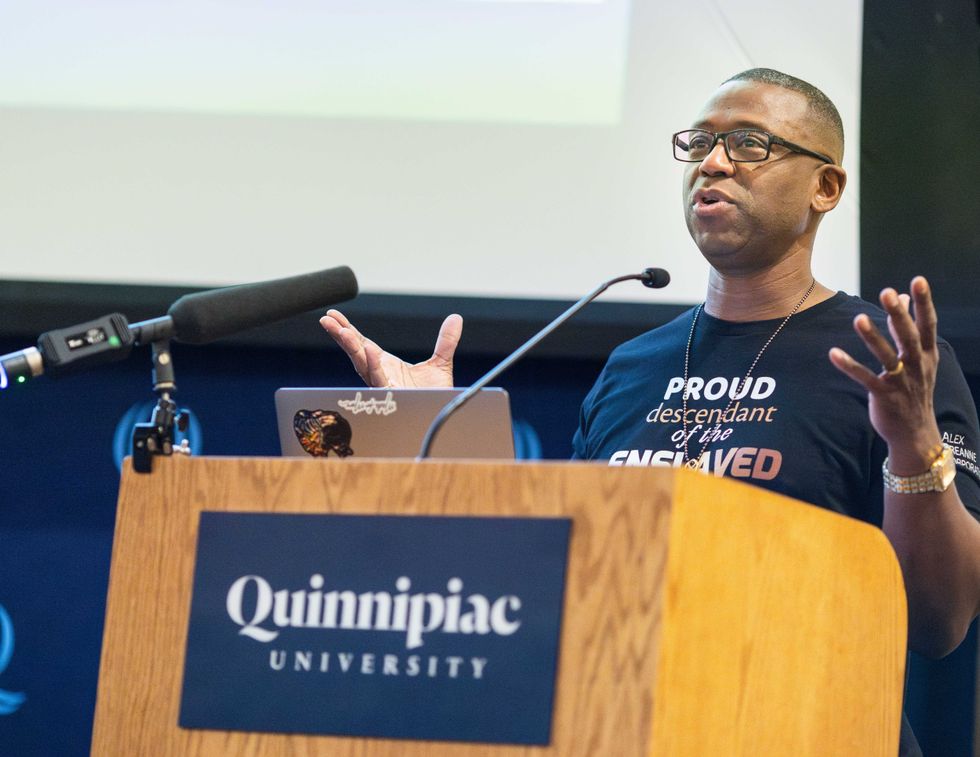 John Mills speaking at Quinnipiac University.Courtesy the Alex Breanne Corporation
 Stephanie Saetta,with her rescue dog George and Blue (left), a shepherd mix awaiting his forever home.Madi Long