It’s hard to wrap one’s mind around the fact that come this Saturday, Sept. 11, it will mark the 20th anniversary of one of our nation’s darkest days — the day that 19 extremists carried out a terrorist attack against the United States of America — killing 2,977 people with airplanes that were detonated into deadly weapons in New York City, Washington, D.C., and outside of Shanksville, Penn.
The most notable of the attacks took place a mere two-plus hours south of here in New York City, at the World Trade Center’s Twin Towers in Lower Manhattan. That’s where hijackers purposefully flew American Airlines Flight 11 and United Airlines Flight 175 into the two towers.
The 2,753 people killed due to the collapse of the two iconic skyscrapers included not only the many working there, but 343 NYC firefighters, 23 NYC police officers and 37 officers from the Port Authority. Victims ranged in age from 2 to 85.
Another 184 people died when American Airlines Flight 77 was hijacked and flown into the Pentagon in Washington, D.C., and crashed into the federal building.
Forty more men and women who were passengers and crew members aboard United Airlines Flight 93 were then killed when their flight crashed near Shanksville, Penn. Hijackers were believed to have crashed the plane in a field there rather than let their planned target be known after the passengers and the crew tried to regain control of the flight once they realized it, too, was part of that day’s coordinated terror attack.
It was a heartbreaking day, with the first plane striking the north tower of the World Trade Center at 8:46 a.m. ET.
Those of us who remember watching the events unfold on the morning news can probably still remember the clear blue skies with the bright September sun streaming down.
Watching that first tower collapse seemed surreal. Then, 27 minutes later, the second tower came hurtling down. It was like some horrid instant replay. That day, in those moments, our nation was forever changed.
Sept. 11 proved America was vulnerable to terrorists on its home soil — something we had thought we were immune to up until that point. It left us uneasy and traumatized. We continue to carry that burden around today, as many, especially here in the Northeast, continue to care for and sadly bury first responders who worked at Ground Zero.
Now, 20 years later, we again commemorate that somber anniversary. Many of us now have children who hadn’t been born back then. It’s up to us to share with them what had happened, to tell them why it’s so important to appreciate our country, to respect our flag, to honor our veterans, to thank our first responders and to never forget the events of 9/11.
This September 11 we’ll see a few communities holding tributes in the Harlem Valley (for more, read this week’s front page), but whether you attend in person or in spirit, please take a moment on Saturday, Sept. 11, to think about what’s been lost in those 20 years. Perhaps also consider what you have learned. Hopefully, we can all walk away with more insight into just how fortunate we are to call the USA home and to appreciate the freedoms that are uniquely American.



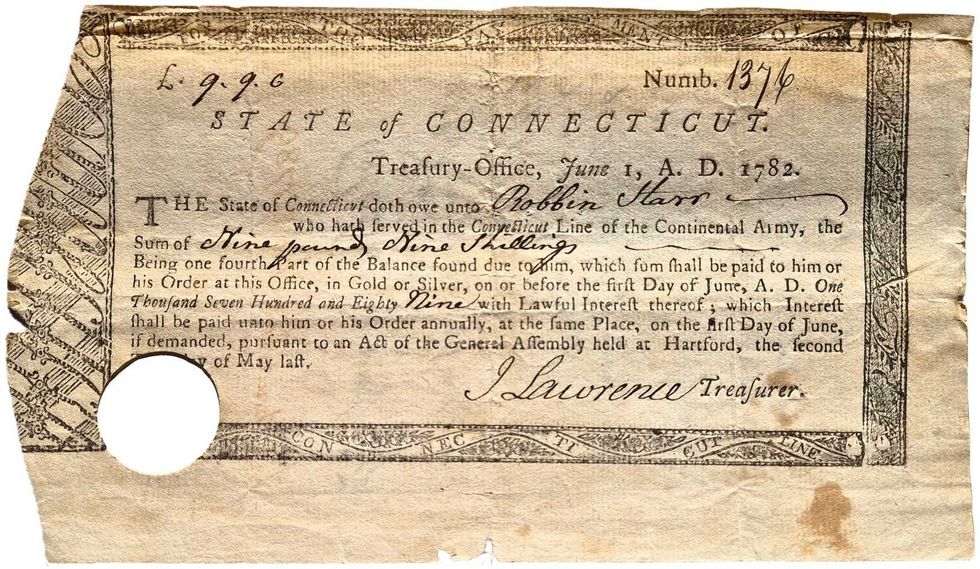 Pay Bill for Robin Starr’s service in the Continental Army.Courtesy the Alex Breanne Corporation
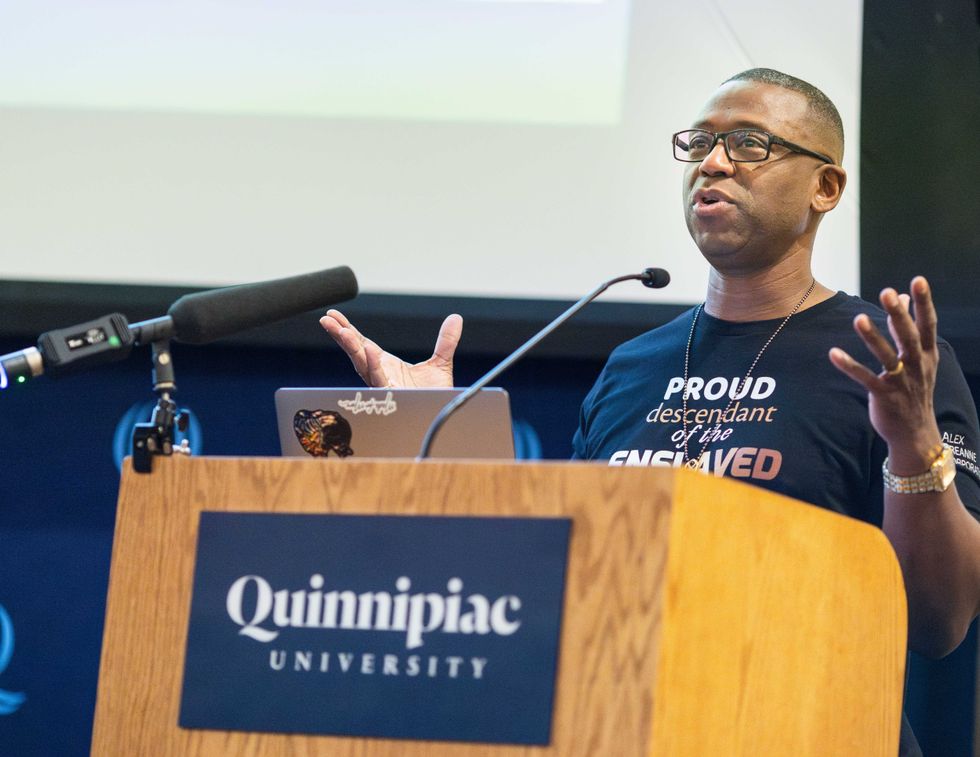 John Mills speaking at Quinnipiac University.Courtesy the Alex Breanne Corporation
 Stephanie Saetta,with her rescue dog George and Blue (left), a shepherd mix awaiting his forever home.Madi Long