To mask or not to mask? That seems to be the question on millions of Americans’ minds these days, as the coronavirus pandemic sweeps across the nation, killing hundreds of thousands of our men and women who only months ago were leading vibrant lives surrounded by their loved ones.
Now, 10 months after COVID-19 hit our shores, it’s hard to believe that people in the U.S. are still debating whether donning a face mask can help slow the spread of the deadly respiratory virus — and if it’s worth the simple act of placing a small piece of material securely across one’s mouth and nose to prevent viral particles from going airborne and possibly infecting others with a disease that could easily kill them.
Science has proven it is. Medical experts the world over have supported that science. There is clearly evidence to demonstrate that wearing a mask is the responsible thing for all to do, everyday, to protect those around us — family, friend or stranger.
Yet still, there are those among us who don’t believe. There are those who seem to think the Centers for Disease Control and Prevention (CDC) and the World Health Organization (WHO) — nonpolitical medical organizations — are lying when they say wearing masks saves lives — and instead are politically motivated in their messaging rather than based in fact.
Now, after watching the nightly newscast and reading the morning news, you may believe those “anti-maskers” live in places far removed, perhaps in Wyoming, where that state’s Republican governor, Mark Gordon, resisted mandating masks until he himself became infected with COVID-19 at the end of November. Or perhaps you think those naysayers live in Kansas City, Mo., where the CDC tracked trends of counties with and without a mask mandate.
NPR reported on the CDC’s Kansas City study, and interviewed Dr. Rex Archer, a Kansas City physician who heads the COVID-19 treatment center at St. Luke’s Health System.
“We’ve had this huge swing that’s occurred because [people are] not wearing masks, and yes, that’s putting pressure on our hospitals…” Archer told NPR.
According to the CDC study: “Wearing face masks in public spaces reduces the spread of SARS-CoV-2.”
Again, science doesn’t lie.
Even President Elect Joe Biden has asked every American to mask up for the first 100 days after he takes office in January. He told CNN’s Jake Tapper on Thursday, Dec. 3, that the request is, “Not forever. One hundred days. And I think we’ll see a significant reduction.”
But getting back to the anti-maskers, the ones we’ve been referring to in this editorial, they do not live in the Midwest or the far reaches of the U.S., they live right here in the Harlem Valley. This week, we spoke to people who reside and do business locally in Millerton and its surrounds who fall on both sides of the mask debate; you can find that article on our front page. We hope you’ll take the time to read it.
So while you may be trying to keep yourself and your loved ones safe, cocooned securely in your home as much as possible, only going out for necessities, wearing a mask and keeping socially distanced, there are others, perhaps your friends and neighbors, who are not following our governor’s safety guidelines, our health department’s guidelines, the CDC’s guidelines, our president elect’s guidelines. They believe they know better. We’re not saying they’re acting out of ill-will or spite, that they’re intentionally trying to make others sick or to kill anyone. Of course not. But the fact is that is exactly what their actions could lead to — intentional or not.
And then there are those who do act belligerently when they are asked to put on a mask — as they are required to do in the State of New York when in a public place — by people who are justly concerned about catching the virus. To those acting out, please, just stop it. Such hostility is unnecessary. Being asked to put on a mask is not inappropriate. We are in the midst of a deadly global pandemic. As of Tuesday, Dec. 8, more than 1.5 million people have died worldwide. It takes courage to speak up when someone’s actions jeopardize another person’s life.
Responding by coughing on a person, yelling at a person, cursing at a person, intimidating a person, threatening a person, physically assaulting a person — such behavior is unacceptable, bordering on being criminal — if not actually being criminal. We can’t sanction such actions and hope others agree, including the law.
The bottom line here is that the issue of wearing a face mask — a simple step that can save lives — should not be politicized. Today, as we face this ever-growing pandemic together, as a community, putting on a face mask should be as routine as putting on a jacket before heading out for a chilly day. It’s a protective measure, not just for yourself, but for others as well. Think outside of yourself. Once the New Year arrives we’ll be well-nigh on a year of the coronavirus. It’s long past time to for all of America to finally mask-up.





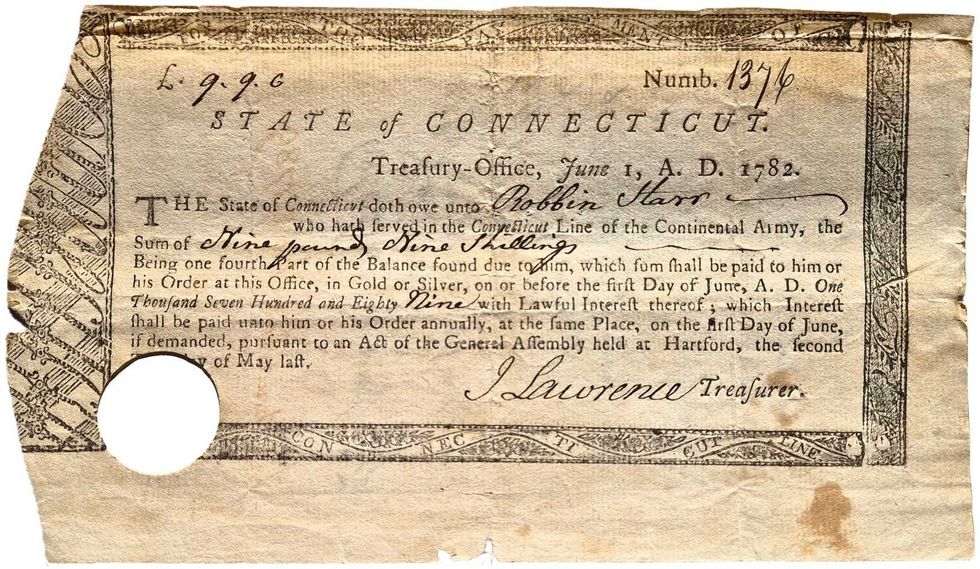 Pay Bill for Robin Starr’s service in the Continental Army.Courtesy the Alex Breanne Corporation
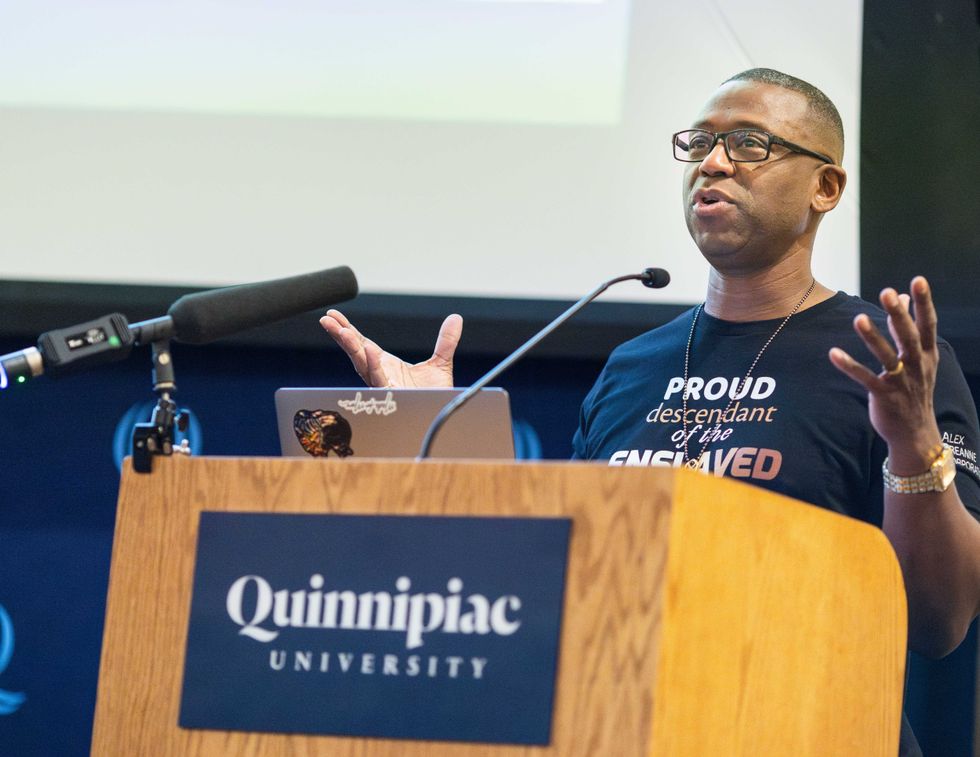 John Mills speaking at Quinnipiac University.Courtesy the Alex Breanne Corporation
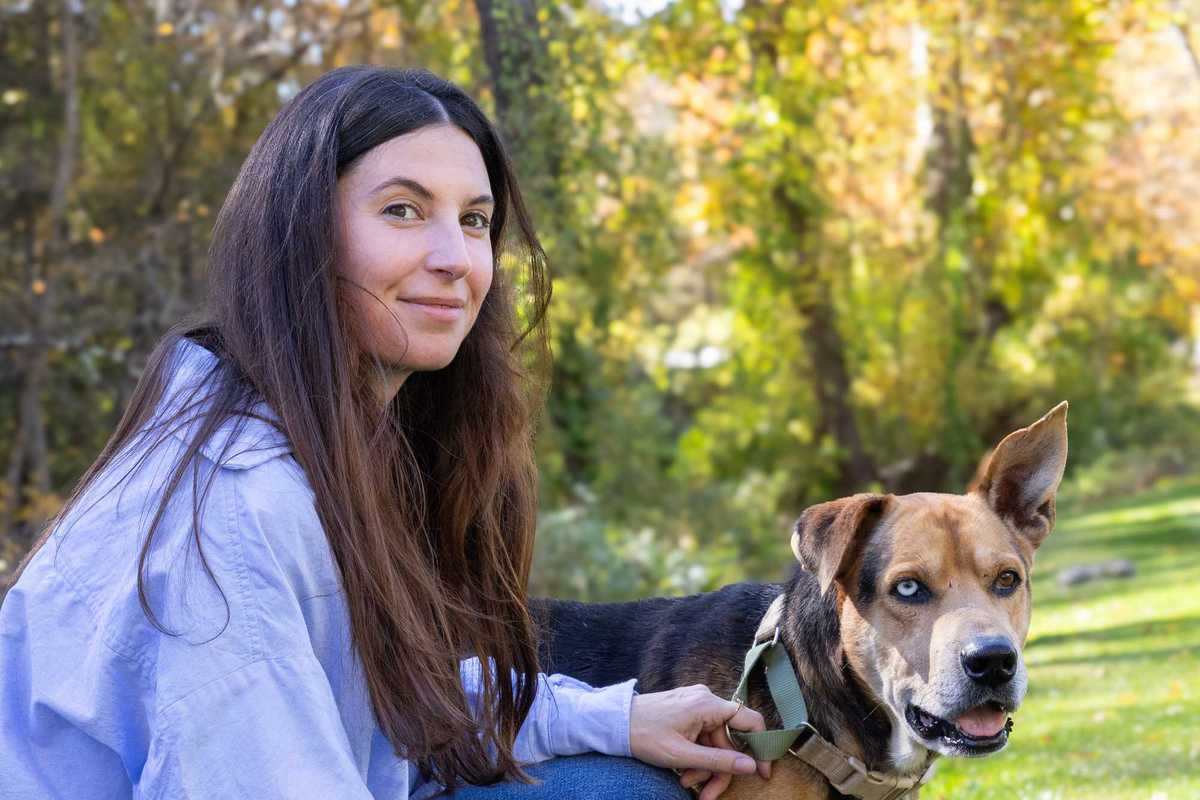
 Stephanie Saetta,with her rescue dog George and Blue (left), a shepherd mix awaiting his forever home.Madi Long