Christmas tree shortage looms

Christmas tree shortage looms
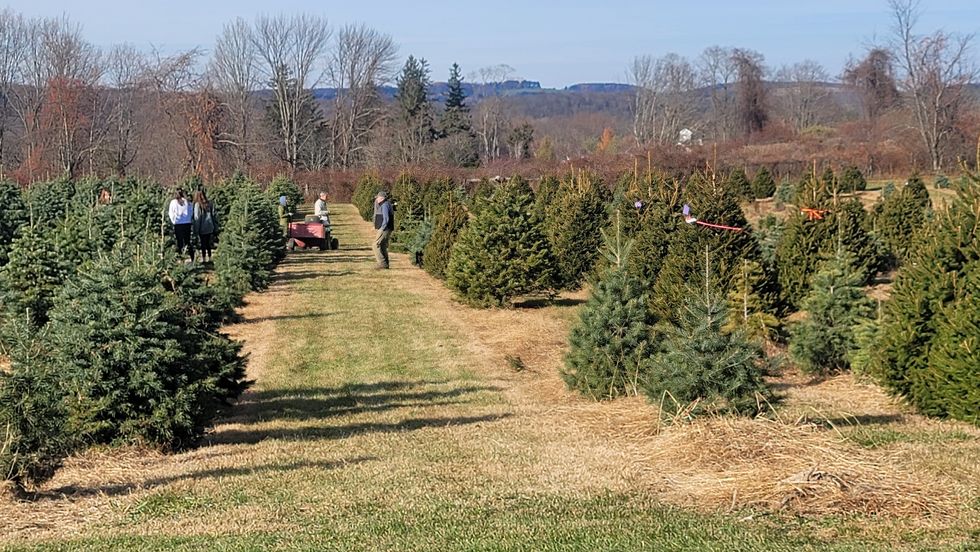
Rows of holiday greenery at Evergreen Christmas Tree Farm in Millbrook. 
Photo by Judith O’Hara Balfe

MILLBROOK —  Manhattan architect Richard Phillips owned 25 acres of land in Dutchess County and his sister, who was a Master Gardener in New Jersey, thought he should find something to grow.

He liked gardening — green thumbs grew in his family — so evidently the logical thing was for him and his wife, Wendy, to start a Christmas tree farm. In 1989, they started planting trees, and in 2001 they opened their farm for business, usually on three or four weekends per year. Thus was born Evergreen Christmas Tree Farm.

The couple lived in Manhattan, coming up to the Evergreen Farm on the weekends until the COVID-19 pandemic, then they moved here full-time. On a busy Saturday recently, they reminisced about the families who were coming to buy trees. “Some of them have been coming for years,” Richard Phillips said. “We’ve watched their children grow up,” Wendy Phillips added.

The process is simple: A customer walks through the farm and pick their tree, which is cut down by a worker with a buzz saw who then carries it to the road on a tractor. Then another worker stuffs the tree, trunk-first, into a machine that enfolds it in netting. The customer then goes to the barn to pay, where there are also wreaths for sale, and bags in which to dispose of the tree once finished with it. If there’s a child, they’re given a candy cane. Then the tree is brought to the customer’s car, tied on the roof in most cases, and taken home to decorate.

Growing the tree is not that simple, nor is the entire prospect of getting it into a house for Christmas. There are many factors that can prevent this; some are natural, some are the results of humanity’s ongoing battles to survive. Some years there are fewer trees for sale than needed. 

This year, Evergreen Farm will only be open for two weekends: It was open Thanksgiving weekend and will also be open Saturday, Dec. 2, and Sunday, Dec. 3, after which it will close for another year. Some of the other farms will not open until December, and will only be open for two weekends as well. This is because there is a shortage of trees again this year. The reason for the shortage goes back much further.

Said Phillips: “During the recession, around 2009, 2010, no one was buying trees, so we didn’t plant a lot. Then when COVID hit, everyone was buying trees.” Many people moved from the city to places like Dutchess County, which felt safer. People who lived up here part-time came and stayed, and the people who usually came only on weekends spent the holidays here. All of a sudden, there weren’t enough trees.

Another thing that COVID did was to bring families closer together, in some cases, so if you couldn’t party, didn’t want to go see the Christmas Show at Rockefeller Center, or that famous tree, a safer way to celebrate the holiday was to go to a farm and pick your own tree as a family.

Trees don’t grow over night. It takes eight years or more for a tree to mature. So, the recession that caused people to stop planting trees they thought they’d never sell was basically why there were fewer trees for sale when COVID hit and everyone bought trees. Now the stock is rather slim, and trees planted since COVID are still quite small.

There are other reasons for shortages: drought, and also root aphids that suck the sap out of the roots, causing the tree to discolor, stop growing, and eventually die. There are other pests, and fungi, as well. Trees grown close together and pass things on.

If trees seem expensive, well. They are. But trees need a lot of upkeep, which means fertilizers, sprays, water, machinery, mowing and pruning, which all comes after the initial planting, and none of it comes cheap, including labor if you can’t do it all on your own. At Evergreen there was also the machine that packs the tree plus the gas for the tractors. It all adds up. Then figure into that, when you plant a tree, you have to wait between eight and 10 years for it to mature. In the meantime, anything can happen to it.
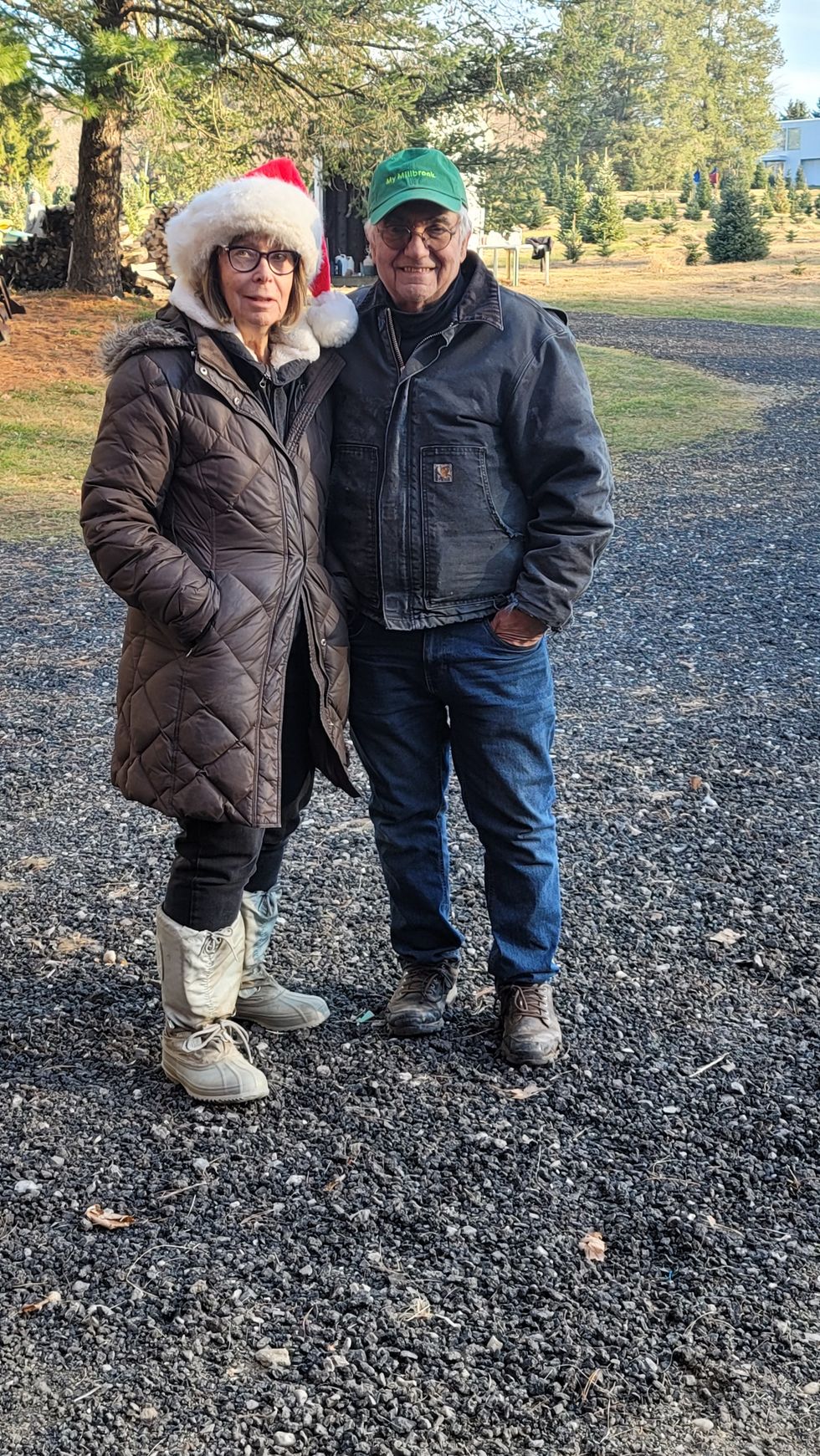

From left, Wendy and Richard Phillips, owners of Evergreen Christmas Tree Farm in Millbrook. Photo by Judith O’Hara Balfe

Latest News

Speed cameras gain ground in Connecticut, stall in Dutchess County

A speed enforcement camera in New York City.

Photo courtesy NYC DOT

Speed cameras remain a tough sell across northwest Connecticut — and are still absent from local roads in neighboring Dutchess County.

Town leaders across northwest Connecticut are moving cautiously on speed cameras, despite a state law passed in 2023 that allows municipalities to install them. In contrast, no towns or villages in Dutchess County currently operate local automated speed-camera programs, even as New York City has relied on the technology for years.

Keep ReadingShow less
In remembrance:
Tim Prentice and the art of making the wind visible
In remembrance: Tim Prentice and the art of making the wind visible

There are artists who make objects, and then there are artists who alter the way we move through the world. Tim Prentice belonged to the latter. The kinetic sculptor, architect and longtime Cornwall resident died in November 2025 at age 95, leaving a legacy of what he called “toys for the wind,” work that did not simply occupy space but activated it, inviting viewers to slow down, look longer and feel more deeply the invisible forces that shape daily life.

Prentice received a master’s degree from the Yale School of Art and Architecture in 1960, where he studied with German-born American artist and educator Josef Albers, taking his course once as an undergraduate and again in graduate school.In “The Air Made Visible,” a 2024 short film by the Vision & Art Project produced by the American Macular Degeneration Fund, a nonprofit organization that documents artists working with vision loss, Prentice spoke of his admiration for Albers’ discipline and his ability to strip away everything but color. He recalled thinking, “If I could do that same thing with motion, I’d have a chance of finding a new form.”

Keep ReadingShow less
google preferred source

Want more of our stories on Google? Click here to make us a Preferred Source.

Strategic partnership unites design, architecture and construction

Hyalite Builders is leading the structural rehabilitation of The Stissing Center in Pine Plains.

Provided

For homeowners overwhelmed by juggling designers, architects and contractors, a new Salisbury-based collaboration is offering a one-team approach from concept to construction. Casa Marcelo Interior Design Studio, based in Salisbury, has joined forces with Charles Matz Architect, led by Charles Matz, AIA RIBA, and Hyalite Builders, led by Matt Soleau. The alliance introduces an integrated design-build model that aims to streamline the sometimes-fragmented process of home renovation and new construction.

“The whole thing is based on integrated services,” said Marcelo, founder of Casa Marcelo. “Normally when clients come to us, they are coming to us for design. But there’s also some architecture and construction that needs to happen eventually. So, I thought, why don’t we just partner with people that we know we can work well with together?”

Keep ReadingShow less
‘The Dark’ turns midwinter into a weeklong arts celebration

Autumn Knight will perform as part of PS21’s “The Dark.”

Provided

This February, PS21: Center for Contemporary Performance in Chatham, New York, will transform the depths of midwinter into a radiant week of cutting-edge art, music, dance, theater and performance with its inaugural winter festival, The Dark. Running Feb. 16–22, the ambitious festival features more than 60 international artists and over 80 performances, making it one of the most expansive cultural events in the region.

Curated to explore winter as a season of extremes — community and solitude, fire and ice, darkness and light — The Dark will take place not only at PS21’s sprawling campus in Chatham, but in theaters, restaurants, libraries, saunas and outdoor spaces across Columbia County. Attendees can warm up between performances with complimentary sauna sessions, glide across a seasonal ice-skating rink or gather around nightly bonfires, making the festival as much a social winter experience as an artistic one.

Keep ReadingShow less
Tanglewood Learning Institute expands year-round programming

Exterior of the Linde Center for Music and Learning.

Mike Meija, courtesy of the BSO

The Tanglewood Learning Institute (TLI), based at Tanglewood, the legendary summer home of the Boston Symphony Orchestra, is celebrating an expanded season of adventurous music and arts education programming, featuring star performers across genres, BSO musicians, and local collaborators.

Launched in the summer of 2019 in conjunction with the opening of the Linde Center for Music and Learning on the Tanglewood campus, TLI now fulfills its founding mission to welcome audiences year-round. The season includes a new jazz series, solo and chamber recitals, a film series, family programs, open rehearsals and master classes led by world-renowned musicians.

Keep ReadingShow less
google preferred source

Want more of our stories on Google? Click here to make us a Preferred Source.

google preferred source

Want more of our stories on Google? Click here to make us a Preferred Source.