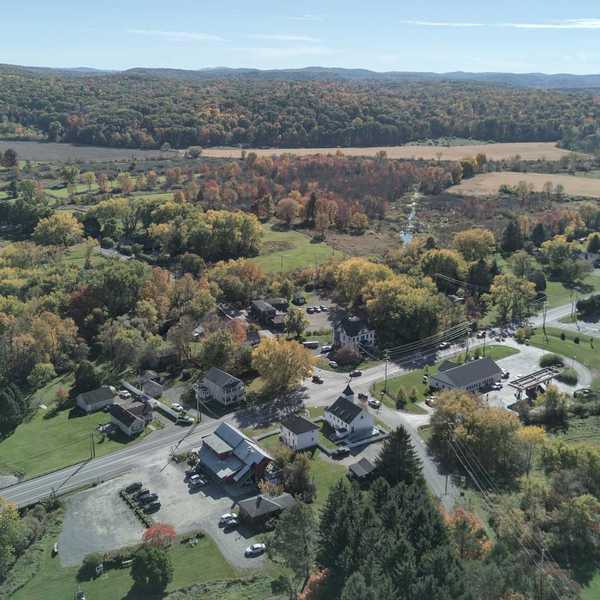
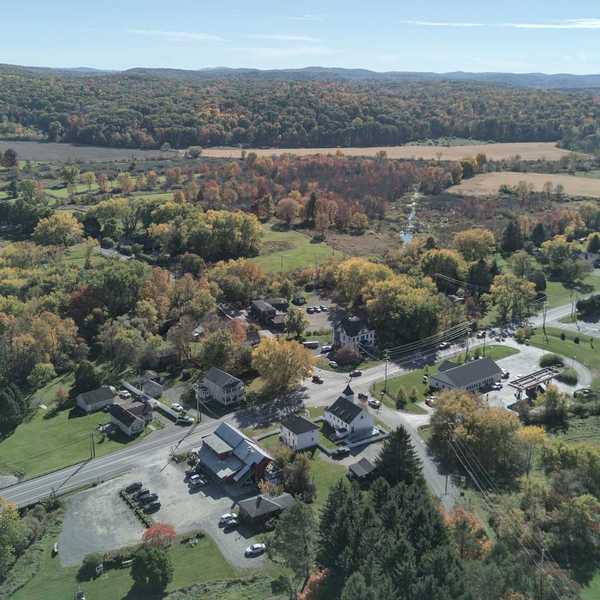
Glance up at the upland ridgelines, or down to the marshy lowlands, and you’re likely to see a familiar brilliant red beginning to glow amongst the still mostly-green canopy. Look through your kitchen window, however, and you may see your favorite maple’s treasured foliage showing jaundiced yellow, marred by cracked and crumpling brown edges, and perhaps even prematurely shedding some of those sickly leaves.
This is due to a condition called leaf scorch, explained Kent Tree Warden Bruce Bennett during a recent interview with The Lakeville Journal.
Leaf scorch happens when environmental factors cause undue evaporation from the leaves that the tree is unable to replenish due to low moisture in the soil. The abnormally dry conditions across the Northeast have primed trees, especially those vulnerable due to existing disease or other stressors, to leaf browning and early dropping.
Bennett looks to the previous leaf season as a beacon of hope for what we may expect in these abnormal years. Many of the region’s red and sugar maples, often the star for bright reds and oranges, were impacted by a fungus known as anthracnose that thrives in muggy weather. Last year’s hot and humid summer caused a proliferation of the disease across the Northwest Corner canopy, especially in the maples, causing leaves to brown and drop early.
But after those leaves dropped, “late fall turned out to be incredible,” Bennett said.
Having the diseased and damaged leaves out of the picture, the late-season showstoppers pulled through with a rich and deep tableau of yellows and golds, russet, ruby and even magenta. Tulips, birches, late-season red maple cultivars, ashes and oaks — especially scarlet oak — are to thank for that spectacular closing act.
Bennett expects a similar trajectory this fall, with a “musty brown, disease-y look earlier, and then later on we’re going to get some really good fall color.” This also gives the atmosphere more time to produce some much-needed rainfall, though the near-range forecast still looks relatively dry despite some predicted intermittent showers.
The Northwest Corner is lucky, though, compared to the rest of New England, the majority of which is experiencing drought conditions. Extreme drought, with some streams ranking at their lowest ever recorded flow, exists in parts of Maine, New Hampshire and Vermont. Northern Connecticut has thus far avoided a drought classification due to last minute rain events that have “kept our grasses green,” as Bennett put it.
As the leaf season moves later in the fall due to the warming climate, tricky leaf seasons are becoming more common, Bennett said, meaning each year is more complex to predict. One topographic tip this year, he said, is to look for northern and eastern facing slopes, as they will have fared better than the hotter southern and eastern faces of mountains and hills during the dry weather. He recommended a drive down Route 44 towards Canton, where a healthy forest and high water table due to reservoirs usually allows for good foliage.
While we can hope for a late season show in the canopy, Bennett advised residents to keep their eyes on the yards and understory as well. “The hydrangea have been mind-boggingly beautiful,” he said, due to perfectly moist springtime growing conditions and a drier late summer. “The blooms were fantastic, and they just lasted forever and ever and ever, and even into the fall, they’re going to be there.”
“That’s going to be something that’ll add to the fall color.”




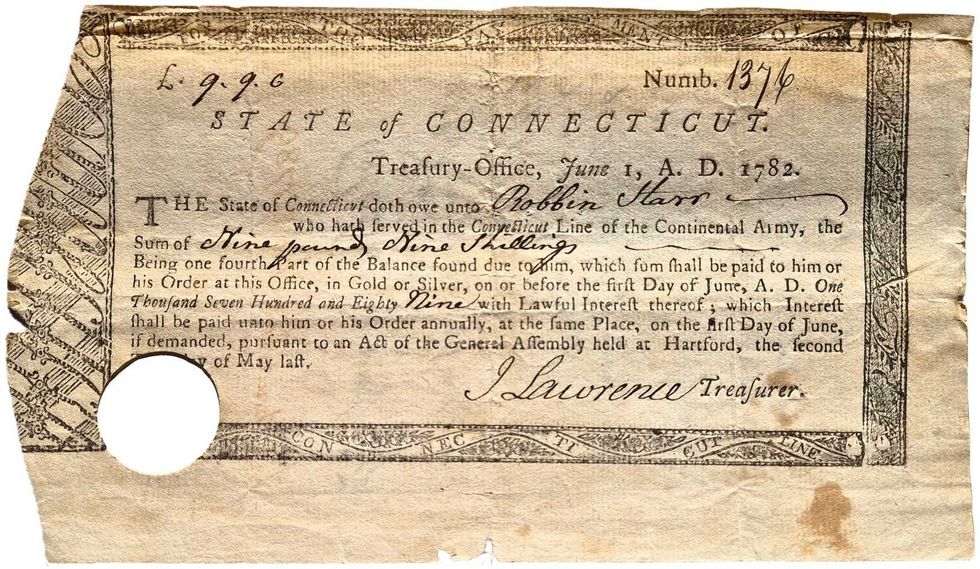 Pay Bill for Robin Starr’s service in the Continental Army.Courtesy the Alex Breanne Corporation
 John Mills speaking at Quinnipiac University.Courtesy the Alex Breanne Corporation

 Stephanie Saetta,with her rescue dog George and Blue (left), a shepherd mix awaiting his forever home.Madi Long