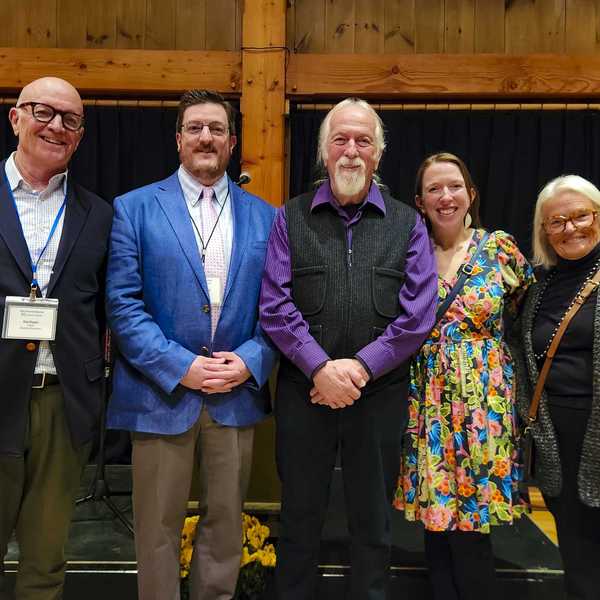
The Sharon Playhouse in Sharon, Conn., will present a production Thornton Wilder's 1938 Pulitzer-Prize winning three-act play, "Our Town," a rumination on the ordinary lives of the residents of a small New Hampshire town across a time. "Our Town" opens at The Bobbie Olsen Theater on Friday, Sept. 15. I spoke with director Aldrus Nicols and star Jane Kaczmarek, a Golden Globe and Emmy-nominate actress and Sharon resident herself.
Alexander Wilburn: Everyone has either seen this play or even been in this play. As a director or as an actor, what is the dichotomy between adherence to tradition, and then impulse for reinvention?
Jane Kaczmarek: It’s amazing how much this play changes when you revisit it as an adult. I’m sure that when I revisit it again 10 years late it will resonate in a completely different way. I think it’s important to note it hasn’t been done in The Sharon Playhouse since 1963.
Andrus Nichols: When this play came out in 1938, it was radically different than anything else that was being produced at the time. It was incredibly avant-garde. It was a wild concept to put a production up on Broadway with no set. Wilder intended to write a very timeless play, which is one of the reasons why there are no sets, and there are no prompts. In one essay that he wrote, he talks about the character of Emily and thinking of all the girls that have ever lived and died and all the girls that will be born and live going forward into the future. These people represent all of us…
JK: Not just people at the turn of the century.
AN: Exactly. Not just people at the turn of the century. He also talked about himself, even though this was such wildly different kind of theater in 1938, he did not think of himself as an innovator. He thought of himself as a rediscover of forgotten goods, which I think is interesting.
JK: Which is amazing. I play The Stage Manager, a narrator who takes the audience through the journey of visiting this town in three acts. One of the real motifs throughout the play is that time goes so fast we don’t have time to look at each other. I marvel that in 1938, before World War II had even begun, when most people had party lines for phones and didn’t have cell phones or the internet, Wilder’s dire message was to take time to look at each other, take time to take in what I refer to, and has been referred to, as the sacred ordinary in life around you. What’s growing in the garden, the birds, whether we got rain on the tomatoes — the basic things that really make life rich and meaningful. The message is timeless. In this day and age, with things being as ridiculously speedy and disconnected as they are, he’d probably have a heart attack seeing how kids live now.
AW: Although he wrote it in such a bleak time for this country, smack dab in the middle of The Depression. Right now, as it continues to be performed, we’re also in a very tumultuous time. We’ve gone through more economic struggles in this country.
JK: I think you’re really right about that, about The Depression and what was brewing in Europe. In 2017, when Ariana Grande was doing a concert in Manchester, England, and there was a horrible shooting, the town did a production of Our Town as a memorial to the community. I did this play at the Pasadena Playhouse with Deaf West, which is an extraordinary company of deaf actors. We did a joint production of signing and speaking production right after Trump got elected with the message being: we have to learn to talk, we have to communicate, we have to talk to each other. It was purposely done right after he was elected as a way to say, slow down and look at this, slow down and find common ground. So it’s interesting you brought that up because I think this play is always a great choice to do no matter what social or economic turmoil is happening around you, because the basic message, as I said, is the sacred ordinary. When you’re lying on your deathbed, you’re not going to be thinking about how you should have gotten out of stocks and into bonds. You wish you had spent a more time reading to your kids. You know what, Alex, it’s interesting because you’d be surprised with all the people that don’t know this play. My favorite lady at J.P. Gifford’s, the sandwich place in Sharon, I always talk to her and I’d say, “We’re rehearsing ‘Our Town.’” She’s a middle-aged lady. She said, “Oh, I never heard that. I haven’t seen that one.” And I said, “Good. You got to come.” There’s a teenager in our cast. And after the read through, he said, “I am so glad I’m part of this. I never heard this play before.” We were all a mess reading it that first day because it is such a beautiful play. And I said to him, “I’m so glad that this is first experience with this play.” And I told him I had been in high school in 1973. I saw a production of this at the Milwaukee Repertory Theater when I was in high school, and I was so blown away. Judith Light was playing Emily. Going into it I had no idea what this play was about, and I was crying so hard, my poor date beside me, I was using a sleeve, I was using my program. I was using anything to wipe up my nose and my tears. I just remember it was a real turning point in my life, especially thinking about being an actress and realizing that theater can make people feel this way and think about these things.
For tickets go to www.sharonplayhouse.org

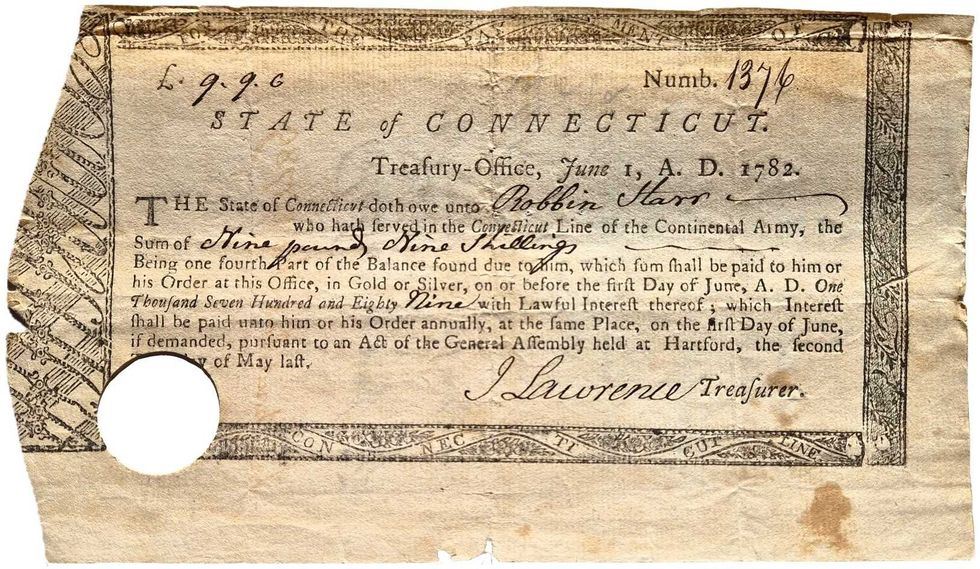 Pay Bill for Robin Starr’s service in the Continental Army.Courtesy the Alex Breanne Corporation
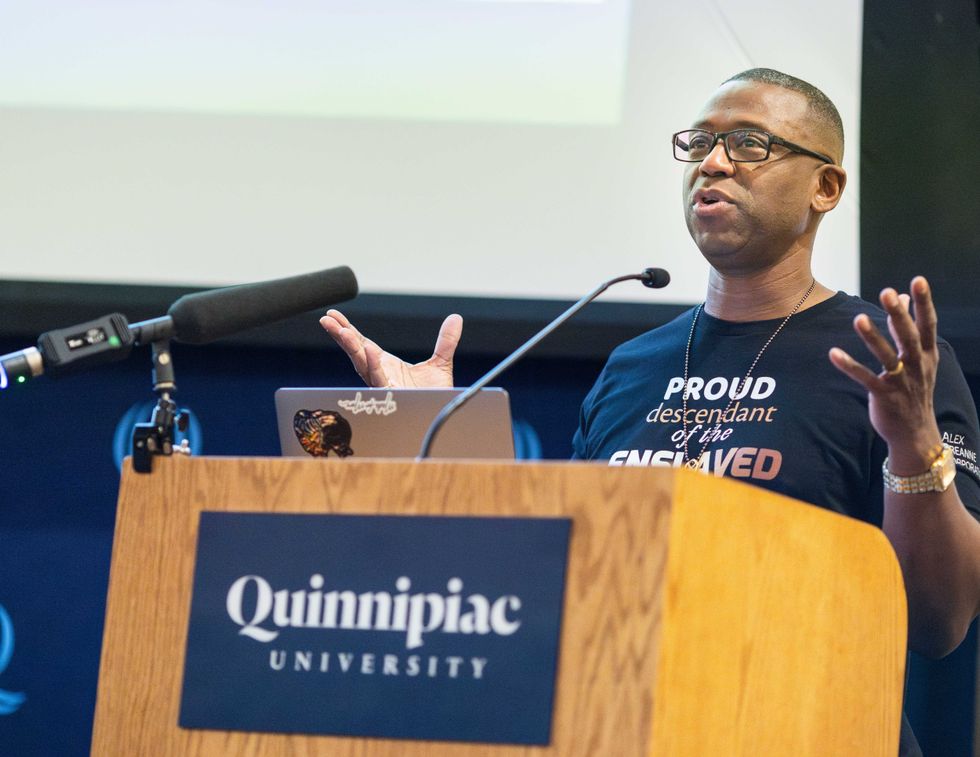 John Mills speaking at Quinnipiac University.Courtesy the Alex Breanne Corporation

 Stephanie Saetta,with her rescue dog George and Blue (left), a shepherd mix awaiting his forever home.Madi Long