Black cats unfairly shunned, stigmatized, say regional animal rescue groups

Lucian picked his owners outside a grocery store.
Provided

Lucian picked his owners outside a grocery store.
Lucian is one lucky black cat. The emerald-eyed feline has been living in the lap of luxury since being rescued from the streets of Albany nine years ago by the Pecha family of Falls Village.
Today Lucian lives in Litchfield with his owner, David Pecha, where he spends his days cat-napping, bird-watching, attention-seeking and occasionally cajoling with a neighborhood fox.
Unlike Lucian, not all black cats end up in forever homes. According to regional animal rescue groups, black pets in general, and black cats in particular, are often shunned by prospective adopters.
Enter National Black Cat Day 2024, which falls on Oct. 27 this year. The annual awareness day is designed to support and promote the beauty and well-being of black cats and to dispel myths and superstitions that have haunted them for centuries, particularly around Halloween.
The day plays a vital role in advocating for welfare and adoption of black cats.
Shunned through no fault of their own
“I’ve had someone come up to me and say they would take anything but black,” said Beverly Ditto of Collaborative Cats, a feline foster home-based rescue organization serving Southern Columbia and Northern Dutchess counties of New York. “There are black cat lovers, but that is rare.”
Ditto, who has owned several black cats, said she has found them to be among the “sweetest and most lovable” of felines, second to orange cats, and not deserving of being feared.
She attributes their lack of popularity to long-held superstitions about them being harbingers of bad luck or that they are evil doers associated with Satanic rituals. Black cats also blend in with shadows, giving them a spooky appearance.
Because superstitions about black cats are reinforced around Halloween, it is common for shelters to put adoptions on hold. According to the Smithsonian, some adoption agencies and shelters won’t even consider placing black cats in homes until after Halloween for fear they will be tortured or sacrificed.
“All the shelters generally are very nervous about adopting out before Halloween,” said Ditto. “There are people out there to be known to harm black cats. I haven’t encountered that, but it has been a big worry amongst the rescues.”
Currently, Collaborative Cats, which takes in stray, abandoned, injured and homeless felines, has several black kittens available for adoption, including Roary, Jacques and Lucifer, all described as sweet and playful.
The organization, which is not a shelter, said Ditto, is constantly seeking new foster homes for its approximately 100 felines.
Raven and Bagheera
At The Little Guild in West Cornwall, two black cats, Raven and Bagheera, arrived at the shelter in August and are awaiting adoption. Both are about a year old and have the sweetest dispositions, said the shelter’s executive director Jenny Langendoerfer.
“It is interesting that people do like to see unique colorings and markings,” she noted. “But the one thing about black cats is that they make the most wonderful pets.”
Langendoerfer described Bagheera, a sturdy, green-eyed young male, as a “mini panther, very silly and very sweet,” and 1-year-old Raven as very playful.
Lauren Mucha, one of the caregivers at The Last Post cat sanctuary and cat retirement home in Falls Village where 124 cats reside, said about 20 of its feline residents are black.
She said she is perplexed as to why people would shy away from dark-coated cats, as they don’t deserve the negative image.
One cat in particular, Jinx, has been a resident at The Last Post for the last eight years and does not have a mean bone in its body, said Mucha, who described him as a Velcro cat, a “real cuddler.”
This cat picked his family
Not everyone is on board with the negative black cat spin. For some, a visit from a black cat means good luck or prosperity. In some cultures, black cats, considered sleek and seductive with their all-knowing yellow and green eyes, are even worshipped.
Take Lucian’s owner, David Pecha, for instance.
The mini household panther was rescued by Pecha’s son, Alex, about nine years ago while attending college in Albany. Alex and a friend had emerged from a grocery store “and the cat came flying out from under a car, meowing at them and trailing them.”
It was the end of the school year, and because the cat appeared to be pretty well cared for, said Pecha, they thought it might have escaped during the confusion of the move.
After failing to find a no-kill shelter nearby, they took Lucian back home with them to Falls Village and posted “cat found” posters around campus, but no one came forth to claim the black cat, said Pecha.
Before long, Lucian befriended a doppelganger named Bagheera, owned by the Atwood family just up the street, Pecha recalled.
“He was the spitting image of Lucian, and they hung out together. You would see the two of them running around the streets in the middle of town.”
When Pecha relocated to Litchfield a few years ago, so did Lucian, who has since settled into his new quarters, according to his owner. He considers his cat to be more like a loyal dog, with a unique personality.
Unlike other cats, Lucian doesn’t use a water bowl. Instead, he laps up his drink from a tall glass, filled with cool water straight from the fridge.
And as for snow, the pampered feline will have nothing of it. “He doesn’t do winter,” said Pecha. “He’ll put one paw in the snow, and it’s ‘Oh, hell no.”
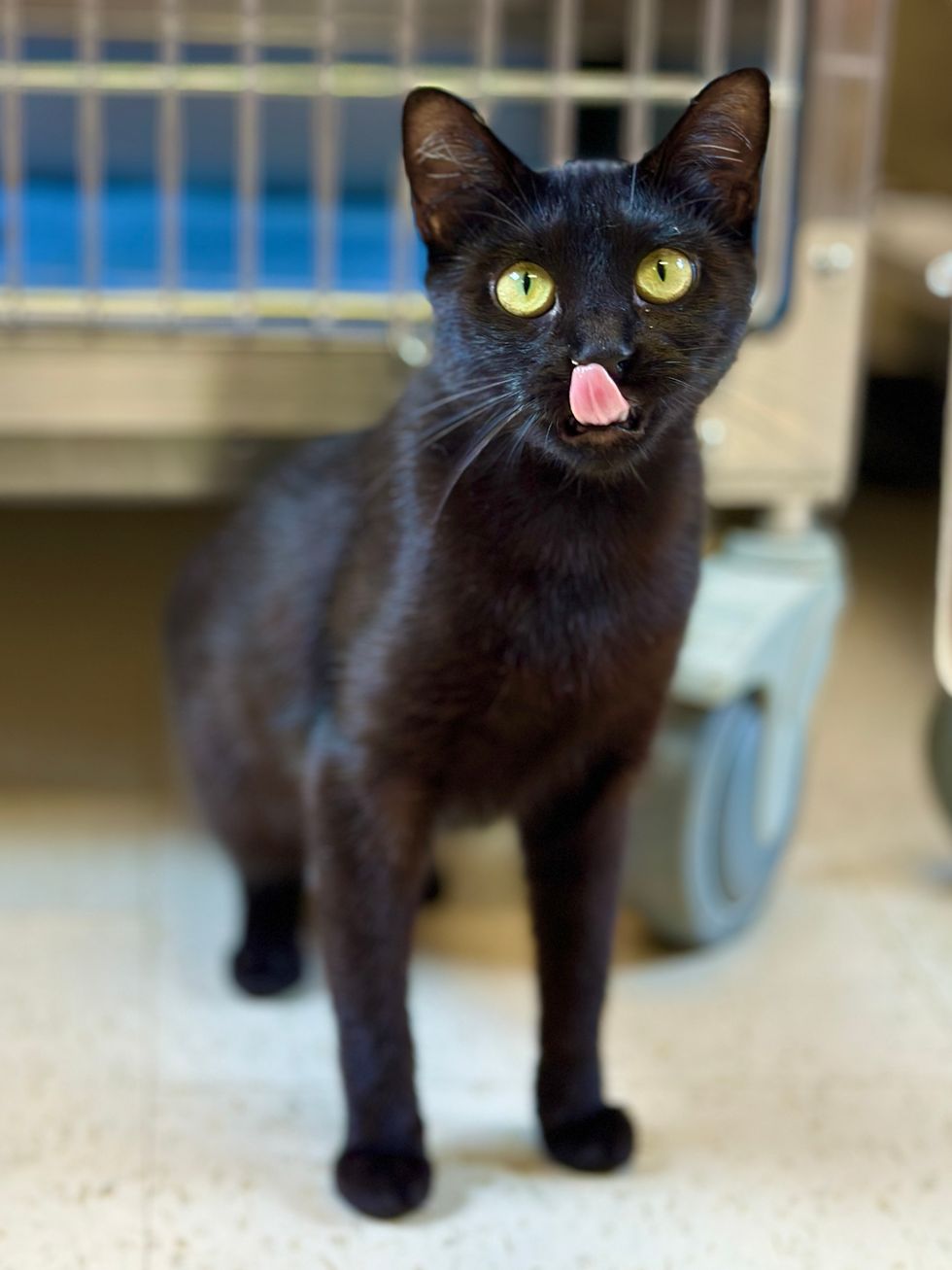
Below are several black cats up for adoption at The Little Guild in West Cornwall, and Collaborative Cats in Ancramdale, NY. Additional details are available by contacting the rescue groups either by phone or via their website. Photos provided.
Farmland vista where one of the proposed solar arrays for Hecate Energy's proposed Shepherd's Run solar energy array on Route 23 in Craryville, New York.
COPAKE – The past year marked another herky-jerky dance on the community solar front for this otherwise quiet hamlet.
As 2025 rolled along, the battle between Hecate Energy LLC and residents opposed to its proposed 42-megawatt Shepherd’s Run solar farm entered its eighth year.
In February, New York State officials dismissed the company’s application, and the process of review continued through the rest of the year. Officials in Albany eventually issued two additional notices of incompleteness.
Meanwhile, state legislators also weighed in on the project. State Sen. Michelle Hinchey, D-41, and State Assemblywoman Didi Barrett, D-106, both expressed concerns about the project in letters to state officials and to Gov. Kathy Hochul. Hudson Mayor Kamal Johnson wrote about concerns the city’s Common Council cited in October 2024 about the safety of Hudson’s water supply.
The project has been controversial since it initially was discussed in 2017 — planned as a 60-megawatt solar farm to be located on farmland near the intersection of Routes 23 and 7. In January 2024, the project had to be downsized after the company lost control over a portion of designated land. As it now stands, Shepherd’s Run will span 700 acres with thousands of solar panels covering 225 acres.
In other developments, last summer Hecate found itself in Delaware Chancery Court as a creditor sought a restraining order against the Chicago-based developer, owner and operator of renewable power projects. A Hecate lender claimed: “Hecate Holdings is woefully insolvent, strapped for cash, and drastically over leveraged,” a motion stated. Then, soon thereafter, a second creditor filed a similar motion in the same court claiming Hecate was in default in its loan agreements.
By the middle of the next month, in September, state officials accepted the company’s Shepherd’s Run application as “complete” and within a requisite 60-day period issued a draft permit for the project. That was in mid-November.
Next up will be public hearings. Two will be virtual airings available on Tuesday, Jan. 27, at 2 p.m. and 6 p.m. Four in-person hearings are scheduled for 2 p.m. and 6 p.m. on Wednesday, Jan. 21, 2026, and Thursday, Jan. 22, 2026, at Town Hall in Copake.
On Jan. 10, from noon to 2 p.m. at the Copake Memorial Park Building some residents have organized a community meeting in preparation of the public hearings. Organized by Sensible Solar for Rural New York and the Arcadian Alliance, the meeting will feature talks and videos “to hear experts on how Shepherd’s Run will negatively impact Copake.” Speakers include Town Supervisor Richard Wolf, William Murphy, a retired battalion chief from the Fire Department of New York and Lindsay Brecht of Copake Lake Realty.
The Millerton Square plaza is still empty on Friday, Jan. 2, a little over eight months since the Town of North East Planning Board approved a site plan for major renovations to the grocery store in April.
MILLERTON – At a glance, Millerton’s year was marked by striking contrasts. Moments of division were set against moments of community building. Major municipal milestones were followed by delays and missed deadlines. And years-long efforts to prepare for the future unfolded alongside planning efforts to celebrate the past.
A Feb. 3 fire shaped what would become a year of rebuilding and resilience for the Village of Millerton. The early-morning blaze destroyed the highway and water department building, incinerating the village’s police vehicles, snow-removal equipment and everything inside the building.
What followed was an impressive effort to replace critical infrastructure, secure emergency funding, file and manage insurance claims and reimagine long-term plans for the site. The loss ignited nearly a year of logistical challenges, but also revealed a supportive community of workers, volunteers and neighbors. Demolition of the building began on Oct. 27, and efforts to build two new structures will begin early this year, although an official construction timeline has not been released by the village.

One of the biggest questions on residents’ minds this year was the long-awaited return of a full-scale grocery store to Millerton. Early optimism followed the 2024 sale of the Millerton Square Plaza to Kim and Chris Choe, veteran grocers who own the Sharon Farm Market. After the Town of North East Planning Board approved their site plan earlier this spring, many hoped the new “Town Gourmet Market” would open in 2025. The owners even floated an October target.
But as fall came and went, the plaza’s parking lot remained cluttered with debris, and visible disrepair raised new questions about timing. During a recent visit to the couple’s newly opened New Haven store, Market 360, co-owner Kim Choe said extensive interior renovations have delayed progress and that no updated timeline is available. Still, Choe emphasized that the project is moving forward.
In May, a group of residents and neighbors concerned about national immigration enforcement urged the Village Board to adopt a local law prohibiting Millerton police from assisting U.S. Immigration and Customs Enforcement (ICE) without a judicial warrant. Their request was heard at a May 21 board meeting, but momentum surged ahead of a July 29 follow-up meeting that drew nearly triple the crowd. The discussion revealed a deeply divided community. Ultimately, trustees declined to pursue the proposal, and Millerton Police said they would fully cooperate with federal authorities, including ICE, even without a judicial warrant, while noting that the department does not collect immigration status information.
In spite of that decision, local advocates have continued to organize independently. Residents have sought “Know Your Rights” training and rapid-response preparation through regional organizations such as the Columbia County Sanctuary Movement and Vecinos Seguros 2, building informal networks to support neighbors who may be vulnerable. While the village chose not to adopt the new policy, these community-led efforts reflect a broader regional movement to ensure residents understand their rights and have support in an increasingly uncertain enforcement landscape.

Millerton’s long-awaited pool at Eddie Collins Park saw both disappointment and progress this year. In July, Mayor Jenn Najdek announced that construction – originally scheduled to begin in spring 2025 – had been pushed to 2026 due to ongoing wetlands and septic-related reviews by county and state agencies. Residents and officials alike were disappointed that the pool will not be ready for the village’s upcoming 175th celebration in July. Trustees chose to delay construction until after the event, ensuring residents have a place to gather.
Even so, planning continues. Architects from LaBella Associates presented updated designs in December 2025, and trustees finalized several key decisions, including opting against a heated pool because of cost and choosing a fully equipped commercial kitchen for the pool house. With design details now refined and ready for county review, village officials say the project remains very much alive – just on a longer timeline than originally planned.
Zoning, often an overlooked topic, became one of the year’s most contentious issues, as the Town of North East moved toward a rewrite of its commercial zoning code for the first time since the 1970s. After four years of work by the volunteer Zoning Review Committee (ZRC) and nearly a year of Town Board review, officials released a 181-page draft in November outlining major updates intended to modernize the code. Officials stated that additional goals were to encourage new housing options, streamline approvals and support local business growth. A public hearing is set for Jan. 8, where residents will have an opportunity to weigh in.
In recent weeks, however, a group called “Save Millerton” has challenged the process, publishing information that alleges poor transparency, overly dense housing allowances and lax zoning enforcement. Town officials reject those claims, calling them misleading and emphasizing that the rewrite reflects years of public meetings, professional planning input and the goals laid out in the 2019 Comprehensive Plan.
Supervisor Chris Kennan said revisions may still follow the Jan. 8 hearing and stressed that the updated code is designed to encourage much-needed housing and welcome new and existing business development.
Even amid delay and division, Millerton continued to show up for one another. The community turned out in numbers for major events like the Oblong Books 50th Birthday Celebration, the Millerton News Street Fair and the Memorial Day Parade. And while zoning will continue to take center stage and shape Millerton’s future, planning is in full swing to honor its past with the 175th committee working alongside business owners and residents to create a birthday bash in July.
Road crews began construction in August on a new sidewalk along Route 44 connecting Amenia’s town center to Beekman Park, a project scheduled for completion in spring 2026.
The past year in Amenia was marked by steady progress on infrastructure, preservation and community projects designed to improve daily life and position the town for future growth.
In March, the Town Board selected a contractor to extend the sidewalk along Route 44 between Broadway and Beekman Park, with construction beginning in August. When completed this spring, the project will provide a safer pedestrian connection between the town center and the park.
Work also advanced on plans for a new town garage and salt shed. Town crews completed site preparation throughout the year, handling initial land clearing and grading in advance of construction, which is scheduled to begin this spring.
Community groups played a role in enhancing public spaces as well. In early May, members of the Amenia Garden Club planted a native pollinator garden at the Amenia Free Library. Now established, the garden continues to attract bees, insects and birds native to the region.
New businesses added energy to the town in 2025. Isabela, Amenia’s newest restaurant, opened in late March and quickly built a loyal following, drawing steady local interest. In July, the Silo Bakery also opened in Amenia, offering an array of pastries, breads and pies and becoming another popular destination.
Preservation efforts also moved forward during the year. In late May, donations from the Amenia Historical Society and local residents supported restoration work on the town’s 1937 Sanford fire truck. Once complete, the town’s first fire engine is expected to return to public view, including appearances in local parades.
A long-anticipated preservation milestone was marked on July 3, when the town officially accepted the donation of the historic Wassaic Charcoal Kilns. The ceremony formalized the transfer of the two restored 19th-century stone kilns to the town on the eve of Independence Day celebrations.

Community events drew visitors throughout the year. Despite clouds and intermittent rain, classic cars lined Wassaic’s Main Street in late May for a car show organized by Fenders and Flowers. In mid-October, months of planning culminated in the first annual Amenia Harvest Festival, which brought together vendors, residents and visitors.
Equestrian events also expanded in 2025. The Silo Ridge Masters returned to Keane Stud with an additional weekend of show-jumping competition. Riders were drawn to Amenia again in early October for a three-star competition, followed the next week by a new five-star event under the Highlands Cup banner. The expanded competition included two nights of concerts and a car competition.
Voters weighed in during the November election, continuing the town’s support for Democratic candidates. Rosanna Hamm won the supervisor’s race, defeating Republican Terrence McCauley by a margin of 686 to 402. Democrats also strengthened their presence on the Town Board, with Walter Dietrich winning one of two full-term seats and Vicki Doyle securing the remaining year of an unexpired term. Republican Nicole Ahearn won the second full-term seat.
Amenia voters also narrowly chose to retain the town’s ban on retail cannabis sales, approving the measure by a vote of 560 to 515.
Looking ahead, the coming year is expected to bring the completion of the Route 44 sidewalk project and construction of the new town garage and salt shed, along with continued progress on repairs to the Water District’s facilities, including new well heads and pumping station.
Family members of Army PFC Charles R. Johnson attended a May 29 ceremony at Nine Partners Cemetery dedicating a permanent marker recognizing Johnson’s Medal of Honor for valor during the Korean War.
MILLBROOK -- Throughout the year, a supportive Millbrook community turned out for civic participation and celebratory events, reinforcing strong local bonds while finding moments of shared pride and reflection.
Among the most significant was the long-sought recognition of PFC Charles R. Johnson, a Millbrook native who was posthumously awarded the Medal of Honor for extraordinary valor during the Korean War.
The honor was presented by President Joseph Biden at a White House ceremony in early January and carried special meaning in Millbrook. In late May, local and county officials, a military honor guard, and Johnson’s friends and family gathered at Nine Partners Cemetery for a ceremony honoring his bravery and dedicating a permanent plaque and flag markers.

Later in the year, Grace Church was filled to capacity as clergy, parishioners and community members gathered for the dedication of a new stained-glass window on the church’s west façade, marking a rare and historic moment for the congregation.
Voters also approved a Capital Budget proposal in May by a wide margin, authorizing more than $38 million for long-needed repairs and renovations to Millbrook Central School District buildings. The project is now proceeding through the schematic design phase.
At the Millbrook Library, a new native pollinator garden was dedicated in early October on the site of a 1953 memorial garden planted by the Millbrook Garden Club in honor of the Flagler family. The family, which has ties to the area, traces its roots to Henry Flagler, a co-founder of Standard Oil and one of the most influential American industrialists in the 19th Century.
Early October also marked the grand opening of the first phase of Bennett Park, developed on the former Bennett College campus. The event drew residents, donors and planning professionals, with a forest-green ribbon cut beneath a tent on the park’s Great Lawn. The phase created Millbrook’s largest public green space, a major undertaking led by the nonprofit Millbrook Community Partnership.

Planning also moved forward on a multi-million-dollar proposal to renovate the historic Thorne Building on Franklin Avenue into a comprehensive arts space, with the Planning Board expected to consider the application in early 2026. The building, which was constructed in the early 20th century and served as a public school, has fallen into disrepair and has largely been vacant for 20 years.
Community spirit was on full display during the long-planned Community Day in September, as residents welcomed visitors from across the region for a day of activities, parades, contests and celebration.
That sense of engagement continued through Millbrook Listens, a year-long effort inviting residents to share their vision for the village’s future, with volunteers gathering input at events throughout the year. Volunteers in colorful T-shirts have appeared at community events ready to listen to any and all ideas.
In the November elections, Washington Democrats won both board seats. Democrats Maxine Verne and Susan Mancuso won the two Town Council seats, defeating Republicans Nicholas Galente and Douglas Giles. Supervisor Gary Ciferri, a Republican, was unopposed.