Thank you!
Your support is sustaining the future of local news in our communities.

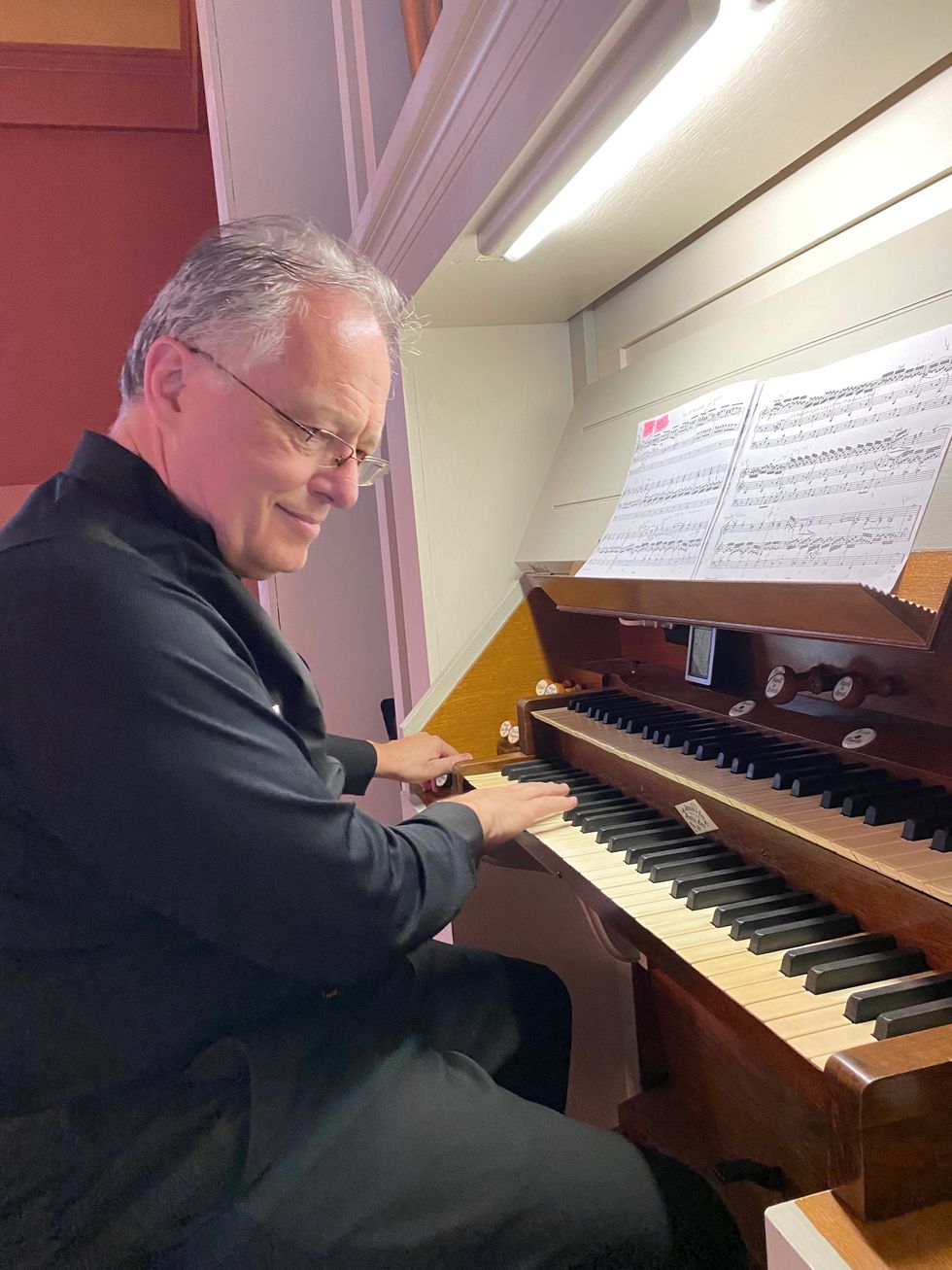
Kent Tritle connects with his audience at the Smithfield Church

Kent Tritle connects with his audience at the Smithfield Church
Kent Tritle, an audience favorite at the Smithfield Church, performed in recital on Saturday, Sept. 9, on the historic Johnson and Son tracker organ. 
Photo by Leila Hawken

AMENIA — Bringing talent, natural musicality and engaging personality to perform in recital for the 11th time at the Smithfield Church on Saturday, Sept. 9, organist Kent Tritle captivated his audience and remained to spend time in conversation during the reception that followed.

The full proceeds of the recital would benefit the Oratorio Society of New York, which is celebrating 150 years of singing this year and is one of the performing organizations directed and conducted by Tritle. He also conducts the professional chorale Musica Sacra and serves as the organist for the New York Philharmonic and the Cathedral of St. John the Divine. He is also a faculty member in the graduate program at The Juilliard School.

 The Tritle annual recital was on hiatus during the pandemic, but it returned with gusto this month. This performance included works by Buxtehude, Bach and contemporary composer Charles Coleman, each carefully selected and explicated in turn. To accomplish that, Tritle bounded from the Johnson and Son tracker organ at the rear of the church to the 1866 Steinway grand at the front of the church to play key themes and patterns to listen for. Then, back to the organ, having prepared the audience for what was to come.

Smithfield’s pastor Douglas Grandgeorge had let the audience know in advance that the year 1866 was the first year that Steinways were built under that name, the company having just changed its name from Steinweg to Steinway, in a move to increase sales.

“It just goes and goes and goes,” said Tritle of one of the several Bach selections.

The 1893 organ also touts its own history as an Opus 796, two manual, seven-stop instrument, installed in the Smithfield Church in 2010, in a hand-crafted setting to match the historic architecture. The organ previously served the First Congregational Church in Kent, Connecticut.

As the reception wound down, Tritle paused for an interview to discuss the recital experience and the relationship between the performer and his audience, with many having praised the educational aspects built into the performance.

“I love the way you talk to the audience,” interjected Laura Evans, an audience member who drove up from New York City. “You talk to them,” she repeated.

“People had a sense of enjoyment, a connection with the music,” Tritle said, noting the recital’s intimacy where he and the audience members can talk. A live performance, he felt, encourages that dialogue, aligning with the familiar silent dialogue performers experience while performing. 

“Things happen with energies,” Tritle said of live performance. “Heartbeats become uniform.”

“I hope they will leave feeling they had heard something and that they connected,” Tritle said of his audience.

The subject turned seamlessly to artificial intelligence (AI) and music. “AI lacks spontaneity; the sense of the room,” said Tritle, acknowledging that there will be great applications and future benefits to society.

“But it won’t replace live performances or audiences,” he added with certainty.

Asked about his earliest years, Tritle said, “I come from a musical family,” recalling that he and his parents regularly sang around the piano. Both parents were accomplished musicians. One day, his father surprised his mother with the delivery of a home organ, when Tritle was about 9.

“I was so smitten with the organ,” Tritle said, suggesting that his mother got very little time with it.

“It started at home,” he said.
Latest News

Wassaic Project co-founder Eve Biddle presents her “Field Notes”

Artist Eve Biddle and Tremaine Gallery Director Terri Moore.

D.H. Callahan

On Wednesday, Sept. 2, the Tremaine Gallery at the Hotchkiss School in Lakeville opened its new show, “Field Notes,” with works by multidisciplinary artist Eve Biddle.

Biddle is best known in the area as one of the founders of the iconic Wassaic Project in the hamlet of Wassaic, New York. The project, which is part art incubator, part gallery, part studio and a whole lot of community, is housed in an old converted grain elevator right next to the Metro North train tracks. It’s credited by many as the spark that revitalized the hamlet, which now boasts a craft bakery, a curated wine and liquor store, a pizza hot spot, the Lantern.

Keep ReadingShow less

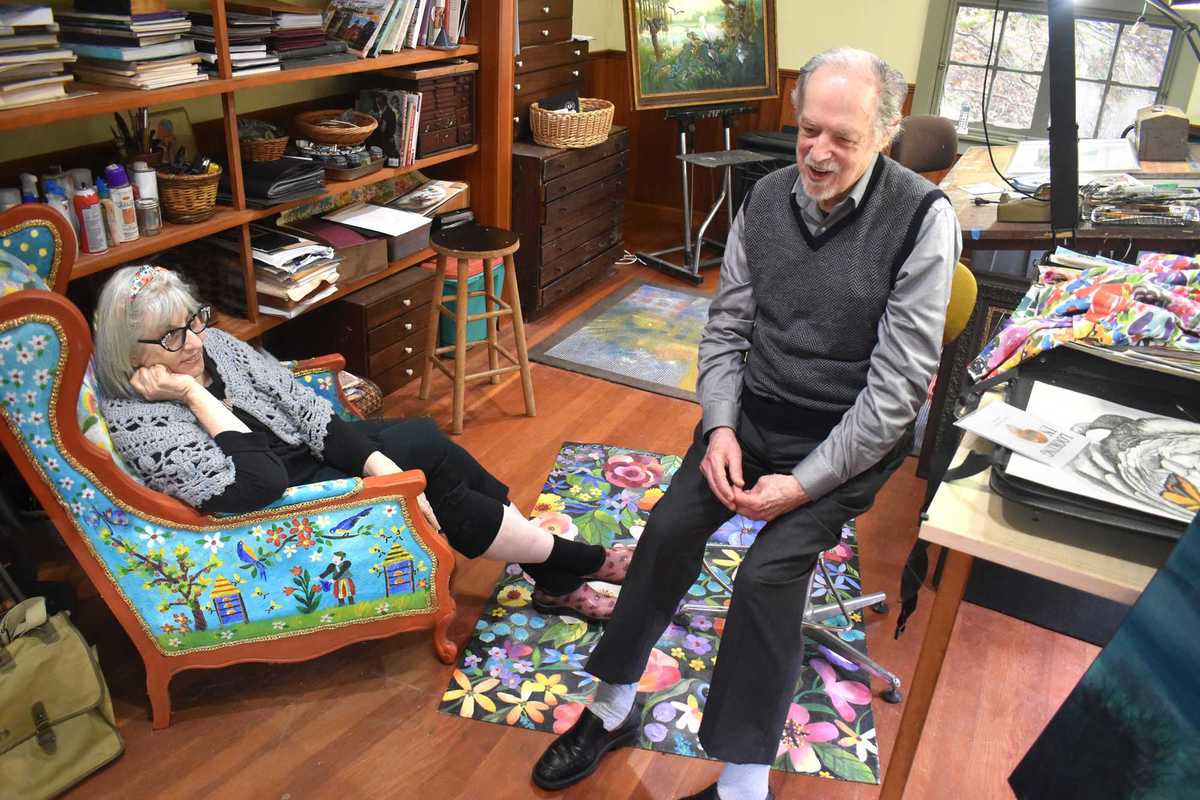
Victor Cella is painting his own path

Victor Cella is painting his own path

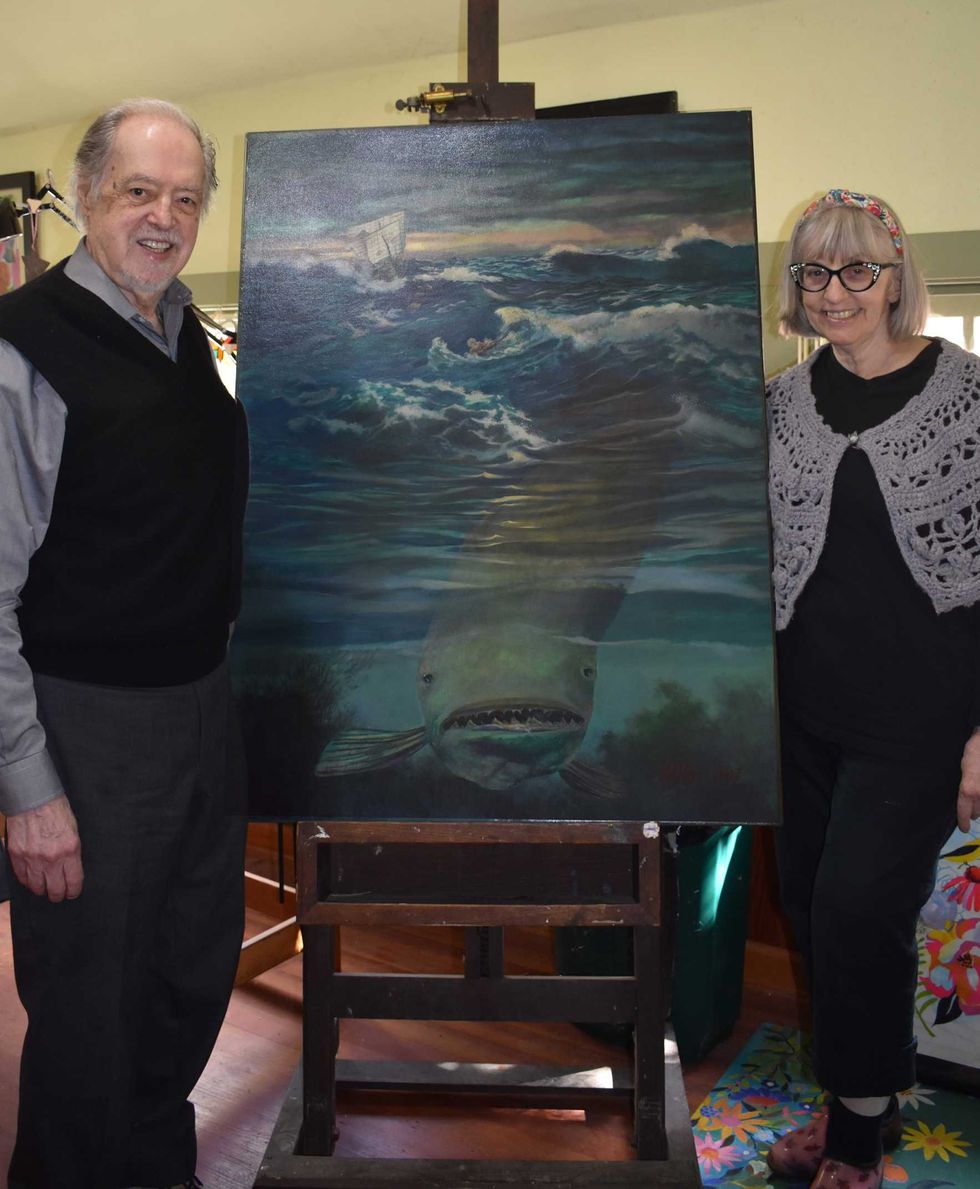
Artist Victor Cella with his recent painting “White Dog” in his studio and shop, Little Store Antiques in Great Barrington.

L. Tomaino
If I taught art, I’d teach it in a different way. I could teach it as an awareness — how to free yourself up.
— Victor Cella

Paintings by Victor Cella of a blue dog, a flower still life and a colorful abstract greet visitors as they mount the steps to The Little Store, an antique shop he runs with his husband, John Ortisi, at 88 Main St. in Great Barrington, Mass.

The shop is filled not only with antiques but also with Cella’s paintings. People stop by to see what Cella is currently painting and to talk with him. He is known for his amiability as well as his paintings.

Keep ReadingShow less
google preferred source

Want more of our stories on Google? Click here to make us a Preferred Source.

Fear and Loathing in the Woodland

Fear and Loathing in the Woodland

Fear and Loathing in the Woodland Japanese barberry, an invasive shrub with thorny branches, provides shelter for mice and can contribute to conditions that allow tick populations to thrive.

Provided

I am tempting tick-bite fate by writing this, even from the safety of my office.

Eight people emailed me with a link to the New York Times article on ticks that ran in the Aug. 20 magazine section.My Instagram algorithm made sure that I saw the same story several times over.The article, “The Summer the Ticks Took Over,” by Benjamin Wallace reads like a horror story, engendering a kind of paranoia that sidewalk-hugging New Yorkers can easily fall prey to.The reader comments enhance the author’s terror and fall into key categories: readers who are living proof of the sometimes harrowing, life-altering consequences of a tick bite; readers’ instructive life hacks against ticks (“permethrin is your friend”); readers’ collective chant to kill the deer; and, finally, readers who question why anyone would ever go in the woods again.

Keep ReadingShow less
Oldtone brings roots music, dancing and community to Cool Whisper Farm

The Allum Ridge Boys & Ashlee at Oldtone Music Festival in 2025

Jim Wright

The Oldtone Music Festival returns Sept. 10 through 13, bringing musicians and audiences together for a four-day celebration of roots music at Cool Whisper Farm in Hillsdale.

Founded in 2015 as a one-day show in Wassaic, Oldtone moved the following year to the Schober family’s Cool Whisper Farm, where it grew into a three-stage camping festival. The festival ran annually until the COVID-19 pandemic forced its cancellation in 2020. After limited attempts to bring it back in 2021 and 2022, organizers announced in early 2023 that the festival would end.

Keep ReadingShow less
“Come From Away,” a story of kindness at Sharon Playhouse
“Come From Away” cast in rehearsal. (Back Row L to R): Jeffrey Konowitch, Meagan Lewis-Michelson, Max Bennett-Parker, Michael F. McGuirk, Tracy Liz Miller, Ricky Oliver, Cherish Love, Willie Marte (Front Row L to R) Cameron Sirian, Chelsie Nectow, Erin Lindsay Krom, Sophie Nassiri
Lynette Shy

Twenty-five years after the events of Sept. 11, 2001, the Sharon Playhouse is staging a musical about what happened in the aftermath — and about an extraordinary act of kindness in a small Newfoundland town.

“Come From Away,” the Tony Award-winning musical by Irene Sankoff and David Hein, runs Sept. 11 through 27 and concludes the Playhouse’s 2026 MainStage season. Directed by Hunter Foster, with choreography by Krystyna Resavy and music direction by Eric Thomas Johnson, the production tells the true story of the thousands of airline passengers who suddenly found themselves stranded in Gander, Newfoundland, after U.S. airspace was closed following the terrorist attacks.

Keep ReadingShow less
google preferred source

Want more of our stories on Google? Click here to make us a Preferred Source.

google preferred source

Want more of our stories on Google? Click here to make us a Preferred Source.