Latest News
âThe Divine Sisterâ comes to Sharon Playhouse for one-night benefit
Richard Feiner And Annette Stover
Aug 26, 2026
Playwright and performer Charles Busch is âThe Divine Sister.â
Provided
Continuing a popular tradition, the Sharon Playhouse will present a one-performance-only staged reading of âThe Divine Sister,â another riotous comic romp by the acclaimed playwright and performer Charles Busch, on Friday, Aug. 28 at 7 p.m.
The play is a wild and witty homage to Hollywood films that feature nuns â from âThe Song of Bernadetteâ and âThe Bells of St. Maryâsâ to âThe Singing Nunâ and âThe Sound of Music.â It is classic Charles Busch: wickedly funny, gloriously over-the-top and overflowing with theatrical joy.
Busch is no stranger to the Playhouse, which has previously produced readings of his Tony-nominated Broadway hit, âThe Tale of the Allergistâs Wifeâ and his hilarious spoof, âDie Mommie Die!â High time indeed to celebrate this irreverently reverent piece of theater.
âThe Divine Sisterâ centers on the Mother Superior of St. Veronicaâs Convent and her efforts to save the struggling order and school, which are upended by mysterious visitors, forbidden romance, shocking revelations and increasingly outrageous miracles. In a review of the playâs original production, The New York Times wrote, ââThe Divine Sisterâ finds Mr. Busch returned to peak form. This gleefully twisted tale of the secret lives of nuns â in which the playwright doubles as leading lady â is Mr. Buschâs freshest, funniest work in years.â
In addition to Busch, the reading reunites members of the playâs original 2010 Off-Broadway cast: two-time Tony Award nominee Alison Fraser; 2021 Isabelle Stevenson Tony Award recipient Julie Halston; and Sharon Playhouse favorites Jennifer Van Dyck and Jonathan Walker. Completing the cast is Lucy Rhoades, seen earlier this season at Sharon Playhouse in âSwingtime Canteenâ and last summer in âMillion Dollar Quartet.â
âThis is the kind of special event we love to present,â said Sharon Playhouse Artistic Director Carl Andress. âCharles is one of our countryâs great comic playwrights and performers, and every time he comes to Sharon itâs a celebration. Whether youâre a longtime fan or discovering his work for the first time, âThe Divine Sisterâ is a wonderful introduction. Reuniting so much of the original Off-Broadway cast for one unforgettable evening makes this a truly special event.â
Busch has been recognized with countless awards for his indelible contributions to American theater. He was inducted into New Yorkâs Theater Hall of Fame in 2024 in honor of his distinctive body of work. He also is the subject of the documentary film, âThe Lady in Question is Charles Busch.â
The reading will take place on the Olsen Stage, with all proceeds going to benefit Sharon Playhouseâs productions and educational programs and helping ensure that the Playhouse continues to thrive as a cultural destination for audiences and artists in the region.
âThe Divine Sisterâ is presented by Dugazon and Pete Hathaway, producers, in association with Amy Danis and Mark Johannes, associate producers.
The day before the reading, producer Hathaway will host âA Divine Celebration with Charles Busch,â an exclusive cocktail party on Thursday, Aug. 27, from 5 to 7 p.m. All ticket proceeds from this event will also directly benefit the Sharon Playhouse.
Tickets for both âThe Divine Sisterâ and âA Divine Celebration with Charles Buschâ are available at sharonplayhouse.org.
Keep ReadingShow less

Want more of our stories on Google? Click here to make us a Preferred Source.
KK Kozik sees things differently
Natalia Zukerman
Aug 26, 2026
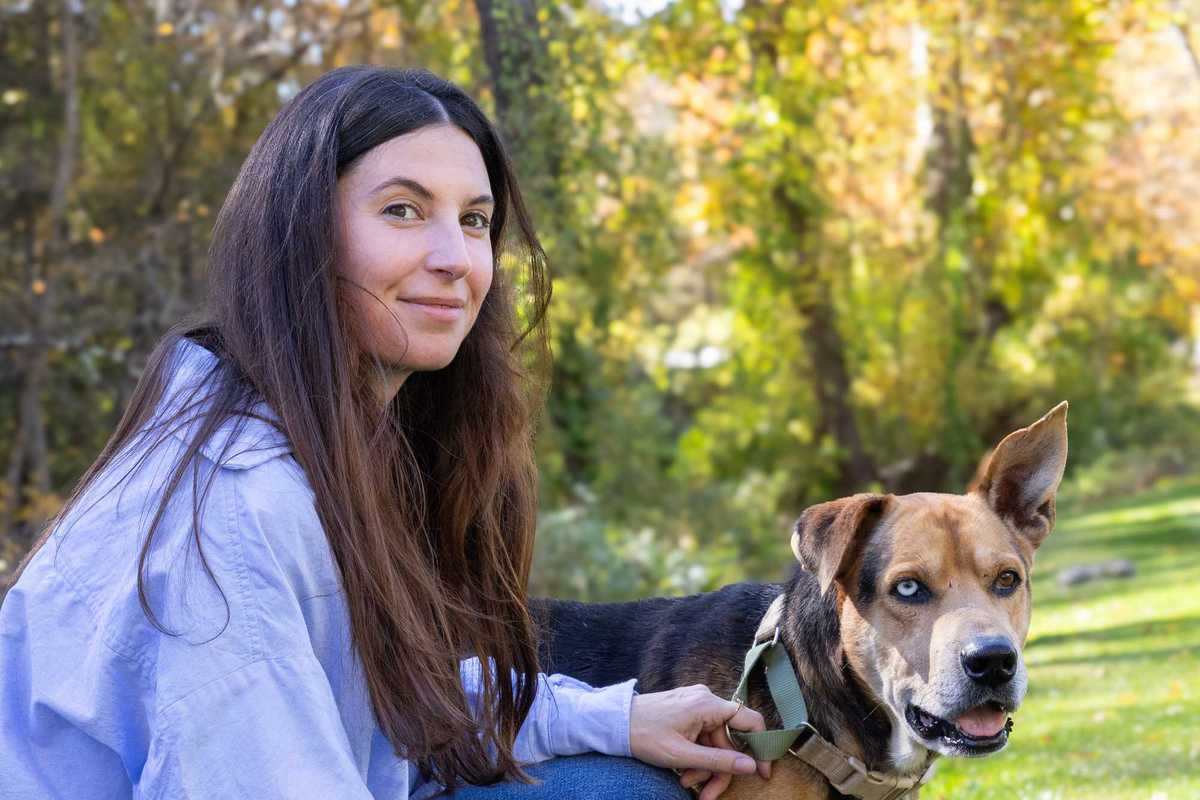
KK Kozik in her studio
Natalia Zukerman
Maybe it takes the ability to interpret what youâre looking at to really see.
â KK Kozik
KK Kozik has a theory about getting older.
âI donât think you have eyes to see until you have eyes to see,â said the painter. âAnd maybe it takes the ability to interpret what youâre looking at to really see, and maybe thatâs what comes with wisdom.â
It is a particularly fitting philosophy for an artist whose paintings often begin with the world around her but rarely end there. There might be something recognizable â a stone wall, an apple tree, a crow â but then there is something less certain. Something that appears to be one thing becomes another upon inspection. Memory gets involved. So does imagination. So does time.
Since moving from New York City to Sharon, Connecticut in 2006, the landscape around her has become increasingly important to that process.
âI just saw things differently,â Kozik said.
The change was not immediate. She remembers an earlier version of herself driving through Vermont without paying much attention to what was happening beyond the windshield.
âI didnât have the means to see what was happening around me,â she said. âI just sort of la, la, la, la, la, driving to Vermont.â
But, she said, she started to pay attention differently.
âI became more sensitized as time went on,â she said.
Asked whether that change came with age, she said, âAge and so-called wisdom.â
Thereâs a sense of loss in her landscapes, but a particular kind of loss that also has a twinge of redemption. Specifically, what happens to a landscape when people leave it?
âWhen the people go away, the wildlife comes back,â Kozik said.

Kozikâs work has never settled into a single recognizable formula. She has painted landscapes, figures and still lifes, moved toward abstraction and returned to representation. Her subjects change, but the underlying impulse remains: to take what is in front of her and discover what else there might be.
Kozik describes herself as someone who is always trying to figure things out. Her paintings often have the feeling of a thought in progress rather than a conclusion. They have been called âsingle-line novellas,â a description that makes sense: They can contain the suggestion of an entire story without telling you exactly what happened.
The animals are part of that storytelling.
They arrived partly because of what was disappearing.
âThey were like the new redemption in a way,â she said.
There is something almost funny about the way Kozik talks about this â not because the loss itself is funny, but because she refuses to turn it into a grand pronouncement. She observes something, considers it, and lets it complicate the work.
That same sensibility comes through when she talks about her own development as an artist. Her paintings make room for interpretation. They donât always tell the viewer what an animal symbolizes, or why a landscape has been altered, or where a particular image came from. Instead, they leave enough evidence to make you curious and enough room for your own stories.
The effect is not accidental. Kozik has spent years thinking about how images work, both as paintings and as containers for ideas.
Her work is currently included in âThe Naturalist,â a group exhibition on view through Sept. 13 at Kenise Barnes Fine Art in Kent, alongside Richard Klein, Sally Maca, Rick Shaefer and Tricia Wright. The exhibition brings together artists whose work engages with the natural world, including its forms, histories and mysteries.
Kozik is an especially apt fit for the exhibition. She is described by the gallery as a landscape painter, figurative painter and interiors/still-life painter whose work frequently moves toward painterly abstraction. Her practice, the gallery notes, is âfluid and continuousâ â always searching for new pictorial problems to solve.
That search has also extended beyond her own studio.
For several years, Kozik ran ICEHOUSE Project Space, an 18th-century icehouse on Sharonâs town green that she transformed into an unusual venue for contemporary art. It opened in 2018 with Dan Devineâs âInside-Out NASCARâ and went on to host site-specific projects by artists including Mark Dion, Eric Aho, Janet Biggs, Richard Klein, Kristin Jones, Lisa Hoke and Ryan Frank. The projects addressed everything from the decline of winged insects and native and invasive plants to Sharonâs iron industry, its gardens and its history as an ice-producing community.
The space is now closed, but its premise still feels connected to Kozikâs painting practice. Each project responded in some way to the physical location, turning what might otherwise have been a little historic outbuilding into a setting for contemporary art.
Kozikâs own work does something similar with the landscape. She takes a place and lets it become more than a place.
Kozikâs paintings tell us that something happened before we arrived, and that something will happen after we leave.
And then there is the question of what to do with the space in between.
Maybe Kozikâs paintings are less about that space and more about an idea, as she put it, of âwhich questions to think about.â
Keep ReadingShow less
Lakeville Open Horse Show returns for 69th year
Sally Haver
Aug 26, 2026
Jazzmine Bone and A Stitch in Tyme power through the Gamblerâs Choice run during the 2024 Lakeville Open.
Caitlin Von Graf
For nearly seven decades, the Lakeville Open Horse Show has brought riders, horses and spectators together for a day of competition and community.
This yearâs show takes place on Sunday, Aug. 30, at Riga Meadow at Coole Park, 1031 Bengal Amenia Road in Millbrook.
The event, which has been held continuously for 69 years, is open to the public with free admission.
Individual competitions will run from 8 a.m. to 5 p.m., and visitors can stop by briefly or settle in for the day.
A food truck, bake sale and portable restrooms will be available on-site.
The show is the primary fundraiser for The Lakeville Pony Club, with proceeds supporting young riders who need financial assistance to participate in lessons. Members and their families work throughout the year to create the event for both competitors and spectators.

For those new to horse shows, the day offers a chance to learn more about the sport and understand what happens in the ring. In equitation competitions, judges evaluate the riderâs skill, from beginners learning walk and trot to more advanced riders navigating cantering and jumping courses.
Hunter competitions focus on the horseâs style and smoothness over fences, while jumper classes emphasize accuracy and speed as horses and riders race against the clock without knocking down rails.
The day also includes a crowd favorite: the costume class, where horses and riders dress up in creative ensembles for a chance at the top prize.
Programs will be available onsite to help spectators identify competitors and horses. A full list of competitions, entry information and details for those interested can be found at rigameadow.com
Whether an experienced equestrian or simply curious about the sport, the Lakeville Open Horse Show offers a chance to enjoy a Hudson Valley tradition that continues to bring the community together.
Keep ReadingShow less
A new home for contemporary music in Connecticut
D.H. Callahan
Aug 26, 2026
This year, the ARChive of Contemporary Music, or ARC, is moving its collection to a permanent home in Ridgefield, Connecticut.
ARC is somewhat hard to imagine. Comprised mainly of huge collections from musicians, archivists, and DJs, it has compiled more than three million sound recordings, consisting of over 90 million songs.
But with the rate that it collects, thereâs a good chance that number has now hit its ninth digit. The collection is arguably even more impressive than its board, which has included such illustrious members as Q-Tip, Keith Richards, Nile Rodgers, Fred Schneider, Martin Scorsese, Paul Simon, Carl Bernstein, and David Bowie, many of whom house their personal collections at ARC.
Given its size, it is likely to take ARC about two years to be open its new location to the public. It hopes to have its collection in the building within a year, and then spend the following year putting it all into place.
Since 1985, founder and director B. George has been storing away musical media on Chambers Street in New York City. George moved to the area in the 1970s, and quickly became friends with many of the dayâs top musicians, who would gather in the one downtown eatery open after-hours, Daveâs Lunch. Itâs where he met David Bowie and Lou Reed.
George was immersed in the culture, DJing parties, and rubbing elbows with musicians. He worked with Laurie Anderson, and released her âO Supermanâ single on his micro-label One Ten Records.
The artistic scene was thriving, due in no small part to its affordability. New York City had been written off by mainstream America as a dirty, crime-ridden trap.
A famous Daily News headline still tickles George to this day. It reads âFord to City; Drop Dead.â Even the president of the United States thought New York was irredeemable. But in its weakest hour, the city created one of the greatest assets itâs ever provided: a place for poor artists to create without the looming threat of eviction or starvation.
In 1980, George edited a book titled âVolume: International Discography of the New Wave.â The book was so successful that people started sending him recordings for the next edition. Quickly, George had more than he knew what to do with, so by 1985, he started looking for a home for this rapidly growing collection. He found it on Chambers Street in lower Manhattan for just $68 a month.
The reality of financial constraints seems to be a constant concern for George. To him, the ârevitalizationâ of the city meant fewer opportunities for artists to create without the need for a safety net. That era is now decades in the rear view mirror, and the whole creative world has felt the effects.
Today, George feels that âcoolâ has become too heavily commoditized to allow artistic scenes to thrive. Once corporate America identifies the next hive of underground cultural activity, it pounces.
George saw this happen in SoHo, where the rent he couldnât afford in the â80s of $100 has now risen to as high as $10,000 a month. This pattern seems to keep repeating. In recent years, a vibrant creative scene in Williamsburg, Brooklyn mirrored the same trajectory, at an accelerated pace. An area littered with loft parties and underground venues in the early 2000s has already been replaced by luxury fashion storefronts in a matter of years.
Thatâs whatâs driven George to move the ARChive out of the city. As his collection continues to grow, thereâs simply no way to meet the financial demands for space in Manhattan. So five years ago, he started moving media to Dutchess County, as part of a short term agreement at an estate in Staatsburg. Now heâs found a more permanent solution in Ridgefield, Connecticut
For the ARChive, physical media is the priority. While it has a partnership with archive.org, digitizing millions of songs, and making them available to the public, ARC is not a traditional media library. Its collection has not been open to the public to browse at leisure. Instead, it mostly makes its resources available to researchers and rights holders.
This new home, however, presents new opportunities, and George is excited to share portions of the Archive with a broader audience. This will include a Japanese-style listening area â built in partnership with Klipsch and Sonos â DJ and listening spaces with extra copies of its robust music-book collection (they have over 35,000), and more public-facing spaces to experience otherwise inaccessible recordings. Its Adopt-a-Record program will allow the public to sponsor pieces of media much like sponsoring an endangered animal. For an additional donation, donors can even get their picture taken with their record at the ARC headquarters⌠once itâs open.
For George and the ARChive of Contemporary Music, the collecting never stops. With collecting trips all over the world, and donations coming in from every imaginable genre, they can only hope that their next expansion wonât be necessary any time soon. For now, itâs time to settle in, and listen to some tunes.
Learn more and support ARC at https://arcmusic.org/
Keep ReadingShow less

Want more of our stories on Google? Click here to make us a Preferred Source.
loading