



Latest News
Webutuck Little League's season opener
Nathan Miller
Apr 15, 2026

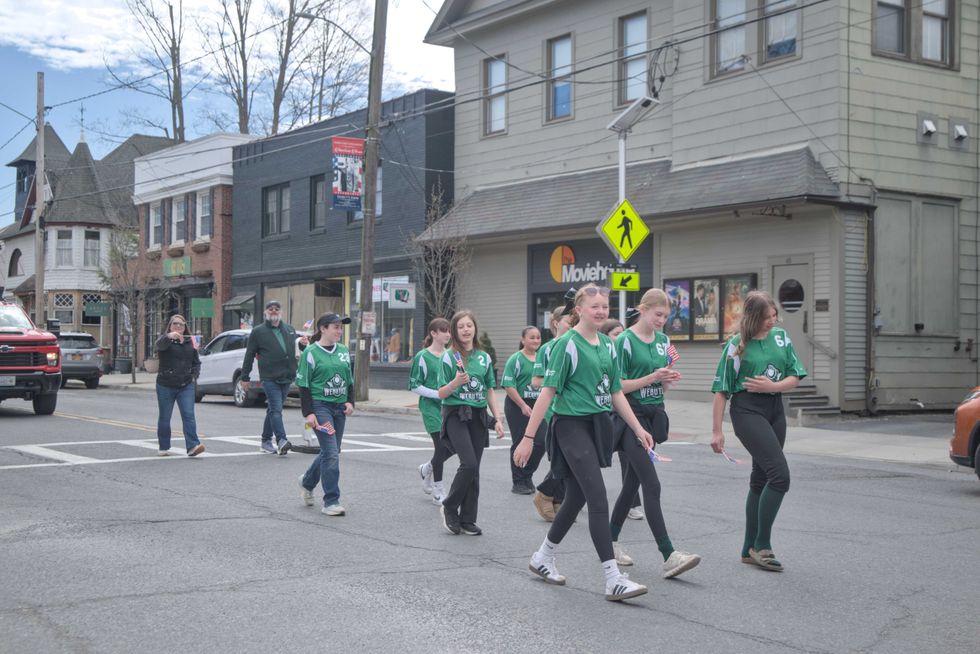
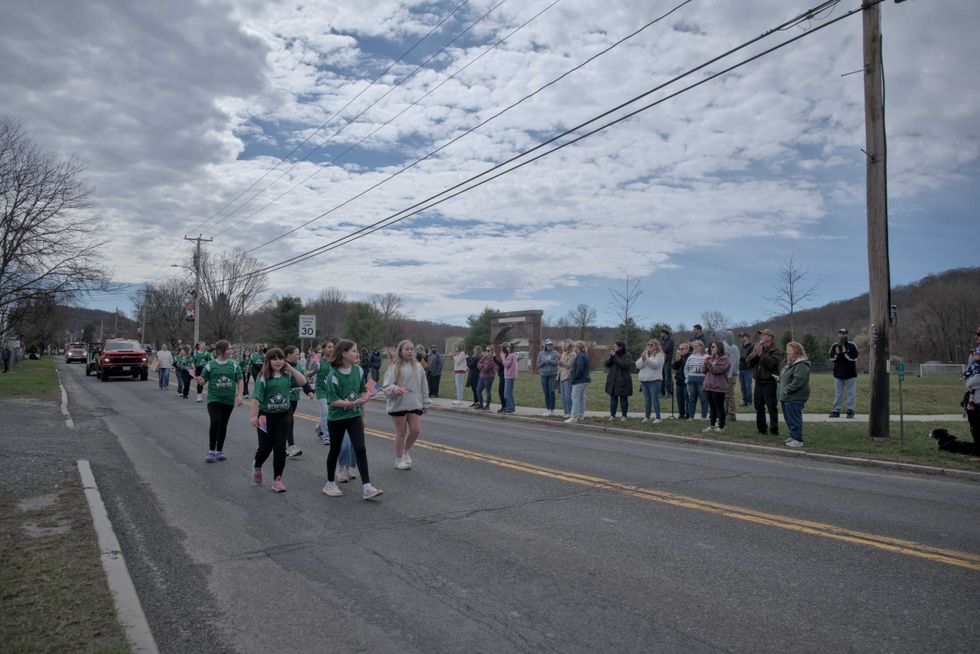
Little leaguers run across Eddie Collins Memorial Park in Millerton for lunch, popcorn and ice cream at the pavilion during the Webutuck Little League season opening party on Sunday, April 12. The league has signed up 80 players for the 2026 season comprising six teams, including one tee-ball team, three baseball teams and two softball teams.
Photo by Nathan Miller
MILLERTON — The Webutuck Little League held its season opening party on Sunday, April 12, at Eddie Collins Memorial Park on Route 22.
Players enjoyed free food, popcorn and ice cream and a day of playing in inflatable castles and an obstacle course.
The league has signed up 80 players across six teams — one tee-ball team, three baseball teams and two softball teams.





Keep ReadingShow less
Surging gas prices stretch local budgets
Aly Morrissey
Apr 15, 2026

Gas is priced at $4.09 per gallon at the 17 Gay Street Shell station in Sharon, Conn., April 12, sitting just below the national average of $4.12, according to AAA.
Photo by Aly Morrissey
New York drivers are paying sharply more at the pump than they were a year ago, with gas prices up more than $1 per gallon — a surge that is hitting wallets across Dutchess County even as prices steadied briefly last week.
The spike comes as global tensions continue to cause oil prices to rise. Prices briefly stabilized following news of a two-week ceasefire between the United States and Iran, but uncertainty returned after talks ended without an agreement, leaving drivers bracing for continued volatility.
Residents of the Northwest Corner and Eastern Dutchess County continue to pay hefty prices at the pump, according to data collected by AAA. Despite high prices, demand for fuel continues to climb.
Just a month ago, Sharon resident and local blacksmith William Trowbridge said a fill-up typically cost around $75. Now, for the first time, he paid more than $100 to fill his truck — a jump that left him concerned when the total climbed into triple digits.
“It makes me angry,” Trowbridge said at the Shell station located at 17 Gay St. in Sharon. “Now, I’m starting to think about combining errands when I go out.”
Trowbridge, like many others, attributes the spike in gas prices to “a war that shouldn’t even be happening.”
At the Gay Street station, employee Jacob Enquest said customer reactions have shifted in recent weeks.
“Whether it was about politics and the war or the prices themselves, everyone had something to say,” Enquest said. “Now people just want to know if prices are going to come down, and I have to tell them their guess is as good as mine.”
Local and national prices
According to data compiled by AAA, the average price for a gallon of regular gas in Connecticut held steady last week at $4.08, unchanged from the prior week but significantly higher than earlier this year.
In neighboring New York, prices are slightly higher, averaging $4.12 per gallon as of April 13, according to AAA.
Prices in both states have climbed sharply in recent weeks. In Connecticut, gas is up 56 cents from a month ago and more than $1 higher than this time last year. Nationally, the average price rose to $4.12 per gallon, up 49 cents from a month ago.
Connecticut currently ranks 16th in the nation for highest gas prices, while New York prices are largely in line with the national average. The lowest prices are found in Oklahoma and Kansas, where drivers are paying around $3.44 to $3.49 per gallon, while California and Hawaii are paying nearly $6 per gallon.
Legislation
Rising gas prices are impacting more than just individual drivers, with local businesses, schools and municipalities also feeling the strain as they adjust budgets and daily operations to absorb higher costs.
Local legislators in Connecticut and New York have called for relief for individuals at the pump, receiving mixed results. While Gov. Ned Lamont recently dropped hopes of a gas tax holiday in Connecticut, Dutchess County, New York, legislators advanced a resolution to cap the county’s sales tax on gasoline and diesel at $3 per gallon beginning June 1.
“It will be a modest saving, but any amount helps,” said Dutchess County Legislator Chris Drago D-19, who supported the resolution initiated by the Democratic Caucus.
Drago described the price increase as “one of many unfortunate results from this needless war in the Middle East,” adding that Dutchess County should not get a “windfall of taxes” from the war.
“As we know, it’s more and more expensive to live where we live, and it’s hitting families hard,” Drago said. “Anything we can do to alleviate any financial strain at this time is important.”
In Connecticut, lawmakers have explored similar relief measures, though no gas tax holiday has been approved.
Though there is precedent for a gas holiday in Connecticut, like when the Ukraine war first broke out, it has yet to happen since the Iran conflict began.
State Sen. Stephen Harding, R-30, who is an advocate for the tax holiday, said that the concept could be revisited if prices remain high.“I’m still hopeful,” Harding said. “If prices remain high, I think there’s a chance it could still happen. People in this state need this type of relief right now.”
The state levies a 25-cent-per-gallon tax on regular gasoline.
For some families, pump prices reflect tipping point
For some local residents, rising gas prices are compounding an already difficult cost of living — forcing tough decisions about where to live and how to get to work.
Guy Gnerre and his wife, Kim, are now facing exactly that reality. The couple, both longtime educators, have lived in the Salisbury area for about 25 years. Gnerre has worked as a special education teacher at Salisbury Central School for the past seven years, while his wife has spent 25 years at Hotchkiss. Now, they are preparing to make a significant change to adapt to the rising cost of living in the region.
Gnerre said home ownership in the area has been a dream for his family, but it has remained just out of reach. The couple has rented locally for more than two decades and is now being forced to move nearly 30 miles away to Torrington after receiving notice that their landlord plans to return and renovate the property.
With a daughter in college and the cost of living at an all-time high, the couple worry about what’s ahead, including fears of dipping into retirement savings to purchase a home that Gnerre said needs lots of work and is in an unfamiliar city.
“Yes, we are going to get obliterated in terms of gas,” Gnerre said, noting that he and his wife plan to carpool after their move. But it’s not just fuel prices that are affecting his family. “Gas is part of the checklist,” he said, adding, “I wish it was just the fuel.”
Schools that rely on diesel say ‘Business as usual – for now’
With diesel prices outpacing regular fuel prices, schools throughout the region are keeping a close eye on costs for buses, but say they’re not ready to make significant changes.
In districts that outsource bus contracts to independent companies, schools typically agree on a diesel rate per gallon at the start of the year. Salisbury Central School, for example, has a contract with All-Star Transportation and prepays for gallons of diesel based on a negotiated price.
“We’re set for the year,” said Sue Bucceri, administrative assistant to the principal. “We’re locked into the price we agreed upon last summer,” before diesel prices surged.
The average price for a gallon of diesel currently costs $5.92 a gallon in Connecticut, up from $3.79 a year ago, according to AAA.
Bucceri works on the budgeting process in partnership with Region One’s business office, and said SCS is not making significant changes for the 2026-2027 budget based on gas prices.
“We didn’t do anything out of the ordinary,” Bucceri said. “We made a nominal increase on price-per-gallon,” she added. At this time, she said the school is fortunate that it’s not being significantly impacted from a budget perspective.
Just across the border in New York, the Webutuck Central School District owns its own fleet of buses and isn’t benefiting from a locked-in price model.
“Gas prices do impact us,” said Robert Farrier, business administrator for the Webutuck Central School District. However, Farrier said he and his colleagues are not worried about the budget at this time, though they plan to keep an eye on prices.
Farrier said the business office padded the transportation section of their budget during the COVID-19 pandemic, and, to date, they are prepared for unexpected events such as rising fuel costs.
“We’re not canceling field trips or anything like that,” he said.
Keep ReadingShow less
Embroidery as a living local tradition celebrated in Millbrook Library exhibit
Leila Hawken
Apr 15, 2026

Celebrating the significant history of embroidery and its place within the fabric of the community, an exhibit opening was held on Thursday, April 9, at the Millbrook Library. Millbrook Historical Society secretary Alison Meyer, co-organizer of the event, provided welcoming remarks. The exhibit will continue until Saturday, May 2.
Photo by Leila Hawken
MILLBROOK — A new exhibit at the Millbrook Library tells the story of the Millbrook Needlework Guild, a storied group that has threaded its way through the past century of life in the village.
The exhibit opening was held on Thursday, April 9, attracting residents and visitors to view exquisite historic pieces of needlework art, all linked to today’s Millbrook due to their continuing importance as local works of art.
Assembled by the Millbrook Historical Society in a project that spanned two years, Society Secretary Alison Meyer, co-organizer of the event, welcomed a substantial turnout of residents and visitors. Meyer noted the contributions of her co-coordinator, Society board member Denise Bauer in bringing the event to life.
“It all began with the Millbrook Needlework Guild organized in 1954. The legacy has been preserved in churches, homes and the library,” Meyer said, noting that exhibit pieces have been loaned from throughout the village community.
“It’s gone from a local endeavor to the national scene and now back to local,” Meyer added. Also participating in the exhibit is the area’s Skyllkill Chapter of the Embroiderers’ Guild of America that was formed in 1974, continuing the tradition to the present day.
A highlight of the opening was the presentation of a certificate of appreciation on behalf of the Millbrook Historical Society to resident Anne Collins who had first suggested the idea for the exhibit.
When it was formed in 1954, the Millbrook Needlework Guild, whose members were local women devoted to the art, was gifted with a house donated by Margaret Thorne Parshall. The house still stands at the corner of Franklin and Maple Avenues. The imposing home also served as an academy for instruction in embroidery, under the tutelage of then Millbrook resident Erica Wilson who came to be known by many as “the first lady of stitchery.” Wilson’s shops still operate in Nantucket and Martha’s Vineyard.
In 1958, Parshall helped establish the American branch of the British Embroidery Guild, having traveled to England to meet with needleworkers. That organization became the Embroiderers’ Guild of America in 1958.
The exhibit will continue at the Millbrook Library until Saturday, May 2.
Keep ReadingShow less

Want more of our stories on Google? Click here to make us a Preferred Source.
Millbrook yard sale to feature repair café at library on April 25
Leila Hawken
Apr 15, 2026
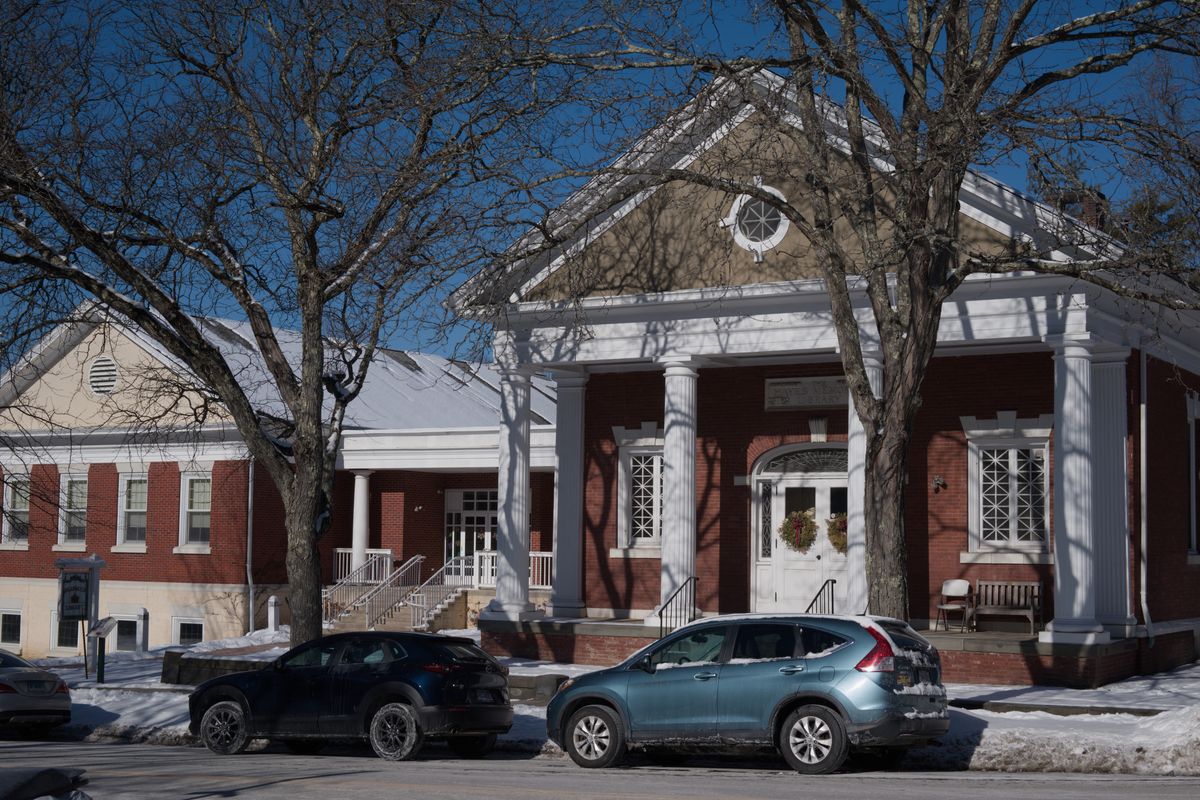
The Millbrook Library on Franklin Avenue.
Photo by Nathan Miller
MILLBROOK — Among the many activities planned for the Millbrook Community-wide Yard Sale on Saturday, April 25, will be a repair café offered at the Millbrook Library between 11 a.m. and 3 p.m. The rain date will be Sunday, April 26.
Residents can bring up to two small items in need of attention to the library and find local experts willing to provide free repairs. The event is intended to keep such items from being discarded into landfills, when all that may be needed is a small fix.
Eligible for repair are broken lamps and small appliances, jewelry, wooden furniture, mending, and darning among sewing services. Local repair coaches will either fix the item or provide advice on where to take it next. The community is also invited to bring knives in need of sharpening.
Demonstrations of bicycle maintenance will be a feature. Bring plastic bags and batteries to the library for recycling during the event.
The Community-wide Yard Sale provides an opportunity for Millbrook neighbors to get together and share in finding treasures at yard sales throughout the village, enjoy music, get things repaired at the library, or simply socialize.
Keep ReadingShow less
Bang Family Series at Smithfield Church to present Sophia Zhou in concert
Leila Hawken
Apr 15, 2026

Sophia Zhou
Photo provided
AMENIA — The Bang Family Concert Series will feature New York-based pianist Sophia Zhou in performance at The Smithfield Church on Saturday, April 18, beginning at 3 p.m.
Zhou’s program “Into the Light” will include a rare treat — Beethoven’s grandest and most technically challenging piano sonata, “Waldstein,” along with works by Mozart, Chopin, and Debussy.
The concert is open to the public. A suggested donation of $20, payable at the door, will contribute toward funding more concerts. A reception with refreshments will follow the concert.
The Bang Family Concert Series has a tradition of hosting eclectic performances by gifted musicians from the Tri-Corner area. Known to area residents, Zhou has performed internationally as a soloist and chamber musician in New York, Washington, D.C., Amsterdam and Shanghai. She has played with chamber musicians in New York, Hong Kong and with faculty from The Juilliard School, Curtis Institute and Manhattan School of Music.
Currently, Zhou serves as Founder and Artistic Director of the Millbrook Music Salon.
The Smithfield Church is located at 656 Smithfield Valley Road in Amenia. The church is accessible for people with disabilities.
For more information, go to thesmithfieldchurch.org/concerts.
Keep ReadingShow less
Public hearing set for local law allowing bingo, games of chance in Village of Millbrook
Leila Hawken
Apr 15, 2026

MILLBROOK — The village Board of Trustees is considering allowing bingo and games of chance within Millbrook again, more than four years after officials repealed a local law and effectively banned the activities in 2021.
Two local laws that, if passed, would allow bingo and other games of chance to be included in fundraising events were discussed by the Board of Trustees at its regular meeting on Wednesday, April 8.
The trustees voted unanimously to schedule a public hearing for Local Law No. 2 and No. 3 on Wednesday, April 22, beginning at 6 p.m. at Village Hall.
Bingo and games of chance are seen as significant highlights of the fire department’s annual carnival.
“We need a new local law,” Mayor Peter Doro said, explaining that it would provide the legal framework to allow the games.
Doro said that the village’s legal counsel is drafting resolutions to establish the local laws. Following the public hearing phase, the village would need to hold a special election to approve the new local laws.
The date for the special election was set by the Trustees for Tuesday, June 23, in time for the firemen’s summer carnival.
Doro explained that the special election could be administered locally, probably at the firehouse.
To limit costs, the town could print the ballots, but the Dutchess County Board of Elections has advised that four paid poll watchers would be needed to oversee the process. Because a small turnout of voters would be likely, votes could be hand-counted, rather than machine-counted, Doro added.
Keep ReadingShow less
Want more of our stories on Google? Click here to make us a Preferred Source.
loading