Allen Young

SHARON — Allen Young passed away on Saturday, Nov. 8, after a long battle with Parkinson’s disease. He would have turned 85 on Nov. 14.
Academically, Allen was hard to match as he sailed through the Bronx School of Science, Yale University, and Harvard Law School. He returned to Yale in his retirement to earn a MA in history. Allen’s sport was reading history books, and he could probably tell you what Napoleon had for breakfast.
Allen spent 26 happy years at PricewaterhouseCoopers where he was Deputy General Counsel. It was in that time that he developed a love for a perfect Manhattan straight up. This remained his cocktail time favorite.
Allen was active in Sharon town politics and served on the board of The Hotchkiss Library. He served on the Zoning Board of Appeals and the Democratic Town Committee. He was also on the board of Crescendo.
Allen is remembered by his family as being joyful and deeply kind.
He is survived by his wife Lindley Young, his daughter Ridgley Sraka, his son Nate Young and stepdaughters Katherine Singer and Ann Volkwein. His grandchildren and step-grandchildren are Hazel Straka, Henry Straka, Alisa Young, Victor Young, Jackson Singer, Sloane Singer, and Maximus Saxton.
In lieu of flowers, memorial contributions may be made to The Hotchkiss Library.
The Kenny Funeral Home has care of arrangements.
Nathan Miller
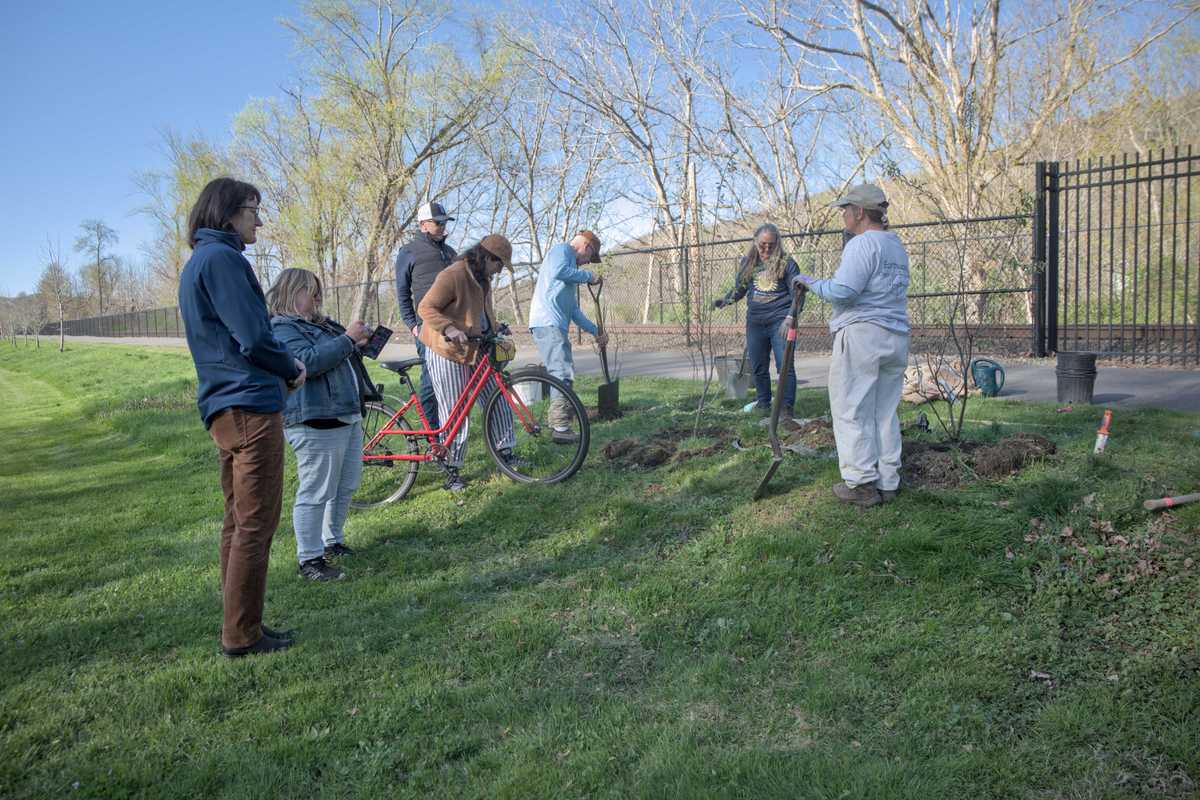
A group of gardeners and community members hear Maryanne Snow-Pitts explain proper care for newly-planted tree saplings near the Harlem Valley Rail Trail in Wassaic after Snow-Pitts planted two serviceberry trees in celebration of Arbor Day on Friday, April 24.
Leila Hawken
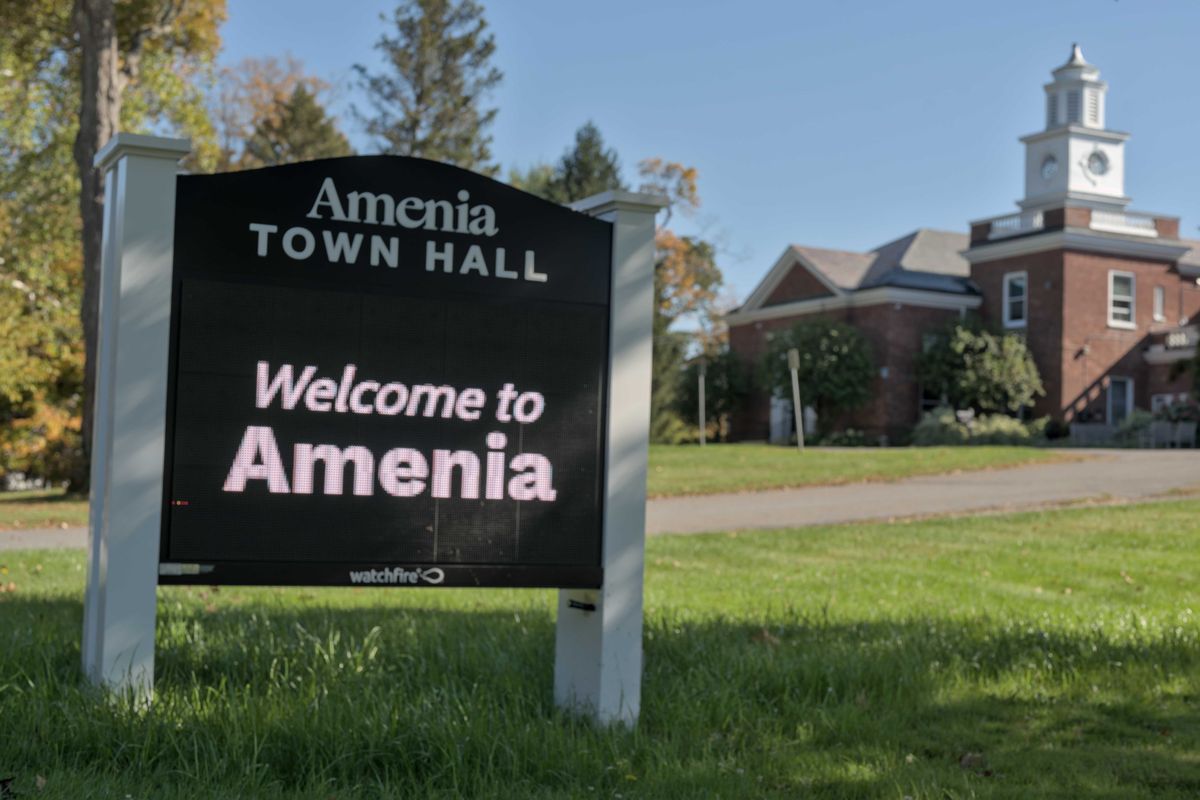
AMENIA — The proposed workforce housing subdivision on Route 22 is awaiting feedback from the Amenia Fire Company after developers added more water tanks to plans for the property.
Planning Board members discussed other outstanding questions involving the Cascade Creek workforce housing subdivision at their regular meeting on Wednesday, April 22, continuing a conservation subdivision process that began nearly a year ago.
Board engineer John Andrews said that once the conservation analysis step is approved by the board, the next step will be the preliminary subdivision approval process that will likely need a public hearing. When that preliminary approval is granted by the board, then the developer, Hudson River Housing, will be able to begin the application process for final subdivision approval, which can involve another public hearing.
The next step in the present process, outlined by board attorney Cassandra Britton, is for the developer to submit to fire department officials the completed, agreed-upon package defining fire suppression plans, including water holding tanks, and a traffic study to measure estimated numbers of daily trips to be generated by the development.
The developer is working through the state Department of Transportation to develop more traffic studies. The planning board indicated that such studies must be completed before May 15, while schools are in session. Previous traffic density studies were done in June.
Summarizing the overall project, Peter Sanders of Rennia Engineering, representing the developer, said that Cascade Creek would consist of 28 lots on 24 acres, including two conservation parcels, arranged along a single 24-foot-wide road. Current drawings show two road cuts off of Route 22 to service a one-way subdivision road, although discussion continues on whether a single two-way entrance would be better.
Sanders recalled that the planning board had visited the site on Wednesday, March 11, and had developed additional comments based on that visit, resulting in plan adjustments.
After consultation with fire officials, a tentative plan calls for the installation of two 30,000-gallon water storage tanks on site, though final approval from the fire company is still required.
Also, one of the lots that would have abutted Route 22 was moved to the interior of the subdivision, with more vegetation to be planted throughout to provide screening.
Responding to board concerns about wanting to promote diversity in home design, Sanders said that various flexible components will add variety, including garages, porches, decks and a variety of exterior paint colors. He added that the variables will become clearer during the design approval phase when the site plan drawings are presented.
Important to the planning board and to member Ken Topolsky in particular is an ongoing debate with the developer over whether local residents could benefit from a preferential system for selection to be able to purchase the homes in the development.
“I will continue to push on this,” Topolsky said. “What we need to do is serve residents of Amenia.” His research has shown that preferential systems are in place in some communities, leading him to reason that they are allowed.
Representatives of Hudson River Housing have maintained that such systems are not allowed.
Discussion is expected to continue at the next planning board meeting scheduled for Wednesday, May 13.

Want more of our stories on Google? Click here to make us a Preferred Source.
Natalia Zukerman

Tremaine Gallery exhibit ‘Vulnerable Earth’ explores climate change in the High Arctic.
“Vulnerable Earth,” on view through June 14 at the Tremaine Gallery at Hotchkiss, brings together artists who have traveled to one of the most remote regions on Earth and returned with work shaped by first-hand experience of a fragile, rapidly shifting planet, inviting viewers to sit with the tension between awe and loss, beauty and vulnerability.
Curated by Greg Lock, director of the Photography, Film and Related Media program at The Hotchkiss School, the exhibition centers on participants in The Arctic Circle, an expeditionary residency that sends artists and scientists into the High Arctic aboard a research vessel twice a year. The result is a show documenting their lived experience and what it means to stand in a place where climate change is not theoretical but visible, immediate and accelerating.
That shared experience — weeks spent together navigating the waters around the Svalbard Archipelago —forms the connective tissue of the exhibition. Artists work across video, photography, performance and digital media, but what binds them is proximity: to the landscape, to one another and to the evidence of environmental change.
“The residency is fantastic,” Lock said. “You fly into the most northerly airport on the planet, get on a ship with a bunch of artists and then sail around the archipelago and find a bay or a glacier, get into little rubber boats and go to shore. There are three guides with rifles … and they form a triangle around us to protect us from polar bears, and then you’re just there.”
That immediacy — of risk, of beauty, of isolation — is evident in the work on view. “Everyone is concerned with the environmental shifts that are occurring, and you’re witnessing it out there,” Lock said. “We were cleaning the beach one day and there’s so much trash on this beach in the middle of nowhere … because there’s plastic in the sea. We are witnessing these things firsthand.”
Lock’s own contributions underscore how quickly the landscape is changing. In one piece, two photographs are mounted on a glacier-shaped metal stand. “I went to photograph the glacier, and we were sailing around and because of the map, we knew we were at the glacier, but we couldn’t see it,” he said. Dense fog, created by warming air meeting cold ground, obscured what should have been unmistakable. Only later, in post-production, did the glacier emerge. “In Photoshop, I could extract the glacier, but to the naked eye, it was no longer visible.”
Other changes are even more stark. Lock recalled the reaction of the ship’s captain comparing current conditions to his charts. “His ‘up to date’ map showed that the glacier was 8 kilometers between one side and the other, but we parked at one side, sailed and moored on the other side and it was 1.4 kilometers,” Lock said. “So, it’s just like bam. It’s happening so fast.”
There is a sense of urgency in these images, but the collection also is a testament to process and to the community that forms in such extreme conditions. “There’s quite a nice network of artists who are pretty tight,” Lock said. “We were on a ship together in tight quarters for three weeks, so we got to know each other really well. And I found connections across the work with my own practice.”
Mindful of the environmental stakes embedded in the work itself, Lock made decisions aimed at reducing impact when curating the exhibition. “A lot of this work I printed with their permission to cut down on my carbon footprint,” he said.
And yet, for all its focus on fragility and loss, the Arctic exerts a pull. “It was funny, I’ve been twice,” Lock said. “When I left the last time, I was like, oh, I don’t know if I need to go back. And then I got back, and all I wanted to do was go back.”
The Tremaine Gallery is located on the Hotchkiss campus at 11 Interlaken Road, Lakeville. Gallery hours are Tuesday - Saturday, 10 a.m. to 4 p.m. and Sunday, 12 noon to 4 p.m.
Kerri-Lee Mayland
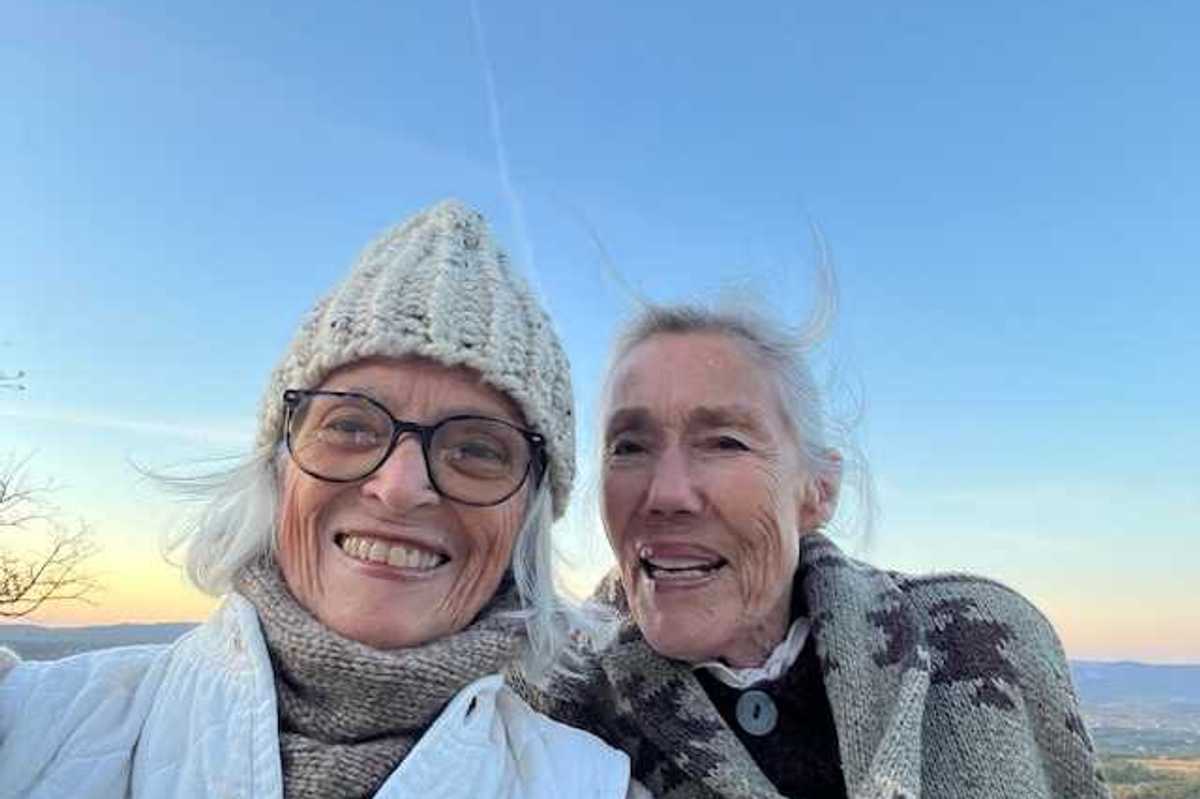
Joan Osofsky and Sharon Marston
Joan Osofsky is closing the doors on Hammertown, one of the region’s most beloved home furnishings and lifestyle destinations, after 40 years, but she is not calling it an ending.
“I put my baby to bed,” she said, describing the decision with clarity and calm. “It felt like the right time.”
At 80, Osofsky is stepping away from the business she built into an institution. Yet her attention is not fixed on what she is leaving behind but on what she calls “Beyond Hammertown,” a phase shaped not by legacy but by intention and possibility.
“Not defined by what I created, but by what I choose next,” she said.
Founded in a barn in Pine Plains in 1985, Hammertown grew into a singular brand with locations in Rhinebeck and Great Barrington, known for its warm, layered aesthetic that blended European and American antiques with rustic textures and modern simplicity. Often credited with helping to define a “modern country” sensibility, the store drew a devoted following from across the region and beyond. But for Osofsky, its success was never a solo effort.
“Hammertown was never just my story,” she said. “It was built alongside my family and colleagues, whose support and talent made everything possible.”
That sense of collaboration traces back to her earlier life as a teacher in New Jersey and Rhode Island. While raising her children in the late 1960s and ’70s, she launched a patchwork quilting business, selling work in shops in New York City and the Berkshires. She went on to work with friends on The Sweet Life Chocolate Engagement Calendar, published in the early 1980s and sold nationally, and led a PTA quilting project that still hangs in her children’s former elementary school.
Those early experiences of building a home, raising a family and creating by hand became the foundation of Hammertown. Even now, that instinct remains unchanged.
“I still love knitting for babies and making scarves for friends,” she said.
As news of the closing spread, Osofsky said she felt both the weight of the decision and the depth of the community it touched.
“I felt its weight and its love when I announced Hammertown was closing,” she said.
Still, her focus returns to what lies ahead. She describes this next phase as open, undefined and deeply personal — a shift away from building a business toward following curiosity wherever it leads. Writing, travel and creative exploration are all part of that vision, along with revisiting ideas once set aside.
Among them is a book she once considered publishing traditionally. Now, she is rethinking that path, reflecting a broader change in how she approaches creativity. No longer tied to a store or a brand but “just for the joy of it,” she said.
That shift also makes room for other parts of her life, including time with her granddaughter, cooking, learning to garden and spending time in France.
“I’ll be at Trade Secrets helping my dear friend Sharon from Marston House,” she said of the annual garden event in May benefiting Project SAGE. “She lives in France most of the year, and I visit her frequently — we shop the markets, share life and walk the French countryside. This has become an important part of my life.”
Other constants remain. Tennis, she said, has long provided not only recreation but connection. She hopes to spend more time on the court, possibly even competitively, while continuing her work with the Northeast Community Center and the Little Guild. These commitments she describes as deeply meaningful and essential to what comes next.
“That has meant a great deal to me beyond Hammertown.”
As she prepares for the transition, Osofsky speaks less about loss than about clarity — a desire for space, a readiness for quiet and the ability to move forward on her own terms. She describes this next phase as rooted in authenticity and an “imperfectly perfect life,” acknowledging that it carries both release and uncertainty.
“I’ll let go, but I’m not sure where I’m being led, and that is OK,” she said.
A year from now, she expects people might see a shift in her — someone lighter, less burdened.
“Still deeply connected to creative beauty,” she said, “just less tied to outcomes and more open to surprise.”
Though many have framed Hammertown’s closing in terms of legacy, Osofsky resists that perspective. For her, the present moment feels far more alive.
“Legacy is something you come to understand later,” she said. “Possibility is something you feel in the present.”
What she hopes people carry forward is not just a memory but a feeling of something less tangible.
“I hope people don’t just remember Hammertown,” she said. “I hope they feel it — that sense of warmth and comfort, like walking into a place that felt like home.”
She sees Beyond Hammertown not as retirement but as the beginning of something new and intentional. There is still more to try, more to learn, more to become. It just might be her most personal design yet.
“And that, more than anything,” she said, “feels right.”
Leila Hawken
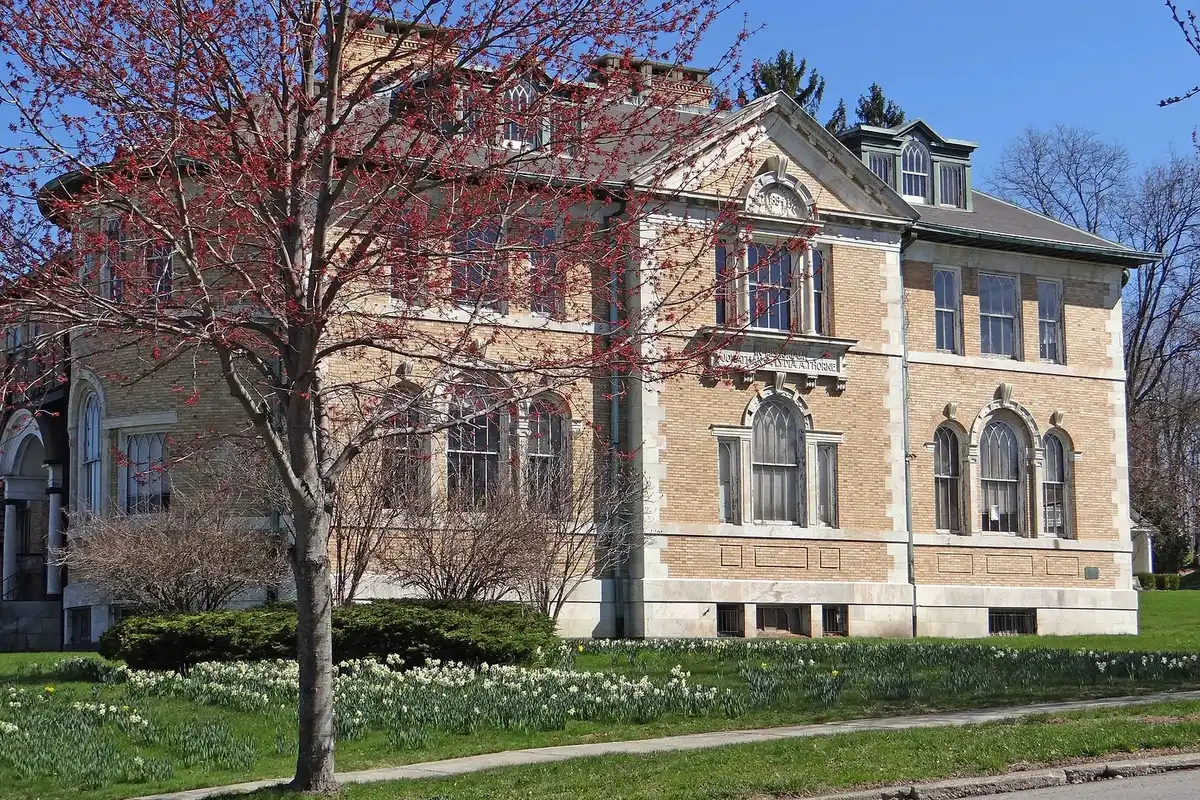
MILLBROOK — Planning Board members voted to close a public hearing for renovations to the historic Thorne Building on Franklin Avenue on Monday, April 20.
Planned renovations to the historic Thorne Building on Franklin Avenue would create a multi-use community arts center.
The public hearing phase for the project’s site plan approval began at the March 16 meeting held at the Millbrook firehouse and was continued to allow more time for residents to consider the plans and provide comment. The April 20 meeting was again held at the firehouse to accommodate expected attendance.
Architect Michael Sloan, principal at Sloan Architects of Millbrook, reviewed an adjustment to the site’s parking lot plan. The center aisle within the 56-space lot has been widened to 25 feet. The Franklin Avenue entrance will be one-way because the present curb cut is too narrow for two-way traffic. The driveway will exit onto Maple Street.
Sloan added that the intended uses of the building meet all provisions of current zoning law.
Planning Board Chairman Frank Redl asked the architect to provide details on usage and the potential impact of those uses.
One resident spoke to express concern on behalf of neighbors who may be impacted by parking, and also asked that corrections be made to the minutes of the previous meeting to address some inaccuracies. Another resident spoke in favor of the proposal for its potential to attract people to the village center.
“The building will not accommodate large events,” Sloan said, but the lawn area could be used for additional parking if multiple events are scheduled simultaneously.
The existing bandshell will be demolished, Sloan noted, and the playground will be moved closer to the church building for the convenience and safety of the children who use it.
The board closed the public hearing at the recommendation of consulting engineer Richard Rennia, clearing the way for the board to review the comments and the site plan at a future meeting.
Originally built as a K-12 school, the landmark building would be transformed into a space for the community to gather and create. The overall site plan envisions a rear addition to expand the stage, the improved parking lot, new exterior lighting, a front garden and the removal of the portico on the building’s east side.
Board members also closed a public hearing for plans to demolish and replace a residential building at 4 Merritt Ave.
The plans represent the second phase of construction at the Reardon Briggs property located at 3265 Franklin Ave.
The board closed the hearing following public comment from long-time residents who live close to the residence to be built. Board members are expected to review the site plan at their next meeting on Monday, May 18.
Representing the developer, engineers from Day Stokosa of Wappingers Falls summarized plans for the phased improvements that would demolish an existing single-family home and replace it with a newly-constructed two-family residence on the 0.66-acre lot.
The existing residence has a footprint of 630 square feet. The new residence, containing two two-bedroom units, would occupy a footprint of 1,347 square feet. The engineers indicated that the plans are consistent in appearance and concept with the business-zoned area.
During the public hearing, owners of the single-family century-old Merritt Avenue home adjacent to the proposed duplex expressed their opposition. The plan for the new residence, they said, would diminish their present quality of life, including access to light, sun, airflow and privacy, the latter due to the placement of windows.
“We love the area,” the owners said, asking that the design be modified.
“They are meeting all of the code requirements,” Redl said of the developers, but he continued by asking the developers whether they might mitigate the effects. One resident suggested that to achieve privacy, the new building might be swiveled to move its windows away from those of the neighbor.
The engineers reported that they have already reduced the plan by 500 square feet and lowered the height of the new building.
Although the public hearing was closed, residents are invited to submit written comments in advance of the May 18 meeting when the board will review the site plan.
Want more of our stories on Google? Click here to make us a Preferred Source.
Want more of our stories on Google? Click here to make us a Preferred Source.