There’s a bowl in my studio where pieces of the planet reside. I bring them home from travels, picking them up not for their beauty or distinction but for their provenance. I choose the ones that speak to me — the ones next to pyramids, along hiking trails, on city sidewalks or volcanic slopes.
I like how stones feel in my hand: weighty, grounding. I don’t mind them making my pockets and suitcase heavier. The bowl is about the size of an average carry-on. It has been years since it was light enough for me to lift.
They’re not specimens. I’m not a scientist comparing igneous with sedimentary, or metamorphic with minerals or meteorites. I don’t know slate from quartzite, or schist from basalt or gabbro. They aren’t memories either, because I can’t tell by looking at them where they’re from. They sit quietly beside me in whatever moment I’m occupying.
They’re not souvenirs from places, like coffee mugs or snow globes. They are the places themselves.
The planet has reorganized itself in my bowl. Melbourne nestles next to the Hebrides. The streets of Roma in Mexico City rub elbows with Vatican City, Rome. Eastern Tibet sits on top of Machu Picchu; New Delhi is now close to Detroit. Cappadocia has finally met Capri. Mustique knows Morocco, and they both lie on the beaches of southern France.
These stones have witnessed the fall of civilizations, the birth and death of infinite beings, tectonic upheavals and the creative destruction of fire and ice.
Who touched them before me? Inca, Maya, Trojans? Warriors, slaves or yaks? Blue-footed boobies in the Galápagos or a slithering Costa Rican fer-de-lance? Was one of them used to stone a blasphemer in ancient Greece?
It’s not as if the place where I live needs more stones. In New England we’ve been blessed with an imposing population of glacial erratics — characters dragged here by the last Ice Age and left to sit silently in the woods for the past 16,000 years. The stones themselves, I’ve learned, are more than a billion years old.
The most ancient rocks known to us are more than four billion years old. Others are practically new, formed continually as tectonic plates shift along seabeds or lava cools along volcanic slopes. And while individual rocks vary wildly in age, the substance of rocks — atoms of silicon, oxygen and iron —is far older than the Earth itself, forged in ancient stars before our Milky Way existed.
Perhaps my bowl is filled with stars.
I recently stood before an exhibit of Aboriginal art called “The Stars We Do Not See.”The artists are descendants of the oldest continuous civilization on Earth, at 350,000 years. Their past is not distant or inaccessible to them; they understand time as a cycle and live in relationship with everything on earth and sky, including stones.
The title of the show was inspired by the late Yolŋu artist Gulumbu Yunupingu, who painted the night sky on bark. She spoke about the “stars behind the stars” — all there is to learn and appreciate beyond what we can see.
Deep in the woods on the hill above our house in Norfolk sits a giant marshmallow-shaped rock, one of the billion-year-old ones. At some point, someone leaned a ladder against it — a standing invitation to a new perspective.
How can we know the things that are invisible, the stars behind the stars? How can we feel connected to what came before us and sits silently around us, too slow for our impatient eyes to see?
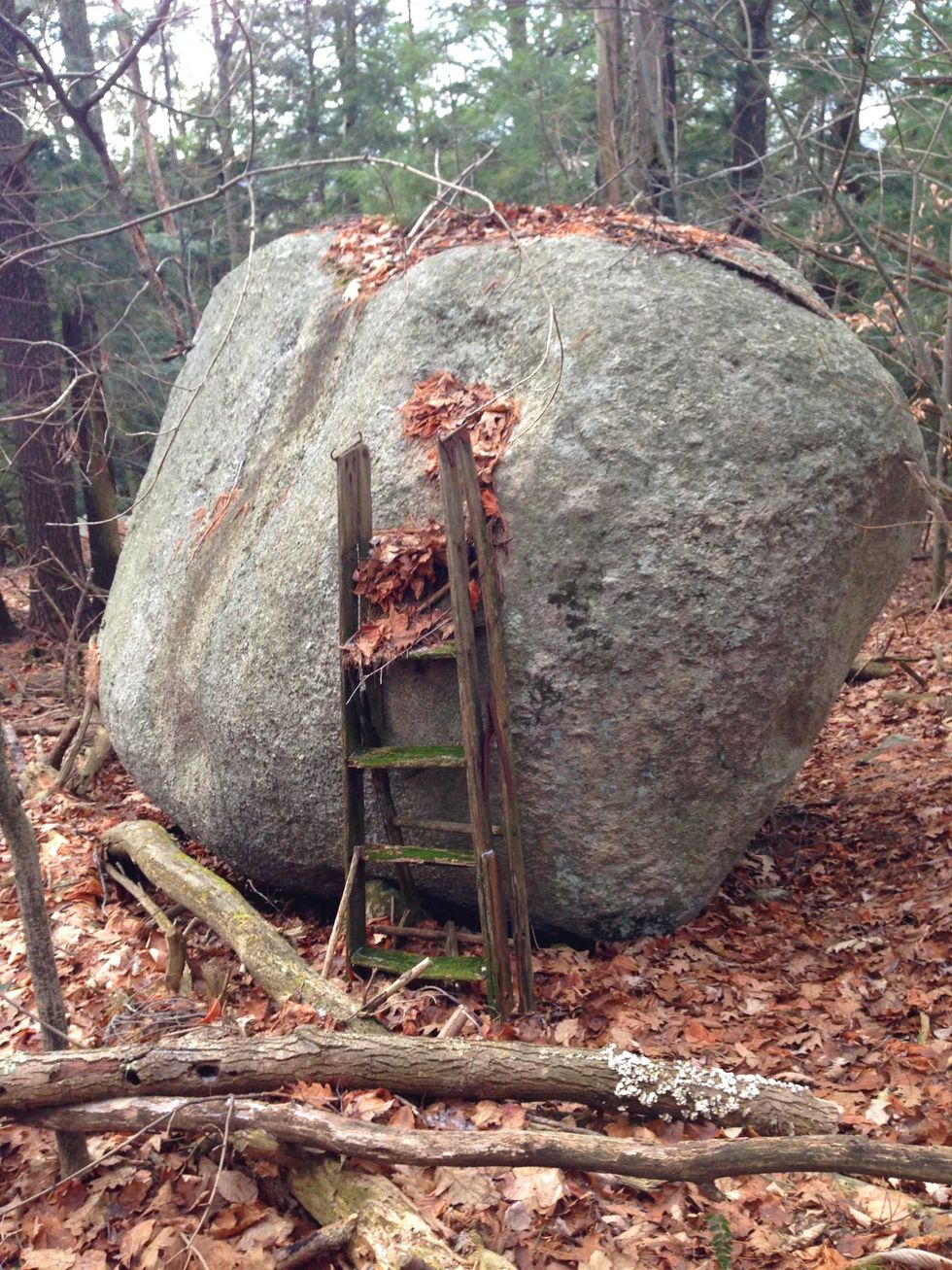 A rock with a ladder.Cheryl Heller
Every once in a while, someone leans a ladder against a rock so we can’t miss it. Most of the time, we’re on our own.
I sometimes joke with my younger sister that when I die, she and our nieces can divide up whatever I leave behind, including the handbag she has had her eye on for years. But who will see and care about a bowl of rocks too heavy to lift and too silent about their value to be appreciated?
This is for you, Lynn, Stacey, Katie and Rose.
I hope you keep the planet in my bowl together.
It might be, after all, my small and only lasting intervention in the world.
Cheryl Heller is a designer, educator and business strategist who pioneered the field of social design and founded the first social design MFA program at the School of Visual Arts. She lives in Norfolk.


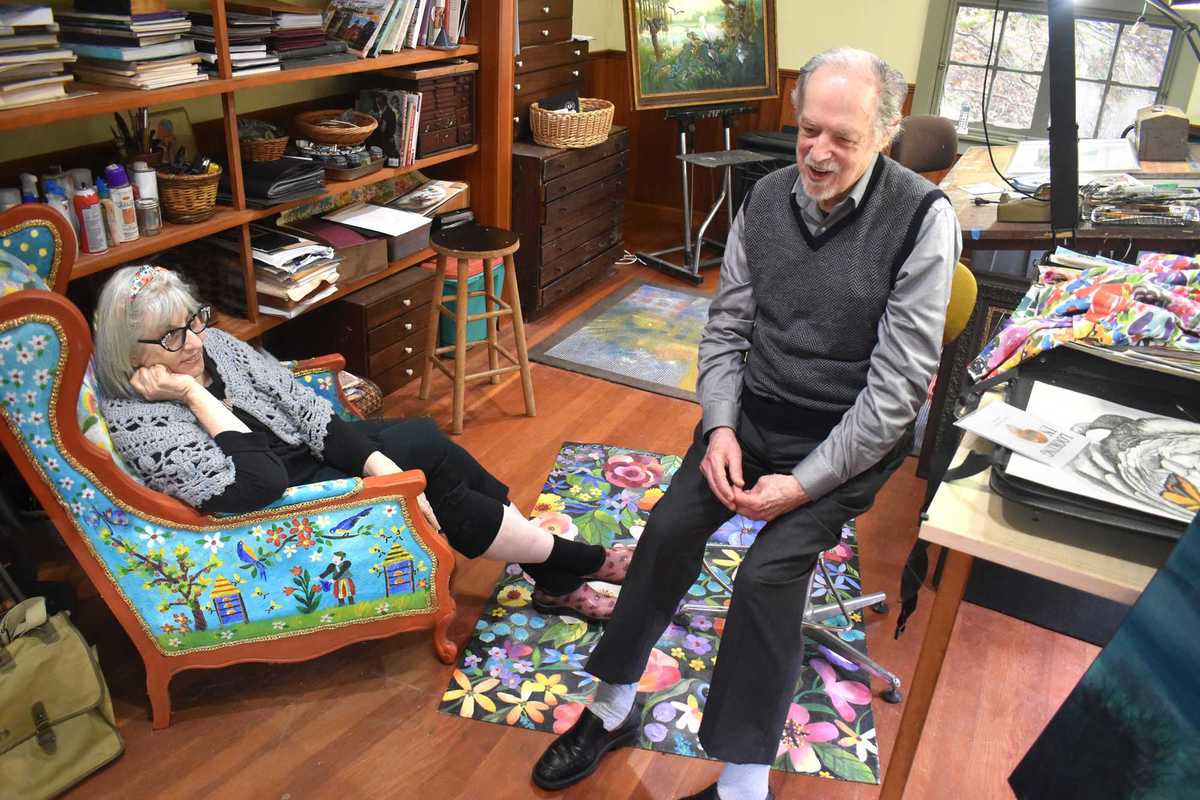
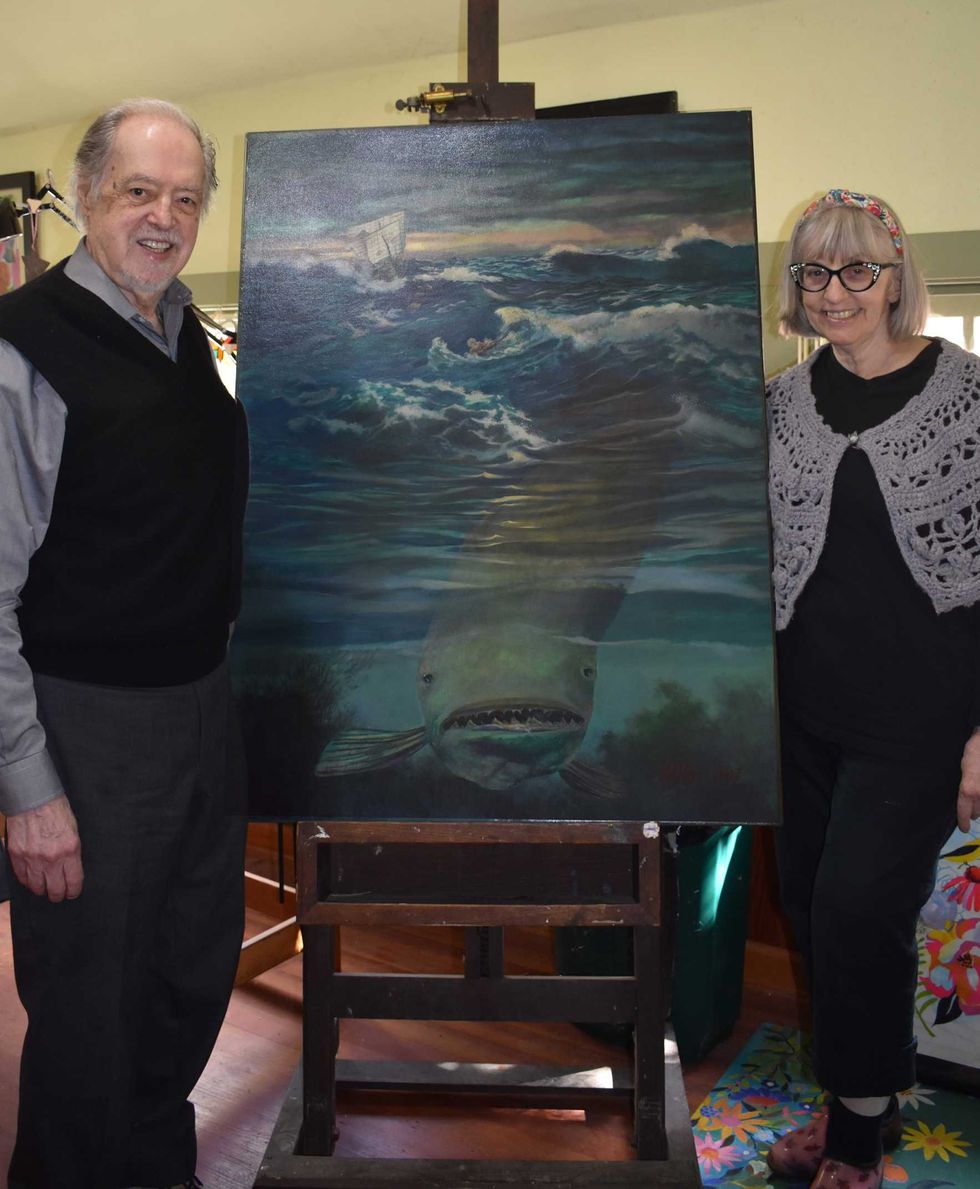 Justine and Victor Valla in their studio with a painting of Victor’s,”Jonah and the Whale.” Robin Roraback