Theodore R. Kneeland


MILLERTON — The world lost an exceptional educator and all-around good guy when Theodore (Ted) R. Kneeland passed away at the Sharon Center for Health and Rehabilitation on Sept. 5, 2025, following a three-decade-long battle with heart disease.
Born May 14, 1947, in Buffalo, New York, Ted always credited his parents, Eleanor Sengpiel Kneeland and Theodore R. Kneeland Sr., for sending him to Cheverus High School in Portland, Maine, where as a scholar-athlete he played all the classic sports, was a member of the 1965 New England championship debating team, and learned to love learning and ideas.
Inspired by football superstar Jim Brown, Ted attended Syracuse University where “across a crowded room” of some 2,000 freshmen, he first spotted the love of his life, partner in all things, and adoring wife, Carol.
Following graduation in 1969, they married in a candlelight ceremony. The romance continued for one day short of 56 years with flowers, candy, mutual respect, a loving family, and a conversation that never ended.
The teacher whom students nicknamed “Zeus” spent three years teaching at Mercersburg Academy in Pennsylvania before beginning a 29-year career at Trinity-Pawling School in Pawling, New York. There, frustrated by his inability to reach a few students whom he knew had potential, he followed the suggestion of Headmaster Philips Smith and Dean of Faculty John Lloyd Owen and began to search for answers to the problem.
The quest quickly resulted in his development of the innovative Language Retraining Program, designed to help bright dyslexic students reach their full potential as they learned to read, write, and think.
At a time when few believed those students could be taught, Ted followed his credo of “Just Take Care of the Kids,” freely sharing the program throughout the country and with educators who came to the school from as far away as Hong Kong and the British Isles.
Early on, an IBM executive grateful for the help Ted had given to his son, arranged for the school to receive one of the first six Local Area Networks in the country. Ted was designated an IBM fellow, brainstorming monthly with developers on ways in which computers could facilitate education and aid in reading and writing.
Zeus was polyonymously known as “Boomer,” as his prowess on the faculty softball team was as impressive as in the classroom. He loved mentoring young colleagues and believed that every encounter on campus was a teachable opportunity.
Bridging the Town/Gown Divide, Ted retired as coach of his New England championship golf team to volunteer for his son’s teams at Brewster’s Melrose School and in Pawling. During his summers on the shores of Lake Champlain in Shoreham, Vermont, he volunteered for Hook Kids on Golf, providing instruction and handmade clubs for area youngsters.
In his early 50s, Ted was diagnosed with potentially deadly heart problems. He was lucky enough to receive a newly developed treatment from Dr. Harvey Kramer of Southbury, Connecticut, who was and continues to be a firm believer in the importance of keeping up with the latest advances in the field.
Despite his challenges, Ted continued to teach, returning in 2001 to his family’s ancestral home in “hardscrabble Maine,” where he spent 11 years at Fryeburg Academy as Dean of Faculty and Director of Studies with his brother in education, Headmaster Daniel Lee. They cut the dropout rate to “nearly nothing,” raising the number of students who progressed to “the next level” to “nearly everyone,” with many students becoming the first in their families to attend college — most on scholarship.
Ted coordinated with faculty at the middle school in order to better prepare students for The Academy’s challenging program, which he strengthened with the addition of multiple Advanced Placement (AP) classes.
Again “Taking Care of the Kids,” this lifelong educator collaborated with Maine community colleges, actively promoted the idea of free tuition, and arranged for students to take courses and get a jumpstart on credits while still at The Academy.
His health declining, Ted was given a dire prognosis. But good fortune once again intervened, taking him to the Cleveland Clinic — the number one heart hospital in the world. There he was treated by top physicians Walid Saliba and Randall Starling.
Coincidentally, Starling helped author the lifesaving paper that prompted Dr. Kramer’s treatment many years earlier.
Against all odds, the cutting-edge treatments in Cleveland brought Ted two dozen more years as he courageously volunteered as a guinea pig for experimental procedures that have since helped others all over the world.
With all he did, Ted’s first priority was always his family. When Carol was incapacitated by a drunk driver, Ted expanded his Daddy Duties to include everything from gourmet PB & J’s to puddle-jumping lessons, forming an unbreakable bond with their toddler son, Douglas. For the next four years, Ted helped Carol navigated the then non-handicap-accessible world, ensuring that she could freely enjoy life and that they could continue teaching as a team.
When the two retired from Maine in 2012, they moved to Millerton to be close to their expanding family. There, Ted wrote the column “Bleacher Views” for The Millerton News and cheered on Hotchkiss teams coached by his beloved son, best friend, golf buddy and Latin mentor, Doug.
He treasured time with his deeply cherished grandsons, Teddy and Henry Kneeland, who brought a bright light to his world as he listened to their adventures, ate their Play Doh spaghetti, and watched proudly as they developed into thoughtful and loving young men. Helping Teddy to design a first baseman’s mitt as he moved into that legacy position and meeting the challenge of keeping up with Henry’s chess prowess gave him immeasurable joy.
Ted also loved and is survived by his dear sister-in-law, Karen Carson of Medina, Ohio; his niece Leslie Putnam of New York; his niece Holly and her husband Edward Tasz of Burgettstown, Pennsylvania; and his nephews, Eddie and Connor Tasz, also of Burgettstown.
He was predeceased by his parents, his brother, William Kneeland, and his brother-in-law and good friend, Curtis Carson.
Ted’s life will be among those celebrated at the Alumni Weekend Memorial Service on Oct. 4 at Trinity Pawling.
In all, Ted was grateful for a life well lived and for all of those who enriched and enabled it. Should you choose to, he would be delighted to know that you would, in whatever way possible, be “Taking Care of the Kids.”
Kenny Funeral Home is in charge of arrangements.
Graham Corrigan
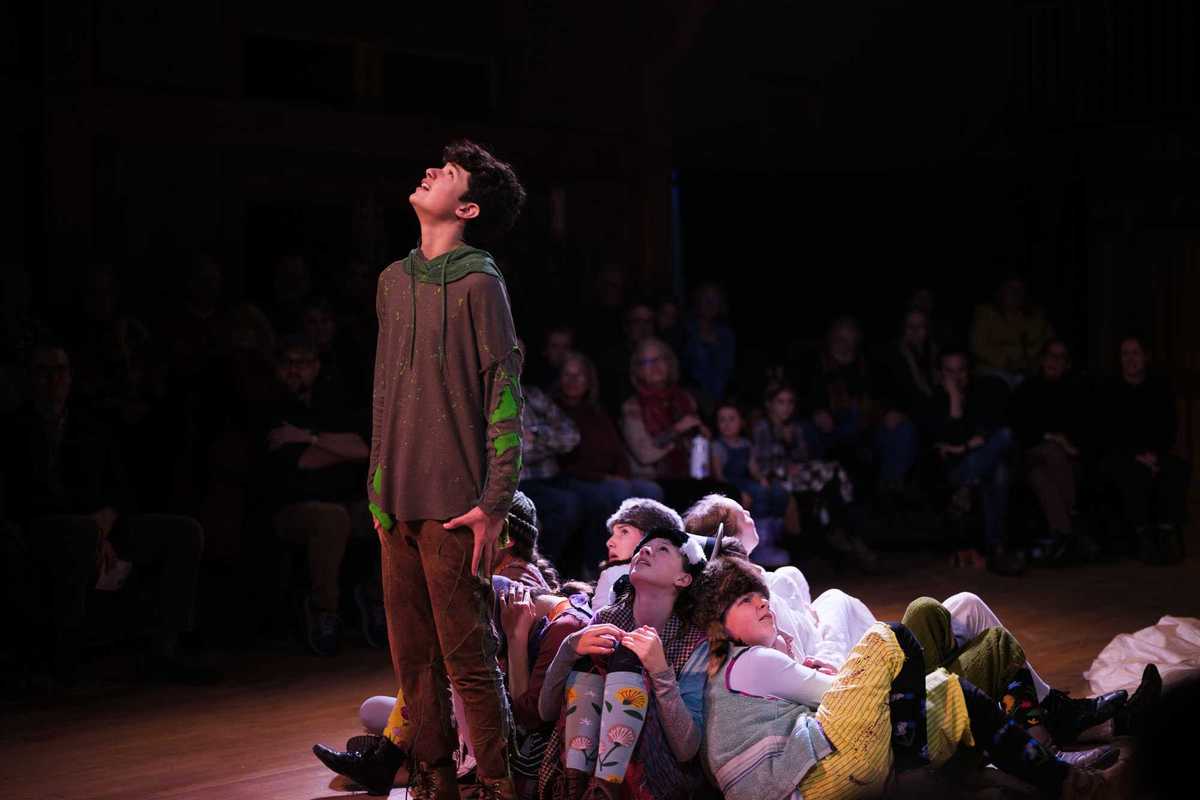
Ivan Howe, 13, performs as Peter Pan at the Sharon Playhouse in Sharon, Connecticut. Howe began his acting career on stage at the Playhouse in “Oliver!” in 2023 and has since performed on stage and even taken a supporting role in the Netflix miniseries “Eric” starring British actor Benedict Cumberbatch.
MILLBROOK — Ivan Howe’s acting career might be growing faster than he is.
In 2023, the Indian Mountain School student and Millbrook native landed his first title role in Sharon Playhouse’s production of “Oliver!” Three years later, he’s about to start high school having shared the screen with Marvel superheroes.
In addition to multiple performances on stage, the 13-year-old rising freshman has already logged a credit on a Netflix show — a 2024 miniseries starring Benedict Cumberbatch called “Eric.”
It didn’t happen by design — Howe’s parents are educators, and his older siblings had other interests. It was a trip to the Playhouse that originally sparked the idea of acting. “I wanted to be an actor because my best friend acted in plays,” Howe said. “I thought that was the coolest thing ever.”
Ivan’s parents Jeni and Jonathan were supportive of the idea. Jonathan had acted in college, and Sharon Playhouse provided a great place to learn. A role in “Elf Jr.” was Ivan’s first role, and “Oliver!” happened soon after. “The Sharon Playhouse is where I found my feet as an actor,” Howe said. “I did my first show there, and I’ve met so many friends and mentors there.”
Ivan’s optimistic perspective may have landed him big roles, but onscreen, he’s become known for something quite different. With dark curly hair and a quiet, commanding presence, he’s often been cast as the brooding, troubled character.
That’s especially true in “Eric,” the 2024 Netflix series that introduced Howe to a much larger audience. He plays Edgar, the son of troubled parents who disappears mysteriously in the streets of New York City. “Edgar wasn’t necessarily a bright and cheerful character,” Howe said, “and I really like characters like that. It would be fun to be in a comedy, but I like the characters who have more depth.”
The series was filmed in Budapest and co-stars Gabby Hoffman and Benedict Cumberbatch, who Ivan idolized from his role as Dr. Strange in the Marvel movies. “I’m obsessed with all things Marvel,” he says, and relished the opportunity to talk shop with one of its tentpole characters. Cumberbatch is a professed fan of the original comic books, too, and by the end of shooting “Eric,” the two actors were sharing meals at a local Hungarian restaurant near the set.
“It was amazing to see all these professional actors, like Gabby and Benedict, in their environment,” he said. “It was a big inspiration for me.”
The cameras represented a big change for Howe, whose previous acting experience had mostly been onstage. The scale of a major Netflix production required him to adapt quickly.
“I was the only kid on set,” Howe said. “It taught me that it’s really a professional workplace, and I learned how to tune out everything except for the scene.”
Easier said than done — especially compared to the live energy of a stage. “In theater, you just have to go with it…but with screen, you have the chance to adjust things.”
After the success of “Eric,” Howe returned to the stage. He played two lead roles: Josh Baskin in “Big” at Sheldrake’s Stagedoor Manor, then returned to the Sharon Playhouse stage as Peter Pan. He’ll be performing in “The Saviors” at the Atlantic Theater Company before starting high school in the fall. In between rehearsals, Howe likes to volunteer at the Trevor Zoo.
As for advice for other aspiring actors — Howe said that feeling uncomfortable is a sign you’re headed in the right direction.
“The hardest part of acting, to me, can be feeling self-conscious,” he said. “Sometimes I can feel myself not acting to the fullest because of thatbarrier. But when I finally do, it’s so much easier. Fight your way into whatever you want to do.”
Graham Corrigan
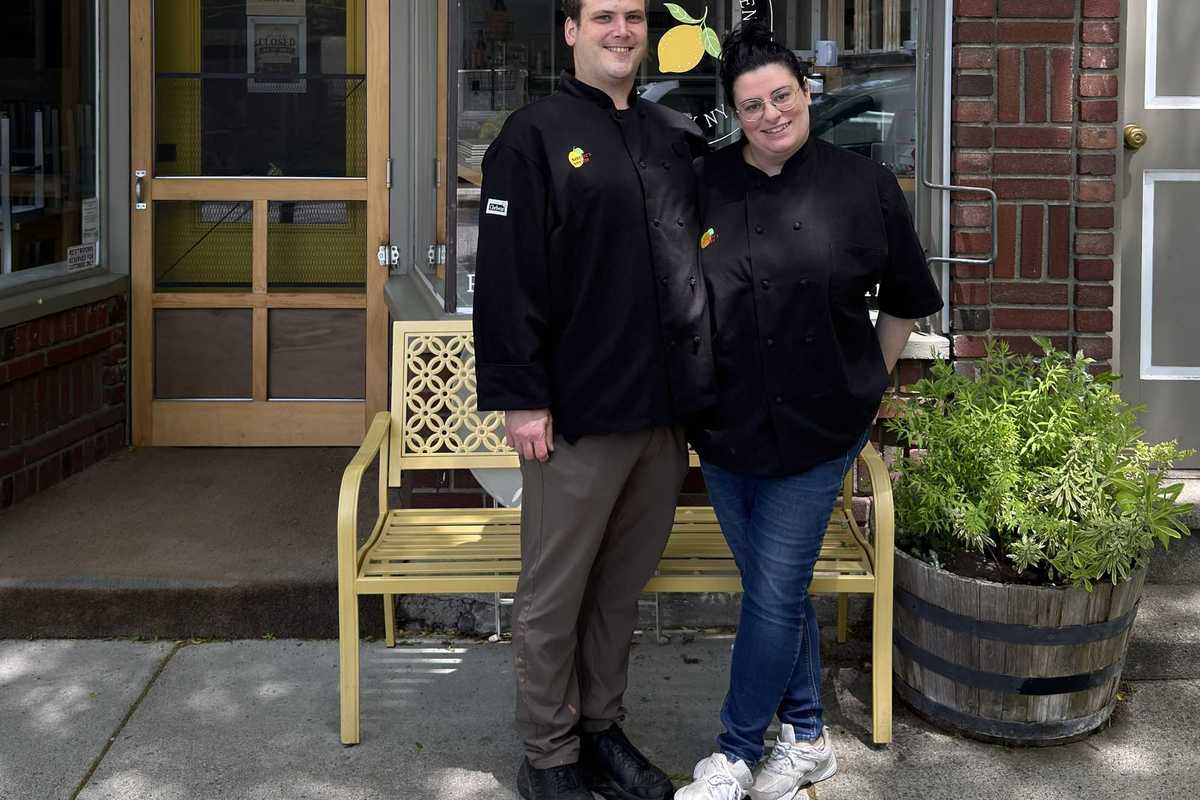
Jennifer Burgen, right, and Michael Burgen now own Babette’s Kitchen on Franklin Avenue in Millbrook. The duo have worked at the shop since 2024.
MILLBROOK — A local eatery that has operated on Millbrook’s Franklin Avenue for more than 20 years is changing ownership.
The new owners at Babette’s Kitchen are two longtime employees. Jennifer Burgen, who has worked at Babette’s for the last three years, and Michael Burgen, who joined the kitchen in December 2024, took over earlier this month. Michael had previously been a general manager at Fern in Lakeville.
The couple has long dreamed of running their own restaurant, so when Babette’s co-founders Buffy Arbogast and Beth Daidone expressed a desire to find new owners, the Burgens jumped at the chance.
“We’re excited to continue the legacy that Beth and Buffy started,” said Jennifer Burgen. “We like to say that they kept it in the family.”
For 22 years, Babette’s Kitchen has been a Millbrook staple for coffee, breakfast, lunch and catering. With an emphasis on local produce and a menu sourced from nearby farms, Babette’s has gained regional acclaim for its inventive menu and extensive pastry offerings. Their buttermilk biscuits, frittatas, and seasonal rotations have made the 20-seat café a weekend favorite for locals and weekenders alike.
Like Babette’s founders, the Burgens graduated from the Culinary Institute of America, a culinary school based in Hyde Park. When Babette’s founder Arbogast attended in 2004, she was at the forefront of a gastronomic migration.
The Burgens are part of the second wave, and are committed to keeping Babette’s core menu intact. “We’re not doing any changes for the first couple of years, but in the long term, we’d love to bring some family recipes out,” Burgen said. “My grandmother was a great cook, and Mike’s grandmother was an amazing baker.”
Michael Burgen was raised in the Buffalo area, and he’s looking forward to bringing some of the flavors of Western New York to Babette’s. “There’s a great little food scene up there,” Michael Burgen said. “But a lot of the items are very regional. You don’t really see them in other parts of the state. It’ll be fun to see people experience that.” That will eventually include Buffalo wings during football season, and Beef on Weck, a Buffalo classic that features thinly sliced roast beef on a kummelweck roll with horseradish and caraway seeds.
In the meantime, however, the Burgens are running the kitchen Beth and Buffy have perfected over two decades with little change.
“They’ve built such a great place,” says Michael Burgen, “and it has such a loyal following.” Michael has spent much of the last 18 months learning the ins and outs at Beth’s elbow: her flavors, her systems, and her kitchen space. “Every kitchen is different,” he said. “So her showing me her ways of operating with the equipment was a big part of the production. It takes a lot of the guesswork out.”
For their part, the now-previous owners of Babette’s feel like they’ve found the right team to continue their legacy. In a message posted earlier this week, Arbogast said the Burgens “are the perfect pair to keep Babette’s true to its roots, but to move it forward with fresh bright ideas.”
Millerton News
CANAAN — Anita L. (King) Gochey, 85, of 77 South Canaan Rd. died June 5, 2026, at Geer Village. She was the wife of the late Lester Gochey. Anita was born July 16, 1940,in Winsted, daughter of the late Ivan and Irene (Dulude) King.
Anita was well known throughout the Northwest Corner. She worked for many local businesses and organizations. Anita worked at the Rexall Drug Store, C.A. Lindell and Sons, Bob’s Clothing, Brooks Pharmacy, and the Housatonic Valley Regional High School in the cafeteria.She used her skills in calligraphy to complete the record books for the North Canaan Congregational Church.Anita’s daughter remembers her as being very creative with cardboard, and a loving mom.
Anita is survived by her son Raymond Gochey and his fiancee’ Chris Filkins of Hinsdale, Massachusetts; and her daughter Michele O’Brien of Sharon. She is also survived by her sister Denise Warner of Torrington and her brother Arthur King of Danbury. Her three grandchildren, Kyle Gochey of Pittsfield, Massachusetts, Cody O’Brien of Georgia, and Sabrina O’Brien of Falls Village. Anita was predeceased by her brother, Martin King.
A Celebration of Anita’s life will be held on Saturday June 20, 2026, at 2:00 p.m. in the Newkirk-Palmer Funeral Home 118 Main St. Canaan, CT 06018.

Want more of our stories on Google? Click here to make us a Preferred Source.
Nathan Miller
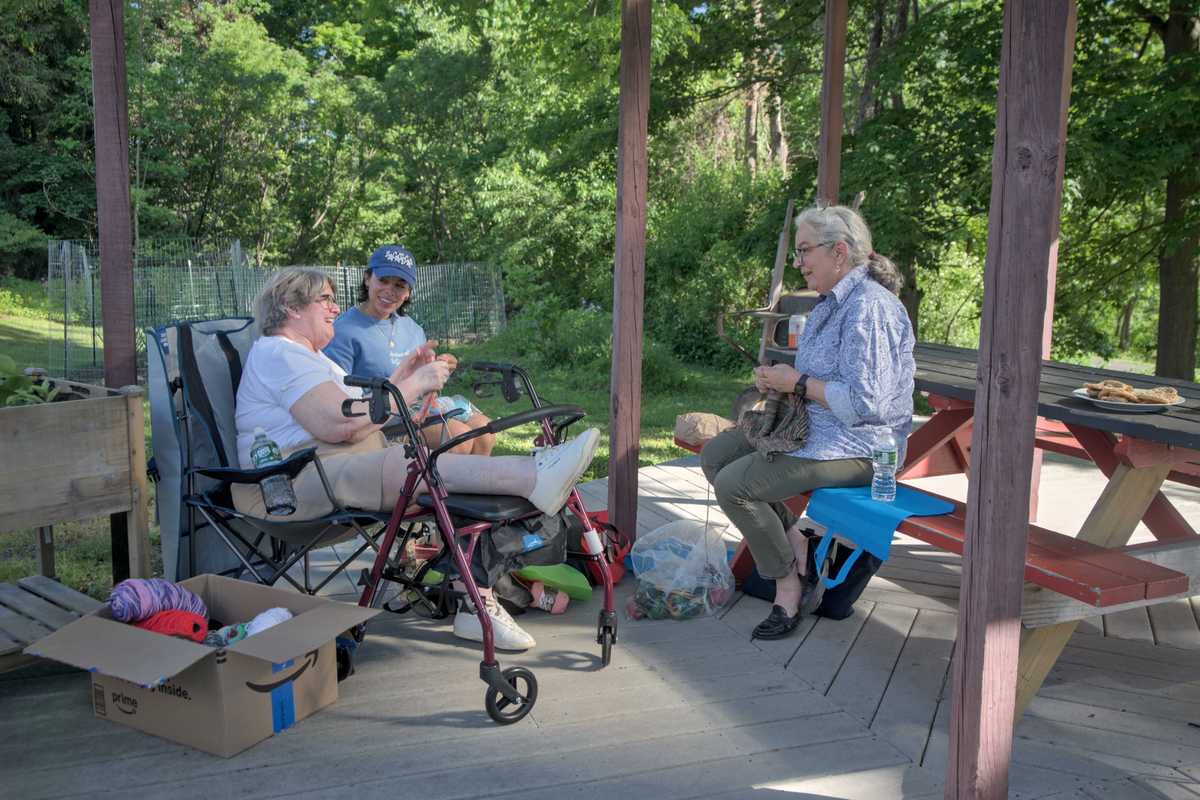
Carol Kneeland, left, Cyndhia Valle, center, and Irene Banning knit together on North East Community Center’s back porch during the first “Community Porch Party” on Wednesday, June 3.
MILLERTON — A new pilot program at the North East Community Center aims to bring in community members for chill hangs at the nonprofit’s office on South Center Street this summer.
The weekly “Community Porch Party” is an evolution of senior administrative assistant Ash Baldwin’s “Craft Collective,” which invited community members to enjoy a group crafting session where participants were encouraged to bring individual projects, swap tips and be together. The gathering on Wednesday, June 3, and the preceding “Craft Collective” meetings are part of a broader effort to provide accessible, community-building programming.
The pilot program is set to run every Wednesday through the end of July.
NECC board chair and interim Executive Director Irene Banning joined Baldwin along with Millerton resident Carol Kneeland and Pine Plains resident Cyndhia Valle at the program’s opening night. Kneeland brought enough knitting needles and yarn to go around, and taught Valle how to get started making a knitted square.
“She’s a total pro of 40 minutes,” Kneeland said, knitting needles in hand.
Banning said the community center is working to return to a former status as a community hub. She remembered the COVID-19 pandemic as a turning point for the organization, when it shifted to providing crisis management programs such as its food pantry and housing assistance.
While those programs are still important to NECC’s mission, Banning said, community building is equally so.
She recalled needing an outlet for social interaction when her son moved away from her home, prompting her to find a knitting group based out of Pine Plains.
“One day I just picked up my knitting and I decided to go,” Banning said. “It’s been a fabulous thing.”
The “Community Porch Party” is less focused on the crafting, and instead on just providing an opportunity for people to enjoy a nice yard and a chat with fellow community members. Baldwin and Banning assembled sweet treats and snacks for people to eat, and crafters are encouraged to bring a project but it’s not required.
The effort stems from a recognition that social interaction can be difficult to come by in northeast Dutchess County.
“It’s so hostile out there, and you always have to be careful about what you say or what you don’t say,” Banning said. “Just to have a place where that doesn’t matter is really nice.”
NECC’s “Community Porch Party” is set for Wednesdays from 3 p.m. to 5:30 through July 29.
Graham Corrigan
PINE PLAINS — Community Day returns to Pine Plains on June 13, reviving a tradition last celebrated in 2023 during the town’s bicentennial celebration.
The event’s return has been spearheaded by an ad hoc group of residents led by Lenora Champagne, Jeanne Valentine-Chase, Lisa Agnelli, Joan Taylor, Helene Marsh and others.
Champagne and Valentine-Chase, who are on the town’s Beautification Committee, said they recruited volunteers to help organize it, realizing that Community Day is a big undertaking. “It was clearly a bigger project than what that committee could take on,” said Champagne. “So we turned to people who’d been involved in previous Community Days.”
The community was up to the task. Some of the entertainment will be familiar: live music will fill the air, local businesses and nonprofits will set up booths along Main Street, and the Graham-Brush House will host fiddlers and reenactments.
New additions to Community Day abound, too: a 31-vendor market will set up shop by the Catholic church on Poplar and Church Street. The market will host makers offering sourdough bread, artisanal jewelry, and everything in between. The Pines, a historic Victorian inn on Maple Street, will open its doors for tours as well.
This year’s Community Day is also offering an eye-popping amount of complimentary experiences, for kids and adults alike. First there’s a free breakfast hosted by Pine Plains Fire Company. Free raffle tickets are on offer, with the chance to win prizes like gift certificates to local businesses like Chaseholm Farm and Factory Lane Automotive — or fruit trees donated by Full Circus Farm. There’s a free scavenger hunt to work up an appetite, and free lunch from local restaurants to sate it — all chased down with a postprandial stroll through the free corn maze.
“There ought to be something of interest for everyone,” Champagne said. “We’re really curious to see what people enjoy.”
Town Councilwoman Jeanine Sisco is the group’s liaison to the town. She’ll also be the one “collecting garbage and schlepping benches.”
“We did Community Day for years,” Sisco said. “But sometimes people just didn’t step up. We’re hoping this will be the start of doing it every year.”
The goal, Sisco says, is to bring people in to town. All the people: generational locals and weekenders alike. “We want to bring all those folks into a united venue to get to know what’s going on in town, and revitalize the spirit of community.”
Leila Hawken
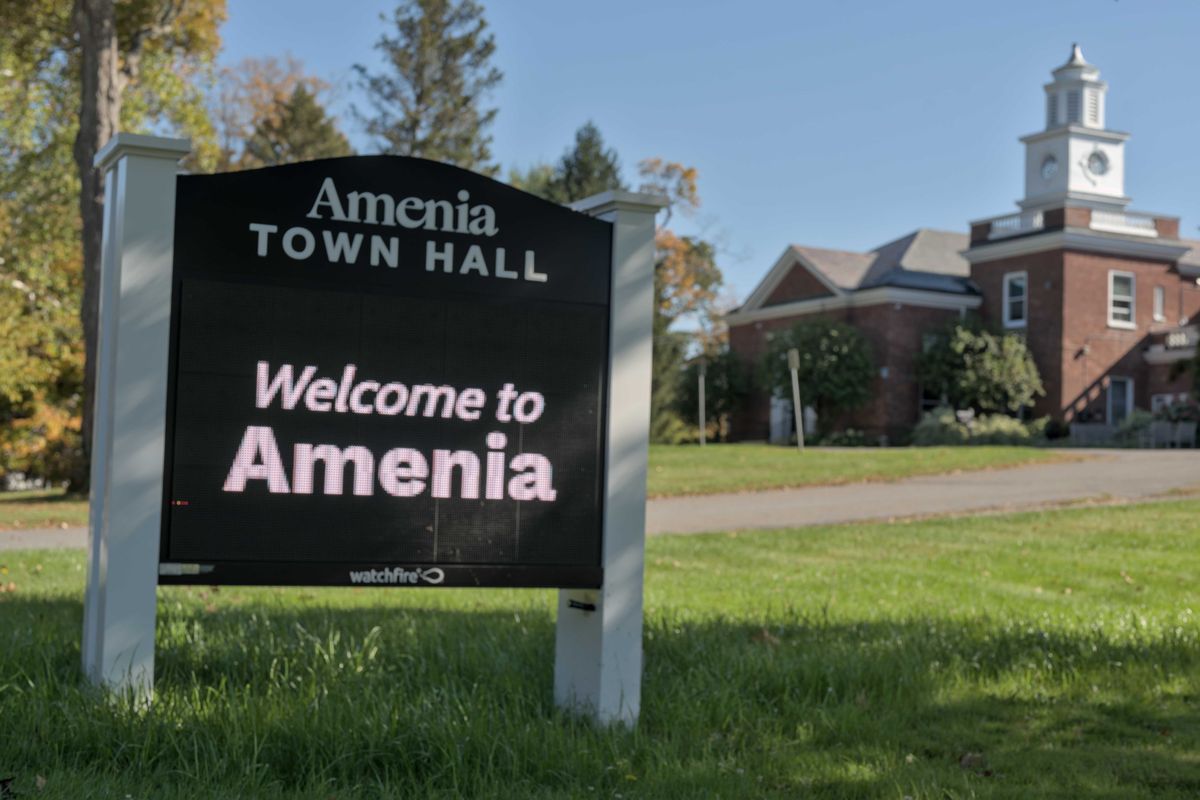
AMENIA — The Water Committee is exploring options to allow municipal water customers to pay their bills online and by credit card.
Responding to customer interest in additional payment options, the committee discussed potential billing software upgrades during its regular meeting Wednesday, June 3.
Town Billing Clerk Nancy Nowak presented information from Muni-Link of Bellwood, Pennsylvania, a cloud-based billing company that serves municipal utilities.
“This software is so much better,” Nowak said. “It is similar to what we have now, but it’s easier.”She added that the company works with four credit card processors.
Initial set-up cost for the system is estimated at $12,000, Nowak said, with an additional monthly charge of $650. Current administration costs for billing stands at $138 monthly for the town.
“But you would be getting twice as much service,” said Water Committee chairman Bill Flood, comparing the proposed streamlined billing system to the present one.
Nowak had explained that the current system provides limited account management capability, leaving much input to be done by hand. She reported also that over the years, customers have asked for the convenience of emailed billing and on-line payment.
For those water district customers who lack computer capability or who prefer to pay in person, there would still be the option for mailed billing.
The committee agreed to continue to explore the option, gathering additional information, before presenting a proposal to the Town Board.
In other discussion, Flood announced that the prefabricated pump house building is expected to be installed at the Lavelle Road site in the fall. The foundation is ready to accept the new structure.
A program to replace non-working water meters is progressing with VRI Environmental Services, the town’s water operator, having sent out 20 postcard notices. In response so far, 13 meters have been replaced.
In final action, the Water Committee agreed to meet quarterly, rather than the current monthly schedule. Special meetings will be scheduled as needed.
Want more of our stories on Google? Click here to make us a Preferred Source.
Want more of our stories on Google? Click here to make us a Preferred Source.