Governor Hochul implements temporary statewide burn ban

The LED sign in front of Amenia's Town Hall on Route 22 warns passing motorists of the current temporary burn ban, in effect from Oct. 2 to Oct. 15.
Photo by Nathan Miller

The LED sign in front of Amenia's Town Hall on Route 22 warns passing motorists of the current temporary burn ban, in effect from Oct. 2 to Oct. 15.
A statewide burn ban is in effect as of Thursday, Oct. 2, the New York State Governor's office announced in a press release.
The temporary ban is in effect until at least Oct. 15, and the statement released by the governor's office said the restrictions will be re-evaluated prior to the Oct. 15 deadline.
Lighting fires for brush or debris disposal and large, uncontained fires for cooking or other purposes are banned until at least Oct. 15 under the statewide order. Backyard fire pits, contained camp fires no larger than 3 feet in height and 4 feet in diameter, and small, contained cooking fires are still permitted under the burn ban.
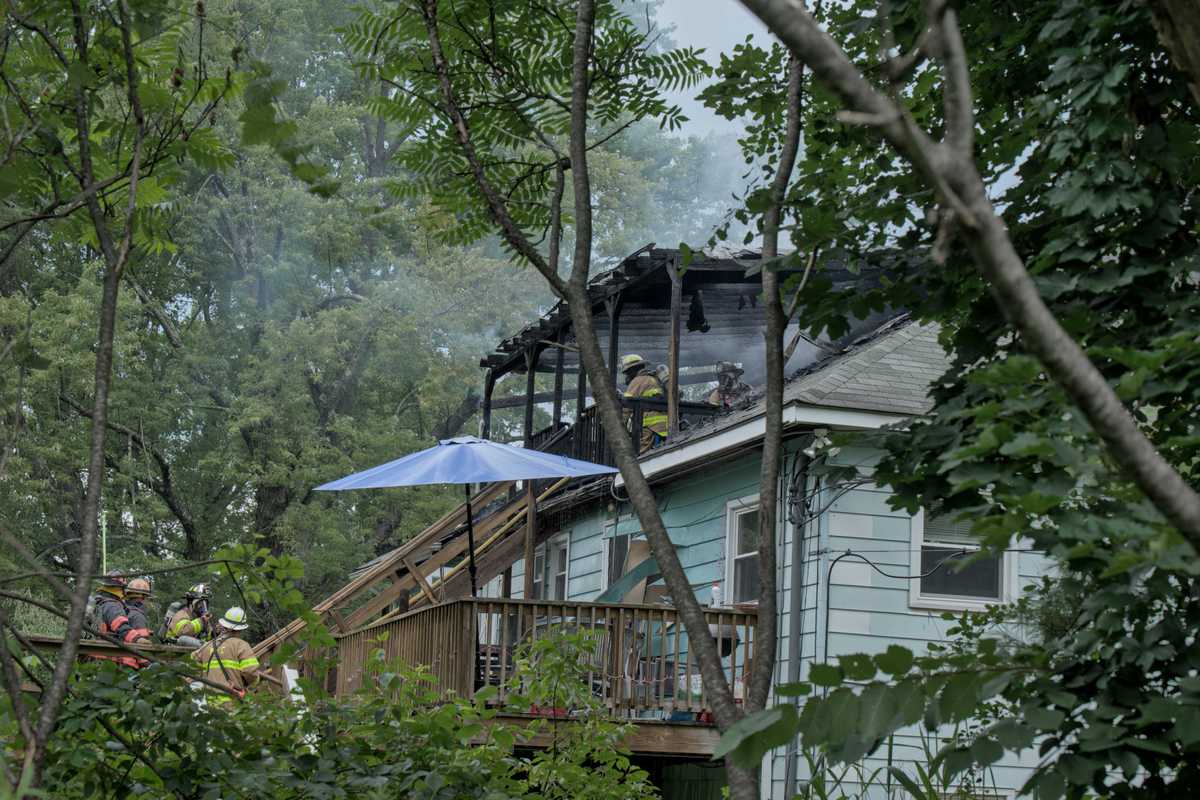
New York State has faced dry conditions all autumn, triggering drought watches and warnings across most of the state.
Dutchess County, along with the other counties in the Catskills region, are under a drought watch according to the Department of Environmental Conservation's drought condition map.
Dutchess County is currently under a "high" fire danger rating, according to the DEC.
Graham Corrigan
Carol Jimenez, left, and Alexa North explain their roles on the marketing team for Stissing Mountain High School’s racecar build team at a car show at the high school on Saturday, May 9.
PINE PLAINS — High school students showed off their engineering skills Saturday, May 9, showcasing a Mark 5 Shelby Cobra they built over the course of the school year.
The car was the end product of Pine Plains High School students’ participation in the Winner’s Circle Project. It’s the school’s first time as part of the yearly project, which began in 2019 as a way for high schoolers to get hands-on experience in STEM.
A shipment of parts and a fiber glass body was delivered to the school in September. Since then, a team of 25 students helped to build the car under the supervision of Jim Benincasa, a former math teacher at the school. A total of 17 of them are responsible for the build, while eight others handle marketing and graphic design under the direction of humanities teacher Jennifer Blackburn.
“I thought there was no way we would do this kind of program,” Benincasa said. “And a week later the principal came and said, ‘Do you want to do this?’”
Over the course of the class, the students had the opportunity to tour some professional racing labs: Factory Five in Massachusetts — which manufactures build-it-yourself component car kits — and Dyson Racing Team’s headquarters in Poughkeepsie among them.
“It helped me think about what I want to do in the future,” said Eben Dedrick, one of the participating students. “Now, I want to go into mechanical engineering. I worked on getting the pedals adjusted, and tuning the car — getting the wheels in the right spot.”
“A lot of classes in our school aren’t very hands-on,” said Alexa North, a student who worked on the marketing side. “This felt a lot closer to what I’m actually going to do.”
Her fellow marketer Carol Jiminez agrees. “When we tell people about it, everyone says, ‘I wish I had a class like that in high school.”
Local businesses got in on the act, too. Pine Plains Auto Body visited the school to help out with the car’s body work. Wheels of Time, a local vintage restoration auto company, lent a hand with the interiors. “I was blown away by the support,” Benincasa said. “And the kids are really into it too.”
The rubber meets the road next week: on May 19, Stissing High’s Cobra will travel to Lime Rock, where a professional driver will take the car through its paces. A few days later on May 22, the Cobra will compete against six other area schools participating in the Winner’s Circle Project. The cars will be judged by Dyson Racing pros in performance, marketing, and overall design.
Nathan Miller
Crews finish renovations at Veterans Park by spraying dirt off the new pavers and sidewalk in downtown Millerton on Thursday, May 7.
MILLERTON — Landscaping crews put the finishing touches on upgrades to Veterans Park in downtown Millerton on Thursday, May 7.
Workers had removed the temporary fencing and were spraying dirt off the brand new pavement Thursday afternoon. Scape-Tech Landscaping Technologies began the work on Monday, April 20, and predicted the work would be completed within two to three weeks.
Millerton Mayor Jenn Najdek praised the work, saying Scape-Tech's crews previously renovated Millerton's sidewalks.
"They're fast, efficient and easy to work with," Najdek said.
Renovations to the park included new brick pavers, replacement of a portion of sidewalk through the park, and replacing asphalt paving. Crews also power-washed the stone walls in the park.
Najdek said the work is mostly complete. The park now just needs grass to grow to finish its revitalization.
Funding for the renovations came from a combination of grants and cash reserves that the village maintains, meaning the village did not have to take on additional debt for the project.

Want more of our stories on Google? Click here to make us a Preferred Source.
Millerton News
Liane McGhee, a woman defined by her strength of will, generosity, and unwavering devotion to her family, passed away leaving a legacy of love and cherished memories.
Born Liane Victoria Conklin on May 27, 1957, in Sharon, CT, she grew up on Fish Street in Millerton, a place that remained close to her heart throughout her life. A proud graduate of the Webutuck High School Class of 1975, Liane soon began the most significant chapter of her life when she married Bill McGhee on August 7, 1976. Together, they built a life centered on family and shared values.
Liane was a woman of many passions. She found peace in the outdoors, whether she was taking scenic country rides, fishing, or walking her dog. An avid reader and a talented painter, she possessed a creative spirit and a caring heart that extended to all animals. Above all, Liane was most at home when surrounded by her family.
Liane is survived by her devoted husband of nearly 50 years, Bill McGhee. Her legacy continues through her three children: Joshua (Tanya) McGhee, Justin McGhee, and Jaclyn (Joe) Perusse. She was the proud grandmother of Connor, Calia, and Kennedy McGhee, as well as Lillian and Tillman Perusse. She is also survived by her siblings, Larry Conklin and Linda Holst-Grubbe. Liane was predeceased by her parents Martin and Lillian Conklin, and her brother, Robert “Bob” Conklin.
In keeping with Liane’s generous nature, the family requests that, in lieu of flowers, memorial donations be made to Hudson Valley Hospice (by mail to 374 Violet Ave, Poughkeepsie, NY 12601 or online at https://www.hvhospice.org/donate) or to the Millerton Fire Company at PO Box 733, Millerton, NY 12546.
A celebration of life will be held on Friday, May 8, from 4:00 to 7:00 p.m. at Conklin Funeral Home, 37 Park Avenue, Millerton, NY.
Her family will remember her as the strong-willed and caring matriarch who always put them first. She will be deeply missed.
Natalia Zukerman
Ten New Yorker cartoonists gather around a table in a scene from “Women Laughing.”
There is something deceptively simple about a New Yorker cartoon. A few lines, a handful of words — usually fewer than a dozen — and suddenly an entire worldview has been distilled into a single panel.
There is also something delightfully subversive about watching a room full of women sit around a table drawing them. Not necessarily because it seems unusual now — thankfully — but because “Women Laughing,” screening May 9 at The Moviehouse in Millerton, reminds us that for much of The New Yorker’s history, such a gathering would have been nearly impossible to imagine.
The documentary, directed by longtime New Yorker cartoonist Liza Donnelly and filmmaker Kathleen Hughes, traces the uneven history of women cartoonists at the magazine, from their presence in its earliest issues to their near disappearance by the 1950s. But the film does something more interesting still: it lets us watch these artists at work.
“The idea was talking to these women about their process and where their ideas come from,” Donnelly said. “You get to witness these women drawing in the film, and I draw with them.”
“Women Laughing” includes intimate conversations with some of the most celebrated and groundbreaking cartoonists at The New Yorker, including Roz Chast, Emily Flake, Sarah Akinterinwa, Liana Finck, Amy Hwang and Bishakh Som. Donnelly also speaks with Emma Allen, the magazine’s first female cartoon editor. During a dynamic roundtable discussion with 10 cartoonists, viewers also meet artists Emily Sanders Hopkins, Maggie Larson, Arenza Pena-Popo and Victoria Roberts.
“I will confess that it was what I was most worried about,” Hughes said of the technical challenges presented by filming 10 artists at work. “You have 10 people. That’s 10 microphones, six or seven cameras. We didn’t even have a budget for it, but our crew donated all the gear so that we could get it done.”
Hughes was relieved that not only did it work, but it became one of the most memorable parts of the film.
“Frankly, when you put people together and have them talk on screen, it can get tiresome quickly,” Hughes said. “So I’m glad that nobody listened to me when I said I didn’t think we should do this.”
For Donnelly, whose book “Very Funny Ladies” was the impetus for the film, the documentary offered dimensions the printed page could not. For Hughes, whose previous films have examined weightier subjects like economic inequality and gun violence, entering the world of cartoonists brought its own revelations.
“I really did think that the cartoonists were sort of in charge of what was in the magazine,” Hughes said, laughing. “That was probably the biggest revelation.”
What surprised her most was not just the structure of the magazine’s famously competitive submission process — cartoonists submit batches each week and face frequent rejection — but the sheer persistence required to sustain the work.
“It was inspiring to see the dedication everybody had to the craft,” Hughes said. “And how creative everybody is, not just in making the cartoons themselves, but in supporting themselves through it.”
An audience reaction that has surprised both Donnelly and Hughes is the laughter. By the time the filmmakers finished editing, they had seen each cartoon so many times that the humor had become technical material — questions of pacing, framing and sequence. The first public screening changed that.
“All the laughter really kind of blew us away,” Hughes said. “You forget.”
The audience response underscores something else the film makes clear: just how much skill lies behind the apparent simplicity of a single-panel cartoon. Donnelly noted that the form is “a lot harder than you think.” Like the cartoons it celebrates, the documentary values economy and precision. At just 37 minutes, its compact running time reflects that ethos.
“A lot of people have said it’s a great length,” Hughes said. “It’s almost like a cartoon version of a documentary.”
Donnelly appreciates the response she hears most often after screenings.
“You leave them wanting more,” she said.
Like the best New Yorker cartoons, “Women Laughing” says a great deal with remarkable economy, leaving audiences laughing and looking more closely at what appears, at first glance, deceptively simple.
“Women Laughing” will screen at the Moviehouse (48 Main St., Millerton) on May 9 at 7 p.m. followed by a conversation with Liza Donnelly, Kathleen Hughes and cartoonist Amy Hwang. Moderated by local filmmaker Pam Hogan. Tickets at themoviehouse.net
Natalia Zukerman
In “Your Friends and Neighbors,” Lena Hall’s character is also a musician.
At a certain point you stop asking who people want you to be and start figuring out who you already are.
— Lena Hall
There is a moment in conversation with actress and musician Lena Hall when the question of identity lands with unusual force.
“Well,” she said, pausing to consider it, “who am I really?”
Born Celina Consuela Gabriella Carvajal into a San Francisco family steeped in performance — her father a choreographer, her mother a prima ballerina — Hall was, by her own account, “born to be onstage.”
“Like a show pony,” she joked.
She trained first as a ballet dancer, studying in France on scholarship before abandoning that path for musical theater after seeing her sister perform in “42nd Street.”
Even then, identity was something inherited before it was chosen.
The Tony Award-winning, Grammy-nominated performer has spent much of her career moving between worlds: Broadway and television, rock clubs and film sets, musical theater precision and raw, unvarnished songwriting. Her latest solo album, “Lullabies for the End of the World,” is an intimate, autobiographical work that explores co-dependency, heartbreak and self-reckoning.
But for Hall, whose career includes a Tony-winning turn in “Hedwig and the Angry Inch,” a starring role on Apple TV+’s “Your Friends and Neighbors,” and acclaimed performances in film and television, the search for artistic identity has been unfolding for decades.
The record’s central themes — identity, authenticity, reinvention — are the same ones Hall has been sorting through for much of her adult life.
“It wasn’t until later that I started asking those questions,” she said from New York City, which she splits her time between and West Cornwall, Connecticut. “What do I want to represent? Who do I want to be? I was trying to find the authentic self instead of just going with the flow.”
The search began, in part, with an unlikely catalyst: a tonsillectomy.
When Hall was 26, surgery altered her voice just as she had joined the rock band The Deafening. “They would just play really loud and never change the key,” she said, laughing.
At the same time, Hall found herself confronting larger questions about purpose and artistic direction.
“I was going through that moment of, what do I really want out of this industry?” she said. “If I’m going to keep doing this, I need to have a purpose.”
Until then, Hall said, she had largely been defined by external expectations.
“I was always who I was told to be,” she said.
The surgery became a kind of reset, both vocally and personally. It also coincided with another form of reinvention: the decision to change her professional name.
“My real name is a lot,” she said.
People stumbled over its pronunciation. It was harder to remember, harder to place. “Lena Hall” felt streamlined, memorable. “It also just sounds like a rock star,” she laughed.
Hall, who is one-quarter Filipino with Spanish and Swedish ancestry, later grappled with whether changing her name obscured an important part of who she is. At one point, she said, she was advised that reverting to her birth name might improve her casting prospects as representation standards shifted.
She declined.
“That didn’t feel authentic,” she said.
Instead, Hall came to see the name change as less a departure than a continuation.
After making the change, she discovered that Carvajal itself was a family alteration, adopted generations ago in the Philippines.
“I’m still honoring my family, even in the name change,” she said. “I’m continuing that tradition.”
Her Filipino heritage remains central to how she understands herself, even as some parts of that history remain difficult to trace.
“I’m very curious to keep searching,” Hall said. “That side of my family is where all the artistry came from.”
Hall’s refusal to flatten herself into a single story or cultural identity is mirrored in her journey as a multi-hyphenate artist. She is, depending on the moment, a Broadway belter, a screen actor, a rock frontwoman, a conceptual songwriter.
Her current side project, the all-female Radiohead tribute band Labiahead, gleefully complicates the picture further, reframing familiar songs through a new lens.
“When women perform something written and performed by men, it changes it completely,” she said. “Nothing even needs to be said. It just happens.”
The same could be said of Hall’s own work.
Across mediums, she is an artist interested less in performance as display than performance as revelation.
Onscreen, she said, that often means doing less.
“The camera is literally on your nose,” she said. “You just have to think, and it picks it up.”
Between Celina Carvajal and Lena Hall, between ballet and rock, Broadway and Cornwall, Hall is making peace with multiplicity.
“At a certain point,” she said, “you stop asking who people want you to be and start figuring out who you already are.”

Want more of our stories on Google? Click here to make us a Preferred Source.

Want more of our stories on Google? Click here to make us a Preferred Source.