

The U.S. and Mexico are the only countries out of 19 other OECD countries where a substantial portion of the population lacks any form of health insurance. In the U.S., about 8% of the population, or 27 million people, are uninsured. That number is about to grow larger.
That data is part of an independent research study conducted by The Commonwealth Fund, a private foundation. And that is despite the U.S. has spent more on health care than any other nation. In 2024, we spent 18% of gross domestic product on health care. That is nearly two times as much as the average OECD country.
Over a year ago, the Republican led U.S. Congress cut health care spending by cutting public subsidies for private health care insurance which caused millions to lose healthcare coverage. While on paper the savings seemed justifiable, in reality the cuts have just shifted the burden of paying for the uninsured patient to the hospitals, and ultimately, the taxpayer.
Before you ask, the Emergency Medical Treatment and Labor Act mandates that hospitals provide treatment to patients with emergency medical conditions, regardless of their insurance status or ability to pay. This federal law was enacted in 1986 to prevent patient dumping, where hospitals would refuse treatment to individuals based on their inability to pay or lack of insurance. This places hospitals and other health care clinics in harm’s way.
This is not some dire predicament that may happen in the years to come. Some for-profit hospitals are already reporting a 20% increase in uninsured visits, and one company is expecting as much as $1 billion less in profits for this year. And the administration is only getting started.
As part of the “Big Beautiful Bill,” the administration and Congress are cutting an additional $625 billion in Medicaid over 10 years. The CBO estimates another 7.8 million people will become uninsured as a direct result of these changes. That would bring the total number of newly uninsured Americans to almost 17 million.
And the trend is not your friend. Baby Boomers of all income levels are retiring and will need increasing health care regardless of their ability to pay. If you look at the demographics, those most impacted by these changes are low-income adults in Medicaid expansion states. Young adults (ages 19-34) will be hurt as well. To put that in perspective, that’s 3 in 10 Gen Zers who are vulnerable according to the Urban Institute. People with disabilities who do not qualify for federal disability benefits (2.6 million), and rural residents, where it is estimated that $155 billion in reductions of Medicaid spending will occur.
In 2025, the federal, state, and local governments collectively spent $30.6 billion to cover the medical costs of uninsured patients, according to recent government studies. The total cost to taxpayers is higher when you consider uncompensated care costs. Each newly uninsured person can generate as much as $900 in lost revenues for hospitals, two-thirds of which translates into loss profits. Uninsured patients frequently pay 2 to 5 times more for care than insured patients. And that was before the ACA reductions and the expected cuts in Medicaid coverage.
In this era of populism, where the GOP majority is already razor-thin, some might think that this kind of legislation is tantamount to political suicide. It would be, but politicians are a crafty lot. Most of the cuts in Medicaid will only become law after the midterm elections this year. In which case some of the base that Republicans depend upon the most to deliver a majority in Congress in November won’t realize the devastation to their well-being until it is too late. I won’t mention the potential loss of life involved since some might accuse me of valuing human life more than money.
Hospitals and emergency rooms will continue to absorb rising uncompensated care from a combination of state-directed payment cuts, much higher charity care, reduced Medicaid/ACA funding, and limited stopgap state programs. Some will attempt to pass on those higher costs to you via increased premiums on your own health care. Others will need to apply to the government to bail them out. In which case, you, the taxpayer, will pay for those bailouts as well.
Our health care system is a wreck. The U.S. has one of the lowest rates of physician graduates and the lowest rate of primary care physicians per 1,000 people. Americans also have one of the highest rates of dying prematurely where men are more likely to die from avoidable causes than women.
The U.S., on average, has the poorest health outcomes of any high-income country, according to The Commonwealth Fund. The May 28, 2026, paper “U.S. Health Care from a Global Perspective, 2026” argued that a “Lack of universal coverage, weak primary care infrastructure, high out-of-pocket costs, and a complex insurance system contribute to and exacerbate the nation’s uniquely poor performance relative to its peers.” I couldn’t have said it better.
Bill Schmick is a founding partner of Onota Partners, Inc., in the Berkshires. Bill’s forecasts and opinions are purely his own and do not necessarily represent the views of Onota Partners Inc. None of his commentary is or should be considered investment advice.




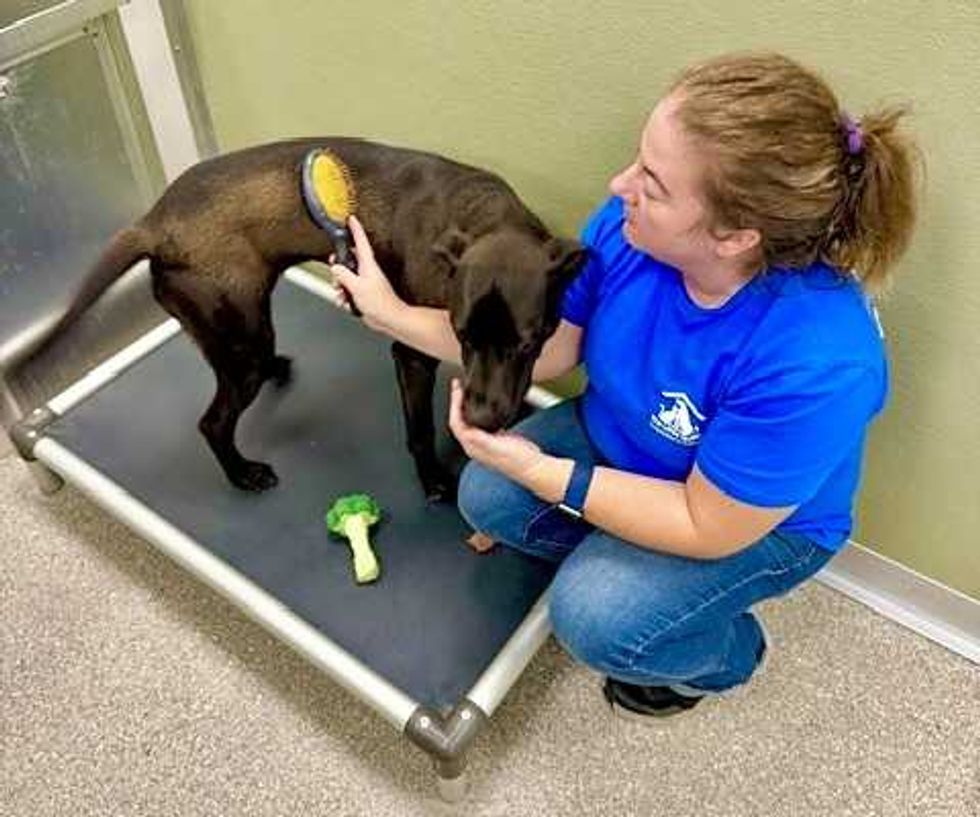 Tiffany Lemelin, shelter manager, brushing Marsala upon arrival.Provided
 Michael DeBarba, certified dog trainer working with Marsala.Jennifer Almquist
 Marsala wins a heart.Jennifer Almquist
 Sadie, center, a Carolina dog, plays with her friend Negra, a terrier mix. Bella Linda, the small poodle, has since been adopted.L. Tomaino
 Wesley, a young, exuberant mix, is looking for an active home.L. Tomaino
 Bonnie and Clyde, an affectionate terrier pair.L. Tomaino





The catch-up trade