COPAKE – The nearly 9-year saga of a utility-scale solar farm plan for this rural hamlet continued on Monday, Sept. 14 with an adjudicatory hearing held by two New York State judges who heard testimony for and against the project.
It was standing room only in the Copake Town Hall as more than 100 people attended a hearing on the merits of a 42-megawatt solar installation proposed by Chicago-based Hecate Energy LLC.
“How are you?” came the comment from one woman who entered the room. “Here we go again,” a remark referring to the numerous times the public has gathered to hear about Hecate’s plans. The company first came to Copake in 2017.
Maureen F. Leary and Dawn MacKillop-Soller, administrative law judges at the New York State Department of Public Service’s Office of Renewable Energy Siting and Electric Transmission (ORES), conducted the hearing. The focus was twofold: flood plain compliance and meeting the requirements of the town’s wetlands laws.
At the start, Judge Leary commended the townspeople on their “engagement in the community.”
Hecate, the state’s ORES office, the New York’s Department of Environmental Conservation and the Town of Copake were present to examine and cross-examine expert witnesses with the goal of establishing facts for the judges to consider. In addition to the expert testimony given at the hearing, more than 100 documents were filed ahead of time, nearly all opposing the project.
State Sen. Michelle Hinchey (D-41) wrote: “I have previously written to the Office of Renewable Energy Siting regarding potential negative impacts on farmlands and forests, water supply, and tourism, as well as the developer’s potentially insecure financing as reported in the press and legal filings.”
The clock is running on the project. The judges will issue a ruling on the matter, after which the ORES executive director is required by law to make a decision on the project by Oct. 19 to either grant or deny a permit. If Hecate receives a go-ahead from ORES, it then will have to come to the town for a permit.
At Monday’s hearing, a senior engineer from Hecate, Kip Smith, was questioned by Copake’s attorney, Benjamin Wisniewski, about parts of the project that will be located in a flood zone. Smith said that several solar arrays would be partially located in a flood zone.
Smith said Hecate plans to install arrays that can be raised in the event of flooding, and noted that one important component, an inverter, would be moved from its current planned location because it is in a flood zone. In response to a question from Judge MacKillop-Soller, Smith said that 9 or 10% of the project is located in an inundation zone.
The inundation model used by Hecate presumes the impact of a 100-year flood. With flooding estimates ranging from two feet to seven feet, MacKillop-Soller questioned how first responders would be able to enter the site. “First responders must have or need to have access,” she said.
Smith responded that the access roads would not be affected by flooding, adding that no one should be on the site anyway. MacKillop-Soller then asked about the road construction, and Smith said it would be a gravel base.
Judge Leary asked Smith if he had any reason to second-guess his assumptions. “I have no concerns about our ability to meet the guidelines,” he said. “Or to rethink the model.”
Hecate has been interested in developing a utility-scale solar farm in Copake for almost 10 years.
The application process has dragged out and the company’s first application was denied by the state.
The current application was submitted in December 2024. Late in 2025, the state began a hearing and public comment process, holding four public hearings in Copake in late January.
Overall, more than 1,000 public comments were received and posted in the state’s project management system. By June of this year, the two administrative law judges who oversaw the hearings issued a ruling on issues related to the project, and subsequently in August the state called for an adjudicatory hearing to develop a factual record, notably on the impact to wetlands and floodzones.









 Tiffany Lemelin, shelter manager, brushing Marsala upon arrival.Provided
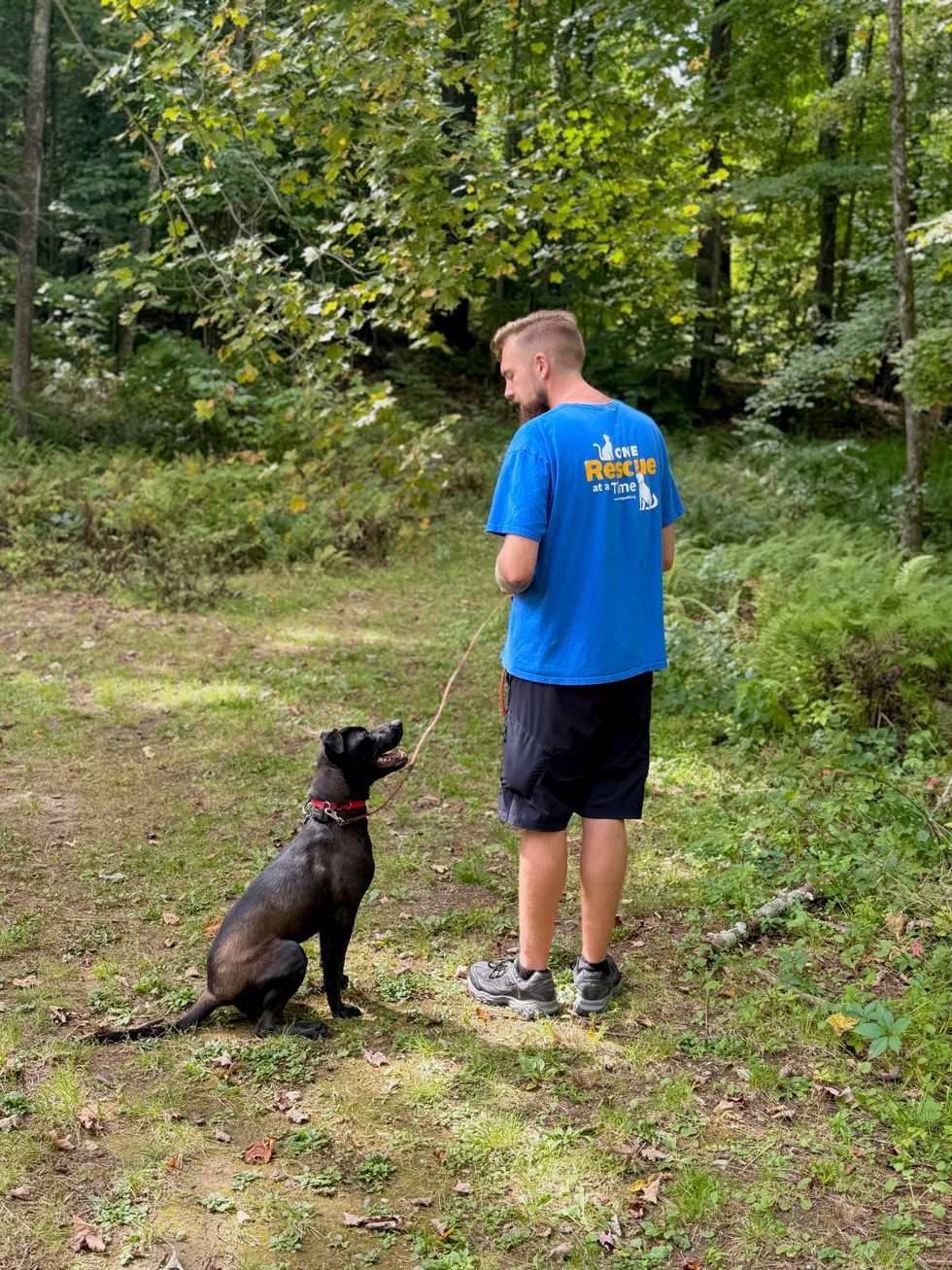 Michael DeBarba, certified dog trainer working with Marsala.Jennifer Almquist
 Marsala wins a heart.Jennifer Almquist
 Sadie, center, a Carolina dog, plays with her friend Negra, a terrier mix. Bella Linda, the small poodle, has since been adopted.L. Tomaino
 Wesley, a young, exuberant mix, is looking for an active home.L. Tomaino
 Bonnie and Clyde, an affectionate terrier pair.L. Tomaino