Smithfield’s traditional Christmas Concert and Tea returns Dec. 6

The Smithfield Valley Church on Smithfield Road in Amenia.
Photo by Leila Hawken

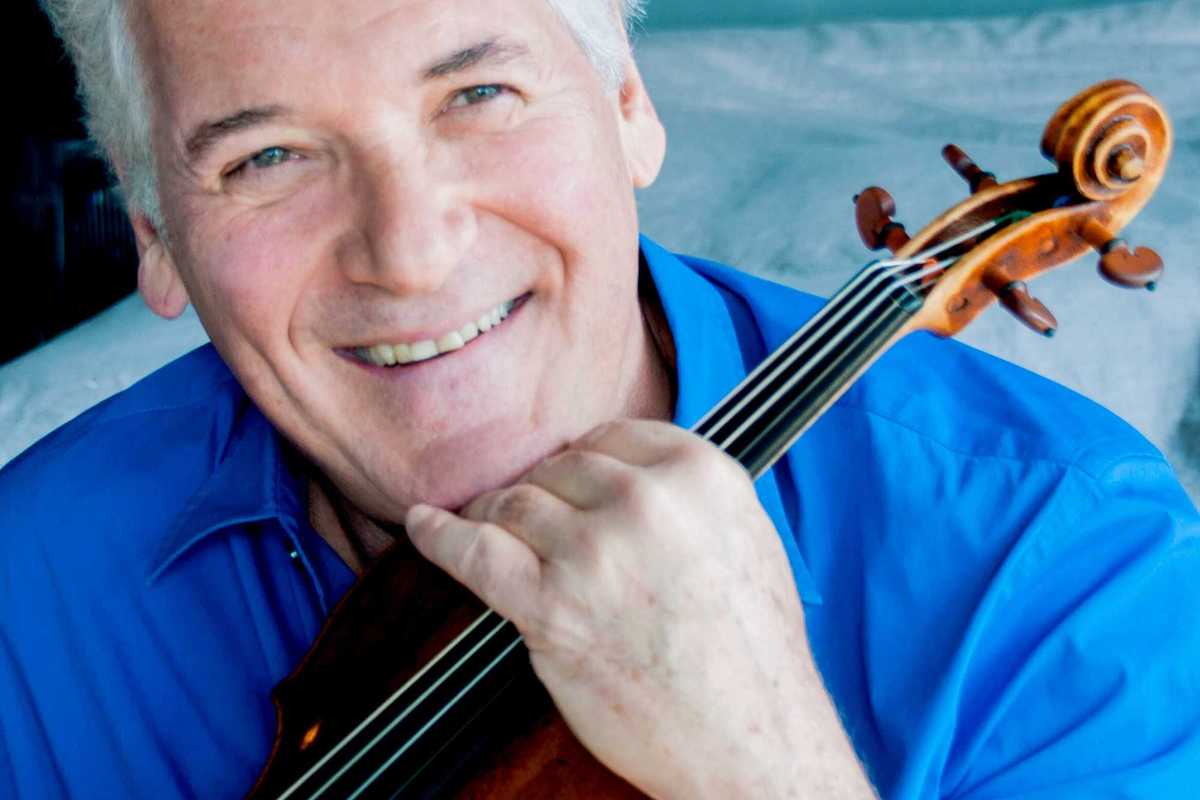
AMENIA — Kick off the season in musical style with the Smithfield Christmas Concert and Tea on Saturday, Dec. 6, at 3 p.m., at the historic Smithfield Church. The concert is presented by the Bang Family Concert series, and it will feature the 15-member Smithfield Chamber Orchestra playing an eclectic mix of classical, pop and jazz.
The concert and tea is a tradition that began 20 years ago. The chamber orchestra under the direction of Matt Finley has provided the music for the past five years. This year’s repertoire will include emphasis on jazz versions of holiday favorites.
Among the pieces to be performed are an excerpt from Tchaikovsky’s “Nutcracker,” a “Peanuts” theme, a sing along, carols, an original piece, and a holiday favorite from Irving Berlin.
The popular event is open to the public. A donation of any amount is welcome, although $20 is suggested to support producing more Smithfield Church concerts. Children are admitted free. The traditional tea reception with a grand variety of refreshments follows the concert.
For more information, visit https://thesmithfieldchurch.org/concerts. The church is located at 656 Smithfield Valley Road.
A stand of trees in the woods.
Did you notice that some sugar maples lost their leaves far earlier this fall than others, missing out on the color parade? The leaves wilted from dull yellow to brown in August before falling off in early September. Where we live, it has happened for several years to a few older maples near the house.
I called two arborists to get as accurate a diagnosis as possible by phone and received two opinions on the issue, both involving fungal pathogens. Skip Kosciusko, a West Cornwall arborist, diagnosed the problem as verticillium wilt, which he says has reached pandemic levels among the area’s sugar maples. “It looks like we have climate conditions that prevent the really cold air from settling in the winter. Cold is helpful in killing the fungus deep inside the tree.” Verticillium wilt enters through the roots and blocks the tree’s vascular system, preventing water from reaching the leaves. It will most often kill the tree, especially young or poorly maintained ones.
Chris Roddick, formerly head arborist at the Brooklyn Botanic Garden, blames anthracnose. You may be familiar with the way anthracnose affects sycamore trees, a type of maple. Infected sycamores lose their first set of leaves in early spring, after which another set grows back. In the case of sugar maples infected with anthracnose, the leaves fall in August — about six weeks early — and they do not grow back until the following spring. We don’t yet know what this shorter life cycle will mean for the long-term viability of infected trees.
Skip has been treating infected sugar maples with a product called Kphite, which he describes as a salt from the minerals potassium and phosphate, known as phosphonate. He has found that it works well on beech trees, too, but he does not claim it is a cure. Rather, it bolsters trees’ natural defense mechanisms and their ability to deal with fungal infection. This product is available only to commercial entities, so homeowners need an arborist for its application.
Chris does not use any fertilizers on trees aside from compost. He is concerned about the long-term effects and unintended consequences of chemicals — even mineral supplements — that can leach into the water supply. He is “okay” with trees dying, and he’s “not doing nothing”; instead of applying chemicals, he is planting other species. His approach encourages a diversity of native plants so he can see what thrives in this new environment.
“Understanding disease pressures in plants is difficult. We often isolate an individual maple tree and see what happens. It’s different in the woods or for a stand of trees — here we have a system. If you manipulate one, you have consequences for the others. We think there are things to be done; we just don’t know what.” What we do know: fungi are quickly adapting to a warming climate, and changes in precipitation patterns may also favor fungal spread to trees.
As with humans, plants require minerals for healthy functioning. Humans can eat nutritious food or take supplements for overall health or to improve immunity; plants rely on the soil. There seem to be at least two reasons why plants are not getting what they need. One is that necessary nutrients have been depleted from the soil. Research suggests this may result from the recent Asian jumping worm infestation. The worms voraciously ingest soil — and the minerals that would otherwise be available to plants. In doing so, they turn the topsoil into a porous texture best described as coffee grounds. Rain can more easily wash through soil in this state, carrying away nutrients trees and other plants rely on.
A second reason is that trees may no longer be able to access needed minerals. This can happen if naturally acidic soil becomes alkaline or vice versa. Plants thrive at certain pH levels; a shift can inhibit nutrient absorption. We are seeing soil chemistry change in our woodlands as invasive plants proliferate. A 2003 study examined forest soils and mycorrhizal fungi associated with sugar maples and found that “a profound change in the mycorrhizal system will be one component of the potential ecosystem effects of invasion of new forest habitat by nonnative earthworms.” Mycorrhizae are the underground fungal threads that help trees share and trade nutrients. The study found that Asian jumping worms are breaking up the mycorrhizal network that helps sugar maples share and trade nutrients. (See theungardener.com for full citations of this and other studies.)
Can trees wait for science to help them? Should we experiment with possible solutions without understanding the full consequences, even if doing so might save trees? What actions do we take in the face of continuing species decline? It’s a subject we are obliged to explore here in the Northwest Corner, where so much of our experience relies on the view-enhancing, shade-giving, wind-breaking, habitat-restoring tree population.
Dee Salomon ‘ungardens’ in Litchfield County.
Director Yael Melamede and her mother Ada Karmi Melamade in ‘Ada: My Mother the Architect.’
When “Ada: My Mother the Architect” arrives at the Millerton Moviehouse this weekend, it may not immediately seem like your typical holiday fare. But looks can be deceiving. As the title suggests, director Yael Melamede has made her mother’s extraordinary architectural achievements the subject of a documentary. Ada Karmi Melamade is a mother of three, a central figure of Israel’s contemporary Bauhaus design, and a trailblazer for women who has reached dizzying professional heights over the course of a long and storied career.
What the title leaves unsaid, however, is the difficult personal choices the architect had to make along the path to success. Motherhood couldn’t always take priority — and while all’s well that ends well in this stirring portrait of family and fabrication, that underlying tension elevates what might have otherwise become a study in monotonous adulation.
The buildings are the easy part: Ada’s creations are unequivocally beautiful, and her daughter is up to the challenge of capturing their essence on film. Using a combination of unique perspective, time-lapse sequences and archival material, we’re treated to a symphony of light.

“I think that with one beam of light that falls right, it can change everything,” Melamade says, and we see her buildings — Jerusalem’s Supreme Court building and the Ben Gurion Airport among them —bloom and glow in some of the most breathtaking sequences.
But the film’s heart lies in the sometimes strained relationship between mother and daughter. “How [did] you love me for so many years?” Ada asks her daughter during one interview. “I wasn’t with you.” It’s a cutting message that has special resonance during the holiday season: Where are the lines between work and life, and how do we know when they need to be redrawn?
“Ada: My Mother the Architect” will screen at the Moviehouse in Millerton on Saturday, Dec. 6 at 7 p.m. A Q&A with director Yael Melamede will follow the film. Tickets at themoviehouse.net.
Graham Corrigan is a writer and musician from Philadelphia currently living in Lakeville.
The Orvis Guide hip pack as seen on the Orvis website.
What do you get the angler that has everything?
You start by realizing there is always something the angler does not have.
Such as a hip pack instead of a vest. After years of lugging around too much stuff in a vest, my back hurt, so I switched to a hip pack from Orvis, which I promptly overstuffed.But getting the weight off my shoulders helped some with the back pain. The pack in question is the Orvis Guide model at $179. The “PRO” version is waterproof, a little bigger and $100 more expensive.
I use a lanyard for tippet, clippers and clamp. There are any number of lanyards on the market. I use one from The Fly Shack at $14.95. I actually use two of these, one set up for trout and one for bass.
For tippet and leaders, I use Bozeman Flyworks. The 55 yard tippet spools in nylon and fluorocarbon start at $5 and have more material than the standard 30 yard spools from bigger outfits. The fluorocarbon is nice and stiff, even at thinner diameters, which I like for droppers. The nylon and fluorocarbonleaders come in packs of five in standard lengths and diameters, starting at $9.50, which is significantly less expensive than the above-mentioned bigger outfits. I change and rebuild leaders constantly, so these savings add up over the course of a season.
For those of you who don’t tie flies, you can pick up the basics inexpensively at The Fly Shack and Big Y Fly Company. For wet flies I recommend Ligas Discount Flies in Boulder, Colorado.Their soft hackle wets work better than anyone else’s, why I don’t know. Plus Wally will call to confirm your order and there’s a good chance you’ll wind up yakking with him for a while, which is both entertaining and instructional.
Also check out Brent Auger’s flies at Dragontail Tenkara. The Utah Killer Bug (12 for $15) and the War Bird flymph ($24 for 12) are very effective flies, especially in a tight-line nymphing rig.
What you should also do is drop in at the fly shop wherever you are and buy some flies made by local tyers, and buy something else for the good of the house. Or, if you’re shopping for someone, get a gift certificate, bearing in mind that fly fishing is hideously expensive and $50 barely flips the meter. Around here that means UpCountry Sportfishing in Pine Meadow, and you can get a gift certificate online.
Books: Pocketguide to Eastern Streams by Thomas Ames is in a new edition ($29.95). This sturdy paperback is loaded with info and photos of the bugs we love, including a few I never heard of and I’ve been around some.
John Gierach died earlier this year, and he was so good at writing about this sport it makes me want to bail out completely and take up macrame instead. Any of his titles would make a good present for your grumpy winterized housebound angler, but I am partial to “Trout Bum” and “Standing in a River Waving a Stick.”
And I still think Taylor Streit’s “Instinctive Fly Fishing”($14.95) is the single best general introduction to the sport. There is something for every angler, from the newbie to the crusty and certifiable (me) in this slender volume.
These books are in print and while Amazon is certainly handy, I urge you to get them through one of our independent bookstores if possible. UpCountry has a good book selection as well.
Hunt Library director Meg Sher, left, and Linda Ciaro of Project SAGE before delivering a presentation on online safety for youth.
FALLS VILLAGE, Conn. —Maintaining online safety for young people in the region requires an understanding of the dangers of being online and the willingness to plan ahead for when — not if — a bad situation arises.
That was the message from Project Sage’s Linda Ciano, who spoke at the David M. Hunt Library Thursday evening, Nov. 20, in Falls Village, part of an ongoing effort to educate families about online safety across the Northwest Corner.
Ciano said cyberbullying can occur on any online device and in any format — social media, text message, etc. This distinguishes cyberbullying from its real-life counterpart. “Cyberbullying follows the victim into the home.”
Over half of children between the ages of 14 and 17 report some experience with cyberbullying, and it is about evenly split between girls and boys.
Victims can become antisocial, develop substance abuse problems, and express suicidal ideation.
And while young people grow up and move past any bullying in real life, cyberbullying is what Ciano calls a “repetitive harm.”
“It’s up there forever.”
Online predators
Victims of cyberbullying usually know their attackers. However, this is not the case for those children who are lured into compromising situations by online predators.
Ciano showed a slide showing a plain white van, puppies and candy.
She explained that these are the images associated with predators, and that children are taught from an early age to be wary of the man in the white van with the puppies etc.
“But the internet brings strangers into the home all the time.”
Online predators and groomers often follow a script, and gradually increase the level of intimacy with their victims.
Often youngsters will be gradually convinced to send their new online “friends” nude photos or videos.
The predator then threatens to make the images public unless the victim sends more, or demands money to not post them.
The advent of artificial intelligence makes all of this more complicated, because AI can create a convincing nude image of someone with nothing but a photo of someone’s face.
Online safety
Everyone should practice basic online safety, including setting everything to “private,” turning off location tools, and only following people they know in real life on social media.
Beyond that, Ciano said a good practice is to advise young people not to send nude photos of themselves to anybody.
“If the person in the photo is underage then it is child pornography,” she said flatly, adding that anyone who sends it along or has it downloaded on a device is going to be in big trouble if it is discovered.
Parents and children can create a family agreement on how to proceed in the event of a cyber “accident.”
To manage the situation, Ciano recommends the following actions for children:
1) Stop responding. Some predators will give up and seek easier prey.
2) Preserve evidence. Ciano said the urge is to delete everything, but it is important to preserve records of the encounters using screenshots, external drives, and printing out hard copies.
3) Call in your team – the group of trusted adults that the children and parents identified in their safety plan.
The adults need to:
1) Believe the child.
2) Validate the child’s experience and show empathy
3) Provide support
4) Report the predatory activity to the appropriate authorities.
Ciano said the federal Take It Down Act went into effect in May. The legislation makes it a federal crime to distribute intimate images of people without their permission — including authentic images and images created by artificial intelligence.
The law also establishes a process for filing a request to remove images within 48 hours, and creates a national standard and mechanism where none existed.