Cornwall resident and author Roxana Robinson’s newest novel explores the unique challenges of finding love later in life.
“Leaving” is the story of two high school lovers, Warren and Sarah, who are reunited decades later. Their passion reignited, they must now grapple with the nuanced difficulties they bring to their new/old love story after two separate and full lives spent apart.
The intricate dynamics and emotional landscapes of the characters allow for an exploration of some difficult questions.
“Leaving, in terms of this novel, is about the way we part from things in our lives,” Robinson explained. “Sarah and Warren parted from the idea of their relationship originally for a reason that was completely false,” she continued. “I think that for many of us, those relationships that you have in your late teens and early 20s are based on so many complicated and possibly absurdly superficial things. There are all sorts of very flimsy reasons that we connect or leave a relationship, or even just a conversation. We just turn away. And in part, that’s necessary. We can’t stay open to everything our whole lives.”
Indeed, as the plot unfolds and the characters’ motivations are explored, the reader is left pondering the ways in which we often turn away from and abandon ourselves throughout the course of our lives.
Said Robinson: “What are the reasons that you stay fixed on your course? And what is that course? What does that mean to you? It’s exploring all those questions.”
Asked about her process, Robinson shared that “the characters write the book,” emphasizing her organic, exploratory process that shuns rigid outlines in favor of character-driven storytelling. “I write novels about things that really sort of trouble me and make me curious,” said Robinson.
Her second novel, “This Is My Daughter,” which came out in the ‘90s, explored the challenges of blended families and the inner lives of characters grappling with significant life choices.
“I was watching this [people embarking on second marriages] all around me and seeing people who were saying, ‘It’s great! We all are so happy, and the kids love us.’ I just didn’t think that was really what was happening. It was what Americans wanted to believe, but it wasn’t really what was true. So, I wrote about that issue, that problem of trying to reconnect families, because it was very prevalent at that time.”
Of “Leaving,” Robinson shared: “This is about people in the second half of their lives who are having a romance, and it’s much more complicated. You sort of think, ‘Oh, my kids are gone. I’m where I want to be in my in my career. And now I’m free to do what I want.’ And you are never free to do what you want. You are always bound by personal connections to place, to children, to commitments you’ve made. So, it was really interesting to me to sort of explore that issue.”
Robinson’s writing routine is as disciplined as it is exploratory. She writes first thing in the morning, every morning, guided by themes and characters that tug at her curiosity. This process has led her to explore diverse and challenging topics, from the aftermath of the Civil War to the return of a marine from Iraq to a character struggling with heroin addiction.
Her books have required meticulous research and empathy. She wrote “Leaving” in about three years, which is considerably less time than she usually spends on a novel; she said, “I didn’t have to do any research.”
Her teaching at Hunter College’s MFA program underscores her commitment to literature as she revisits literary classics with her students, finding new layers in each successive reading of “Madame Bovary,” “Anna Karenina,” “To the Lighthouse,” “House of Mirth” and “whoever else seizes our fancy that semester,” said Robinson.
“I’m probably the only person you know who has read Anna Karenina 15 times,” she remarked with a laugh, highlighting her dedication to both her craft and her role as an educator.
Robinson’s biography of Georgia O’Keeffe, praised by Calvin Tomkins of The New Yorker as “without question the best book written about O’Keeffe,” offers a profound exploration of the artist’s life. It’s a work that not only showcases Robinson’s narrative prowess but also her deep understanding of the visual arts, a skill honed during her time in the American painting department at Sotheby’s. This expertise, coupled with a serendipitous suggestion to the book’s publisher by her husband, Tony Robinson, catapulted her into writing O’Keeffe’s biography, a task she initially doubted she’d be approached for, considering her pivot to fiction.
“It was a great project,” said Robinson. “She was a wonderful subject to write about.”
As art mimics life and inspiration for writers often comes from everywhere and everything, there is a hint of O’Keeffe in Sarah, one of the main characters in “Leaving.”
Robinson said of the comparison to Sarah’s self-sufficiency and independence: “It’s true. Sarah is very comfortable living alone. She has a beloved dog. She has a job. She has work that interests her. She has children that interest her. And you don’t see her as being needy because she’s alone, which is rare.”
In true O’Keeffe fashion, the characters in “Leaving” break with convention in order to really investigate what it means to love.
As for what is next for Robinson, she said, “I’m always at work on a book, so I have another book that I’m engaged by.” Her eyes then wandered to the corner of the book-lined room. “That’s it,” she laughed, “that’s what writers do.”
“Leaving” (W.W. Norton & Company), Robinson’s 11th published book, will release Tuesday, Feb. 13, with a book launch at The White Hart in Salisbury and a conversation with writer Dani Shapiro. Robinson will also discuss the book in conversation with Gillian Blake at The Cornwall Library Saturday, Feb. 17 at 4 p.m.
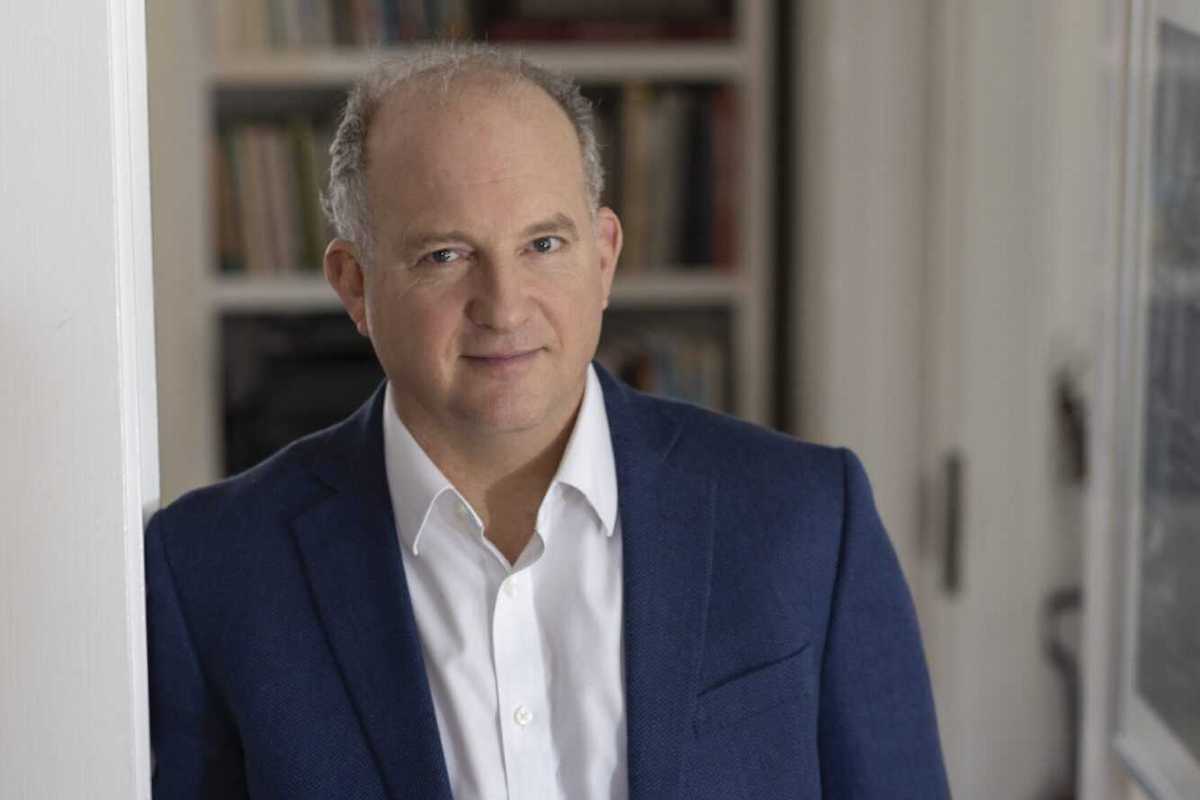





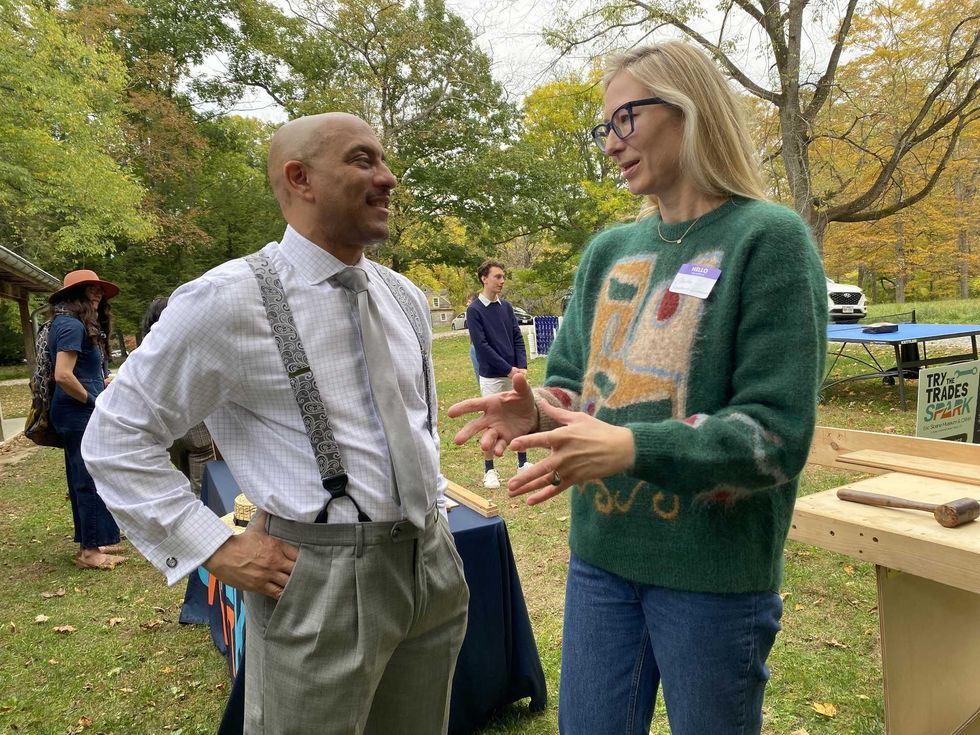 About to open the planning event for the sixth annual Troutbeck Symposium on Sunday, Oct. 4, Troutbeck owner Charlie Champalimaud spoke with guest speaker Hasan Kwame Jeffries of The Ohio State University, who has been a vital participant in the program since it began in 2021.Photo by Leila Hawken

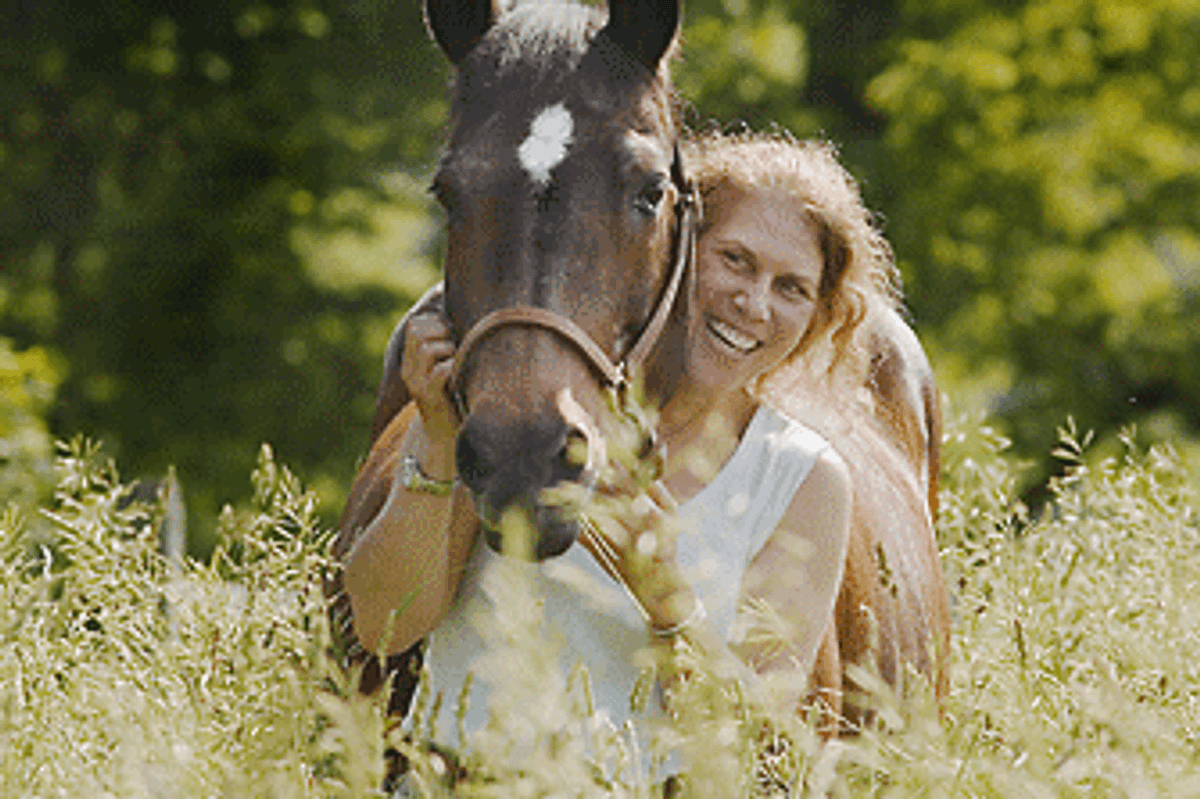
 Photo by Kirsten Edlund-Tunkel