Scot Galliher: Joining conservation and agriculture

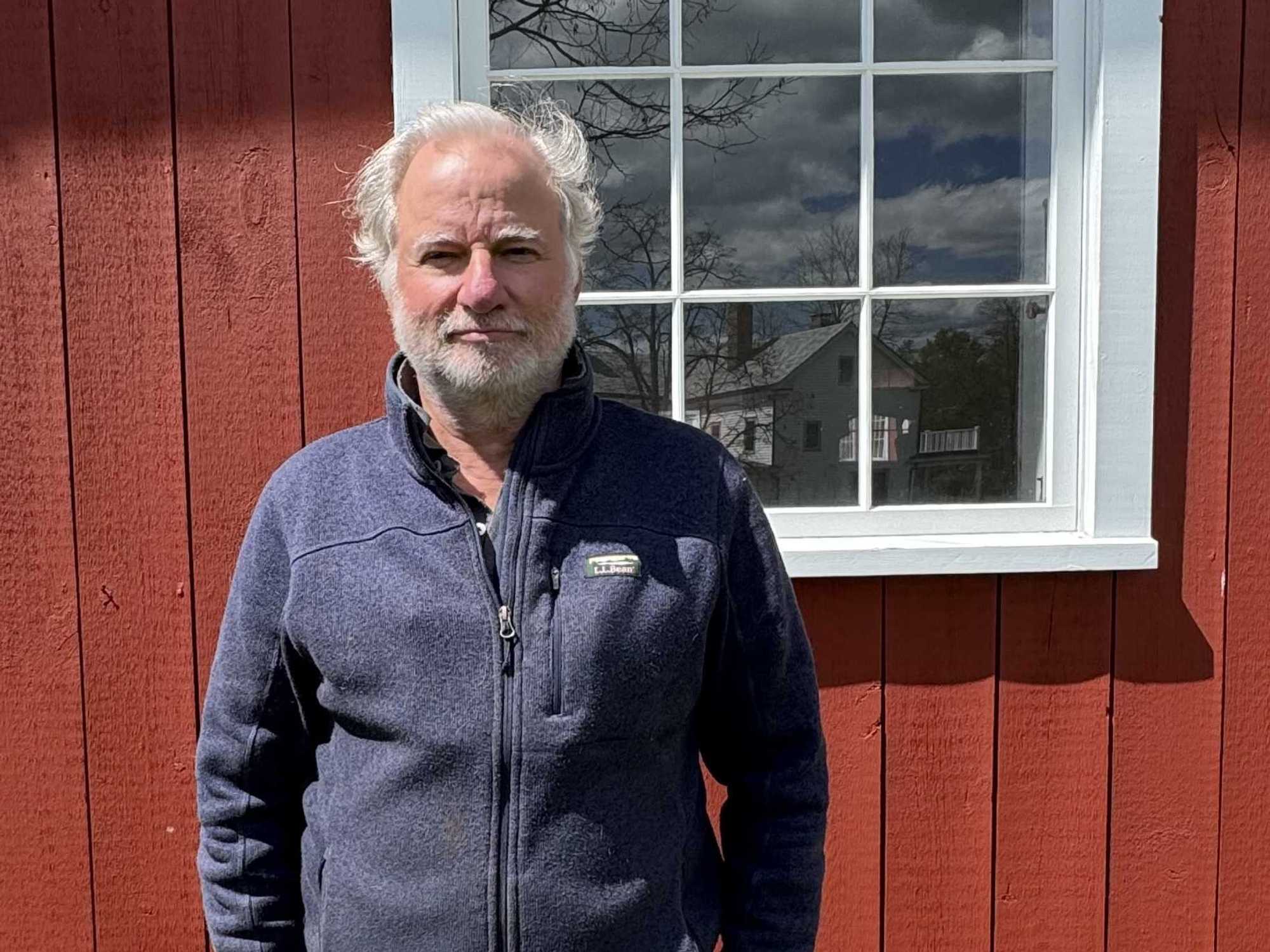
Scot Galliher at Silver Mountain Hay in Millerton.
Provided


Scot Galliher at Silver Mountain Hay in Millerton.
Farming is not a job. It’s a lifestyle. — Scot Galliher
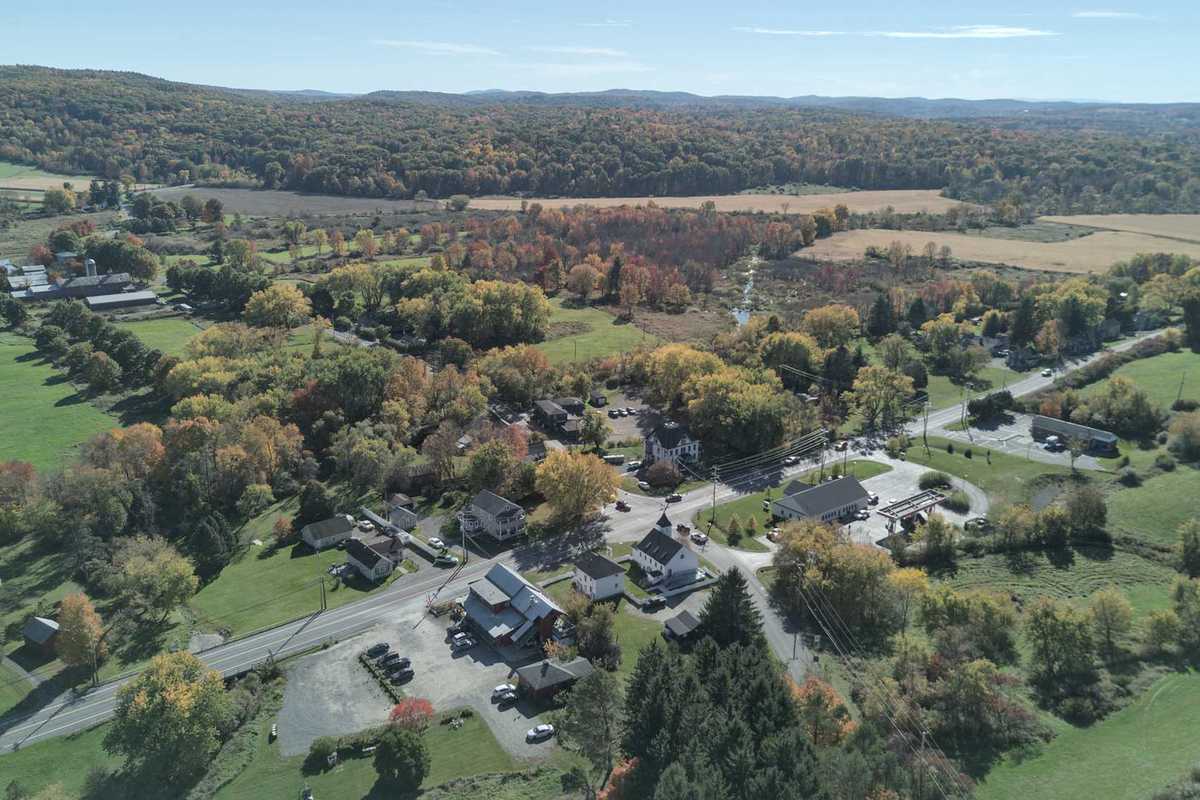
From the fields of Silver Mountain Hay in Millerton, Scot Galliher monitors moisture levels in horse feed, oversees the restoration of historic farmhouses and discusses the architectural details of the towering red barn that has become a local landmark. Two decades ago, he was working on Wall Street after leaving a career analyzing satellite data for a NASA subcontractor. Today, Galliher owns one of the area’s most distinctive agricultural operations — a farm he purchased not simply to grow hay, but to preserve open land threatened by development.
Unlike many farmers who inherit generations of family land, Galliher arrived at agriculture through conservation. After returning from abroad, he already owned another nearby farm and often passed the Silver Mountain property while driving his wife to the Wassaic train station. At the time, development pressure in the region was intensifying, and a developer had reportedly been close to purchasing the land before the deal fell through. Galliher stepped in soon afterward.
“I bought the farm to prevent that from happening,” he said.
That philosophy still shapes the operation today. For Galliher, farming and land preservation are inseparable. The open fields and rural landscapes that define the Harlem Valley survive only because working farms continue to exist, he argues. Without economically viable agriculture, open land eventually disappears — either overtaken by development or left unmanaged.
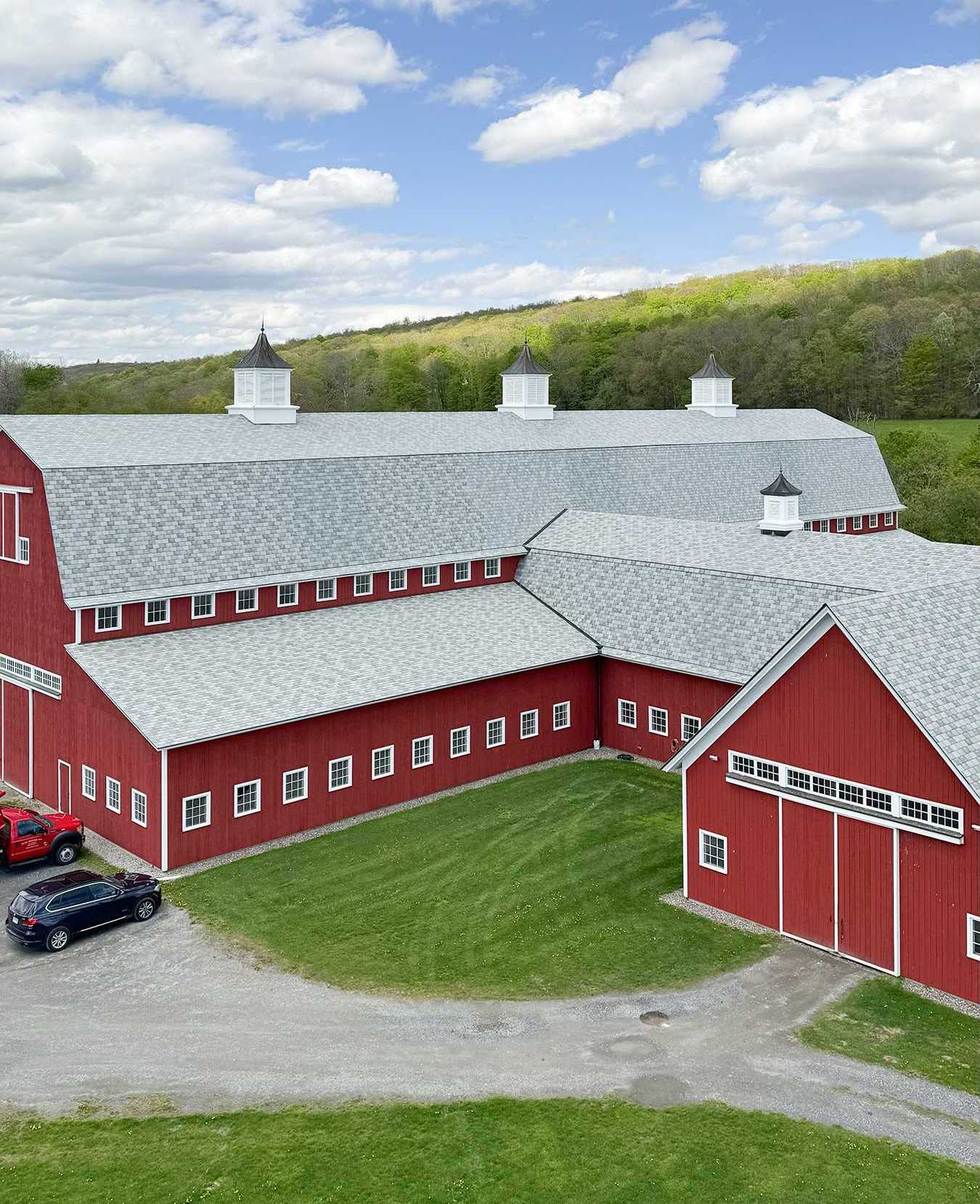
That long-term vision is visible across the property, particularly in the massive red barn that has become one of the area’s most recognizable agricultural structures. After the original dairy barn deteriorated, Galliher began studying historic barns throughout the Northeast before working with an architect to design a replacement that reflected both traditional agricultural design and modern functionality. The finished structure includes clerestory windows that flood the interior with natural light, an Olympic-sized indoor riding arena and infrastructure designed for a future equestrian facility. “I wanted to build an equestrian barn,” Galliher said.
Although the scale of the operation is impressive, Galliher speaks about farming in notably practical terms. Much of what he knows about hay production was learned through direct experience.
“Farming is largely learned through experience,” he said. “You learn by doing.”
Producing premium horse hay, he explained, requires careful attention to weather patterns, moisture levels, grass composition and timing. A sudden storm can destroy thousands of dollars’ worth of hay in less than an hour.
Galliher approaches haymaking with the precision of an engineer. Moisture levels must be carefully controlled to prevent mold, and different horses require different nutritional profiles. While many horse owners prefer softer second-cutting hay, Galliher noted that first-cutting hay is often nutritionally superior. “It is very difficult to make 50,000 feed-quality bales of hay year after year,” he said. Still, despite the technical demands of the work, Galliher describes farming less as an occupation than a way of life. “Farming is not a job,” he said. “It’s a lifestyle.”
He speaks enthusiastically about the smell of fresh hay after a successful harvest and the satisfaction of watching trailers return to the barn at sunset after long summer days in the fields. And after years spent in finance, he says he does not miss Wall Street very much.
“The reward system here is different,” he said. “I think it’s richer. I think it’s more human.”
Today, Silver Mountain Hay stands not only as a working agricultural operation, but also as a reflection of Galliher’s broader philosophy — that preserving rural landscapes requires more than admiration. It requires active stewardship.
Alec Linden
The Spirit Ballooning crew and passengers on a flight from Great Barrington to Salisbury on July 25 of last year.
While some moonlighters may dread their weekend shifts, local NBT banker Darrel Long looks forward to his early morning side gig, since it involves flying high above the Northwest Corner hills glowing in the sunrise.
Perhaps better referred to as his “dawnlighting” operation, Darrel is the president and founder of North Canaan-based hot air balloon outfit Spirit Ballooning, which has been taking intrepid denizens of the region on daybreak flights across the southern Berkshires since 2009.
Darrel has been a licensed balloon pilot since 1994 when he flew his first solo voyage in a self-built balloon he called Spirit, now the company’s namesake. “I was not only a brand new student,” he said, “I was a test pilot in my own balloon!”
Luckily, the design was sturdy, proven by its place in the company’s three balloon fleet today, three decades later.
Darrel said once the balloon was built, he realized he needed a crew, so he got to building the next element in the process: a family. “We’ve got two sons and two daughters, and they’ve all been involved since they were born,” he said, explaining that the motivation behind Spirit Ballooning was partially to sustain the family’s passion as the kids developed their own interest in flying.
The real purpose, though, is to share the joy of floating above the verdant morning landscape with others, Darrel explained: “We don’t really do it to make a lot of money, we mainly do it to share the experience.”

His daughter Madi, who is the Audience Development Editor for The Lakeville Journal and The Millerton News, agrees. During a recent conversation, she recalled a young couple the family met at a balloon festival in Vermont over a decade ago.
“When we first started flying them, they were just boyfriend and girlfriend,” she said, but after a few years of taking them up, “we eventually got invited to their wedding.”
“They were our passengers, but then it became so much more than that,” she said, noting that similar experiences of building relationships came to define her upbringing around hot air balloons. She said that when she was growing up in North Canaan, she made many of her friends after having landed on their parents’ lawn in a balloon.
Madi put her pilot training on pause in high school and college to focus on other things, but recently she’s considering a renewed push for a license. After all, it’s in the Long family DNA – “People learn their ABCs, and we just, like, learned to fly balloons,” she said with a laugh.
Her older brother Jordan was the first of the Long children to get licensed when he was 19, and had built his first balloon by 20 – Foxtrot, which also is featured in the Spirit fleet.

Ryan, the eldest, is also licensed, and currently flies balloons in California but is soon to move back to the Northeast where he may help out with the family business, Jordan said.
Now 30, Jordan is a commercial airline pilot for JetBlue by day and globe-trotting balloon flyer by morning, having soared over the Alps, the lush fields of Ireland, and most recently Northeastern Spain, amongst other destinations.
When he thinks about the differences in the two types of flight, he likes to remember a metaphor his friend, who also pilots both, once offered that likened airplane flying to the structure and order of marching band music.
“With hot air ballooning,” on the other hand, “it’s pure jazz.”
“You can have a destination in mind, you can start off in a known location,” Jordan said, “but in the meantime, you can improvise and float around, go on little tangents with different wind patterns and over different natural features.”
Jordan explained that the farms, industries, towns, estates and landscape features of the Northwest Corner and broader region can make it feel like floating above history. “It just brings your hometown to life in a way you otherwise wouldn’t know about,” he said.
Despite having flown balloons in faraway places, Jordan maintained that “there’s no place like home.”
To find out more and to book a flight, visit spiritballooning.com


Want more of our stories on Google? Click here to make us a Preferred Source.
D.H. Callahan
Max Ocean at the Subversive Taproom in Catskill.
On the western banks of the Hudson River, the town of Catskill is becoming a beacon of ethnic, religious and generational diversity. Partially fueled by the increased popularity of towns like Hudson and the gentrification that comes with it, residents of all stripes are making their homes in the once underappreciated town.
Among those putting down roots are Max Ocean and Zane Coffey, the founders and brewers at Subversive Malting and Brewing. In 2020, after a few years of searching for a place where they could craft their beers and build community, they landed on a modest lot with an old auto-shop big enough to house their equipment.
As their business grew, fueled in no small part by their fast and flawless menu of elevated tavern fare, so did the number of customers who called themselves regulars. Among those regulars was David Quituisaca, donor organizer and volunteer coordinator at Columbia County Sanctuary Movement, or CCSM.
Founded in response to the political rhetoric of the 2016 presidential campaign, CCSM provides support for immigrant communities while advocating for policy changes at the county, state, regional and national levels. They’ve partnered with many local businesses in a symbiotic fashion, receiving funds and donations while helping to educate employees and patrons about their rights, and what non-targeted citizens can do to help protect their neighbors. In addition to their work in Columbia County, CCSM also teams up with other immigrant support groups in places like Millerton and Salisbury to educate vulnerable residents and community members alike.
After seeing reports and footage of the increasingly violent tactics used by the federal government in its efforts to arrest and deport Spanish-speaking residents, Subversive wanted to do something to help. Around the National Day of Protest against ICE’s tactics in January, Ocean reached out to Quituisaca and asked what they could do. It was quickly determined that a limited run beer and community launch party was the way forward. But what kind of beer would it be?
Subversive is known for their carefully crafted brews, which, while adored by their customers, aren’t always the most accessible to the casual sipper. For this run, they wanted something unique enough to talk about, but easy enough for non-craft beer fans.
What they decided on was creating a more accessible light beer using the yeast from Modelo’s internationally popular Mexican-style cerveza. They call it “Chinga la Migra.” Subversive committed to donating 15% of all sales to CCSM, a pledge they anticipate will net thousands of dollars when all the beer is sold out.

While the beer and the event will undoubtedly help CCSM’s efforts in raising awareness and garnering funds, Quituisaca notes that their efforts are nonstop. He notes that recent high-profile immigration enforcement tactics have underscored an ongoing need for support, including financial donations and access to larger spaces for classes and seminars on how to navigate an increasingly aggressive federal enforcement environment.
Though the fight may persist, with partners like Subversive, the migrant community and their supporters can kick back with a cold beer every once in a while to celebrate this vibrant community, and all they have to offer.
Subversive Brewing is located at 96 W. Bridge St., Catskill. More info at drinksubversive.com
Natalia Zukerman
Cast members of “Legally Blonde” rehearse offsite.
For nearly three decades, The CENTER for Performing Arts at Rhinebeck has been a gathering place for actors, audiences and aspiring artists from across the Hudson Valley.
Founded as a nonprofit organization dedicated to making the arts accessible to people of all ages and backgrounds, The CENTER has grown from a summer theater under a tent into a year-round cultural institution. Since opening its permanent home in 1998, the theater has combined professional-quality productions with educational programs, youth performances and community events.
That mission remains at the heart of The CENTER’s work today. Managing Director Kerry Dotson calls it “the Hudson Valley’s home for affordable, quality theatre for almost 30 years,” noting the ongoing effort to maintain “a balance throughout our season of plays and musicals, and of classic and contemporary pieces.”
The organization strives to create an inclusive environment while offering opportunities for performers, technicians and students to develop their craft and engage with the performing arts.
“Many of the artists who call The CENTER home have extremely impressive theatre resumes,” said Dotson. “Many of them started by trying for a professional career in theater, but it takes more than just talent and training. It takes a lot of luck and the right connections. Many of the artists who work on our productions are every bit as talented as those who work on Broadway productions,” but never quite managed to be in the right place at the right time.” She went on to say that many performers have had successful careets in theater or film,“but have retired and need the creative outlet that they find at The CENTER. The CENTER has become their second home,” she said.
One of The CENTER’s most distinctive traditions is its annual Sam Scripps Shakespeare Festival, now in its 20th year. Named for philanthropist Samuel H. Scripps, whose support helped shape the theater’s development, the festival is performed on The CENTER’s replica of Shakespeare’s Globe Theatre, reconstructed each year and modeled after the historic London landmark.
While this year’s Shakespeare season has concluded, audiences can still look forward to a busy summer lineup.

From June 5 through June 28, The CENTER presents “Legally Blonde: The Musical,” the upbeat Broadway adaptation of the popular film. Filled with high-energy dance numbers, memorable songs and plenty of humor, the musical follows Elle Woods as she defies expectations and discovers her own strengths while pursuing a law degree at Harvard.
The summer season continues with Stephen Sondheim’s acclaimed musical “Company,” running July 10 through July 26. Widely regarded as one of the most influential American musicals of the 20th century, “Company” offers a witty and thoughtful exploration of friendship, marriage and modern relationships.
Rounding out the season is “Trenzas,” scheduled for Aug. 7 through Aug. 9. The contemporary musical celebrates family, identity and cultural heritage through a collection of interconnected stories centered on Latina women and their experiences.
“Younger audiences are welcome to attend our Kids on Stage productions of ‘Shrek Jr.’ or ‘School of Rock Jr.’ in July and August,” said Dotson.
In addition to its mainstage productions, Dotson added that the Black Box space —opened in 2024 — has become a “springboard for local playwrights and artists,” expanding opportunities for new and experimental work while keeping production accessible and intimate. She also emphasized that audiences can “look actors in the eyes,” a reflection of the close-knit, community-driven spirit that defines the theater.
The CENTER continues to serve as a community hub for arts education, youth theater and special events throughout the year.
For tickets and more information about upcoming performances, visit centerforperformingarts.org.
Patrick L. Sullivan
Successful fly-fishing involves research and development.
A few weeks ago, on a chilly, raw morning on a somewhat swollen Beaverkill River in New York, Gary Dodson and I rolled up expecting to have the area to ourselves.
We did not.
There were four anglers clumped together right under the covered bridge where famed angler and fly-tier Theodore Gordon did a lot of his research and development. Gordon did his in the late 19th century, when R&D was a little easier in the sense that getting to the river meant walking or catching a ride from a passing horse and buggy. It would have been unusual to see four anglers anywhere, never mind in a bunch.
We bypassed these researching developers and made our way downstream. The river was high enough to make wading tricky and cold enough, at 48 degrees, to make the trout sluggish and uninterested in participating in R&D.
I managed a couple of bumps on small, heavy nymphs, and Gary caught a handful of dinker browns who, he said, had trouble getting their little mouths around a size 12 soft-hackle wet.
The important thing here was that my new right hip didn’t give me any trouble.
“Let pain be your guide,” said the doctor, Yoda-like, when he took me off the injured reserve list.
And by golly, he was right.
It is traditional to complain about the weather. It is also boring, so I won’t do it, except to say that in the last few weeks sometimes it was cold and sometimes it was unusually hot, and none of it helped.
But it was good R&D.
Example: I was wet-wading the Housatonic and environs by the third week of May. This is the earliest I can recall doing this.
The Hous water temp was at or near 70 on May 20, which made me think it was time to deploy the Woolly Buggers in search of smallmouth bass. Since I had the wrong rod for the job, this was a sloppy and cumbersome maneuver. It resulted in one rainbow trout of modest size, no doubt a recent arrival from the hatchery, and precisely what I was trying to avoid.

But it was momentarily satisfying to have some development to go along with the research.
My friend Dave Edgerly came up, and we took a whack at the Blackberry, where the water temps hadn’t reached the danger level, and we plucked a few from the foamiest, most aerated water we could find.
Years of R&D have taught me that, given the choice between breathing and any other activity, trout opt for the former.
So if things are slow in the long, slow, deep pools, find the white water and watch for a few minutes. Chances are you’ll see trout sticking their heads up, grabbing whatever bugs are coming down the pike.
In a situation like this, I take it straight to them, with a couple of heavy nymphs — one drab, one gaudy — launched straight into the foam.
How big and how heavy?
“Let pain be your guide.” Or, in this case, “let getting hung up on a rock and having to rerig be your guide.”
Start with the big ones. If you’re getting snagged, switch out to the smaller ones. Eventually, through careful application of research and development, you will find the answer.
Or not.
Failure is a big part of R&D. If it starts to get on your nerves, just remember this:
In most endeavors, if you fail 70% of the time, someone will suggest a new line of work.
In baseball, a hitter who fails 70% of the time over a 20-year career goes in the Hall of Fame.
Fly-fishing is like baseball in this sense.
So relax and get on with the R&D, en route to the HoF.

Want more of our stories on Google? Click here to make us a Preferred Source.

Want more of our stories on Google? Click here to make us a Preferred Source.