Writer’s retreat in the woods

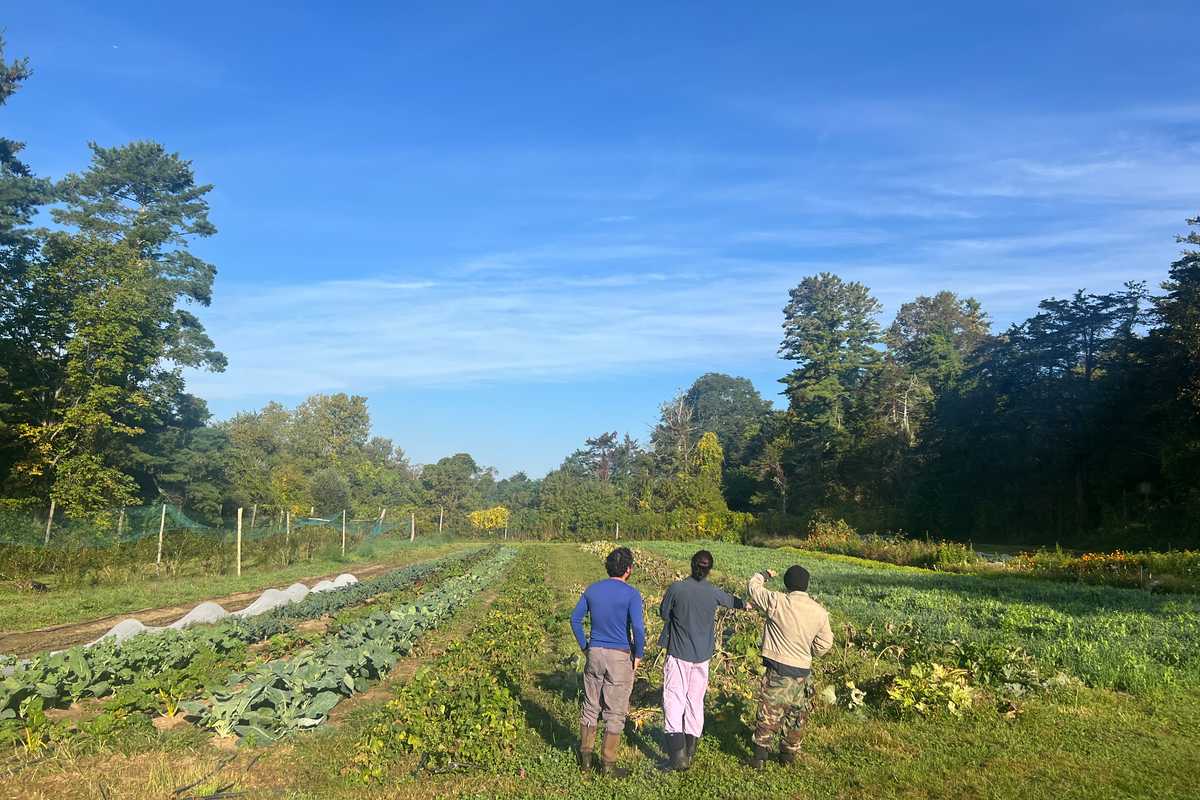
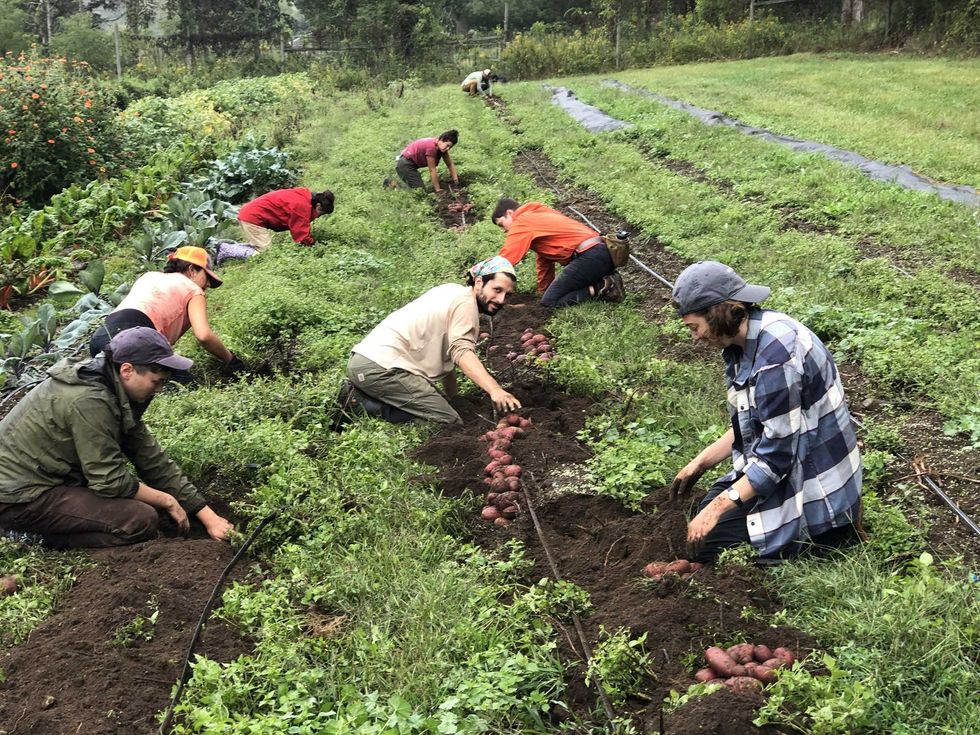
Participants in a 2024 Great Mountain Forest Woodland Academy workshop at Yale Camp.
Photo by Mike Zarfos


Participants in a 2024 Great Mountain Forest Woodland Academy workshop at Yale Camp.
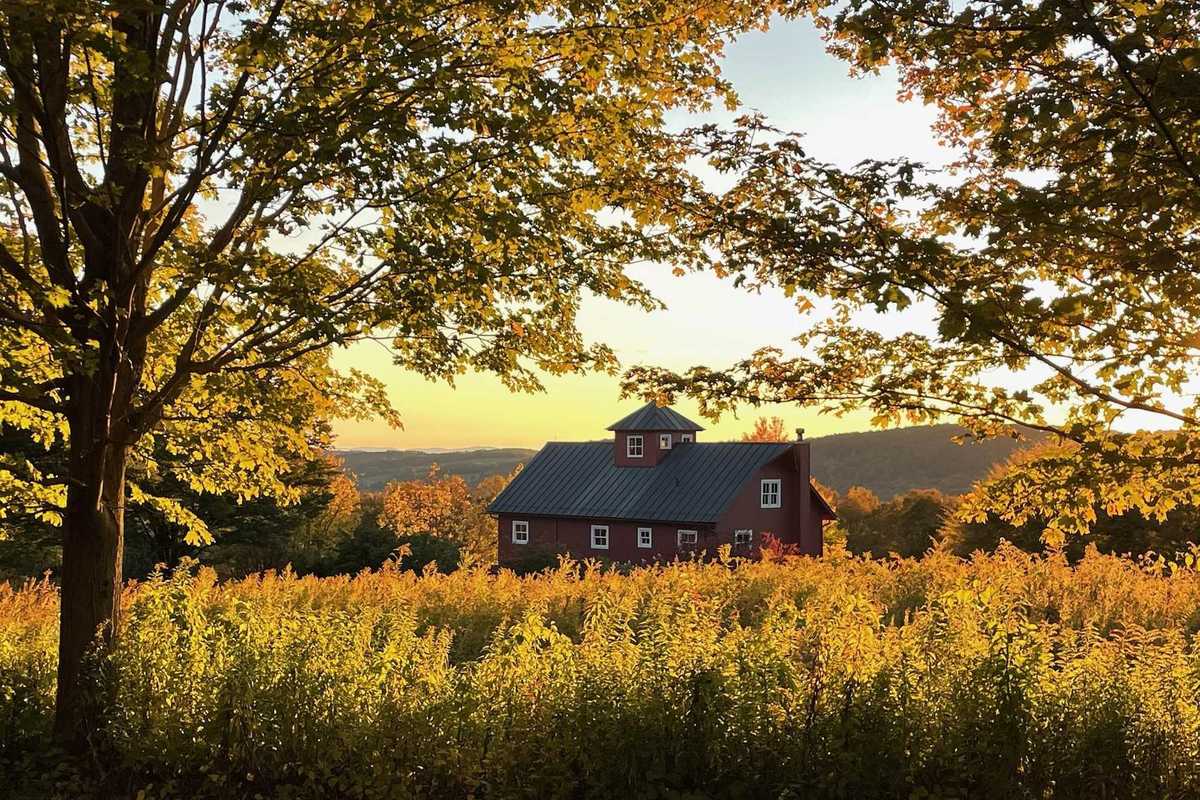
Great Mountain Forest (GMF) will host its first Nature Writing Retreat at the historic Yale Camp in Falls Village from Aug. 7-9, 2026. Writers of all levels are invited to draw inspiration from one of New England’s most notable forest landscapes. GMF envisions the retreat becoming an annual event celebrating writing, conservation and the relationship between people and forests.
This immersive three-day retreat reflects on the legacy of Hal Borland, the American writer and New York Times nature columnist whose work was deeply connected to this landscape. The retreat explores how wilderness shapes language, strengthens close observation and fosters environmental consciousness.
Six workshops, led by nationally recognized authors, poets and environmental experts, will take place throughout GMF’s 6,400-acre forest. Participants will engage in field observation, writing and discussion focused on description, ecological literacy, eco-poetry and nature-based storytelling.
According to Michael Zafros, GMF executive director, “There are few uses of a forest more sustainable than serving as inspiration. Hosting writers and artists is a great way to explore and provide this use of our forests. This new program demonstrates how Great Mountain Forest can be an antidote to the challenges facing our world. The retreat brings people together, builds community in the forest, gets participants outside and off their screens, and uses nature sustainably to heal and inspire minds and souls.”
The weekend includes journaling and campfire conversation on Friday, a guided nature walk and workshops on Saturday, and a closing reflection on Sunday.
Borland wrote, “I challenge anyone to stand on a hilltop and fail to see a new expanse not only around him, but in him, too.” Organizers hope participants in the inaugural retreat will experience just such an epiphany.
The 2026 Great Mountain Forest Nature Writing Retreat is made possible in part through support from H. Bruce McEver, Roshy and Dalton Dwyer, and Housatonic Heritage. The retreat is curated by Tom Shachtman.
Enrollment is limited. An optional post-retreat online anthology of participant work will also be offered. For more information and to enroll, visit greatmountainforest.org/writing-retreat-2026.
Natalia Zukerman
Artist Adam Van Doren and curator Donna Hassler talk to a group of visitors at the Berkshire Botanical Garden. A Stephen Proctor vessel sits to their left.
This summer, the Berkshire Botanical Garden in Stockbridge has hosted “Grounded in Nature: Paintings by Adam Van Doren,” an exhibition exploring the intimate relationship between architecture and the natural world.
On view for only a few more weeks in the Leonhardt Galleries, the exhibition features more than 35 watercolor and oil paintings by the New York-based artist, architect, author and Yale professor, curated by art historian Donna Hassler, director emerita of Chesterwood. The works span three distinct places that have shaped Van Doren’s artistic practice: New York City, Cornwall, Connecticut, and his travels throughout Europe.
Hassler first encountered Van Doren’s work years ago, when they crossed paths through their shared connection to the American Academy in Rome. Years later, when she was considering artists whose work would complement Berkshire Botanical Garden’s focus on art and nature, his paintings immediately came to mind.
“When I heard about Steve Proctor’s show, I immediately thought about Adam’s work,” Hassler said, referring to the ceramic artist whose monumental vessels and sculptures are also on view at the Garden. “Everything that is on exhibit here has some aspect of nature in it. And thinking about the built environment — buildings are not built in a vacuum. The landscape is important to the overall impression of the building in a particular setting.”
After visiting Van Doren’s New York studio and reviewing hundreds of works, Hassler decided to organize the show geographically, allowing viewers to trace how different landscapes have influenced the artist.
The first gallery focuses on Van Doren’s life in New York City, where he has maintained a studio on West 57th Street, near Central Park. His watercolors capture architectural details and urban landscapes, from Central Park bridges and fountains to Greenwich Village townhouses and the former Carnegie Mansion, now home to the Cooper Hewitt, Smithsonian Design Museum.
“He has a studio on West 57th Street, right down the block from Carnegie Hall,” Hassler said. “Within a couple of blocks of Central Park, you see a number of watercolors — a fountain, details of the balustrade, bridges in Central Park, cityscapes.”
The exhibition then moves to Cornwall, where Van Doren has spent summers throughout his life on a family farm originally purchased by his grandparents, writers Mark and Dorothy Van Doren. Surrounded by fields, streams and historic buildings, this landscape, which will be familiar to many, has become one of his most enduring subjects.
The Cornwall gallery is housed in Berkshire Botanical Garden’s historic Center House, an 18th-century building whose preserved character echoes the themes of Van Doren’s work.
“I like that they’re in here,” Hassler said. “It’s not a white gallery space. The raw material of this older building is still here.”
Many of Van Doren’s Cornwall paintings explore the interplay of architecture, land and light, including views of the Bradford homestead, an 18th-century farmhouse surrounded by weathered barns and stone walls.
The final section of the exhibition follows Van Doren’s travels abroad, particularly in Italy, France and England. Influenced by his architectural training at Columbia University and the classical watercolor techniques of the École des Beaux-Arts, Van Doren has long used watercolor to capture historic buildings within their landscapes.
“He paints mainly outdoors,” Hassler said. Working en plein air, the artist often paints with a portable stool, watercolor paper and palette, capturing changing light and atmosphere in real time.
Hassler noted the difference between Van Doren’s watercolor and oil paintings, a few of which are displayed side by side in the exhibition.
“He uses pure color,” she said of his watercolor technique. “It’s your eye that then fills in the form that he’s creating.”
The exhibition also includes works from Van Doren’s time as a visiting artist at the American Academy in Rome, where he painted ancient ruins, gardens and architectural views. His Rome paintings later inspired the poet John Tagliabue’s collection “An Artist in Rome.”
“Grounded in Nature: Paintings by Adam Van Doren” is on view through Aug. 23 at Berkshire Botanical Garden. For more information, visit berkshirebotanical.org
D.H. Callahan
Emily Gallagher, soprano, is one of the performers pairing wine with opera at Stissing Center.
When old-world elegance calls to mind both opera and fine wine, “Opera Uncorked” answers with both. On Saturday, Aug. 8, at Stissing Center in Pine Plains, carefully curated wines from Fulton and Forbes Wine and Spirits in Ancram will be paired with classical arias from beloved operas.
The wines will mostly be drawn from the regions where many famous operas were born.
Both Germany and Austria share a claim to one of the most formidable opera composers of all time. In 1791, at Schikaneder’s theatre in Vienna, Wolfgang Amadeus Mozart’s “The Magic Flute” first graced the ears of music enthusiasts. Since then, Germany has produced countless additional operatic masterpieces, including Carl Maria von Weber’s romantic “Der Freischütz,” and Richard Wagner’s epic “The Ring Cycle.”
During his lifetime, Wagner dominated the opera scene. His prolific work is known to have inspired French composer Claude Debussy to write his only opera, “Pelléas et Mélisande.” But Debussy’s work is overshadowed by the crown jewel of French opera: Georges Bizet’s “Carmen.”
Jacopo Peri was an Italian composer and vocalist working in the late 16th century, during the late Renaissance and early Baroque periods. In 1597, his opera “Dafne” premiered in Florence. It is widely recognized as the first opera ever created and performed. Since then, composers such as Puccini and Rossini have kept Italy at the forefront of opera with works like “La Bohème” and “The Barber of Seville,” respectively.
The fourth wine region is home to a majority of the performers at “Opera Uncorked”: California. Emily Gallagher, of Los Angeles, is a soprano whose work has been described as “harmonically appealing and splendiferous.” Devony Smith is a California-born, Grammy-nominated mezzo-soprano whose voice has been called “sensual” and “strong” by The New York Times.
Rounding out the performers are award-winning Puerto Rican-American baritone Brian James Myer, who has worked with the Metropolitan Opera in New York City, and Peter Lake, who recently wrapped up a tour as Old Deuteronomy in the hit Broadway classic, “Cats.”
The program will be led by accompanist and conductor Caleb Yanez Glickman, also of Los Angeles, alongside Fulton and Forbes’ Rachelle Merriam, who has carefully selected the wines.
With wine and opera paired so expertly together, there seems to be only one thing missing. But fear not: cheese and crackers will be provided by local favorite Chaseholm Farm, bringing this international evening right back to its center in Dutchess County.
For tickets, visit thestissingcenter.org
Thomas Jensen
Saturday, July 25, in the Shed at Tanglewood, the BSO took the stage with pianist Paul Lewis for Mozart’s “Piano Concerto No. 27 in B-flat major” (K. 595). This was Mozart’s final piano concerto, completed in January 1791. Mozart died on Dec. 5, 1791.
Premiered by Mozart himself on March 4, 1791, it was his final public appearance as a soloist.
Unlike Mozart’s fiery or dramatic minor-key concertos, this concerto features a transparent, sparse texture, quiet lyricism and a calm, resigned, autumnal mood. It has three movements: Allegro, Larghetto and Allegro.
In the first movement, Allegro, Mozart is in no hurry to introduce the piano; his introduction is as long and lavish as can be. This gentle, graceful orchestral introduction presents four main themes, beautifully played by the BSO musicians.
Lewis waited, and then his time arrived with a quiet (sotto voce) entrance by the solo piano, followed by a rich, chromatic development section with frequent key changes.
The second movement, a Larghetto in E-flat major, provided a serene, calm and deeply lyrical contrast to the opening movement. In his element, Lewis carried on with fine playing while the orchestra supports this gentle movement. We all need soothing, gentle music from time to time, and this section is a tonic.
The third movement, an Allegro, takes the form of a cheerful, playful and dancing rondo. Lewis delivered the principal theme, famously derived from Mozart’s own song “Sehnsucht nach dem Frühling” (“Longing for Spring”), K. 596, with elegance.
There was no encore by Lewis, which one must consider in good taste and a sign of respect for Mozart. It was truly quite enough to satisfy all.

Want more of our stories on Google? Click here to make us a Preferred Source.
Millerton News
Finance Associate: Full-Time Garden Help. Looking for an experienced person to weed my acre garden and cut back some plants. In Salisbury. For July and August. Could continue into Fall. naylor99@gmail.com
Home Help Needed. Part Time. Sharon. 407-620-7777.
Now Hiring-Chef and Kitchen Help. The Millerton Inn is looking for a talented and passionate Chef and line cooks to join our team! If you thrive in a fast-paced kitchen, take pride in creating exceptional food and work well with a team, we'd love to hear from you. Competitive pay. Great team. Growth opportunities. Apply in person at The Millerton Inn or send your resume at themillertoninn@gmail.com
NOW HIRING — Bartenders and Servers. Join the Team at The Boathouse in Lakeville.We're looking for friendly, reliable, and energetic Bartenders and Servers to join our team! If you enjoy working in a fast-paced, welcoming environment and take pride in providing outstanding customer service, we'd love to meet you.Apply in person at The Boathouse in Lakeville, or contact us at boathouseatlakeville@gmail.com
Simple part-time help needed in Millerton garden, pleasant environment. Must have basic knowledge of plants/weeds. Pays well. Call 518-789-9289.
Wyantenuck Country Club is seeking waitstaff. Lunch shifts available for weekdays with flexible shift options for weekends and some dinners as well. Call 413-528-0350 or send resumes to brandon@wyantenuck.org
Hector Pacay Landscaping, LLC. Residential & Commercial. Tree service, Painting, Masonry, Stone Walls, Lawn Mowing, Gardens, Construction. 845-636-3212. CT and NY.
LOJA CLEANING AND JANITORIAL Home and Apartment Cleaning. Commercial Janitorial and Maintenance. Offices & Commercial Spaces. Move In/Move Out. Customized Deep Cleaning Projects. Licensed & Insured. 475-746-8621 or 475-529-6484. lojacleaningservices@gmail.com
Tag Sale Saturday, August 8 and Sunday August 9 (8am-6pm) Rain or shine. We'll have mattresses, furniture, rugs, art, clothing, household items, fish tank, electronics, appliances, china, tools, automotive items, camping gear, books, and much much more! If we don't have it, you don't need it. 6963 Route 22, Millerton, 7 miles north of the Millerton light.
2 Bedroom House. Millerton, NY. Quiet. 4 miles from town. No Dogs. $2500 monthly, plus utilities. 518-567-8277.
MT RIGA LAKEFRONT CABIN. Private beach, canoe, kayaks, fishing, $1,275/week. 585-355-5245.
1 bdrm cottage for rent in Millerton. W/d, hardwood floors, garden. On a small farm with beautiful views. 15 min. drive to Harlem line. $1750/month plus heat & trash removal. References required. Call or email Shanna 845-337-7173 shannabarney@gmail.com
ISO reasonably priced winter storage for small car and 16' boat within 20 miles of Millerton. Approx. October-May 252-412.0228.
PUBLISHER'S NOTICE: Equal Housing Opportunity. All real estate advertised in this newspaper is subject to the Federal Fair Housing Act of 1966 revised March 12, 1989 which makes it illegal to advertise any preference, limitation, or discrimination based on race, color religion, sex, handicap or familial status or national origin or intention to make any such preference, limitation or discrimination. All residential property advertised in the State of Connecticut General Statutes 46a-64c which prohibit the making, printing or publishing or causing to be made, printed or published any notice, statement or advertisement with respect to the sale or rental of a dwelling that indicates any preference, limitation or discrimination based on race, creed, color, national origin, ancestry, sex, marital status, age, lawful source of income, familial status, physical or mental disability or an intention to make any such preference, limitation or discrimination.
Millerton News
LAKEVILLE — Priscilla Rudd Wolf was born in Norwalk, Connecticut on May 29, 1946, the youngest daughter of Roswell Hopkins (“Hop”) Rudd and Josephine (“Jo”) Bauman. She was six years younger than her closest sibling, Eve, and had two older brothers Ben and Roswell. Priscilla, affectionately known as Prissy, and then only as Pris, when she had any say about it, grew-up as a dorm kid at Salisbury boys’ school, not an easy feat for a girl in the 1950s. By about age 12, her main goals in life were to (1) become a cheerleader, and (2) make her way onto American Bandstand; Jo wisely sent her off to Walnut Hill, an all girls boarding school, at age 14. Over the years, Pris gave mixed reviews of her boarding school days, but she always recounted fondly her summer visits to Block Island with her best friend, Jeannie Smith, and summer days at home in Lakeville. She loved sunbathing on the back porch of Hop and Jo’s lake house which was in clear view of Hop’s summer camp for boys where Peter Wolf was a counselor one summer. The rest is history with interludes along the way.
Priscilla pursued her love of literature at the University of Pennsylvania. She graduated in 1968 and started teaching 2nd Grade in Cornwall, Connecticut. Despite her “small town” upbringing, Pris was constantly surrounded by music, especially Jazz, thanks to Hop’s love of the drums, and her oldest brother Roz, who would go on to become an avant-garde Jazz trombonist. She was deeply influenced by the folk and rock music of the 60s and the social revolution sweeping the country at that time. She ventured to Canada and reconnected with Peter in Montreal. The precise details of how, when and where the romance bloomed remain murky—some say the decision to marry came one night from a Oudji Board—and on Nov. 28, 1970, Pris and Pete married and eventually made their way to New Brunswick, Canada, where they settled in a farm house in the middle of a potato field.
Their first daughter, Jessica, was born in Bath, New Brunswick, on June 1, 1976. Soon after, Jo became sick and Pris returned to Lakeville to be with her mom. Peter stayed behind in Canada with their 3 dogs: Farley, Dizzy and Gracie. Just before Christmas 1976, Pete was awoken by the dogs in the middle of the night to find the house burning down around him. He managed to escape with the dogs and two bags of clothes he grabbed on his way out the door. By the time the fire brigade arrived, the house had burned to the ground.
Peter and the dogs traveled to Lakeville to join Pris and infant Jess, who were living in Hop & Jo’s house on the lake. Sarah was born on Feb. 10, 1978. Back in her hometown and with two young daughters, Priscilla embraced her role as mom and home maker. On May 28, 1984, Zach was born. Pris and Pete fostered a home of unconditional love and acceptance. There was plenty of time for play, creativity and reading. Pris spent countless hours reading to her kids, and while TV was not allowed, the best movies were: anything featuring Ginger Rodgers and Fred Astaire, musicals, and the finest cinema (Priscilla’s favorites): Tootsie, Hopscotch, and Romancing the Stone, to name a few. Priscilla found her professional home and a community of friends at the Indian Mountain School where, following in her mother’s footsteps, she began working as a tutor for students with learning disabilities. She went back to school for a master’s degree in education and became head of the tutoring department and librarian. She would go on to develop what became the “Learning Center.” During her 30-year career at IMS, she shepherded generations of students through learning challenges and trained colleagues to do the same. She had endless patience for her students, many of whom were new English speakers or struggled with learning differences. All of them found acceptance, support, humor, and encouragement in the tutoring room with Priscilla. Her colleagues found a mentor, a skilled skit writer and performer for faculty roasts (stage name Prisca Fontain), a yoga instructor, a walking partner, and a loyal friend.
In her free time, Pris rarely sat down. She discovered yoga in her 50s and became an instructor. She loved to dance, to garden, to float in the lake atop Mount Riga and to take long walks. She was a devoted mother and grandmother who gave her grandchildren, as she had her children, the gift of constant, unconditional love and acceptance.
In March 2019, Priscilla was diagnosed with ALS, a disease she refused to succumb to and kept at bay by sheer force of will. Peter never left her side, becoming her primary caretaker and providing the constant love and support he had brought to their marriage for 55 years. She died peacefully in her home on May 24, 2026, five days before her 80th birthday. Her family is grateful to the friends and caretakers who stayed by her side throughout her devastating illness and to those who remember her as vivacious, funny, and always full of love.
Priscilla is survived by her brother, Ben Rudd, her husband of 55 years Peter, and their three children, Jessica, Sarah and Zachary, her son-in-law Carlos Fierro, and her grandchildren: Benjamin, Joesphine, and Emilia Fierro-Wolf.
A celebration of Priscilla’s life will be held at the Salisbury Congregational Church on Aug. 29 at 4 p.m.
If you wish to make a donation, please go: alsunitededct.org
Millerton News
FALLS VILLAGE — It is with great sadness that we announce the passing of Frank Camille Grusauskas of Falls Village, Connecticut, on July 22, 2026, at the age of 70. Frank was born on Nov. 14, 1955 in Goshen. He was a beloved father and grandfather, uncle, brother, and partner. He was a fine woodworker and craftsman, an insatiable library patron, a musician, and a lover of life and the natural world. He was an extraordinary and talented man.
Frank spent his boyhood exploring the woods behind his childhood home, on Pie Hill Road in Goshen. He was the youngest and only son of Francis and Doris Grusauskas, with four older sisters, who he called his “Other Mothers.” From an early age he embraced Native American culture, and one of his favorite pastimes was walking local cornfields after a rain, in search of arrowheads, points, and stone tools.
Curious by nature, Frank spent his lifetime learning about earth science, history and art. He loved to sit outside on his front patio pondering crossword puzzles. He was a voracious reader and read until the day before he died. The book he reached for most during his final week was To Catch a Fish, by Mark Kurlansky.
From an early age, Frank lived his life enjoying one pleasure as he anticipated the next. He taught himself to play guitar and mandolin, and loved to camp with his family and instruments at bluegrass festivals, jamming with friends and strangers into the night. He loved seafood, the ocean, homegrown cannabis, throwing dinner parties, stoking the woodstove—his house often approaching 90 degrees in the dead of winter—gardening, and creating. From basket weaving to bread-making, and carving wooden birds and spoons, to tying flies and feather earrings, Frank was almost always working on something. He was resourceful and unconventional in his life and in his creativity. Even the sandcastles he built with his kids while vacationing in Cape Cod were works of art—giant sea serpents and elaborate pyramids and ziggurats with precisely sculpted stairways.
Frank’s passion for woodworking began at the age of five, when his father gave him a pearl-handled jackknife, a block of wood, some nails, and a hammer in their tiny basement. Frank learned to appreciate wood, as his father would only give him a piece of wood if he planned to use it wisely. He banged together a crooked birdhouse, then taught himself to whittle—which, he recalled, was how he learned to work with and against the grain. Frank attended Wamogo High School, and one year of college at Eastern Connecticut State University, before choosing his path of self-taught artisanship. To anybody interested in working with wood, he recommends starting with Bruce Hoadley’s book Understanding Wood—or, “traveling way back in time to watch the Viking ship builders,” which he did via books.
At the age of 26, Frank realized his dream of building a modest and beautiful house on a shoestring budget and with his own two hands, and with the help of his father and his close friends Richard Zimany and Mike Minnick. His children still call that house their home. While raising his three children, he worked as a carpenter, sheetrocker, roofer, painter, sculpture builder, cabinet maker, caretaker, and gardener.
Frank’s deep respect for trees and a reverence for the wood that they produce kept him inspired through his prolific retirement years. In his home workshop, which looked out over his beloved Robbins Swamp, he produced fine bowls, hundreds of spoons and cooking utensils, abstract sculptures inspired by the natural world, tables, chairs, and so much more. Following a brief hospitalization in 2016, during which his son brought him a book on lutherie, Frank spent the next three years building guitars and mandolins, many of which his musician son still plays.
Frank was diagnosed with pancreatic cancer on June 10, and the disease progressed rapidly. He was kept mostly pain-free and remained curious and present throughout the end. He is predeceased by his parents, and sisters Joan Crown, Patricia Rickard, and Denise Garrett. As was his wish, Frank died at his home on Robbins Swamp, where he loved to watch the beavers and murmurations of starlings. He was surrounded by his family.
Frank is survived by his longtime partner of 28 years, Trudy Schaelchli, his sister Barbara Costello and her husband Tom, his first wife Norma DeMay, his children Caitlin, Maria Rose, and Jonathan, and his three grandchildren, Arthur, Eloise, and Phoebe. He is greatly missed, and will never be forgotten. “Love you to tears.”
Calling hours for Frank Grusauskas will be held from 1-3 pm on Saturday, August 8 at the Conklin Funeral Home in Millerton, NY. Please save the date for a celebration of Frank’s life at the Salisbury Town Grove on Saturday, November 14, time TBD. In lieu of flowers, please consider donating to Visiting Nurse and Hospice of Litchfield County, at vnhlc.org/giving/donate.

Want more of our stories on Google? Click here to make us a Preferred Source.

Want more of our stories on Google? Click here to make us a Preferred Source.