Latest News
After tragedy, septic tanks retake a grim spotlight
Graham Corrigan
Aug 05, 2026
Screws secure the cover of the septic tank at Faith Bible Chapel after the death of 2-year-old Olly Rea.
Photo provided
MILLERTON — The death of a 2-year-old Millerton boy who fell into a septic tank has renewed attention to the dangers associated with the wastewater and sewage storage systems that serve thousands of homes and properties across Dutchess County.
Septic tanks remain common throughout the county, where many homes, churches and businesses rely on private systems rather than municipal sewer lines.
On Saturday, July 25, 2-year-old Olly Rea fell into a septic tank located on the grounds of Faith Bible Chapel on Silver Mountain Road. His parents, Johnathan and Darryl Rea, said the boy wandered away while playing in the yard and fell through an unsecured tank cover.
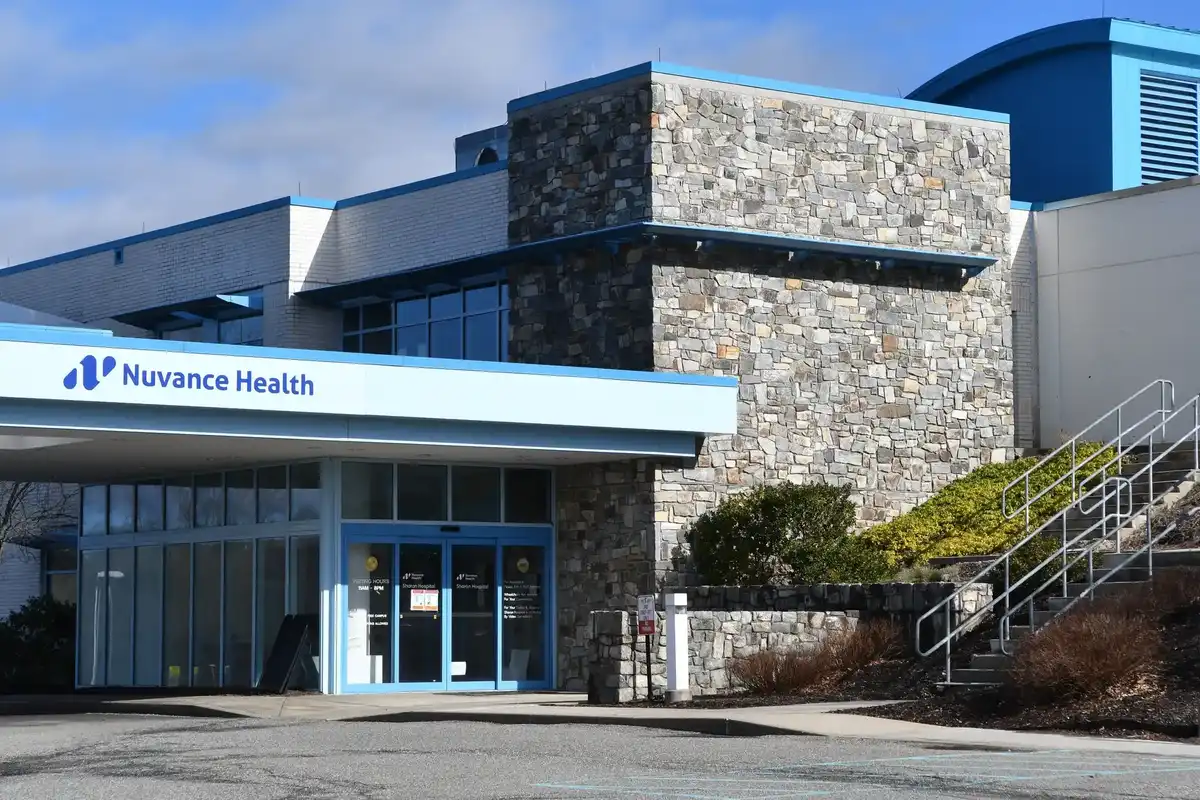
The child was taken by ambulance to Sharon Hospital in Connecticut, where he was later pronounced dead.
The tragedy is grimly familiar to area residents. In 2023, a 2-year-old child in Pleasant Valley died in a similar accident after falling into a septic tank. While such incidents are uncommon, they underscore the potentially deadly risks posed by unsecured or deteriorating septic systems.
While falls and drowning are a serious concern, septic tanks also run the risk of releasing unhealthy gases. Hydrogen sulfide, methane, and ammonia are potential byproducts caused by the breakdown of waste. There’s also a chance of ground collapse after a heavy rain.
The septic tank is a French invention. Jean-Louis Mouras patented his “Automatic Scavenger” in 1881, and the devices soon spread to the United States. They replaced the leaky, brick-lined cesspools prevalent at the time, and became a popular choice as rural expansion increased through the mid-1900s.
The design has remained relatively unchanged over time: a tank made from plastic or concrete is buried in the ground next to a home. The tank allows solids to settle, and lighter liquid waste is released into an adjoining drain field.
Experts suggest pumping a septic tank every few years to clear out waste and scum that doesn’t break down naturally. Replacing the whole tank should happen every 20 years, though it depends on the materials used to make the tank. Concrete tanks last the longest.
Dutchess County’s Sanitary Code requires septic tank covers to remain accessible for inspection and maintenance, but any ground-level access cover must be secured.
The code states that septic covers “shall not be brought flush with the ground surface, unless the cover can be locked to prevent tampering.” The county also recommends periodic inspections, particularly for older systems where risers or covers may have deteriorated over time.
Dutchess County participates in New York’s Septic System Replacement Fund, which provides grants to eligible homeowners to replace failing septic systems that threaten groundwater and surface water quality. Poorly maintained or aging septic systems can allow disease-causing pathogens and other pollutants to contaminate nearby wells, streams and groundwater.
Further information about the Septic System Replacement Fund is available through New York State.
In Millerton, a long-awaited wastewater and sewer project will begin in early 2027. Estimated at $13 million, the first phase of the project will bring a sewer system to Main Street and its surrounding blocks. Properties within the proposed service area currently rely on individual septic systems, including tanks with leach fields, and outdated systems like seepage pits, cesspools and holding tanks.
But for more remote properties, like that of Olly Rea’s church, prospects of a wastewater system seem far off at best. Neighboring towns like Amenia are also on a septic system. Amenia has been debating the feasibility of a sewer system since 1995, but the project’s cost and complications have slowed progress. In 2024, Amenia selected Albany’s Laberge Group to submit a report on the potential system.
Keep ReadingShow less
Dutchess County focus group to address rural childcare challenges
Graham Corrigan
Aug 05, 2026
PINE PLAINS — Parents, caregivers, business owners and childcare providers will have an opportunity later this month to speak directly with state and federal officials about the challenges of finding affordable childcare in rural Dutchess County.
The Child Care Council of Dutchess and Putnam will host a community focus group on Wednesday, Aug. 19, at 5:30 p.m. at the Pine Plains Free Library. Representatives from the offices of Congressman Pat Ryan, Assemblymember Didi Barrett and State Senator Michelle Hinchey are expected to attend and hear directly from residents about barriers to accessing child care.
The focus group comes at a historic moment for childcare in New York. Gov. Kathy Hochul’s 2027 budget included $4.5 billion to expand universal Pre-K in the state, up $1.7 billion from 2026.
The central issue is affordability. Childcare costs have soared in recent years, with the Child Care Council of Dutchess County saying it reliably ranks among a family’s top four expenditures alongside housing, food and taxes. Average childcare expenditures, according to state data, range between $10,000 and $20,000 annually.
Democratic County Legislator Chris Drago, who represents Milan, Millerton, North East, Pine Plains, east Red Hook and Stanford, counts childcare as one of his constituents’ most pressing concerns. “Childcare is connected to so many things,” Drago said. “It’s become exceedingly difficult to live and work and raise a family in northeast Dutchess, and part of that is because there isn’t childcare available.”
In January, Dutchess County was selected as one of three rural New York counties to pilot universal daycare in 2027. The county will receive $20 million in state funding for a childcare program focused on infants and toddlers. Drago hopes the focus group serves as an opportunity to make sure that money is going to the right places.
“We need people to step forward,” he said. “It could be an individual who wants to open a home-based center, or it could be a municipality who has identified a space they can use. We need people who are willing to get certified, so that when money becomes available, there is a place to send the money. We need creative problem solving.”
Locally, childcare centers have been grappling with declining enrollment, high costs and facility closures. Millerton’s North East Community Center discontinued its daycare program last year, citing mounting financial concerns.
Keep ReadingShow less
Charity ride down Route 44 to benefit Millerton child with kidney disease
Nathan Miller
Aug 05, 2026
The Slater family, from left to right: 9-year-old Madeline, 3-year-old Levi, mother Cassidy, 7-year-old Clayton, father Derek and 5-year-old Crew.
Photo provided
MILLERTON — Community members are organizing a charity motorcycle cruise later this month to help a Millerton family whose 5-year-old son is preparing for a kidney transplant after years of surgeries and treatment for congenital kidney disease.
Crew Slater, a 5-year-old Millerton resident, was born with chronic kidney disease and is currently in need of a kidney transplant. Community members are planning a motorcycle cruise from Millerton’s Firehouse on Century Boulevard to Mahoney’s Irish Pub in Poughkeepsie, New York, on Aug. 29 as a fundraiser for Slater and his family as they struggle to afford medication and treatment for the young Millertonian.
Registration for the community cruise will begin at 10 a.m. that day at the Millerton Firehouse. Organizers are asking for $25 per rider and $15 per passenger to participate in the ride, with proceeds going to Slater’s family. Riders will depart from the firehouse at noon and drive down Route 44 in a group to Mahoney’s Irish Pub in Poughkeepsie, where registration fees will provide one free drink.
Cassidy Slater, Crew’s mother, said he has been struggling with multiple congenital issues since birth, including improperly functioning kidneys, bladder and colon, which requires the need for a colostomy bag.
Crew underwent his first surgery at just days old in August 2020. In the nearly six years since, he has endured countless visits to hospitals in Albany and Boston and multiple surgeries to treat his medical conditions.
“It’s just been hospitals, surgeries, routine visits, blood work,” Cassidy said. “All of the above ever since he was born.”
The years of medical visits have strained the family, Cassidy said, but it hasn’t broken their resolve. Despite his health struggles, Crew faces life with excitement and happiness, she said, enjoying time outside with his three siblings at the Slater family’s two-acre property in Millerton.
Crew is currently undergoing treatment to prepare him for a desperately needed kidney transplant. Cassidy said he has reached stage 4 kidney disease, currently functioning at just 20% capacity of a set of healthy kidneys. Stage 5 of the disease is total kidney failure.
Rob Decker of Pine Plains organized the charity cruise set for the end of August to help the family afford mounting costs. Flyers for the event also contain a QR code for an anonymous questionnaire to screen potential donors.
Cassidy praised Decker for getting involved and helping to organize the event. She said Decker and others have created T-shirts and bracelets to sell as fundraisers in addition to the planned cruise later this month. And Decker did all of this without even knowing the family personally.
“He’s just gone above and beyond,” Cassidy said. “For a stranger to want to meet us and do all this stuff for us — there’s still good people out there.”
Crew isn’t the only Slater child to face a troubling diagnosis — his older brother, 7-year-old Clayton, was diagnosed with type 1 diabetes at the age of five and requires regular insulin shots. Insurance coverage shortfalls have caused the family to pay for some of Clayton’s diabetic care supplies out of pocket, further straining their finances.
Despite the hardships, Cassidy said she and her husband work to provide stability and fun for their children. She said her kids spend ample time outside at their two-acre property, and the family takes frequent hiking and camping trips. The couple have four children — 9-year-old Madeline, 7-year-old Clayton, 5-year-old Crew and 3-year-old Levi.
“They’re not scared of what’s thrown at them,” Cassidy said. “They’re going to go through whatever’s thrown at them just like us.”
Keep ReadingShow less

Want more of our stories on Google? Click here to make us a Preferred Source.
Elizabeth Hewitt named chair of Cary Institute Board of Trustees
Eloise Pickering
Aug 05, 2026
Scott Ulm, left, and Elizabeth Hewitt stand together on Cary’s grounds in Millbrook.
Photo provided
MILLBROOK — Elizabeth Hewitt, longtime trustee of the Cary Institute of Ecosystem Studies, has been named Chair of the research institute’s Board of Trustees. She plans for long-term financial stability and scientific expansion during her tenure.
Hewitt began her tenure in the midst of a six-week recovery from a riding incident when she was bucked from her horse. She suffered numerous broken ribs and a punctured lung. Despite her injuries, Hewitt has begun working in her new role.
The Cary Institute Board of Trustees is volunteer-based, and members do not receive compensation.
She comes to the position with nonprofit experience in financial management and asset allocation. Hewitt was chair of the investment committee with Cary before serving as co-vice chair of the Board of Trustees. She was named chair in June.
Hewitt currently works as the Chief Investment Officer at Miras Investments, an institutional family-owned business. She also serves on the board of the Dana Foundation, a nonprofit that focuses on neuroscience. Previously, Hewitt has served on the boards of Berkshire Taconic Community Foundation and The Madeira School, and was the chief investment officer at the Alfred P. Sloan Foundation, a science-based nonprofit.
“Cary and its work expands our understanding of how ecosystems work, and it helps communities and decision makers and land managers make better decisions,” Hewitt said. “It’s a real honor to help steward an organization with that kind of mission.”
Hewitt was drawn to Cary Institute in part because of its work with the Hubbard Brook Research Forest, which first documented acid rain in North America in 1963.
“I always remember Cary as this incredible institute that did world class ecological studies and independent ecological science with a real practical impact,” Hewitt said.
Cary Institute President Josh Ginsberg has worked with two board chairs prior to Hewitt, and says each chair brings a unique skill set to the institute.
“Elizabeth’s skills as a nonprofit financial manager will be especially important,” Ginsberg said.
The Cary Institute has faced recent federal funding cuts, with Hewitt describing the federal funding environment as posing a challenge for science.
“She is going to be a remarkable leader in managing the uncertainty of these times for science-based institutions,” Ginsberg said.
In recent years, the Cary Institute has focused on long-term financial stability, a goal that Hewitt continues to work toward.
“Our role as a board is to create the conditions where great science can thrive,” Hewitt said. “It’s about supporting the institute and helping to expand the reach and impact that Cary science and their scientists can have.”
Hewitt hopes to support the scientific missions of the institute.
“While we’re rooted in the Hudson Valley, we have a much broader national and global impact. I think that’s a really important part of what makes Cary unique,” she said.
Keep ReadingShow less
First cannabis dispensary opens in Pine Plains
Graham Corrigan
Aug 05, 2026
Manager Benjamin Abrahams working behind the counter of Pine Plains’ first cannabis dispensary.
Photo by Graham Corrigan
PINE PLAINS — The first cannabis dispensary in Pine Plains opened for business last week.
The store is still unnamed, but it’s built on the former site of a weigh station — and has retained some key elements of the building’s past.
The dispensary is the first step in a larger plan to breathe new life into the former Deuel’s Home Center property at 7723 Main Street. There are two other buildings on the property that the owners plan to convert to a grocery store and ice cream shop.
But the dispensary comes first. It’s the brainchild of Christopher Gumprecht, Benjamin Abrahams and Brian Seiler. Seiler and Abrahams have managed one cannabis store already — Upstate Pines in Red Hook. Gumprecht bought the Main Street property in 2020, and approached the two about managing a Pine Plains location.
But the trio faced a number of hurdles in order to open the Pine Plains store. First, there was opposition from the Pine Plains Hose Company, which argued the building’s location violated a rule prohibiting cannabis sales within 300 feet of a public service. A waiver was eventually granted in December 2025.
Arguments over an accessibility ramp delayed the project a further seven months. The Planning Board voted in July to allow the business to open without a ramp, and obtain a certificate of occupancy.
The building is freshly painted and two signs flap in the wind outside; there’s little to indicate that the storefront sells cannabis.
Inside, the showroom is bright. On one wall, rows of magnified cannabis buds sit ready for inspection in glass orbs. Edibles are on display in a case below the counter. An old scale, original to the building, has a place of honor near the back.
But the dispensary has not won over everyone. A homemade sign that reads “Say No To Drugs” sits propped on a neighbor’s fence, facing the dispensary.
Abrahams is unfazed. “We’re pioneers,” he said with a grin.
There has been a recent surge in dispensaries, with New York legalizing the sale of recreational cannabis in 2021. Millerton’s first dispensary, Blackrabbit Farms, is slated to open on Main Street later this year.
Keep ReadingShow less
After two decades, Millbrook Antiques Mall owners ready to pass the torch
Eloise Pickering
Aug 05, 2026
MILLBROOK — After two decades of ownership, Jeff and Thelma Zwirn are selling the Millbrook Antiques Mall as they look to retire and focus on spending time with their family.
The couple purchased the Franklin Avenue antique mall in 2005 after deciding to leave New York City in the years following the Sept. 11 terrorist attacks. Now, they have listed the business and its three-story, 5,000-square-foot building for $1,495,000 and are looking for a buyer who will continue operating it as an antique mall.
Established in 1979, the Millbrook Antiques Mall is home to more than 20 vendors spread across 40 rooms. The business generates revenue through vendor rentals, sales commissions, consignments and the owners’ own antique booth. The mall also serves as a retail outlet for Made In Cookware products.
According to Jeff Zwirn, the couple is already in advanced discussions with a prospective buyer.
“We have a few interested buyers, and one is pretty far along,” he said. “He has a vision for growing the business while keeping it an antique mall.”
Jeff Zwirn describes himself as the passive investor, while Thelma has overseen the day-to-day operation of the business from the beginning.
“My wife is on site several times during the week, so she manages the shop. She provides guidance to the dealers, she interacts with the customers. She’s just a wonderful CEO,” Jeff Zwirn said.
Their decision to leave New York City and purchase the business was shaped by the events of Sept. 11, 2001.Jeff Zwirn worked for Keefe, Bruyette & Woods, an investment banking firm whose offices occupied the 88th and 89th floors of the South Tower of the World Trade Center. The firm lost 67 employees in the terrorist attacks.“After attending so many funerals, we decided to shuffle the deck regarding our goals and objectives,” Jeff Zwirn said.
Looking for a slower pace of life, the couple relocated to Millbrook and purchased the Millbrook Antiques Mall. Before the move, Thelma Zwirn worked in New York City as an artist and teacher.
Wendy Maitland, founder of Atelier and the property’s listing broker, said the Zwirns have carefully maintained both the building and the business during their ownership.
“We have a very special property and owners who have a high level of pride of ownership and have taken incredible care of this building throughout their stewardship,” Maitland said. “I feel very lucky to be representing this property and these particular owners.”
Maitland said preserving the business itself will be just as important as selling the real estate.
“The property is most valuable to someone who will continue their legacy because they’ve built up a tremendous following, great reputation and tremendous goodwill throughout the community and beyond,” Maitland said.
As they prepare for retirement, the Zwirns said they are looking forward to spending more time with their children and grandchildren.
“This is the right time for us to focus on other priorities, including more time with the family, the grandchildren, with our own kids,” Jeff Zwirn said.
Keep ReadingShow less

Want more of our stories on Google? Click here to make us a Preferred Source.
loading